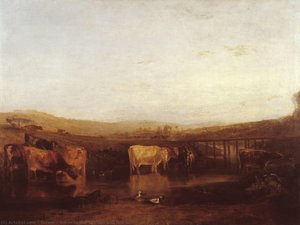
Portret Вилијам Тарнер

100 najpoznatijih slika umetnika Вилијам Тарнер, svaka potpuno jedinstvena

Ažurirano: октобар 2026 · rangirano prema našem koeficijentu popularnosti (pretrage, posete i porudžbine za svako delo) · 870 dela Вилијам Тарнер u našem katalogu

Ukratko

Borbeni 'Temerair' vučen u svoje poslednje pristanište da bude raspadnut (1838) je slika autora Вилијам Тарнер koja privlači najviše pažnje; original se nalazi u muzeju National Gallery, London. Nakon toga, pogled se seli na Brod robova i Великобританија и Велика западна железница. Među 870 dela umetnika Вилијам Тарнер u našem katalogu, ovih 100 su najpoznatija, od kojih je svako jedinstveni original predstavljen sa godinom nastanka, muzejom i razlogom zbog kojeg je i danas neprocenjivo.

1775 – 1851, Ковент Гарден Romantizam Najviše dela: Tate Gallery

Top 10 slika umetnika Вилијам Тарнер, iz ugla galerije

1
Borbeni 'Temerair' vučen u svoje poslednje pristanište da bude raspadnut (1838) čiji je Вилијам Тарнер

Borbeni 'Temerair' vučen u svoje poslednje pristanište da bude raspadnut

1838 · Ulje na platnu · National Gallery, London

„Borbeni 'Temerair' vučen u svoje poslednje pristanište da bude raspadnut” Vilijama Turnera nije samo slika; to je dirljiva elegija za jednu epohu. Završeno 1838. godine, ovo monumentalno platno beleži duboko dremčivu scenu – poslednje putovanje HMS *Temeraire*, veteranog ratnog broda koji se hrabro borio u Trafalgeru, prema njegovom neizbežnom rastavljanju. Slika odjekuje dubokim osećajem gubitka i tranzicije, odražavajući ne samo opadanje mornaričke moći pokretane jedrima, već i šire zabrinutosti koje…

2
Brod robova čiji je Вилијам Тарнер

Brod robova

Ulje na platnu · Muzej finih umetnosti u Bostonu, Boston

Delo koje imamo pred sobom nosi naziv Brod robova, a reč je o uljanom platnu autora J. M. W. Turnera. Iako se često pominje pod ovim kraćim imenom, puno ime dela je Trgovci robljem bacaju mrtve i umiruće preko mga, dolazi tifun. Prvi put je izloženo u Kraljevskoj akademiji 1840. godine. Ovo delo dimenzija je 90,8 cm X 122,6 cm (35,7 in X 48,3 in).

4
Parobod ispred ušća luke čiji je Вилијам Тарнер

Parobod ispred ušća luke

Ulje na platnu · Tate Britain, London

Delo pod nazivom Joseph Mallord William Turner, „Parobod ispred ušća luke”, nije samo prikaz plovila koje se kreće kroz nemirne vode; to je prožimajuće iskustvo, visceralni susret sa sirovom snagom i uzvišenim lepotom prirode. Naslikano 1842. godine, ovo kultno delo predstavlja primer Turnerovog revolucionarnog romantičarskog pristupa pejzažnom slikarstvu, gde se atmosfera i emocija stavljaju ispred precizne reprezentacije. Scena se odvija kao dramatična igra svetlosti, boje i pokreta, hvatajući onaj prolazni…

5
Snowska oluja, Hannibal i njegova vojska kako prelaze Alpe (1812) čiji je Вилијам Тарнер

Snowska oluja, Hannibal i njegova vojska kako prelaze Alpe

1812 · Ulje na platnu · Tate Gallery, London

„Snowska oluja, Hannibal i njegova vojska kako prelaze Alpe” autora Josepha Mallorda Williama Turnera nije samo prikaz istorijskog događaja; to je proživljeno iskustvo, visceralna interpretacija borbe protiv sirove moći prirode. Naslikano 1812. godine, ovo monumentalno platno prenosi nas na opasne padine Maritimskih Alpi, gde su Hannibal Barka i njegove kartaginske legije se borile ne samo sa elementima, već i sa snažnim lokalnim plemenima koji su branili svoju teritoriju. Ovo delo…

6
Битка код Трафалгара čiji je Вилијам Тарнер

Битка код Трафалгара

Ulje na platnu · National Maritime Museum, London

U svom monumentalnom sliku na platnu, Joseph Mallord William Turner hvata oluptanu i haotičnu esenciju Битке код Трафалгара. Ovo masivno istorijsko дело служи као задивљујући prozor u trenutak duboke pomorske drame, gde se čini da sam океан pulsira intenzitetom borbe. Kompozicija je majstorski tapiserija istovremenih događaja, koja prepliće različite momente bitke u jednu, koherentnu viziju borbe i trijumfa. Kroz njegove četkice, posmatrač biva lansiran u samo srce akcije, svedočeći sukobu…

7
Дидо гради Карфаген (такđe poznat kao Uspon Kartадским царством) (1815) čiji je Вилијам Тарнер

Дидо гради Карфаген (такđe poznat kao Uspon Kartадским царством)

1815 · Ulje na platnu · National Gallery, London

„Dido gradnja Kartadžine“, koje je naslikao Joseph Mallord William Turner 1815. godine, nije samo prikaz drevnog grada; to je duboka meditacija o ambiciji, sudbini i prolaznoj prirodi moći. Ovaj monumentalni uljani na platnu, koji sada stoji u svetim hodnicima Nacionalne galerije u Londonu, nadilazi svoju istorijsku temu da bi postao večito istraživanje ljudske aspiracije na pozadini dramatičnog pejzaža. Turner, majstor hvatanja svetlosti i atmosfere, ne nudi jednostavan prikaz, već intenzivno…

8
Ribari na moru (1796) čiji je Вилијам Тарнер

Ribari na moru

1796 · Ulje na platnu · Tate Gallery, London

Remek-delo svetlosti i senke Ribari na moru, naslikani 1796. godine, jedno je od najranijih uljanih dela koje je izložio čuveni engleski umetnik Joseph Mallord William Turner. Ovo očaravajuće delo, koje se čuva u Tate Galeriji u Londonu, predstavlja vrhunac Turnerovog vladanja svetlošću i senkom, postavljajući temelj za njegove buduće umetničke podvige. Umetnički kontekst Turner je bio duboko inspirisan tradicijom noćnih motiva koju su popularizovali umetnici poput Horaca Verneta, Filipa Džejmsa…

9
Бојна темераир čiji je Вилијам Тарнер

Бојна темераир

Ulje na platnu

Slikovno delo Džozefa Malorda Vilijama Turnera iz 1838. godine, „Borbeni Temerir“, mnogo je više od pitopisnog prikaza starog ratnog broda. To je duboko dirljiva meditacija o vremenu, gubitku i neumoljivom maršu progresa – vizuelna elegija koja nastavlja da očarava posetioce svojom lepotom i emocionalnom dubinom.

10
Izgorevanje Zgrada Parlamenta (1835) čiji je Вилијам Тарнер

Izgorevanje Zgrada Parlamenta

1835 · Ulje na platnu

Један Диван Сценарио: ‘Изгоревање Дома Парламента’ од Џозефа Турнера Овај диван рад, ‘Изгоревање Дома Парламента’, је више од обичног сликања; то је моћна емоционална и визуелна искуства која преносе дух Романтизма у свом најсвршенијему облику. Створен 1835. године, овај величанствен мастилански портрет од Џозефа Турнера представља не само историјско догађање – пожар у Дому Парламента током 1834. године – већ и дубоког симболизма, који се односи на промене, снагу природе…

Čuvena dela umetnika Вилијам Тарнер, od 11 do 100

11The Fighting Temeraire (detail) (1839) čiji je Вилијам ТарнерThe Fighting Temeraire (detail)1839 12Fishermen at Sea (1796) čiji je Вилијам ТарнерFishermen at Sea1796 13The Shipwreck (1805) čiji je Вилијам ТарнерThe Shipwreck1805 · Tate Gallery 14Chichester Canal (1828) čiji je Вилијам ТарнерChichester Canal1828 · Tate Gallery 15Велики канал, Венеција (1835) čiji je Вилијам ТарнерВелики канал, Венеција1835 · Metropoliten музеј у Њујорку 16Venecija: Dogana i San Đorđo Đordžo (1834) čiji je Вилијам ТарнерVenecija: Dogana i San Đorđo Đordžo1834 · National Gallery of Art 17The Parting of Hero and Leander - from the Greek of Musaeus (1837) čiji je Вилијам ТарнерThe Parting of Hero and Leander - from the Greek of Musaeus1837 · National Gallery 18Ulysses Deriding Polyphemus (1848) čiji je Вилијам ТарнерUlysses Deriding Polyphemus1848 · National Gallery 19Покашћење - Брб унутар луча где брб прави знаци у плићи воде, и креће се пред водним линијама. Писац био је у овом шторму ноћу када Ариел је напуштао Харвич (1842) čiji je Вилијам ТарнерПокашћење - Брб унутар луча где брб прави знаци у плићи воде, и креће се пред водним линијама. Писац био је у овом шторму ноћу када Ариел је напуштао Харвич1842 · Tate Gallery 20Mercury and Argus (1840) čiji je Вилијам ТарнерMercury and Argus1840 · Nacionalna galerija Kanade 21Dutch Fishing Boats in a Storm (1801) čiji je Вилијам ТарнерDutch Fishing Boats in a Storm1801 · National Gallery 22Slavers Throwing Overboard the Dead and Dying - Typhon Coming on (1840) čiji je Вилијам ТарнерSlavers Throwing Overboard the Dead and Dying - Typhon Coming on1840 · Muzej finih umetnosti u Bostonu 23Snow Storm: Hannibal and His Army Crossing the Alps (1812) čiji je Вилијам ТарнерSnow Storm: Hannibal and His Army Crossing the Alps1812 · Tate Gallery 24Louth, Lincolnshire (1827) čiji je Вилијам ТарнерLouth, Lincolnshire1827 · British Museum 25Snow Storm: Steam-Boat off a Harbour's Mouth (1842) čiji je Вилијам ТарнерSnow Storm: Steam-Boat off a Harbour's Mouth1842 · Tate Gallery 26Snowstorm Peace Burial at Sea (1842) čiji je Вилијам ТарнерSnowstorm Peace Burial at Sea1842 27Rim: Koloseum (1820) čiji je Вилијам ТарнерRim: Koloseum1820 · British Museum 28Železnica, para i brzina - Velika zapadna železnica (1844) čiji je Вилијам ТарнерŽeleznica, para i brzina - Velika zapadna železnica1844 · National Gallery 29Modern Rome-Campo Vaccino (1839) čiji je Вилијам ТарнерModern Rome-Campo Vaccino1839 · J. Paul Getty Museum 30The Pantheon, the Morning after the Fire (1792) čiji je Вилијам ТарнерThe Pantheon, the Morning after the Fire1792 31Undine Giving the Ring to Massaniello, Fisherman of Naples (1846) čiji je Вилијам ТарнерUndine Giving the Ring to Massaniello, Fisherman of Naples1846 · Tate Gallery 32Norham Castle, Sunrise (1845) čiji je Вилијам ТарнерNorham Castle, Sunrise1845 · Tate Gallery 33Venice, Looking East from the Guidecca, Sunrise (1819) čiji je Вилијам ТарнерVenice, Looking East from the Guidecca, Sunrise1819 34Self-Portrait (1799) čiji je Вилијам ТарнерSelf-Portrait1799 · Tate Gallery 35Ruins of Tintern Abbey (1794) čiji je Вилијам ТарнерRuins of Tintern Abbey1794 · Calouste Gulbenkian Foundation 36Вече Дождения (1843) čiji je Вилијам ТарнерВече Дождения1843 · National Gallery of Art 37Quillebeuf, at the Mouth of Seine (1833) čiji je Вилијам ТарнерQuillebeuf, at the Mouth of Seine1833 · Calouste Gulbenkian Foundation 38Peace - Burial at Sea (1842) čiji je Вилијам ТарнерPeace - Burial at Sea1842 · Tate Gallery 39The Battle of Trafalgar, as Seen from the Mizen Starboard Shrouds of the Victory čiji je Вилијам ТарнерThe Battle of Trafalgar, as Seen from the Mizen Starboard Shrouds of the VictoryTate Britain 40Tivoli, the Cascatelle (1827) čiji je Вилијам ТарнерTivoli, the Cascatelle1827 · Tate Britain 41Campo Santo, Venice (1842) čiji je Вилијам ТарнерCampo Santo, Venice1842 42A mountain scene, Val d (1845) čiji je Вилијам ТарнерA mountain scene, Val d1845 · Nacionalna galerija Viktorije 43Bonneville, Savoy with Mont Blanc (1803) čiji je Вилијам ТарнерBonneville, Savoy with Mont Blanc1803 44Union of the Thames and Isis ( (1808) čiji je Вилијам ТарнерUnion of the Thames and Isis (1808 · Tate Britain 45Harlech Castle, from Tygwyn Ferry, Summer's Evening Twilight (1799) čiji je Вилијам ТарнерHarlech Castle, from Tygwyn Ferry, Summer's Evening Twilight1799 · Yale Center for British Art 46San Giorgio Maggiore at Dawn (1819) čiji je Вилијам ТарнерSan Giorgio Maggiore at Dawn1819 · Tate Gallery 47Death on a Pale Horse (1830) čiji je Вилијам ТарнерDeath on a Pale Horse1830 48The Ponte Delle Torri, Spoleto (1840) čiji je Вилијам ТарнерThe Ponte Delle Torri, Spoleto1840 · Tate Britain 49Landscape (1850) čiji je Вилијам ТарнерLandscape1850 · Ermitaž 50Edinburgh from Calton Hill (1819) čiji je Вилијам ТарнерEdinburgh from Calton Hill1819 · Scottish National Gallery 51The Foot of Mount St. Gotthard (1842) čiji je Вилијам ТарнерThe Foot of Mount St. Gotthard1842 · Leeds Museums - Galleries 52Landscape (1850) čiji je Вилијам ТарнерLandscape1850 · Walker Art Gallery 53Falls of the Rhine at Schaffhausen, Side View čiji je Вилијам ТарнерFalls of the Rhine at Schaffhausen, Side View 54Prudhoe Castle, Northumberland (1826) čiji je Вилијам ТарнерPrudhoe Castle, Northumberland1826 55The Fighting Temeraire'', Tugged to her Last Berth To Be Broken Up, 1838'' (1839) čiji je Вилијам ТарнерThe Fighting Temeraire'', Tugged to her Last Berth To Be Broken Up, 1838''1839 · National Gallery 56Europa and the Bull (1845) čiji je Вилијам ТарнерEuropa and the Bull1845 · Taft Museum of Art 57The Red Rigi (1842) čiji je Вилијам ТарнерThe Red Rigi1842 · Nacionalna galerija Viktorije 58The Pass of Saint Gotthard, Switzerland (1803) čiji je Вилијам ТарнерThe Pass of Saint Gotthard, Switzerland1803 · Birmingham Museum and Art Gallery 59Sun Rising through Vagour, Fishermen Cleaning and Sellilng Fish (1807) čiji je Вилијам ТарнерSun Rising through Vagour, Fishermen Cleaning and Sellilng Fish1807 · National Gallery 60Keelmen Heaving in Coals by Night (1835) čiji je Вилијам ТарнерKeelmen Heaving in Coals by Night1835 · National Gallery of Art 61Bonneville, Savoy (1812) čiji je Вилијам ТарнерBonneville, Savoy1812 · Philadelphia Museum of Art 62Slavers throwing overboard the death and dying čiji je Вилијам ТарнерSlavers throwing overboard the death and dying 63Walton Reach (1805) čiji je Вилијам ТарнерWalton Reach1805 · Tate Britain 64Valley of Aosta: Snowstorm, Avalanche, and Thunderstorm (1836) čiji je Вилијам ТарнерValley of Aosta: Snowstorm, Avalanche, and Thunderstorm1836 · Art Institute of Chicago 65Shore Scene with Waves and Breakwater (1835) čiji je Вилијам ТарнерShore Scene with Waves and Breakwater1835 · Tate Modern 66Neuwied and Weise Thurn, with Hoch's Monument on the Rhine, looking towards Andernach čiji je Вилијам ТарнерNeuwied and Weise Thurn, with Hoch's Monument on the Rhine, looking towards Andernach 67The Thames above Waterloo Bridge (1830) čiji je Вилијам ТарнерThe Thames above Waterloo Bridge1830 · Tate Britain 68Ulysses Deriding Polyphemus - Homer's Odyssey (1829) čiji je Вилијам ТарнерUlysses Deriding Polyphemus - Homer's Odyssey1829 · National Gallery 69The Wreck of a Transport Ship (1810) čiji je Вилијам ТарнерThe Wreck of a Transport Ship1810 70Dolbadern Castle, North Wales (1800) čiji je Вилијам ТарнерDolbadern Castle, North Wales1800 · Royal Academy of Arts 71Dawn after the wreck čiji je Вилијам ТарнерDawn after the wreck 72Venice with the Salute (1840) čiji je Вилијам ТарнерVenice with the Salute1840 · Tate Britain 73Heriot's Hospital, Edinburgh (1819) čiji je Вилијам ТарнерHeriot's Hospital, Edinburgh1819 · Nacionalna galerija Škotske 74Sunrise, with a Boat between Headlands (1835) čiji je Вилијам ТарнерSunrise, with a Boat between Headlands1835 · Tate Gallery 75Ivy bridge devonshire čiji je Вилијам ТарнерIvy bridge devonshire 76A First Rate Taking In Stores (1818) čiji je Вилијам ТарнерA First Rate Taking In Stores1818 77Venice, San Giorgio from the Dogana: Sunrise (1819) čiji je Вилијам ТарнерVenice, San Giorgio from the Dogana: Sunrise1819 · British Museum 78Peace (1842) čiji je Вилијам ТарнерPeace1842 79Morning amongst the Coniston Fells (1798) čiji je Вилијам ТарнерMorning amongst the Coniston Fells1798 · Tate Gallery 80Flint Castle (1838) čiji je Вилијам ТарнерFlint Castle1838 81The Fall of an Avalanche in the Grisons (1810) čiji je Вилијам ТарнерThe Fall of an Avalanche in the Grisons1810 · Tate Gallery 82Interior of Salisbury Cathedral (1805) čiji je Вилијам ТарнерInterior of Salisbury Cathedral1805 83Rocky Bay with Figures (1830) čiji je Вилијам ТарнерRocky Bay with Figures1830 · National Gallery 84Crossing the Brook (1815) čiji je Вилијам ТарнерCrossing the Brook1815 · Tate Gallery 85Landscape with Water (1840) čiji je Вилијам ТарнерLandscape with Water1840 · Tate Britain 86Peace - Burial at Sea (1842) čiji je Вилијам ТарнерPeace - Burial at Sea1842 · Tate Gallery 87Lake of Thun (1851) čiji je Вилијам ТарнерLake of Thun1851 · Taft Museum of Art 88Archway with Trees by the Sea (1828) čiji je Вилијам ТарнерArchway with Trees by the Sea1828 89Carisbrook Castle, Isle of Wight (1828) čiji je Вилијам ТарнерCarisbrook Castle, Isle of Wight1828 90Mortlake terrace čiji je Вилијам ТарнерMortlake terraceNational Gallery of Art 91Jedburgh Abbey (1832) čiji je Вилијам ТарнерJedburgh Abbey1832 · Taft Museum of Art 92A Single Figure čiji je Вилијам ТарнерA Single FigureTate Britain 93Shipping at the Mouth of the Thames (1806) čiji je Вилијам ТарнерShipping at the Mouth of the Thames1806 · Tate Britain 94Rain, Steam and Speed The Great Western Railway čiji je Вилијам ТарнерRain, Steam and Speed The Great Western RailwayNational Gallery 95The Nordgalerie čiji je Вилијам ТарнерThe Nordgalerie 96Večera u velikoj prostoriji sa figurama u kostimima (1830) čiji je Вилијам ТарнерVečera u velikoj prostoriji sa figurama u kostimima1830 · Tate Gallery 97Stonehenge (1828) čiji je Вилијам ТарнерStonehenge1828 98Lyme Regis, Dorsetshire, England (1834) čiji je Вилијам ТарнерLyme Regis, Dorsetshire, England1834 99Mount Vesuvius in Eruption - Joseph Mallord William Turner (2026) čiji je Вилијам ТарнерMount Vesuvius in Eruption - Joseph Mallord William Turner2026 100The Billiard Players čiji je Вилијам ТарнерThe Billiard PlayersTate Britain

Čuvena dela Вилијам Тарнер po periodima

Motivi koji su privlačili pažnju Вилијам Тарнер

Četiri teme koje se najčešće ponavljaju u ovim originalima, svaka sa svojim vrhunskim primerom.

Muzeji u kojima se čuvaju originalna dela umetnika Вилијам Тарнер

8 muzeja u kojima se nalazi najviše slika sa ove stranice.

Muzej Grad Radovi umetnika Вилијам Тарнер Slike iz ovog spiska
Tate Gallery, LondonTate Gallery London 24 Snowska oluja, Hannibal i njegova vojska kako prelaze Alpe, Ribari na moru, The Shipwreck
Tate Britain, LondonTate Britain London 42 Parobod ispred ušća luke, The Battle of Trafalgar, as Seen from the Mizen Starboard Shrouds of the Victory, Tivoli, the Cascatelle
National Gallery, LondonNational Gallery London 19 Borbeni 'Temerair' vučen u svoje poslednje pristanište da bude raspadnut, Великобританија и Велика западна железница, Дидо гради Карфаген (такđe poznat kao Uspon Kartадским царством)
National Gallery of Art, WashingtonNational Gallery of Art Washington 11 Venecija: Dogana i San Đorđo Đordžo, Вече Дождения, Keelmen Heaving in Coals by Night
British Museum, LondonBritish Museum London 5 Louth, Lincolnshire, Rim: Koloseum, Venice, San Giorgio from the Dogana: Sunrise
Taft Museum of Art, SinsinatiTaft Museum of Art Sinsinati 5 Europa and the Bull, Lake of Thun, Jedburgh Abbey
Muzej finih umetnosti u Bostonu, BostonMuzej finih umetnosti u Bostonu Boston 4 Brod robova, Slavers Throwing Overboard the Dead and Dying - Typhon Coming on
Nacionalna galerija Viktorije, MelburnNacionalna galerija Viktorije Melburn 3 A mountain scene, Val d, The Red Rigi

Вилијам Тарнер kroz decenije: jedan jedinstveni original za svaku

Radovi po decenijama

Izaberite deceniju da biste videli original koji je definiše.

Slike umetnika Вилијам Тарнер: pitanja za galeriju

Koje je najpoznatije delo umetnika Вилијам Тарнер?Otkrij odgovor

Borbeni 'Temerair' vučen u svoje poslednje pristanište da bude raspadnut (1838), National Gallery, London. Slede Brod robova i Великобританија и Велика западна железница.

U kojoj je godini Вилијам Тарнер stvorio/la Borbeni 'Temerair' vučen u svoje poslednje pristanište da bude raspadnut?Otkrij odgovor

63 godina: Borbeni 'Temerair' vučen u svoje poslednje pristanište da bude raspadnut datira iz 1838, a Вилијам Тарнер je rođen/a 1775.

Koji je deset najpoznatijih slika autora Вилијам Тарнер?Otkrij odgovor

Borbeni 'Temerair' vučen u svoje poslednje pristanište da bude raspadnut, Brod robova, Великобританија и Велика западна железница, Parobod ispred ušća luke, Snowska oluja, Hannibal i njegova vojska kako prelaze Alpe, Битка код Трафалгара, Дидо гради Карфаген (такđe poznat kao Uspon Kartадским царством), Ribari na moru, Бојна темераир i Izgorevanje Zgrada Parlamenta. Gornji rang pokazuje godinu i muzej za svako od njih.

Koliko je poznatih dela umetnika Вилијам Тарнер?Otkrij odgovor

Naš katalog sadrži 870 dela umetnika Вилијам Тарнер, datiranih od 1792 do 1851.

Gde se mogu videti najpoznatiji originali umetnika Вилијам Тарнер?Otkrij odgovor

Većinom u Tate Gallery (London), Tate Britain (London) i National Gallery (London). Tabela muzeja iznad sadrži njih sve.

U kom periodu je Вилијам Тарнер stvorio/la svoje najpoznatije slike?Otkrij odgovor

U 1840s: 21 od 100 dela na ovoj stranici nastalo je tada, od čega je Ulysses Deriding Polyphemus.

Ko je najraniji, a koje je najkasnije čuveno delo umetnika Вилијам Тарнер?Otkrij odgovor

Na ovoj stranici, najstarije delo je iz The Pantheon, the Morning after the Fire (1792), a najnovije iz Lake of Thun (1851).

Koje su teme Вилијам Тарнер preferirao/la?Otkrij odgovor

Landscape (30), Turner (14) i Shipwreck (11), kroz svih 100 dela na ovoj stranici.

Sa kojim materijalima je Вилијам Тарнер najčešće slikao?Otkrij odgovor

Oil On Canvas, za 44 od 100 dela na ovoj stranici.

Kojem umetničkom pravcu pripada delo umetnika Вилијам Тарнер?Otkrij odgovor

Romantizam, sudeći po originalima na ovoj stranici.

Koja originalna dela Вилијам Тарнер mogu videti u Tate Gallery?Otkrij odgovor

Snowska oluja, Hannibal i njegova vojska kako prelaze Alpe, Ribari na moru i The Shipwreck: Tate Gallery, London čuva 18 dela sa ove stranice.

Вилијам Тарнер: portret umetnika

Early Life, Family and Training

In a house on Maiden Lane, within the busy Covent Garden district of London, Joseph Mallord William Turner entered the world. His beginnings were rooted in the practical trades of the city; his father, William Turner, worked as a barber and wigmaker. This domestic setting was also a place of commerce, as William served as an art dealer, providing a young boy with an early, unforced proximity to the world of visual works. The boy’s talent was evident early on, and his father even displayed the child's drawings in the shop window to catch the eyes of passing customers.

By the age of fourteen, the boy's ambition led him to the Royal Academy Schools in 1789. This formal entry into the academic world provided the technical discipline required to transform raw talent into professional skill. Before and during these formative years, he sought practical experience by working for various architects, including Thomas Hardwick, James Wyatt, and Joseph Bonomi the Elder. These roles required a keen eye for structure and perspective, grounding his developing vision in the physical realities of the built environment.

His education was further shaped by the guidance of the topographical draughtsman Thomas Malton. Through this study, he learned to render the specific details of landscapes and architecture with precision. This period of his life was a careful balance of formal instruction and the necessity of working for hire, as he moved from the meticulous demands of architectural drawing toward the more expressive possibilities of the natural world.

Technique and Artistic Style

In his early years, he followed the path of the eighteenth-century topographical tradition, producing precise renderings of architecture and landscapes. These early efforts showed a disciplined hand, yet a restless spirit was already beginning to stir beneath the surface of his technical proficiency. As he matured, his focus shifted from the mere documentation of places to a profound fascination with the raw power of the natural world. He sought to capture the very essence of storms, the sudden fury of seascapes, the massive presence of mountains, and the fleeting brilliance of a sunset. This pursuit led him to become a painter of light, a man who used color as his primary language to describe the atmosphere.

His method was one of constant experimentation across various media, including oils, watercolours, and engravings. He moved away from rigid forms, preferring instead to use bold color and expressive renditions of light to convey the feeling of a moment. He did not merely paint a scene; he painted the air between the eye and the object. This approach allowed him to translate the turbulence of the elements into something deeply felt. His brushwork became a tool for capturing movement, dissolving the boundaries between the sea and the sky through a masterful command of light and shadow.

Key Works and Subjects

His early years saw him mastering the elements of the sea and the self. In 1796, he produced Fishermen at Sea, an oil work that demonstrated his early command over the interplay of light and shadow. By 1799, he turned his gaze inward with a Self-Portrait, rendered in oil on canvas. These early endeavors were but a fraction of a staggering output that eventually included over 550 oil paintings and nearly 20,000 drawings and sketches.

As his vision expanded, he moved from the meticulous details of topography toward the vastness of the natural world. He found profound inspiration in the changing light of the English landscape, such as the watercolor of Louth, Lincolnshire from 1827. His brushwork grew more expressive, often capturing the turbulent energy of storms and the shifting moods of the sky. He was drawn to the drama of the ocean, often depicting the raw power of waves and the vulnerability of those caught within them.

In his later years, the artist found himself fascinated by the rapid changes of the industrial age. He turned his attention to the machines of progress, capturing the movement and steam of a new era. This interest in contemporary technology is evident in works such as The Fighting Temeraire and Rain, Steam and Speed, where the force of human invention meets the vastness of the atmosphere.

Patrons and Commercial Success

The seeds of his professional life were sown in the modest setting of his father's shop. There, the young artist's sketches were displayed in the window, inviting passersby to purchase his early efforts for a single shilling. This early exposure to the marketplace provided a practical understanding of art as a trade. As he matured, he secured a steady and reliable income by meeting the high demand for topographical and architectural watercolours, a pursuit that allowed him to establish himself firmly within the London art world.

His growing reputation eventually drew the attention of men of significant means and influence. He found patronage among figures such as William Beckford, Francis Egerton, the 3rd Duke of Bridgewater, and George Wyndham, the 3rd Earl of Egremont. These connections were marked by substantial transactions that reflected the rising value of his vision. In 1799, he sold The Fifth Plague of Egypt to William Beckford for 150 guineas. A few years later, in 1801, Dutch Boats in a Gale was acquired by Francis Egerton for 250 guineas.

Legacy and Influence

The ripples of his vision reached far beyond the shores of Britain, touching the very foundations of how painters perceived the world. His restless pursuit of light and his expressive use of color acted as a precursor to the Impressionist movement, leaving a profound mark on artists like Monet and Pissarro. He did not merely paint the landscape; he sought to dissolve the boundaries of form, a pursuit that helped pave the way for modern abstraction. This willingness to prioritize atmosphere over rigid detail allowed his influence to travel through the centuries, eventually reaching the abstract expressionists like Mark Rothko.

His ascent to widespread acclaim was aided by a significant turning point in 1840, when a prominent critic became his great champion. This support helped the public grasp the depth of his experimentation at a time when his free treatment of subjects was often met with confusion or criticism. While many found his swirling compositions difficult to interpret, his ability to capture the feeling of a place ensured his place in the history of art. He transformed the landscape from a static subject into a medium for profound emotional expression.

Where to See the Works Today

To witness the legacy of this painter, one must travel to London, where the great majority of his paintings are held. The Tate Britain houses much of his life's work, allowing a viewer to trace his development through the decades. Within these halls, one can find The Fighting Temeraire Tugged to Her Last Berth to Be Broken Up, a work that captures a sense of profound transition. Nearby, the Tate Collection also preserves The Evening of the Deluge, a piece that reflects his preoccupation with the overwhelming forces of nature.

His reach extends far beyond the shores of England, finding homes in various corners of the globe. In Lisboa, Portugal, the Calouste Gulbenkian Museum holds Ruins of Tintern Abbey, a watercolor that demonstrates his command over light and atmosphere. Across the Atlantic, the Museum of Fine Arts in Boston, Massachusetts, preserves Slavers Throwing Overboard the Dead and Dying—Typhon Coming on, a painting that speaks to the darker, more turbulent aspects of his vision.