Portret Симон Вуе

100 najpoznatijih slika umetnika Симон Вуе, izbor iz galerije

Ažurirano: октобар 2026 · rangirano prema našem koeficijentu popularnosti (pretrage, posete i porudžbine za svako delo) · 166 dela Симон Вуе u našem katalogu

Ukratko

Od svih originala koje je Симон Вуе ostavio, najpoznatiji je Venus and Adonis (1642), koji se nalazi u kolekciji J. Paul Getty Museum, Los Anđeles. Odmah za njima slede The Muses of Urania and Calliope (1634) i Annunciation (1640). Naš katalog sadrži 166 dela umetnika Симон Вуе; galerija je čuvala 100 dela koja svet najviše admira, od kojih je svako prikazano sa svojim datumom, muzejom i pričom.

1590 – 1649, Париз Baroque Najviše dela: Luvr

Top 10 slika umetnika Симон Вуе: izbor galerije

1
Venus and Adonis (1642) čiji je Симон Вуе

Venus and Adonis

1642 · Acrylic On Canvas · J. Paul Getty Museum, Los Anđeles

Simon Vouet’s “Venus and Adonis,” painted in 1642, is a striking example of French Baroque art, showcasing the artist’s mastery of color, composition, and his assimilation of Italian artistic trends. This evocative scene depicts the poignant moment from Ovid's *Metamorphoses* where the mortal Adonis, captivated by hunting, rejects Venus’s advances, foreshadowing his tragic demise. The painting isn't merely a depiction of mythology; it's an exploration of love, desire, and mortality…

2
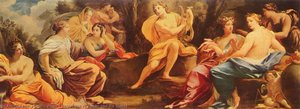
The Muses of Urania and Calliope (1634) čiji je Симон Вуе

The Muses of Urania and Calliope

1634 · Acrylic On Canvas · National Gallery of Art, Washington

Simon Vouet’s “The Muses Urania and Calliope”: A Symphony of Baroque Grace Simon Vouet (1590-1649) stands as a pivotal figure in the artistic landscape of 17th-century France, marking the decisive transition from Mannerism to the opulent grandeur of the Baroque style. His legacy resides not merely in his prolific output but also in his unwavering dedication to mastering Italian influences—a pursuit that fundamentally reshaped French painting and cemented Vouet’s place…

3
Annunciation (1640) čiji je Симон Вуе

Annunciation

1640 · Oil On Canvas · Galerija Ufizi, Firenca

Simon Vouet's "Annunciation," painted in 1640, is more than just a religious depiction; it’s a masterful orchestration of light, shadow, and human emotion. This captivating work transports the viewer to an intimate interior space, where the momentous announcement of Mary’s divine conception unfolds with breathtaking drama. The painting immediately draws the eye to the kneeling figure of the Virgin Mary, bathed in a warm, golden glow emanating from the right…

4
The Fortuneteller (detail) (1617) čiji je Симон Вуе

The Fortuneteller (detail)

1617 · Oil On Canvas · Galleria Nazional d Art Antica, Рим

In the heart of 1617, amidst the vibrant and transformative atmosphere of Roman artistic circles, Simon Vouet captured a moment of profound human connection in his masterpiece, The Fortuneteller. This work, particularly when viewed in its intimate details, serves as much more than a mere portrait; it is an emblem of the burgeoning Baroque style that was beginning to reshape the visual landscape of Europe. The scene unfolds with a…

5
Sleeping Venus (1630) čiji je Симон Вуе

Sleeping Venus

1630 · Acrylic On Canvas · Szépművészeti Múzeum, Budimpešta

Simon Vouet's "Sleeping Venus," painted around 1630, is not merely a depiction of a reclining nude; it’s an exquisite distillation of Renaissance ideals and the burgeoning Baroque aesthetic. This captivating work transcends simple portraiture, offering instead a profound meditation on beauty, repose, and the delicate balance between earthly pleasure and spiritual contemplation. The painting immediately draws the viewer into a world of hushed tranquility, inviting us to share in the…

6
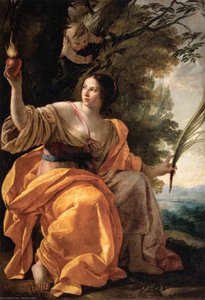
Allegory of Virtue (1634) čiji je Симон Вуе

Allegory of Virtue

1634 · Acrylic On Canvas · Luvr, Pariz

Simon Vouet’s “Allegory of Virtue,” completed around 1634, stands as a testament to the burgeoning Baroque aesthetic infiltrating French artistic circles during Louis XIII's reign. More than just a portrait—though it undeniably depicts a woman radiating grace and authority—the painting delves into profound philosophical concepts rooted in humanist ideals prevalent at the time.

7
The Entombment (1638) čiji je Симон Вуе

The Entombment

1638 · Oil On Canvas · Fitzwilliam College, Cambridge

Simon Vouet's "The Entombment," painted in 1635–1638, is not merely a depiction of a biblical scene; it’s an exquisitely rendered meditation on grief, faith, and the profound dignity of sacrifice. This monumental work, currently residing within the collection of the Fitzwilliam Museum in Cambridge, transcends its subject matter to become a powerful testament to the Baroque era's ability to evoke intense emotion through masterful technique and carefully considered symbolism. Vouet,…

8
Angels with Attributes of the Passion: Angel Holding the Vessel and Towel for washing the hands of Pontius Pilate (1624) čiji je Симон Вуе

Angels with Attributes of the Passion: Angel Holding the Vessel and Towel for washing the hands of Pontius Pilate

1624 · Oil · Minneapolis Institute of Art, Minneapolis

A single celestial figure emerges from a deep, near-black void, commanding the space with an intimate and monumental presence. This angel, caught in a moment of profound spiritual devotion, gazes upward with eyes full of soulful contemplation or sorrow. The light descends from the upper left, carving the figure out of the darkness and casting soft, tender shadows across a face etched with emotion. Every detail feels immediate, from the…

9
Saint John (1623) čiji je Симон Вуе

Saint John

1623 · Oil On Canvas · Philadelphia Museum of Art, Filadelfija

A young man turns his face toward a light that remains unseen. His eyes, wide and searching, catch a glimmer that pulls his gaze upward, away from the dark, murky depths of the background. Thick, dark curls frame a pale face, creating a sharp contrast against the heavy shadows that swallow the space around him. He is caught in a moment of sudden, quiet realization. The light does not merely…

10
Virgin and Child, with an Angel (1642) čiji je Симон Вуе

Virgin and Child, with an Angel

1642 · Oil On Panel · Philadelphia Museum of Art, Filadelfija

The light falls softly upon the skin of the Virgin Mary, catching the curve of her cheek and the small, smooth hands of the Christ Child. They sit within a triangular arrangement that anchors the composition, surrounded by the deep shadows of a dense woodland. An angel leans into this intimate circle, its robes glowing with warm yellows and golds that contrast against the heavy, dark trees behind them. At…

Izbor umetnika Симон Вуе se nastavlja, od 11 do 100

11Madonna with Child (1625) čiji je Симон ВуеMadonna with Child1625 · Ermitaž 12Time Discovering the Love of Venus and Mars (1640) čiji je Симон ВуеTime Discovering the Love of Venus and Mars1640 · John and Mable Ringling Museum of Art 13The Rapture of Saint Theodore (1627) čiji je Симон ВуеThe Rapture of Saint Theodore1627 · Staatliche Kunstsammlungen Dresden 14Heavenly Charity (1640) čiji je Симон ВуеHeavenly Charity1640 · Luvr 15Allegory (1640) čiji je Симон ВуеAllegory1640 · Kapitolinski muzeji 16Parnassus or Apollo and the Muses (1640) čiji je Симон ВуеParnassus or Apollo and the Muses1640 · Szépművészeti Múzeum 17Sacrifice of Isaac (1642) čiji je Симон ВуеSacrifice of Isaac1642 · Milwaukee Art Museum 18Angels with Attributes of the Passion, the Superscription from the Cross (1624) čiji je Симон ВуеAngels with Attributes of the Passion, the Superscription from the Cross1624 · Minneapolis Institute of Art 19The Holy Family with the Infant Saint John the Baptist (1626) čiji je Симон ВуеThe Holy Family with the Infant Saint John the Baptist1626 · Fine Arts Museums of San Francisco 20Ceres and Harvesting Cupids (1634) čiji je Симон ВуеCeres and Harvesting Cupids1634 · National Gallery 21Suicide of Lucrece (1625) čiji je Симон ВуеSuicide of Lucrece1625 · Narodna galerija Prag 22The Muse Clio (1640) čiji je Симон ВуеThe Muse Clio1640 · Staatliche Kunsthalle Karlsruhe 23Allegory with Venus, Mars, Cupid, and Time (1626) čiji je Симон ВуеAllegory with Venus, Mars, Cupid, and Time1626 · John and Mable Ringling Museum of Art 24Vanitas (1621) čiji je Симон ВуеVanitas1621 · Nacionalni muzej u Varšavi 25Lovers (1614) čiji je Симон ВуеLovers1614 · Pushkin State Museum 26Martyrdom of Saint Catherine (1620) čiji je Симон ВуеMartyrdom of Saint Catherine1620 · Musée des Beaux-Arts de Strasbourg 27The Halberdier (1617) čiji je Симон ВуеThe Halberdier1617 · Dayton Art Institute 28Saint Jerome (c.347–420) (1620) čiji je Симон ВуеSaint Jerome (c.347–420)1620 · National Library of Wales 29self-portrait (1620) čiji je Симон Вуеself-portrait1620 30Saint Agnes (1618) čiji je Симон ВуеSaint Agnes1618 · Blanton Museum of Art 31Annunciation to Mary (1617) čiji je Симон ВуеAnnunciation to Mary1617 · Gemäldegalerie 32Psyche and Cupid (1626) čiji je Симон ВуеPsyche and Cupid1626 · Muzej lepih umetnosti u Lionu 33The Nativity (1632) čiji je Симон ВуеThe Nativity1632 34Squire-at-arms - Saint Guillaume d'Aquitaine (1625) čiji je Симон ВуеSquire-at-arms - Saint Guillaume d'Aquitaine1625 · The Art Museum RIGA BOURSE 35The Entombment (1635) čiji je Симон ВуеThe Entombment1635 · Fitzwilliam Museum 36Saint Catherine (1625) čiji je Симон ВуеSaint Catherine1625 · Slovak National Gallery 37Saint Sebastian (1625) čiji je Симон ВуеSaint Sebastian1625 · Muzej fine umetnosti u Hjustonu 38Model for Altarpiece in St. Peter's (1625) čiji je Симон ВуеModel for Altarpiece in St. Peter's1625 · Los Angeles County Museum of Art 39Model for Altarpiece in St. Peter's (1625) čiji je Симон ВуеModel for Altarpiece in St. Peter's1625 · Los Angeles County Museum of Art 40Saint Cecilia (1626) čiji je Симон ВуеSaint Cecilia1626 · Blanton Museum of Art 41Portrait of Virginia da Vezzo (1625) čiji je Симон ВуеPortrait of Virginia da Vezzo1625 · Gemäldegalerie 42The Charity (1635) čiji je Симон ВуеThe Charity1635 43Saint Sebastian (1623) čiji je Симон ВуеSaint Sebastian1623 44Christ at the Column (1637) čiji je Симон ВуеChrist at the Column1637 45The Holy Family with Saint Elizabeth and the young Saint John (1642) čiji je Симон ВуеThe Holy Family with Saint Elizabeth and the young Saint John1642 46The Four Seasons (1644) čiji je Симон ВуеThe Four Seasons1644 · National Gallery of Ireland 47Head of a Bearded Man (1639) čiji je Симон ВуеHead of a Bearded Man1639 · Hatchlands Park 48The Entombment (1637) čiji je Симон ВуеThe Entombment1637 · Musée d'Art Roger-Quilliot 49Artemisia Building the Mausolaeum (1640) čiji je Симон ВуеArtemisia Building the Mausolaeum1640 · Nationalmuseum 50Allegory of Prudence (1645) čiji je Симон ВуеAllegory of Prudence1645 · Musée Fabre 51The Rest of the Holy Family (1650) čiji je Симон ВуеThe Rest of the Holy Family1650 · Musée de Grenoble 52Christ Appearing to Saint Anthony Abbot, Falsely Called Christ Healing a Possessed Person (1650) čiji je Симон ВуеChrist Appearing to Saint Anthony Abbot, Falsely Called Christ Healing a Possessed Person1650 · Musée de Grenoble 53The Virgin Taking the Society of Jesus Under Her Protection (1650) čiji je Симон ВуеThe Virgin Taking the Society of Jesus Under Her Protection1650 54Olivier de Clisson (1650) čiji je Симон ВуеOlivier de Clisson1650 · Musée Départemental Dobrée 55The Muses Urania and Calliope (1634) čiji je Симон ВуеThe Muses Urania and Calliope1634 · National Gallery of Art 56Time Vanquished by Love, Hope and Fame, 1640-1645 čiji je Симон ВуеTime Vanquished by Love, Hope and Fame, 1640-1645Grand Palais 57Portrait of a Young Man (Le Spadassin) (1617) čiji je Симон ВуеPortrait of a Young Man (Le Spadassin)1617 · Herzog Anton Ulrich Museum 58POLYMNIE, MUSE DE L'ELOQUENCE čiji je Симон ВуеPOLYMNIE, MUSE DE L'ELOQUENCELuvr 59Angel with dice and tunic (1620) čiji je Симон ВуеAngel with dice and tunic1620 · Museo di Capodimonte 60Saint Catherine of Alexandria (1620) čiji je Симон ВуеSaint Catherine of Alexandria1620 · Национални музеј западне уметности 61Mary Adoring the Christ child (1623) čiji je Симон ВуеMary Adoring the Christ child1623 · Museum Boijmans Van Beuningen 62The Virgin and Child (of the Column) (1640) čiji je Симон ВуеThe Virgin and Child (of the Column)1640 · Ashmolean Museum of Art and Archaeology 63Parnassus or Apollo and the Muses (detail) (1640) čiji je Симон ВуеParnassus or Apollo and the Muses (detail)1640 · Szépművészeti Múzeum 64Toilet of Venus (1628) čiji je Симон ВуеToilet of Venus1628 · Art Museum 65Self-Portrait (1615) čiji je Симон ВуеSelf-Portrait1615 · Musée Réattu 66LA VICTOIRE čiji je Симон ВуеLA VICTOIRELuvr 67The Rape of Europa (1640) čiji je Симон ВуеThe Rape of Europa1640 · Музеј Тисен-Борнемиза 68Софонисба примајући чашу отрова (1623) čiji je Симон ВуеСофонисба примајући чашу отрова1623 · Staatliche Museen 69St Catherine (1614) čiji je Симон ВуеSt Catherine1614 · Palata Quirinale 70Prince Marcantonio Doria (1621) čiji je Симон ВуеPrince Marcantonio Doria1621 · Luvr 71The Holy Family with Sts Elizabeth, John the Baptist and Catherine (1614) čiji je Симон ВуеThe Holy Family with Sts Elizabeth, John the Baptist and Catherine1614 · Музеј Прадо 72Diana on the Hunt (1619) čiji je Симон ВуеDiana on the Hunt1619 · Bavarske državne slikopisne kolekcije 73The Last Supper (1615) čiji je Симон ВуеThe Last Supper1615 · Palazzo Apostolico 74Birth of the Virgin (1620) čiji je Симон ВуеBirth of the Virgin1620 · San Francesco a Ripa 75The Triumph of Galatea (1642) čiji je Симон ВуеThe Triumph of Galatea1642 · Nacionalna galerija Kanade 76Virgin and Child čiji je Симон ВуеVirgin and ChildMusée des Beaux-Arts de Lyon 77Saturn, Conquered by Amor, Venus and Hope (1645) čiji je Симон ВуеSaturn, Conquered by Amor, Venus and Hope1645 · Musée du Berry 78Self-Portrait (1699) čiji je Симон ВуеSelf-Portrait1699 · Museum de Fundatie 79The Holy Family (1630) čiji je Симон ВуеThe Holy Family1630 · Kunsthalle Bremen 80Madonna and Child (1633) čiji je Симон ВуеMadonna and Child1633 · National Gallery of Art 81LA MISE AU TOMBEAU čiji je Симон ВуеLA MISE AU TOMBEAULuvr 82Allegory of Peace (1627) čiji je Симон ВуеAllegory of Peace1627 · Galleria Nazional d Art Antica 83Allegory of Wealth (1630) čiji je Симон ВуеAllegory of Wealth1630 · Luvr 84Eight Satyrs Admiring the Anamorphosis of an Elephant (1625) čiji je Симон ВуеEight Satyrs Admiring the Anamorphosis of an Elephant1625 · Hessisches Landesmuseum 85LA PRESENTATION AU TEMPLE čiji je Симон ВуеLA PRESENTATION AU TEMPLELuvr 86Parnassus or Apollo and the Muses (detail) (1640) čiji je Симон ВуеParnassus or Apollo and the Muses (detail)1640 · Szépművészeti Múzeum 87The Fortune Teller (1618) čiji je Симон ВуеThe Fortune Teller1618 · Nacionalna galerija Kanade 88Saint Guillaume d'Aquitaine ( ) čiji je Симон ВуеSaint Guillaume d'Aquitaine ( )Luvr 89Apollo and the Muses (1875) čiji je Симон ВуеApollo and the Muses1875 · Bratislava City Gallery 90LA PRUDENCE AMENE LA PAIX ET L'ABONDANCE čiji je Симон ВуеLA PRUDENCE AMENE LA PAIX ET L'ABONDANCELuvr 91Gaucher de Châtillon, Connétable (1632) čiji je Симон ВуеGaucher de Châtillon, Connétable1632 · Luvr 92Caritas Romana čiji je Симон ВуеCaritas RomanaNacionalni muzej u Varšavi 93St Jerome and the Angel (1622) čiji je Симон ВуеSt Jerome and the Angel1622 · National Gallery of Art 94The Fortune Teller (1617) čiji je Симон ВуеThe Fortune Teller1617 · Galleria Nazional d Art Antica 95LE CHRIST EN CROIX čiji je Симон ВуеLE CHRIST EN CROIXLuvr 96Adoration of the Shepherds (Adoration des bergers) čiji je Симон ВуеAdoration of the Shepherds (Adoration des bergers)La Sauvegarde de l'Art Français 97David with the head of Goliath čiji je Симон ВуеDavid with the head of GoliathPalazzo Bianco 98The Continence of Scipio čiji je Симон ВуеThe Continence of ScipioShipley Art Gallery 99Phaethon in His Chariot with Time čiji je Симон ВуеPhaethon in His Chariot with TimeManchester Art Gallery 100The Conversion of the Magdalen čiji je Симон ВуеThe Conversion of the MagdalenThe Hunterian Museum and Art Gallery

Čuvena dela Симон Вуе po periodima

Motivi koji su privlačili pažnju Симон Вуе

Četiri teme koje se najčešće ponavljaju u ovim originalima, svaka sa svojim vrhunskim primerom.

Muzeji u kojima se čuvaju originalna dela umetnika Симон Вуе

8 muzeja u kojima se nalazi najviše slika sa ove stranice.

Muzej Grad Radovi umetnika Симон Вуе Slike iz ovog spiska
Luvr, ParizLuvr Pariz 20 Allegory of Virtue, Heavenly Charity, POLYMNIE, MUSE DE L'ELOQUENCE
Szépművészeti Múzeum, BudimpeštaSzépművészeti Múzeum Budimpešta 5 Sleeping Venus, Parnassus or Apollo and the Muses, Parnassus or Apollo and the Muses (detail)
National Gallery of Art, WashingtonNational Gallery of Art Washington 4 The Muses of Urania and Calliope, The Muses Urania and Calliope, Madonna and Child
Galleria Nazional d Art Antica, РимGalleria Nazional d Art Antica Рим 4 The Fortuneteller (detail), Allegory of Peace, The Fortune Teller
Nacionalni muzej u Varšavi, VaršavaNacionalni muzej u Varšavi Varšava 4 Vanitas, Caritas Romana
Los Angeles County Museum of Art, Los AnđelesLos Angeles County Museum of Art Los Anđeles 3 Model for Altarpiece in St. Peter's, Model for Altarpiece in St. Peter's
Minneapolis Institute of Art, MinneapolisMinneapolis Institute of Art Minneapolis 2 Angels with Attributes of the Passion: Angel Holding the Vessel and Towel for washing the hands of Pontius Pilate, Angels with Attributes of the Passion, the Superscription from the Cross
Philadelphia Museum of Art, FiladelfijaPhiladelphia Museum of Art Filadelfija 2 Saint John, Virgin and Child, with an Angel

Симон Вуе deceniju po deceniju: original koji definiše svaku od njih

Radovi po decenijama

Izaberite deceniju da biste videli original koji je definiše.

Pitanja kolekcionara o slikama umetnika Симон Вуе

Po kojem delu je Симон Вуе najpoznatiji/a?Otkrij odgovor

Venus and Adonis (1642), J. Paul Getty Museum, Los Anđeles. Slede The Muses of Urania and Calliope (1634) i Annunciation (1640).

Koliko je godina imao/la Симон Вуе kada je nastalo delo Venus and Adonis?Otkrij odgovor

52 godina: Venus and Adonis datira iz 1642, a Симон Вуе je rođen/a 1590.

Koja su deset najpoznatijih slika umetnika Симон Вуе?Otkrij odgovor

Venus and Adonis, The Muses of Urania and Calliope, Annunciation, The Fortuneteller (detail), Sleeping Venus, Allegory of Virtue, The Entombment, Angels with Attributes of the Passion: Angel Holding the Vessel and Towel for washing the hands of Pontius Pilate, Saint John i Virgin and Child, with an Angel. Gornji rang pokazuje godinu i muzej za svako od njih.

Koliko je slika ostavio Симон Вуе?Otkrij odgovor

Naš katalog sadrži 166 dela umetnika Симон Вуе, datiranih od 1614 do 1645.

U kojim muzejima se nalaze remek-dela umetnika Симон Вуе?Otkrij odgovor

Većinom u Luvr (Pariz), Szépművészeti Múzeum (Budimpešta) i National Gallery of Art (Washington). Tabela muzeja iznad sadrži njih sve.

U kojim godinama je Симон Вуе naslikao svoja najpoznatija dela?Otkrij odgovor

U 1620s: 31 od 100 dela na ovoj stranici nastalo je tada, od čega je Angels with Attributes of the Passion: Angel Holding the Vessel and Towel for washing the hands of Pontius Pilate.

Koja su prva i poslednja čuvena originalna dela umetnika Симон Вуе?Otkrij odgovor

Na ovoj stranici, najstarije delo je iz Lovers (1614), a najnovije iz Allegory of Prudence (1645).

Koje je motive Симон Вуе najčešće birao/la?Otkrij odgovor

Woman (15), Renaissance (12) i Mythology (9), kroz svih 100 dela na ovoj stranici.

Koju je tehniku najčešće koristio/la Симон Вуе?Otkrij odgovor

Oil On Canvas, za 40 od 100 dela na ovoj stranici.

Kojem umetničkom pravcu pripada Симон Вуе?Otkrij odgovor

Baroque, sudeći po originalima na ovoj stranici.

Čija se dela umetnika Симон Вуе nalaze u Luvr?Otkrij odgovor

Allegory of Virtue, Heavenly Charity i POLYMNIE, MUSE DE L'ELOQUENCE: Luvr, Pariz čuva 12 dela sa ove stranice.

Mogu li naručiti reprodukciju slike od Симон Вуе?Otkrij odgovor

Da, kao reprodukcija: original ostaje u svom muzeju, ali svaku sliku sa ove stranice može se ručno naslikati za vas, po vašoj narudžbi, pojedinačno, direktno sa stranice te slike.

Симон Вуе: život i delo

Симон Вуе: Пионер француске бароке живописи

  • Рођен: 9. јануар 1590, Париз, Француска
  • Умро: 30. јун 1649, Париз, Француска

Симон Вуе је био кључна фигура у преласку француске живописи из манераizma ка барочном стилу. Рођен у umetničkoj породици – његов отац Лоран беше сликар, а брат Обен такође се бавио уметношћу – Вуе је добио рано образовање које је заложило темеље за његољски успех. Нијеком, Лудовико Дорињи, наставиће породичну уметничку наследницу.

Рани каријере и италијански утицаји (1608-1627)

  • Ран портретирање: Вуе је започео кариjerу као портретиста, демонстрирајући рани таленат.
  • Путовање у Енглетан (1608): У младим годинама, уз 14 година, путовао је у Енглетан да нареди портрет, приказујући своју растућу репутацију.
  • Османско ханци и Венеција: Године 1611. Вуе се придружио окружујућем кругу барона де Сансија, француског посланика у Османско ханци, поново за портретирање. Ово путовање га је одвело кроз Константиноপল, а затим и до Венеције 1612. године.
  • Рим (1614-1627): Није време у Риму променило га. Остао је тамо тринаест година, промишљавајући се у живописној umetničkoj сцени нарастајуће бароке периода.

Током свог италијанског боравка, Вуе је апсорбовао различит спектар утицаја. Изучио је драматичне технике осветљења које су пионерирао Караваџо, усвајивши елементе италијанског манераizma, а са посебном пажњом анализирао палете боја и di sotto in su (перспектива испод и изнад) које је користио Паоло Веронезе. Такође се инспирисао радовима Карачија, Гуерцина, Ланфранка и Гуидо Рени, синтетишући ове различите стилове у јединствену umetničку визију.

Развој Вуевог карактеристичног стила

  • Избор у Академију Сан Лука (1624): Његов успех у Риму кулминирао је избором као председник престижној Академије ди Сан Лука, сведочанство о његово вештину и признању у италијанском umetničком свету.
  • Синтеза утицаја: Вуев стил карактерисао се способношћу да апсорбује и дистилира различите уметничке утицаје. Он није само копирао; интегришао је ове елементе у кохерентну и јасно италијански барочну естетику.
  • Увођење бароке у Француску: По свом повратку у Француску 1627. године, Вуе је играо кључну улогу у увођењу италијанског барочног стила у француску живопис, значајно утицавајући на umetnički pejzaж земље.

Главни достигнућа и наслеђе

  • Премјер пејнтер ду Роа (Premier Peintre du Roi): Вуе је именован Premier peintre du Roi (Први сликар краља) – позиција великог престижа и утицаја.
  • Продуктивна раница: Одржавао је велику и активну раницу, обустављајући бројне уметнике који ће обликовати следећу генерацију француских сликара.
  • Запамћени ученици: Међу његовим највтицајнијим ученицима били су Шарл Ле Бран (који касније организује све декоративно сликарство у Версају), Валентин де Булоњ, Шарл Алфонс ду Фресноа, Пјер Мињар, Јусташ Ле Суеур и Клод Мелан.
  • Утицај на француску уметност: Вуев свој утицај проширио изван својих дела; његови ученици носио свој стил и технике шимље кроз Француску, успостављајући јединствено барочну школу живописа. Његов утицај је посебно очигледан у великим декоративним схемима које је наручио Луи XIV.

Историчко значајство

Наслеђе Симона Вуеа почива на његовој кључној uloци као моста између италијанске и француске уметности. Успешно је увозио динамику и великолепије италијанског барока, претварајући га у стил који је резоновао са укусима француског двора и аристократије. Његов утицај је несумњив у развоју француске живописи током 17. века, а његови доприноси данас се и даље препознају код историчара уметности.

Sva 166 dela umetnika Симон Вуе →