


1


Ažurirano: октобар 2026 · rangirano prema našem koeficijentu popularnosti (pretrage, posete i porudžbine za svako delo) · 28 dela Malcolm Drummond u našem katalogu
Ukratko
Od svih originala koje je Malcolm Drummond ostavio, najpoznatiji je A Chelsea Street, koji se nalazi u kolekciji Ashmolean Museum of Art and Archaeology, Oksford. Odmah za njima slede The Garden (1909) i Foreshortened Male Nude (1909). Naš katalog sadrži 28 dela umetnika Malcolm Drummond; galerija je čuvala 28 dela koja svet najviše admira, od kojih je svako prikazano sa svojim datumom, muzejom i pričom.


 Brompton Oratory1912 · Arts Council Collection
12
 Girl with Palmettes1914
13
 The Artist's Desk1915
14
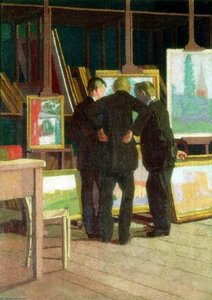 19, Fitzroy Street (Walter Richard Sickert's studio)1914 · Laing Art Gallery
15In the Cinema1913 · Ferens Art Gallery
16
 Backs of Houses, Chelsea1914
17
 Hammersmith Palais de Danse1920
18
 The Tea Party1919
19
 Court Scene1920
20
 Malcolm Drummond1918
21
 Chelsea Public Library1920 · The Stanley - Audrey Burton Gallery
22
 Wooded Pond1918
23
 Fields and Road, Penn Street1918
24
 Seated Nude1925 · New Walk Museum - Art Gallery
25
 Landscape with Trees1925
26
 The Stag Tavern1929
27
 Near Beaconsfield, Buckinghamshire
28
 Hammersmith Bridge
Četiri teme koje se najčešće ponavljaju u ovim originalima, svaka sa svojim vrhunskim primerom.
8 muzeja u kojima se nalazi najviše slika sa ove stranice.
| Muzej | Grad | Radovi umetnika Malcolm Drummond | Slike iz ovog spiska |
|---|---|---|---|
 Ashmolean Museum of Art and Archaeology |
Oksford | 1 | A Chelsea Street |
 Fenton House |
London | 1 | The Garden |
 National Trust |
London | 1 | The Garden |
 Royal Albert Memorial Museum |
Exeter | 1 | The Park Bench |
 Arts Council Collection |
London | 1 | Brompton Oratory |
 Laing Art Gallery |
Njukl na Tajnu | 1 | 19, Fitzroy Street (Walter Richard Sickert's studio) |
 Ferens Art Gallery |
Hull | 1 | In the Cinema |
 The Stanley - Audrey Burton Gallery |
Leeds | 1 | Chelsea Public Library |
Izaberite deceniju da biste videli original koji je definiše.

A Chelsea Street, Ashmolean Museum of Art and Archaeology, Oksford. Slede The Garden (1909) i Foreshortened Male Nude (1909).
A Chelsea Street, The Garden, Foreshortened Male Nude, Boyne Hill Vicarage, Maidenhead, The Garden, In the Park (St James' Park), Charles Ginner (1878–1952), The Park Bench, Girl Dressing i Queen Anne's Mansions. Gornji rang pokazuje godinu i muzej za svako od njih.
Naš katalog sadrži 28 dela umetnika Malcolm Drummond, datiranih od 1909 do 1929.
Većinom u Ashmolean Museum of Art and Archaeology (Oksford), Fenton House (London) i National Trust (London). Tabela muzeja iznad sadrži njih sve.
U 1910s: 16 od 28 dela na ovoj stranici nastalo je tada, od čega je Boyne Hill Vicarage, Maidenhead.
Na ovoj stranici, najstarije delo je iz The Garden (1909), a najnovije iz The Stag Tavern (1929).
Nude figure (2), Urban interior (2) i Rural landscape (2), kroz svih 28 dela na ovoj stranici.
Post-impressionism, sudeći po originalima na ovoj stranici.
Da, kao reprodukcija: original ostaje u svom muzeju, ali svaku sliku sa ove stranice može se ručno naslikati za vas, po vašoj narudžbi, pojedinačno, direktno sa stranice te slike.
Malcolm Cyril Drummond (1880-1945) was more than just a painter; he was a keen observer, an astute chronicler of his time, and a pivotal figure in the development of British modernism. Born into a family steeped in Scottish history – his father a clergyman with strong Highland roots – Drummond’s artistic journey began far from the rolling hills of his ancestry, leading him to the vibrant, often gritty, streets of London. His work, characterized by its intimate interiors, evocative cityscapes, and a subtle yet powerful emotional resonance, firmly establishes him as a key member of both the Camden Town Group and the London Group, movements that profoundly shaped the course of 20th-century British art.
Drummond’s early life provided a unique foundation for his artistic sensibilities. Educated at the Oratory School in Birmingham and Christ Church, Oxford, he initially pursued a path in history before finding his true calling in art. His studies at the Slade School of Art and later under Walter Sickert at the Westminster School of Art exposed him to the burgeoning currents of post-impressionism and the innovative techniques championed by Sickert himself – a loose brushstroke, an emphasis on capturing fleeting moments, and a willingness to depict the darker aspects of urban life. This influence is immediately apparent in his early works, particularly those depicting scenes from Camden Town, a bohemian enclave known for its artistic community and vibrant nightlife.
Drummond’s association with the Camden Town Group (1911-1913) proved to be a formative experience. This collective of artists – including Spencer Gore, Harold Gillman, and Walter Sickert – sought to break away from academic traditions and explore new ways of representing the world around them. The group met weekly, sharing their work and offering critical feedback in a spirit of collaboration and mutual encouragement. The tensions within the group, particularly surrounding Sickert’s relationships, ultimately led to its dissolution, but it served as a crucial incubator for artistic experimentation and innovation. Drummond's contribution was significant; he brought a meticulous eye for detail and a sensitivity to light and shadow that elevated the group’s overall aesthetic.
The Group’s focus on contemporary subjects – urban life, working-class communities, and the changing landscape of London – aligned perfectly with Drummond’s artistic interests. He wasn't interested in grand historical narratives or idealized landscapes; instead, he sought to capture the essence of everyday experience, often focusing on the overlooked corners and hidden spaces of the city. His paintings of interiors—densely packed rooms filled with furniture, figures, and a palpable sense of atmosphere—are particularly compelling, offering glimpses into the lives of ordinary Londoners.
Walter Sickert was undoubtedly Drummond's most significant artistic influence. Drummond’s time studying under Sickert at the Westminster School of Art allowed him to absorb the master’s distinctive style – a blend of realism, impressionism, and a fascination with the darker side of human nature. However, Drummond didn’t simply imitate Sickert; he developed his own unique voice, incorporating elements of post-impressionism, particularly the use of color and brushwork, while retaining a distinctly British sensibility. The Fitzroy Street Group, formed in 1907, further solidified this connection, providing a space for artists to experiment and challenge conventional artistic norms.
Following the dissolution of the Camden Town Group, Drummond joined the London Group (1914-1932), continuing to explore urban themes and experimenting with new techniques. During this period, he produced some of his most memorable works, including depictions of the Hammersmith Palais de Danse and the London Law Courts – scenes that capture the energy and dynamism of early 20th-century London. His later work reflects a growing interest in abstraction and a willingness to embrace bolder colors and more expressive brushstrokes.
Drummond’s oeuvre is characterized by a remarkable range of subjects and styles. His paintings of interiors—such as “Backs of Houses, Chelsea” (1914)—are particularly notable for their atmospheric quality and psychological depth. The use of light and shadow to create mood and atmosphere is masterful, while the figures depicted are often rendered with a quiet dignity and vulnerability. Works like "Seated Nude" demonstrate his ability to capture the intimacy and sensuality of the human form. “Near Beaconsfield, Buckinghamshire” showcases his talent for capturing the beauty of the English countryside.
Despite facing significant personal challenges in later life – including the loss of his sight – Drummond continued to paint until his death in 1945. His work remains a valuable contribution to British art history, offering a unique and insightful perspective on the social and cultural landscape of London at the turn of the century. His legacy endures through his evocative paintings, which continue to resonate with viewers today, reminding us of the power of art to capture the soul of a city and the complexities of human experience.
