


1


Ažurirano: октобар 2026 · rangirano prema našem koeficijentu popularnosti (pretrage, posete i porudžbine za svako delo) · 147 dela Квентин Масејс u našem katalogu
Ukratko
Od svih originala koje je Квентин Масејс ostavio, najpoznatiji je An Old Woman ('The Ugly Duchess') (1513). Odmah za njima slede The Moneylender and his Wife (1514) i Portrait of Erasmus of Rotterdam (1517). Naš katalog sadrži 147 dela umetnika Квентин Масејс; galerija je čuvala 100 dela koja svet najviše admira, od kojih je svako prikazano sa svojim datumom, muzejom i pričom.
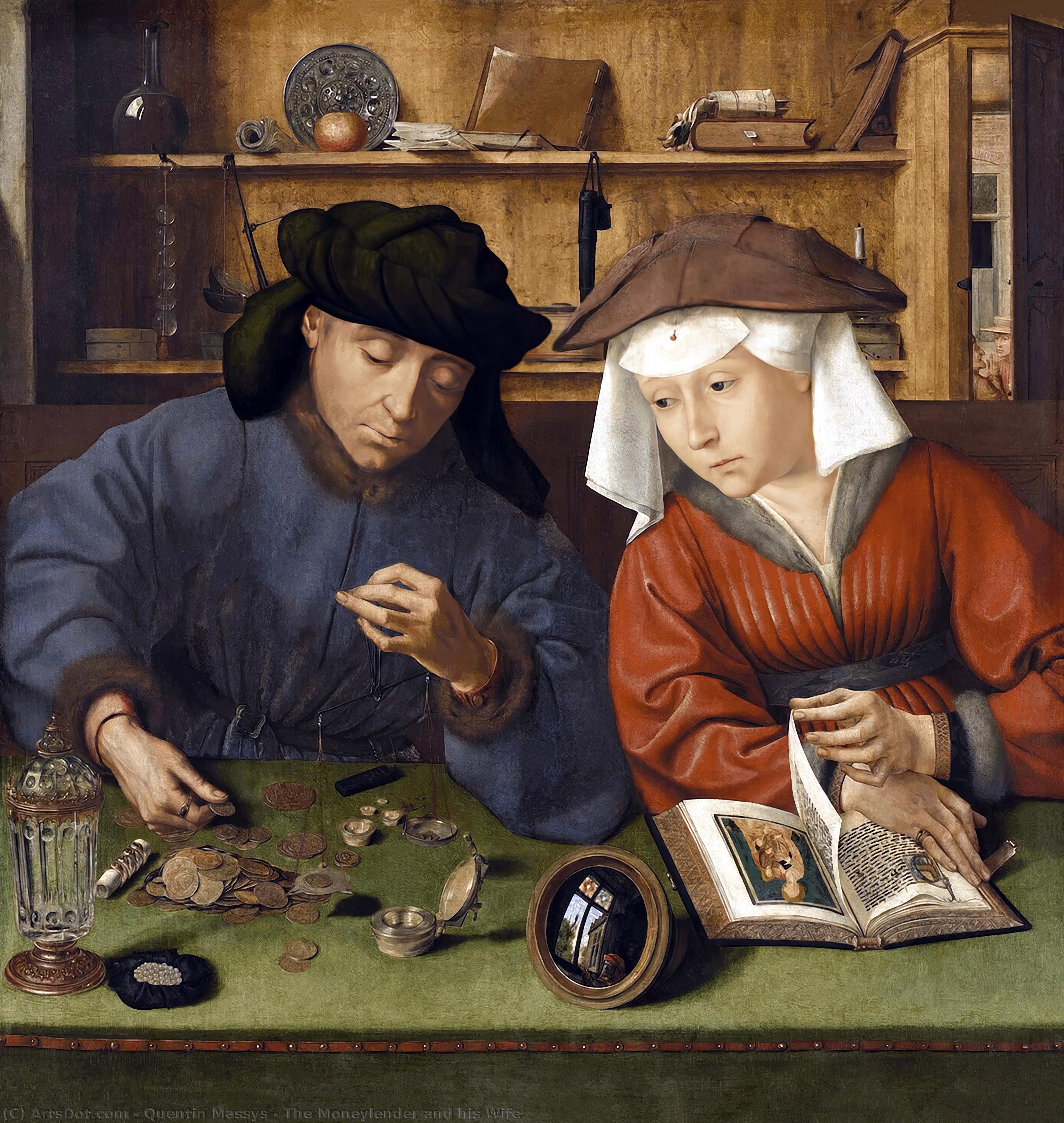
In the quiet intimacy of Quentin Massys’s 1514 masterpiece, The Moneylender and his Wife, we are invited to step across the threshold of time and into a world of profound domesticity and silent narrative. This oil on panel work, currently preserved in the hallowed halls of the Musée du Sobornik in the Louvre, serves as a breathtaking exemplar of the Antwerp School’s mastery. At first glance, the scene presents a…

To stand before this portrait is to step directly into the vibrant intellectual currents of the early sixteenth century. Quentin Massys has captured not merely a likeness, but an entire state of being—the profound concentration of a Renaissance mind at work. The subject, Erasmus of Rotterdam, radiates the quiet authority of scholarship. Dressed in the somber black attire typical of learned men of his era, he is seated amidst the…

Quentin Massys’s *The Moneylender and His Wife*, painted in 1514, stands as a pivotal work within the burgeoning Antwerp School—a movement that decisively reshaped Northern European painting during the High Renaissance. More than just a portrait of a wealthy merchant family, it embodies a complex interplay of observation, satire, and humanist ideals, reflecting the anxieties and aspirations of its time.

In the quiet, hallowed atmosphere of the Staatliche Museen Berlin, there exists a window into the spiritual heart of the sixteenth century. Quentin Massys’ “The Virgin Enthroned,” completed around 1525, is far more than a mere religious portrait; it is a profound meditation on grace and the intersection of the earthly and the divine. As a cornerstone of the Antwerp School, this masterpiece captures a pivotal moment in art history…

The portrait presents a frontal, bust-length view of Christ, positioned centrally against a dark, undifferentiated background. The subject's face is illuminated by a soft, diffused light that defines the contours of the nose, the jawline, and the orbital sockets. A golden halo, composed of fine, radiating lines, emanates from behind the head, creating a sharp contrast with the deep tones of the backdrop. The hair is rendered in long, wavy…

The painting is a portrait of an elderly woman, depicted from just above the waist up. She is presented with striking and exaggerated facial features, including a large head, a prominent nose with nostrils that flare upward, and a face covered in deep wrinkles and pocked textures. Her neck appears long and thin, and she possesses a prominent wart on her right cheek. The subject wears a substantial, elaborately embroidered…

Step closer to the panel and observe the sheer honesty of the skin. There is no attempt here to soften the features or hide the ravages of time. We see a face marked by deep wrinkles, pocked textures, and a prominent wart on the right cheek. The nose is short, with nostrils that flare upward, while the lips remain thin and pinched. It is a heavy, visceral depiction of humanity.…

To gaze upon this exquisite detail from Quentin Massys’s 1514 masterpiece, The Moneylender and His Wife, is to be invited across the threshold of a meticulously preserved moment in time. It is not merely a fragment of paint on panel; it is a concentrated jewel box of Northern Renaissance life, rich with unspoken narratives and dazzling technical mastery. The scene, captured from the legendary work housed at the Musée du…

To gaze upon this detail from Quentin Massys's The Moneylender and his Wife is to be invited across the threshold of a meticulously preserved moment in time. It is not merely a fragment of paint on panel; it is a concentrated jewel box of Northern Renaissance life, rich with unspoken narratives and dazzling technical mastery. The scene, captured from the masterpiece housed in the Musée du Louvre, draws the eye…
 The Adoration of the Magi1526 · Metropoliten музеј у Њујорку
12
 St Anne Altarpiece (detail)1507 · Musées Royaux des Beaux-Arts
13
 St Anne Altarpiece (left wing)1507 · Musées Royaux des Beaux-Arts
14
 The Moneylender and his Wife (detail)1514 · Luvr
15
 St Anne Altarpiece1507 · Musées Royaux des Beaux-Arts
16
 St Anne Altarpiece (central panel)1507 · Musées Royaux des Beaux-Arts
17
 Diptych - Christ and the Virgin
18
 Saint Mary Magdalene1515 · Philadelphia Museum of Art
19
 Saint John the Baptist1511 · Kraljevski muzej lepih umetnosti u Antverpenu
20
 Christ1529 · Metropoliten музеј у Њујорку
21
 The Deathbed of Saint Anne1509 · Kraljevski muzeji fine umetnosti Belgije
22
 Saint Mary of Egypt1515 · Philadelphia Museum of Art
23
 Jacob Obrecht1496 · Kimbell Art Museum
24
 A Bagpiper1513 · Yale University Art Gallery
25
 Christ the Saviour1529 · Музеј Прадо
26
 Madonna and Child1530 · Mauritshuis
27
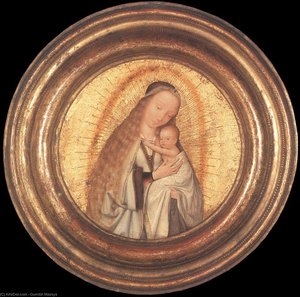 Virgin with the ChildRockox House
28
 Mary with Child (Copy after a lost original)1512 · Bavarske državne slikopisne kolekcije
29
 The Refusal of the Offering of Joachim1509 · Kraljevski muzeji fine umetnosti Belgije
30
 Jesus Among the Doctors1509 · Nacionalni muzej stare umetnosti
31
 Portrait of a man1517 · Staatliche Kunsthalle Karlsruhe
32
 Saint John and the Women at the Tomb of Christ1509 · Nacionalni muzej stare umetnosti
33
 Virgin and Child1520 · Museum Boijmans Van Beuningen
34
 Madonna and Child1490 · Narodni muzej u Varšavi
35
 Portrait of Pieter Gillis1517 · Galleria Nazional d Art Antica
36
 Lamentation of Christ1501 · Narodni muzej u Varšavi
37
 Saint Jerome1512 · Philadelphia Museum of Art
38
 The Virgin in prayer1529 · Музеј Прадо
39
 Saint John1511 · Kraljevski muzej lepih umetnosti u Antverpenu
40
 Head of a Mourning Woman1500 · Gemäldegalerie
41
 Head of a Mourning Woman1500 · Gemäldegalerie
42
 Man of Sorrows1500 · Bavarske državne slikopisne kolekcije
43
 Virgin and Child Enthroned1490 · Kunsthandel P. de Boer
44
 Salome is given the head of John the Baptist1511 · Kraljevski muzej lepih umetnosti u Antverpenu
45
 The Seven Sorrows of the Virgin1500 · Kraljevski muzeji fine umetnosti Belgije
46
 Rem Altar: Saint Roch with the Angel (Reverse: Saint Anne Selbdritt)1518 · Bavarske državne slikopisne kolekcije
47
 Rem Altarpiece: Mary with Child1518 · Bavarske državne slikopisne kolekcije
48
 Rem Altar: Holy Trinity ("Throne of Grace")1518 · Bavarske državne slikopisne kolekcije
49
 Rem Altarpiece: Martyrdom of Saint Sebastian (Reverse: Saint Luke)1518 · Bavarske državne slikopisne kolekcije
50
 Two Old Men in Prayer1515
51
 Presentation at the Temple1509 · Nacionalni muzej stare umetnosti
52
 The Lamentation1510 · Nacionalna galerija Kanade
53
 Salvator Mundi (Christ Blessing)1512 · Szépművészeti Múzeum
54
 Dead Christ1530 · Yale University Art Gallery
55
 The Rest on the Flight into Egypt1513 · Worcester Art Museum
56
 Desiderius Erasmus (1466-1536)1517 · Royal Collection
57
 The Virgin and Child1512 · Museum of Fine Arts Ghent (MSK)
58
 Christ Salvator Mundi and Mary at Prayer1505 · Kraljevski muzej lepih umetnosti u Antverpenu
59
 Portrait of an old woman1510
60
 Portrait of Petrus Aegidius (1486-1533)1514
61
 The Lamentation1512 · Katedrala Gospe od Onze-Lieve Vrouwe
62
 Portrait of a man1508 · Kunsthandel P. de Boer
63
 St Anne Altarpiece1507 · Kraljevski muzeji fine umetnosti Belgije
64
 The purchase agreement1510 · Gemäldegalerie
65
 Madonna and Child with the lamb.1513 · The National Museum in Poznań
66
 Portrait of a Humanist1512 · Musée des Beaux-Arts de Strasbourg
67
 Saint Elizabeth of Portugal1524 · Gemäldegalerie
68
 Portrait of Don Manuel de Menens1530
69
 Saint Jerome in his cell1524 · Kunsthistorisches Museum
70
 Christ Driving the Money-changers from the Temple1520 · Kraljevski muzej lepih umetnosti u Antverpenu
71
 Portrait of een geestelijke (twijfelachtig geïdentificeerd als Jean Carondelet)1525 · Barber Institute of Fine Arts
72
 An Allegory of Folly1528
73
 The Two Tax Collectors1530 · Gemäldegalerie
74
 Mourning Woman from a Lamentation1520 · Gemäldegalerie
75
 Portrait of a man with a letter in his hand1520 · Gemäldegalerie
76
 Virgin and Child with Saints Elizabeth and John the Baptist1522
77
 Portrait of An Old Man1524
78
 Crucifixion1520 · Nacionalna galerija Kanade
79
 Christ carrying the cross1505 · Nacionalni muzej stare umetnosti
80
 Calvary1505 · Nacionalni muzej stare umetnosti
81
 Madonna and Child1520 · Detroit Institute of Arts
82
 Portrait of a Canon1510 · Liechtenstein Museum
83
 Man with Glasses1523 · Städel Museum
84
 Anne and Joachim Present Their Goods to the Temple1509 · Kraljevski muzeji fine umetnosti Belgije
85
 Mary Magdalene1505 · Detroit Institute of Arts
86
 John the Baptist and St Agnes1520 · Валраф-Рихарц Музеј
87
 Ecce Homo (detail)1526 · Dovževa palata
88
 The Crucifixion1515 · National Gallery
89
 Ecce Homo (detail)1526 · Dovževa palata
90
 Ecce Homo1526 · Dovževa palata
91
 Virgin and Child1529 · Mauritshuis
92
 Workshop of )1500
93
 Our Lady of Sorrows1500 · Nacionalni muzej stare umetnosti
94
 St John Altarpiece (detail)1507 · Koninklijk Museum voor Schone Kunsten
95
 St John Altarpiece (right wing)1507 · Koninklijk Museum voor Schone Kunsten
96
 St John Altarpiece (left wing)1507 · Koninklijk Museum voor Schone Kunsten
97
 Peter Gillis1517
98
 Portrait of Cornelia Sandrin1514 · Oldenburg State Museum for Art and Cultural History
99
 Christ on the Cross with Donors (detail)1520 · Museum Mayer van den Bergh
100
 Portrait of a Woman1520 · Metropoliten музеј у Њујорку
Četiri teme koje se najčešće ponavljaju u ovim originalima, svaka sa svojim vrhunskim primerom.
8 muzeja u kojima se nalazi najviše slika sa ove stranice.
| Muzej | Grad | Radovi umetnika Квентин Масејс | Slike iz ovog spiska |
|---|---|---|---|
 Gemäldegalerie |
Berlin | 8 | Head of a Mourning Woman, Head of a Mourning Woman, The purchase agreement |
 Kraljevski muzej lepih umetnosti u Antverpenu |
Antverpen | 7 | Christ as Salvator Mundi, Saint John the Baptist, Saint John |
 Bavarske državne slikopisne kolekcije |
Minhen | 7 | Mary with Child (Copy after a lost original), Man of Sorrows, Rem Altar: Saint Roch with the Angel (Reverse: Saint Anne Selbdritt) |
 Nacionalni muzej stare umetnosti |
Lisabon | 6 | Jesus Among the Doctors, Saint John and the Women at the Tomb of Christ, Presentation at the Temple |
 Kraljevski muzeji fine umetnosti Belgije |
Brisel | 6 | The Deathbed of Saint Anne, The Refusal of the Offering of Joachim, The Seven Sorrows of the Virgin |
 Musées Royaux des Beaux-Arts |
Brisel | 6 | St Anne Altarpiece (detail), St Anne Altarpiece (left wing), St Anne Altarpiece |
 Luvr |
Pariz | 5 | The Moneylender and his Wife, The Moneylender and his Wife (detail), The Moneylender and his Wife (detail) |
 Koninklijk Museum voor Schone Kunsten |
Antwerpen | 7 | St John Altarpiece (detail), St John Altarpiece (right wing), St John Altarpiece (left wing) |
Izaberite deceniju da biste videli original koji je definiše.

In this 1496 portrait, we find ourselves in the presence of Jacob Obrecht, a man whose life was defined by the precision of musical notation and the solemnity of the liturgy. The sitter is captured in a three-quarter pose, his hands clasped in a gesture of quiet contemplation or perhaps prayer. There is a stillness here that feels intentional, as if the subject has paused mid-thought to acknowledge the viewer.…
The portrait presents a frontal, bust-length view of Christ, positioned centrally against a dark, undifferentiated background. The subject's face is illuminated by a soft, diffused light that defines the contours of the nose, the jawline, and the orbital sockets. A golden halo, composed of fine, radiating lines, emanates from behind the head, creating a sharp contrast with the deep tones of the backdrop. The hair is rendered in long, wavy…
In the quiet, hallowed atmosphere of the Staatliche Museen Berlin, there exists a window into the spiritual heart of the sixteenth century. Quentin Massys’ “The Virgin Enthroned,” completed around 1525, is far more than a mere religious portrait; it is a profound meditation on grace and the intersection of the earthly and the divine. As a cornerstone of the Antwerp School, this masterpiece captures a pivotal moment in art history…

To gaze upon this depiction of the Madonna and Child is to step directly into the hushed reverence of the High Renaissance. It is more than just a portrait; it is a profound meditation on maternal love, divine connection, and enduring devotion. The composition centers with breathtaking tenderness on the Virgin Mary cradling the infant Jesus. Her posture speaks of serene acceptance, while the gentle interaction—the kiss upon her cheek…
An Old Woman ('The Ugly Duchess') (1513). Slede The Moneylender and his Wife (1514) i Portrait of Erasmus of Rotterdam (1517).
47 godina: An Old Woman ('The Ugly Duchess') datira iz 1513, a Квентин Масејс je rođen/a 1466.
An Old Woman ('The Ugly Duchess'), The Moneylender and his Wife, Portrait of Erasmus of Rotterdam, The Moneylender and his Wife, The Virgin Enthroned, Christ as Salvator Mundi, The Ugly Duchess, A Grotesque Old Woman (also known as The Ugly Duchess), The Moneylender and his Wife (detail) i The Moneylender and his Wife (detail). Gornji rang pokazuje godinu i muzej za svako od njih.
Naš katalog sadrži 147 dela umetnika Квентин Масејс, datiranih od 1490 do 1530.
Većinom u Gemäldegalerie (Berlin), Kraljevski muzej lepih umetnosti u Antverpenu (Antverpen) i Bavarske državne slikopisne kolekcije (Minhen). Tabela muzeja iznad sadrži njih sve.
U 1510s: 38 od 100 dela na ovoj stranici nastalo je tada, od čega je An Old Woman ('The Ugly Duchess').
Na ovoj stranici, najstarije delo je iz Madonna and Child (1490), a najnovije iz Madonna and Child (1530).
Man (33), Woman (31) i Child (15), kroz svih 100 dela na ovoj stranici.
Oil On Panel, za 56 od 100 dela na ovoj stranici.
Northern renaissance, sudeći po originalima na ovoj stranici.
Head of a Mourning Woman, Head of a Mourning Woman i The purchase agreement: Gemäldegalerie, Berlin čuva 7 dela sa ove stranice.
Da, kao reprodukcija: original ostaje u svom muzeju, ali svaku sliku sa ove stranice može se ručno naslikati za vas, po vašoj narudžbi, pojedinačno, direktno sa stranice te slike.
U živopisnom, uzrastajućem pejzažu šesnaestovečnih Niskih Zemalja, malo je imena koja odjekuju sa toliko temeljnom važžnošću kao Kventin Masis. Često proglašen pionirem Antverpenske škole, Masis je bio slikar koji je premostio jaz između pedantne, duhovne posvećenosti rane nederlandske tradicije i bujajućeg humanizma Severne renesanse. Rođen oko 1466. godine uLeuvenu, u Belgiji, njegov rani život ostaje tkanina isprepletana legendama i istorijskim fragmentima. U svetu istorije umetnosti često se šapuće da je pre nego što je ikada dotakao finu četkicu, bio obučen za zanat kovača gvožđa—detalj koji daje duboku, taktilnu težinu njegovom kasnijem majstorstvu u prikazivan lica teksture i materijala. Ovo iskustvo u obradi metala verovatno je u njemu usadilo jedinstveno poštovanje prema fizičkom svetu, omogućavajući mu da prikaže sjaj svile, hladni odsjaj novčića i izbruđenu ljudsku kožu sa neprevaziđenom preciznošću.
Dok je oko 1490. godine prešao iz akademske atmosfere Leuvena u užurbani trgovački centar Antverpen, Masis je počeo da utka sopstvenu, posebnu nit u tkaninu flamanske umetnosti. Njegovo rano obrazovanje, potencijalno pod vođstvom Dirka Boutsа, povezalo ga je sa lozom majstora kao što su Hans Memling i Rogier van der Weyden. Od ovih prethodnika nasledio je posvećenost verisimilitudu—traganju za istinom u prikazu. Ipak, Masis je bio daleko od običnog imitatora. Dok je zadržao izvrsne detalje karakteristične za svoje pretodnike, on je svoja dela prožela novom, bujomnom vitalnošću i spremnošću da istražuje složenost ljudskog stanja kroz religioznu svečanost, ali i kroz oštre društvene komentare.
Masisova briljantnost leži u njegovoj izvanrednoj sposobnosti da navigira između dva naizgled nepovezana sveta: svetog i svetovnog. S jedne strane, njegove religiozne kompozicije služe kao duboke meditacije o veri. U delima kao što je Hrist na krstu sa darovnicima, on beleži sirovu, emocionalnu težinu raspeća, koristeći senzibilitet visoke renesanse kako bi predstavio scenu koja je istovremeno duboko dirljiva i tehnički besprekorna. Njegova sposobnost da prikaže božansko kroz prizmu ljudske patnje omogućila je njegovim religioznim motivima da odjeknu sa visceralnom intimnošću, čineći duhovno opipljivim za posmatrača.
Nasuprot tome, Masis je bio majstor satiričnog žanra, koristeći svoju četkicu kao ogledalo koje prati promenljive društvene moralne vrednosti svog doba. Posedovao je oštro oko za ljudske slabosti, često stvarajući scene koje su spajale realizam sa suptilnim, podrugljivim duhom. Ova dualnost je možda najočiglednija u njegovom pristupu portretu i žanrovskom slikarstvu, gde je mogao da pređe sa spokojne lepote Device i deteta na složenije, moralno slojevite prikaze savremenog života. Njegov rad je često istraživao teme pohlepe, taštine i tenzije između materijalnog bogatstva i duhovne čistote, čineći ga pretećom velikim žanrovskim slikarima koji će uslediti u narednim vekovima.
Istorijski značaj Kventina Masisa ne može se preuveličati; on je bio katalizator umetničke revolucije u Antverpenu. Uvodeći nove motive i tehnike, a ostajući usidren u bogatim tradicijama svoje domovine, pružio je nacrt za školu slikarstva koja će dominirati Flandrijom tokom čitavog šesnaestog veka. Njegov uticaj se može pratiti kroz evoluciju evropske umetnosti Severa, jer je otvorio put ekspresivnijem, opservacionom stilu koji je prihvatio složenosti modernizujućeg se sveta.
Danas Masisa ne sećamo samo kao zanatliju, već kao pripovedača koji je uhvatio dušu jedne ere. Njegovo nasleđe je sačuvano u trajnoj snazi njegovih slika:


