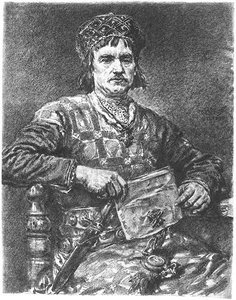
Portret Јан Матејко

100 najpoznatijih slika umetnika Јан Матејко, izbor iz galerije

Ažurirano: октобар 2026 · rangirano prema našem koeficijentu popularnosti (pretrage, posete i porudžbine za svako delo) · 256 dela Јан Матејко u našem katalogu

Ukratko

Od svih originala koje je Јан Матејко ostavio, najpoznatiji je Stańczyk during a ball at the court of Queen Bona in the face of the loss of Smolensk (1862), koji se nalazi u kolekciji Narodni muzej u Varšavi, Varšava. Odmah za njima slede Битка код Грюнвалда [Таненберг] i The Fall of Poland (1866). Naš katalog sadrži 256 dela umetnika Јан Матејко; galerija je čuvala 100 dela koja svet najviše admira, od kojih je svako prikazano sa svojim datumom, muzejom i pričom.

1838 – 1893, Слободни Град Краков Romantic nationalism Najviše dela: Narodni muzej u Varšavi

Top 10 slika umetnika Јан Матејко: izbor galerije

1
Stańczyk during a ball at the court of Queen Bona in the face of the loss of Smolensk (1862) čiji je Јан Матејко

Stańczyk during a ball at the court of Queen Bona in the face of the loss of Smolensk

1862 · Oil On Canvas · Narodni muzej u Varšavi, Varšava

Jan Matejko’s “Stańczyk” stands as one of Poland’s most enduring visual emblems, encapsulating the spirit of a bygone era and resonating with themes of resilience and melancholy. Completed in 1862, this monumental oil painting depicts Stańczyk – the court jester – during a ball hosted by Queen Bona Sforza at Kraków Castle, a pivotal moment representing Poland’s waning influence amidst the encroaching Habsburg dominion.

2
Битка код Грюнвалда [Таненберг] čiji je Јан Матејко

Битка код Грюнвалда [Таненберг]

Ulje na platnu · Narodni muzej u Varšavi, Varšava

U veličanstvenom tapisu evropske istorije slikarstva, malo je platna koje dominira prostorom sa toliko snažne autoritativnosti kao što je Jan Matejko i njegovo delo Битка код Грюнвалда [Таненберг]. Ovo monumentalno remek-delo, impresivnih dimenzija od 987 puta 426 centimetara, mnogo je više od običnog prikaza srednjovekovnog ratovanja; to je duboki psihološki pejzaž nacionalne otpornosti. Naslikano u kasnom 19. veku, delo beleži ključni trenutak sukoba iz 1410. godine između savezničkih snaga Kraljevstva…

3
The Fall of Poland (1866) čiji je Јан Матејко

The Fall of Poland

1866 · Oil On Canvas · Kraljevski zamak u Varšavi, Varšava

The oil on canvas depicts a crowded, ornate room, likely a royal courtroom, where a significant historical event unfolds. The composition is dense with figures dressed in 18th-century attire, including men in coats and ties. In the lower right, a man is positioned in a dramatic, physical protest, his body language contrasting with the more composed or complicit figures surrounding him. The room is characterized by heavy red curtains and…

5
The Prussian Homage (1882) čiji je Јан Матејко

The Prussian Homage

1882 · Oil On Canvas · Nacionalni muzej u Krakovu, Krakov

The Prussian Homage is an oil on canvas painting by the artist Jan Matejko. The work was completed in 1882. This large-scale composition depicts the Prussian Homage, a significant political event from the Renaissance in Poland. The scene captures the moment when Albert, Duke in Prussia, paid tribute and swore allegiance to King Sigismund I the Old. This historical occurrence took place on 10 April 1525 within the market square…

6
Copernicus in the tower at Frombork, or Conversations with God (1872) čiji je Јан Матејко

Copernicus in the tower at Frombork, or Conversations with God

1872 · Oil On Canvas · Јагелонски универзитет, Krakov

Jan Matejko's "Copernicus in the Tower at Frombork, or Conversations with God" isn’t merely a painting; it’s a potent distillation of intellectual fervor and spiritual contemplation. Completed in 1873, this monumental oil on canvas transports us to the heart of Renaissance Poland, capturing a pivotal moment not just in astronomical history but also in the nation's burgeoning sense of self-awareness. The scene unfolds within the austere yet majestic confines of…

7
Skarga`s Sermon (1864) čiji je Јан Матејко

Skarga`s Sermon

1864 · Oil On Canvas · Narodni muzej u Varšavi, Varšava

In the grand tapestry of Polish Romanticism, few works command the room with as much gravity and historical weight as Jan Matejko’s masterpiece, Skarga's Sermon. Created in 1864, this monumental oil on canvas serves as a window into a pivotal moment of spiritual and political tension. The scene captures a gathering of souls within a dimly lit room, where the air seems thick with the weight of impending change. At…

8
Баторио у Пскову (1872) čiji je Јан Матејко

Баторио у Пскову

1872 · Ulje na platnu · Nicolaus Copernicus Museum, Frombork

Bathory at Pskov: Svedočanstvo Romantizma i Istorijske Moći Jan Matejko, poljski slikar poznat po svojim monumentalnim istorijskim kompozicijama, stvorio je delo "Bathory at Pskov" 1872. godine, remek-delo koje nas vodi u srce Livonskog rata i prikazuje ključni diplomatski trenutak između Poljske i Rusije. Ova slika, dimenzija 322 x 512 cm, nije samo vizuelno impresivna već i duboko ukorenjena u nacionalističkom sentimentu tog vremena, slaveći poljsko nasleđe i otpornost. Pred nama…

9
Битка код Грунвалда (детаљ) (10) (1878) čiji je Јан Матејко

Битка код Грунвалда (детаљ) (10)

1878 · Ulje na platnu · Narodni muzej u Varšavi, Varšava

Bitka kod Grunvalda (detalj) (10): Svedočanstvo o epopeji i nacionalnom ponosu Jan Matejkovo "Bitka kod Grunvalda (detalj) (10)" nije samo slika, već moćno svedočenje jednog od najznačajnijih trenutaka u poljskoj i litvanskoj istoriji. Nastala 1878. godine, ova remek-dela hvata intenzitet i haos bitke koja se vodila 15. jula 1410. godine, kada su udružene snage Poljske i Litvanije odlučno porazile Teutonski orden. Matejko je svojom veštinom oživeo istorijske događaje, dajući im…

10
Stańczyk (1862) čiji je Јан Матејко

Stańczyk

1862 · Oil On Canvas · Muzej narodne umetnosti u Varšavi, Varšava

In the quiet, heavy atmosphere of Jan Matejko’s 1862 masterpiece, Stańczyk, one does not merely encounter a portrait, but a profound psychological landscape. The painting presents us with the legendary court jester, not in the midst of a comedic performance or a moment of levity, but captured in a state of deep, melancholic introspection. Seated alone amidst the opulence of a grand interior, his hands are tightly clasped, and his…

Izbor umetnika Јан Матејко se nastavlja, od 11 do 100

11Battle of Grunwald, Jan Zizka(detail) čiji je Јан МатејкоBattle of Grunwald, Jan Zizka(detail) 12The Hanging of the Sigismund bell at the Cathedral Tower in 1521 in Kraków (1874) čiji je Јан МатејкоThe Hanging of the Sigismund bell at the Cathedral Tower in 1521 in Kraków1874 · Narodni muzej u Varšavi 13Portrait of Piotr Moszyński (1874) čiji je Јан МатејкоPortrait of Piotr Moszyński1874 · Nacionalni muzej u Krakovu 14Portrait of Fryderyk Czartoryski čiji je Јан МатејкоPortrait of Fryderyk CzartoryskiErmitaž 15Portrait of Tadeusz Oksza-Orzechowski. (1873) čiji je Јан МатејкоPortrait of Tadeusz Oksza-Orzechowski.1873 · Narodni muzej u Varšavi 16Portrait of Potocki and Poninski (1850) čiji je Јан МатејкоPortrait of Potocki and Poninski1850 · Ermitaž 17Portrait of Franciszek Potocki (1850) čiji je Јан МатејкоPortrait of Franciszek Potocki1850 · Ermitaž 18Gamrat and Stanczyk (1878) čiji je Јан МатејкоGamrat and Stanczyk1878 19Bishop Lubrański establishes the Ecclesiastical Academy in Poznań, sketch (1886) čiji je Јан МатејкоBishop Lubrański establishes the Ecclesiastical Academy in Poznań, sketch1886 · Narodni muzej u Varšavi 20Portrait of Leonard Serafiński (1870) čiji je Јан МатејкоPortrait of Leonard Serafiński1870 · Nacionalni muzej u Krakovu 21Portrait of Mikołaj Zyblikiewicz (1887) čiji je Јан МатејкоPortrait of Mikołaj Zyblikiewicz1887 · Nacionalni muzej u Krakovu 22Nicolaus Copernicus. Sketch to the Painting "Astronomer Copernicus, or Conversation with God" (1871) čiji je Јан МатејкоNicolaus Copernicus. Sketch to the Painting "Astronomer Copernicus, or Conversation with God"1871 · Nacionalni muzej u Krakovu 23Semi-nude man (1859) čiji je Јан МатејкоSemi-nude man1859 · Narodni muzej u Varšavi 24Wladyslaw White in Dijon (1867) čiji je Јан МатејкоWladyslaw White in Dijon1867 25Portrait of Szymon Darowski (1858) čiji je Јан МатејкоPortrait of Szymon Darowski1858 · Nacionalni muzej u Krakovu 26Portrait of a Little Boy (1855) čiji je Јан МатејкоPortrait of a Little Boy1855 · Nacionalni muzej u Krakovu 27Battle of Grunwald (1878) čiji je Јан МатејкоBattle of Grunwald1878 28Christianization of Lithuania A D 1387 (1889) čiji je Јан МатејкоChristianization of Lithuania A D 13871889 · Narodni muzej u Varšavi 29Sketch for the painting “Wernyhora” (1875) čiji je Јан МатејкоSketch for the painting “Wernyhora”1875 · Narodni muzej u Varšavi 30Sketch for “Stańczyk” (1861) čiji je Јан МатејкоSketch for “Stańczyk”1861 · Narodni muzej u Varšavi 31Sketch for “Skarga's Sermon” (1861) čiji je Јан МатејкоSketch for “Skarga's Sermon”1861 · Narodni muzej u Varšavi 32The Babin Republic, sketch (1870) čiji je Јан МатејкоThe Babin Republic, sketch1870 · Narodni muzej u Varšavi 33Alchemist Sendivogius and Sigismund III, sketch (1867) čiji je Јан МатејкоAlchemist Sendivogius and Sigismund III, sketch1867 · Narodni muzej u Varšavi 34Maćko Borkowic, sketch (1873) čiji je Јан МатејкоMaćko Borkowic, sketch1873 · Narodni muzej u Varšavi 35Portrait of Ludwika Groppler (1872) čiji je Јан МатејкоPortrait of Ludwika Groppler1872 · Narodni muzej u Varšavi 36Portrait of Maria Levittoux (1872) čiji je Јан МатејкоPortrait of Maria Levittoux1872 · Narodni muzej u Varšavi 37Portrait of Teodora Matejko née Giebułtowska in wedding dress. (1879) čiji je Јан МатејкоPortrait of Teodora Matejko née Giebułtowska in wedding dress.1879 · Narodni muzej u Varšavi 38Kościuszko at Racławice, sketch (1885) čiji je Јан МатејкоKościuszko at Racławice, sketch1885 · Narodni muzej u Varšavi 39Portrait study of a woman (1881) čiji je Јан МатејкоPortrait study of a woman1881 · Narodni muzej u Varšavi 40Jan Zamoyski at Byczyna, sketch (1884) čiji je Јан МатејкоJan Zamoyski at Byczyna, sketch1884 · Narodni muzej u Varšavi 41Karton do polichromii Kościoła Mariackiego - Popiersie diabła z rozwartą paszczą (1890) čiji je Јан МатејкоKarton do polichromii Kościoła Mariackiego - Popiersie diabła z rozwartą paszczą1890 · Nacionalni muzej u Krakovu 42Karton do polichromii Kościoła Mariackiego - Godło łuczników (1889) čiji je Јан МатејкоKarton do polichromii Kościoła Mariackiego - Godło łuczników1889 · Nacionalni muzej u Krakovu 43Karton do polichromii Kościoła Mariackiego - Główka aniołka (portret córki Heleny) (1889) čiji je Јан МатејкоKarton do polichromii Kościoła Mariackiego - Główka aniołka (portret córki Heleny)1889 · Nacionalni muzej u Krakovu 44Karton do polichromii Kościoła Mariackiego - Postać anioła grającego na flecie (1889) čiji je Јан МатејкоKarton do polichromii Kościoła Mariackiego - Postać anioła grającego na flecie1889 · Nacionalni muzej u Krakovu 45Carton for the polychrome from St Mary's Church - bust of an angel (1889) čiji je Јан МатејкоCarton for the polychrome from St Mary's Church - bust of an angel1889 · Nacionalni muzej u Krakovu 46Defeat at Legnica, from the series “History of Civilization in Poland” (1888) čiji je Јан МатејкоDefeat at Legnica, from the series “History of Civilization in Poland”1888 · Narodni muzej u Varšavi 47Influence of the university on the country, from the series “History of Civilization in Poland” (1888) čiji je Јан МатејкоInfluence of the university on the country, from the series “History of Civilization in Poland”1888 · Narodni muzej u Varšavi 48The Golden Age in Literature in the 16th c., from the series “History of Civilization in Poland” (1888) čiji je Јан МатејкоThe Golden Age in Literature in the 16th c., from the series “History of Civilization in Poland”1888 · Narodni muzej u Varšavi 49Sobieski Sending Message of Victory to the Pope čiji je Јан МатејкоSobieski Sending Message of Victory to the Pope 50Portrait of Henryk Krajewski (1892) čiji je Јан МатејкоPortrait of Henryk Krajewski1892 · Narodni muzej u Varšavi 51Jagiello with Witold čiji je Јан МатејкоJagiello with WitoldNarodni muzej u Varšavi 52Maćko Borkowic (1877) čiji je Јан МатејкоMaćko Borkowic1877 · Narodni muzej u Varšavi 53Study of horse’s head for “The Maid of Orléans” (1886) čiji je Јан МатејкоStudy of horse’s head for “The Maid of Orléans”1886 · Narodni muzej u Varšavi 54Study of a horse's head for “Battle of Grunwald” (1875) čiji je Јан МатејкоStudy of a horse's head for “Battle of Grunwald”1875 · Narodni muzej u Varšavi 55Sobieski sending Message of Victory to the Pope, after the Battle of Vienna čiji je Јан МатејкоSobieski sending Message of Victory to the Pope, after the Battle of ViennaВатикански музеји 56Jan Kochanowski over the dead body of his daughter (1862) čiji je Јан МатејкоJan Kochanowski over the dead body of his daughter1862 57Armor of Stefan Batory (1872) čiji je Јан МатејкоArmor of Stefan Batory1872 58The death of Leszek the White (1880) čiji je Јан МатејкоThe death of Leszek the White1880 59Portrait of Alfred Potocki (1879) čiji je Јан МатејкоPortrait of Alfred Potocki1879 · Nacionalni muzej u Krakovu 60Bohdan Khmelnytsky with Tugai Bey near Lviv (1885) čiji je Јан МатејкоBohdan Khmelnytsky with Tugai Bey near Lviv1885 61Sketch for the painting “Constitution of the 3 May” (1890) čiji je Јан МатејкоSketch for the painting “Constitution of the 3 May”1890 · Narodni muzej u Varšavi 62The Constitution of May (1889) čiji je Јан МатејкоThe Constitution of May1889 · Narodni muzej u Varšavi 63Coronation of the first king A.D. 1001 (1889) čiji je Јан МатејкоCoronation of the first king A.D. 10011889 64Coronation Scene čiji je Јан МатејкоCoronation Scene 65John II Casimir čiji je Јан МатејкоJohn II Casimir 66Brave in Kiev čiji je Јан МатејкоBrave in Kiev 67Richensa of Lotharingia čiji je Јан МатејкоRichensa of Lotharingia 68Jan Olbracht čiji je Јан МатејкоJan Olbracht 69Anna Jagiellon čiji je Јан МатејкоAnna Jagiellon 70Sigismund III Vasa čiji je Јан МатејкоSigismund III Vasa 71Mieszko III Stary čiji je Јан МатејкоMieszko III Stary 72Louis the Hungarian čiji je Јан МатејкоLouis the Hungarian 73Leszek I the White čiji je Јан МатејкоLeszek I the White 74Stanislaw Leszczynski čiji je Јан МатејкоStanislaw Leszczynski 75Matejko Jadwiga čiji je Јан МатејкоMatejko Jadwiga 76Boleslaw V the Chaste čiji je Јан МатејкоBoleslaw V the Chaste 77Augustus II the Strong čiji je Јан МатејкоAugustus II the Strong 78King Stefan Batory čiji je Јан МатејкоKing Stefan Batory 79Kazimierz III Wielki čiji je Јан МатејкоKazimierz III Wielki 80Boleslaw the Bold čiji je Јан МатејкоBoleslaw the Bold 81Augustus III čiji je Јан МатејкоAugustus III 82Orthodox Woloska čiji je Јан МатејкоOrthodox Woloska 83Boleslaus I čiji je Јан МатејкоBoleslaus I 84Dobrawa čiji je Јан МатејкоDobrawa 85Boleslaw III of Poland (Boleslaw the Wry mouthed) čiji je Јан МатејкоBoleslaw III of Poland (Boleslaw the Wry mouthed) 86Leszek the Black čiji je Јан МатејкоLeszek the Black 87Jan Sobieski, portraited in a parade scale armour čiji je Јан МатејкоJan Sobieski, portraited in a parade scale armour 88Wladyslaw Jagiello čiji je Јан МатејкоWladyslaw Jagiello 89Kazimierz II Sprawiedliwy čiji je Јан МатејкоKazimierz II Sprawiedliwy 90Konrad I of Masovia čiji je Јан МатејкоKonrad I of Masovia 91Stoup čiji je Јан МатејкоStoup 92Aleksander Jagiellonczyk čiji je Јан МатејкоAleksander Jagiellonczyk 93Krakow morgue čiji je Јан МатејкоKrakow morgue 94Sigismund I the Old čiji je Јан МатејкоSigismund I the Old 95Wladyslaw the Short čiji je Јан МатејкоWladyslaw the Short 96Wladyslaw of Varna čiji je Јан МатејкоWladyslaw of Varna 97Feast Wierzynek čiji je Јан МатејкоFeast Wierzynek 98Kazimierz Jagiellonczyk čiji je Јан МатејкоKazimierz Jagiellonczyk 99Sigismund II August čiji je Јан МатејкоSigismund II August 100Wladyslaw II the Exile čiji je Јан МатејкоWladyslaw II the Exile

Čuvena dela Јан Матејко po periodima

Motivi koji su privlačili pažnju Јан Матејко

Četiri teme koje se najčešće ponavljaju u ovim originalima, svaka sa svojim vrhunskim primerom.

Muzeji u kojima se čuvaju originalna dela umetnika Јан Матејко

8 muzeja u kojima se nalazi najviše slika sa ove stranice.

Muzej Grad Radovi umetnika Јан Матејко Slike iz ovog spiska
Narodni muzej u Varšavi, VaršavaNarodni muzej u Varšavi Varšava 58 Skarga`s Sermon, The Hanging of the Sigismund bell at the Cathedral Tower in 1521 in Kraków, Portrait of Tadeusz Oksza-Orzechowski.
Nacionalni muzej u Krakovu, KrakovNacionalni muzej u Krakovu Krakov 27 The Prussian Homage, Portrait of Piotr Moszyński, Portrait of Leonard Serafiński
Narodni muzej u Varšavi, VaršavaNarodni muzej u Varšavi Varšava 3 Stańczyk during a ball at the court of Queen Bona in the face of the loss of Smolensk, Битка код Грюнвалда [Таненберг], Битка код Грунвалда (детаљ) (10)
Ermitaž, Sankt PeterburgErmitaž Sankt Peterburg 3 Portrait of Fryderyk Czartoryski, Portrait of Potocki and Poninski, Portrait of Franciszek Potocki
Kraljevski zamak u Varšavi, VaršavaKraljevski zamak u Varšavi Varšava 2 The Fall of Poland, The Constitution of the 3rd May 1791
Јагелонски универзитет, KrakovЈагелонски универзитет Krakov 1 Copernicus in the tower at Frombork, or Conversations with God
Nicolaus Copernicus Museum, FromborkNicolaus Copernicus Museum Frombork 1 Баторио у Пскову
Muzej narodne umetnosti u Varšavi, VaršavaMuzej narodne umetnosti u Varšavi Varšava 1 Stańczyk

Јан Матејко deceniju po deceniju: original koji definiše svaku od njih

Radovi po decenijama

Izaberite deceniju da biste videli original koji je definiše.

Pitanja kolekcionara o slikama umetnika Јан Матејко

Po kojem delu je Јан Матејко najpoznatiji/a?Otkrij odgovor

Stańczyk during a ball at the court of Queen Bona in the face of the loss of Smolensk (1862), Narodni muzej u Varšavi, Varšava. Slede Битка код Грюнвалда [Таненберг] i The Fall of Poland (1866).

Koliko je godina imao/la Јан Матејко kada je nastalo delo Stańczyk during a ball at the court of Queen Bona in the face of the loss of Smolensk?Otkrij odgovor

24 godina: Stańczyk during a ball at the court of Queen Bona in the face of the loss of Smolensk datira iz 1862, a Јан Матејко je rođen/a 1838.

Koja su deset najpoznatijih slika umetnika Јан Матејко?Otkrij odgovor

Stańczyk during a ball at the court of Queen Bona in the face of the loss of Smolensk, Битка код Грюнвалда [Таненберг], The Fall of Poland, The Constitution of the 3rd May 1791, The Prussian Homage, Copernicus in the tower at Frombork, or Conversations with God, Skarga`s Sermon, Баторио у Пскову, Битка код Грунвалда (детаљ) (10) i Stańczyk. Gornji rang pokazuje godinu i muzej za svako od njih.

Koliko je slika ostavio Јан Матејко?Otkrij odgovor

Naš katalog sadrži 256 dela umetnika Јан Матејко, datiranih od 1850 do 1892.

U kojim muzejima se nalaze remek-dela umetnika Јан Матејко?Otkrij odgovor

Većinom u Narodni muzej u Varšavi (Varšava), Nacionalni muzej u Krakovu (Krakov) i Narodni muzej u Varšavi (Varšava). Tabela muzeja iznad sadrži njih sve.

U kojim godinama je Јан Матејко naslikao svoja najpoznatija dela?Otkrij odgovor

U 1870s: 20 od 100 dela na ovoj stranici nastalo je tada, od čega je Copernicus in the tower at Frombork, or Conversations with God.

Koja su prva i poslednja čuvena originalna dela umetnika Јан Матејко?Otkrij odgovor

Na ovoj stranici, najstarije delo je iz Portrait of Potocki and Poninski (1850), a najnovije iz Portrait of Henryk Krajewski (1892).

Koje je motive Јан Матејко najčešće birao/la?Otkrij odgovor

Famous people (32), Men (28) i Man (11), kroz svih 100 dela na ovoj stranici.

Koju je tehniku najčešće koristio/la Јан Матејко?Otkrij odgovor

Oil On Canvas, za 17 od 100 dela na ovoj stranici.

Kojem umetničkom pravcu pripada Јан Матејко?Otkrij odgovor

Romantic nationalism, sudeći po originalima na ovoj stranici.

Čija se dela umetnika Јан Матејко nalaze u Narodni muzej u Varšavi?Otkrij odgovor

Skarga`s Sermon, The Hanging of the Sigismund bell at the Cathedral Tower in 1521 in Kraków i Portrait of Tadeusz Oksza-Orzechowski.: Narodni muzej u Varšavi, Varšava čuva 28 dela sa ove stranice.

Mogu li naručiti reprodukciju slike od Јан Матејко?Otkrij odgovor

Da, kao reprodukcija: original ostaje u svom muzeju, ali svaku sliku sa ove stranice može se ručno naslikati za vas, po vašoj narudžbi, pojedinačno, direktno sa stranice te slike.

Јан Матејко: život i delo

Early Life, Family and Artistic Training

In the city of Kraków, Poland, the child Jan Matejko entered a world shaped by the quiet rhythms of music and the heavy weight of history. He was born on June 24, 1838, into a household where learning was a constant presence. His father, Franciszek Ksawery Matejko, was a tutor and a music teacher who had traveled from the Czech lands. This early environment, filled with the sounds of instruction and the intellectual pursuits of a scholar, provided the foundation upon which the young boy would eventually build his vision of the past.

The path of a scholar did not come easily to him. Though he attended St. Ann's High School, the rigors of formal schooling proved difficult, and he left the institution in 1851 after struggling with his grades. Yet, where the classroom failed him, the brush offered a different kind of language. His talent was evident from a young age, a natural inclination that drew him away from traditional studies and toward the visual arts. By 1852, he had found his way to the school of fine arts in Kraków, a place where his raw potential could be shaped by disciplined hands.

For six years, from 1852 to 1858, he labored under the guidance of masters. He sought the wisdom of Wojciech Korneli Stattler and Władysław Łuszczkiewicz, men who helped him find his footing in the demanding realm of historical painting. It was during these formative years that he began to develop the specific focus that would define his life's work, learning to look at the past not merely as a series of dates, but as a collection of dramatic, human moments. Under their tutelage, he moved from a student of simple form to a painter of complex, historical narratives.

The Development of a National Painter

As his talent matured, Matejko began to turn his gaze toward the heavy weight of the past. His first major work, Tsars Shuyski before Zygmunt III, was completed in 1853, signaling a profound shift toward the historical narratives that would define his life. By 1855, he had begun exhibiting these large-scale historical paintings at the Kraków Society of Friends of Fine Arts. These early efforts were more than mere exercises in composition; they were the first steps of a man seeking to give a face to a nation that was struggling to maintain its own identity.

During the years when Poland was partitioned and lacked political autonomy, Matejko’s brush became a tool for preservation. He sought to promote Polish history and national identity through his canvases, ensuring that the memory of the state remained alive in the minds of the people. His commitment to his country was not confined to the studio. He felt the urgency of the times deeply, contributing both financially and materially to the January Uprising of 1863. His life and his art were bound together by this sense of duty to a land that was often carved up by foreign powers.

Technique and Artistic Style

Matejko possessed a manner of painting that sought to pull the viewer directly into the heart of a crisis. His compositions were never static; instead, they relied upon a dynamic arrangement of figures that suggested movement and sudden, heavy emotion. He utilized a dramatic interplay of light and shadow to heighten this sense of tension, casting deep darkness across the scenes to make the illuminated faces of his subjects appear more urgent. This approach allowed him to render the textures of heavy fabrics and the hard surfaces of armor with a meticulous, almost obsessive attention to detail. Such realism in his figures and the objects surrounding them gave his historical scenes a tangible, physical presence.

This method of working was often described as antiquarian realism. He did not merely paint history; he reconstructed it through a lens of intense psychological weight. Because his work was so deeply rooted in the specificities of the Polish past, it often faced a peculiar struggle when it traveled beyond his homeland. When his canvases were displayed abroad, the nuanced historical significance that a local viewer would immediately grasp was frequently lost on foreign audiences, who lacked the necessary context to understand the deeper allegories hidden within the brushwork. To the uninitiated, the paintings might appear as mere theatrical spectacles, yet for those who knew the history, every gesture and shadow carried the weight of a nation's memory.

Iconic and Major Historical Works

The artist’s brush began to shape the soul of a nation through his canvases, moving from simple depictions toward profound allegories. In 1862, he presented Stańczyk, a work that would forever change how his countrymen viewed their own history. Rather than a scene of courtly merriment, he chose to depict the royal jester alone and burdened by thought amidst a lavish ball, reflecting the heavy anxiety of a nation facing the loss of Smolensk. This ability to infuse historical moments with deep emotional weight became his signature, as he sought to translate the weight of the past into a visual language for a people seeking identity.

As his reputation grew, his compositions became increasingly grand and dramatic. He captured the tension of political upheaval in 1866 with Rejtan, and later, in 1869, he turned his attention to the Union of Lublin. These works were not merely records of dates, but intense studies of human character and political consequence. His skill in rendering textures and the movement of figures allowed him to build scenes of immense scale, such as the 1878 depiction of the Battle of Grunwald, where the chaos of conflict was rendered with meticulous detail and a sense of urgent, dynamic energy.

Later Years and Death

The final years of Jan Matejko were marked by the heavy weight of his responsibilities and the physical toll of his devotion to his craft. As he guided the next generation of painters at the academy in Kraków, his own health began to falter. He suffered from a peptic ulcer, a quiet and persistent struggle that shadowed his later days. Despite the internal pain, his presence remained a central force in the artistic life of the city he called home.

The end came on November 1, 1893, in Kraków. His passing was a moment of profound significance that resonated far beyond the borders of Poland. The news of his death traveled quickly, finding its way into at least thirty-two European newspapers, signaling the loss of a man whose brush had helped define a nation's visual memory. He was laid to rest in Kraków's Rakowicki Cemetery, leaving behind a void in the cultural landscape of the region.

Legacy and National Significance

The name Jan Matejko became synonymous with the very soul of a nation that, during his lifetime, struggled to maintain its own political autonomy. He was remembered as Poland's most famous painter, a man who earned the title of "national painter" by turning the heavy weight of history into something the people could see and feel. By creating the Polish school of historic paintings, he provided a visual language for a country carved up by foreign powers. His canvases did more than record dates; they acted as mirrors for a people seeking to remember their own identity through the shadows of their past.

This influence spread far beyond the walls of the studios in Kraków. Through thousands of reproductions, his images traveled into the homes of many, becoming the standard illustrations for the most significant moments of the Polish story. When people thought of their history, they saw it through his eyes. His ability to transform monumental events into emotional narratives meant that his work became a shared memory for an entire culture. He did not merely paint scenes; he helped build a visual memory that survived even when the state itself was suppressed.

Where to See His Works Today

To follow the traces of his brush is to travel through the great halls of Europe, where his visions of the past remain held in trust. In Warsaw, the National Museum preserves three of his works, keeping his presence felt within the heart of Poland. The reach of his hand extends far beyond these borders, finding a home in the Hermitage Museum in Saint Petersburg, where he captured the likeness of Fryderyk Czartoryski in a monumental oil on canvas.

The spirit of his historical narratives can also be found in the quiet dignity of academic and religious spaces. At the Jagiellonian University in Kraków, one may encounter Copernicus in the tower at Frombork, or Conversations with God, a work that reflects his deep engagement with the intellectual giants of history. Meanwhile, the Nicolaus Copernicus Museum in Frombork holds Bathory at Pskov, a piece that brings the diplomatic tensions of a bygone era into the present through its detailed composition.

Sva 256 dela umetnika Јан Матејко →