Portret Фердинанд Ходлер

Slike umetnika Фердинанд Ходлер: Najpoznatijih 100 kroz oči galerije

Ažurirano: октобар 2026 · rangirano prema našem koeficijentu popularnosti (pretrage, posete i porudžbine za svako delo) · 609 dela Фердинанд Ходлер u našem katalogu

Ukratko

Iz perspektive galerije, najpoznatije delo umetnika Фердинанд Ходлер je Eiger, Monch and Jungfrau in Moonlight (1908). Woman in Ecstasy (1911) i Eiger, Monch and Jungfrau in Moonlight (1908) čine triju koju svako oko prepoznaje. Od 609 dela umetnika Фердинанд Ходлер u našem katalogu, galerija u nastavku predstavlja 100 najpoznatijih dela, od kojih je svako originalno, sa navedenom godinom nastanka, muzejom i onim što ga čini jedinstvenim.

1853 – 1918, Берн Romantic symbolism Najviše dela: National Gallery of Bosnia and Herzegovina

Top 10 slika umetnika Фердинанд Ходлер u galeriji

1
Eiger, Monch and Jungfrau in Moonlight (1908) čiji je Фердинанд Ходлер

Eiger, Monch and Jungfrau in Moonlight

1908 · Oil On Canvas

In the quietude of 1908, Ferdinand Hodler captured a nocturnal moment in his painting, Eiger, Monch and Jungfrau in Moonlight. The scene is dominated by three majestic mountains, arranged with a distinct sense of scale: the leftmost peak appears smaller, followed by a middle mountain with a slightly larger summit, while the rightmost peak stands as the largest of the trio. Above this rugged landscape, two airplanes traverse the sky—one…

2
Woman in Ecstasy (1911) čiji je Фердинанд Ходлер

Woman in Ecstasy

1911 · Oil On Canvas

To encounter Ferdinand Hodler’s Woman in Ecstasy is to step into a realm where the boundaries between the physical form and the ethereal spirit dissolve. Painted in 1911, this monumental canvas serves as a cornerstone of the Art Nouveau movement, capturing far more than a mere moment of movement; it embodies an entire era's yearning for beauty, transcendence, and liberation. The painting depicts a woman caught in the throes of…

3
Eiger, Monch and Jungfrau in Moonlight (1908) čiji je Фердинанд Ходлер

Eiger, Monch and Jungfrau in Moonlight

1908 · Oil On Canvas

In this 1908 oil on canvas, the landscape is dominated by three majestic mountain peaks: the Eiger, the Monch, and the Jungfrau. These summits are arranged in a rhythmic, ascending scale, with the leftmost peak appearing smaller, followed by a middle mountain with a slightly larger summit, and the rightmost peak standing as the largest of the trio. The scene is set during a moonlight night, characterized by a palette…

4
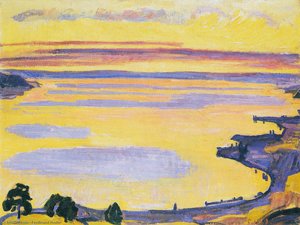
Sunset on Lake Geneva (1915) čiji je Фердинанд Ходлер

Sunset on Lake Geneva

1915 · Oil On Canvas · Kunsthaus Zürich, Zrich

The painting depicts a sunset over Lake Geneva. The sky above the water is rendered in shades of yellow, orange, and pink, creating a vibrant atmosphere. In the foreground, mountains are visible, providing depth to the landscape. A boat is positioned on the water, contributing to the serene scene.

5
Study of two figures (1897) čiji je Фердинанд Ходлер

Study of two figures

1897 · Acrylic On Paper · National Gallery of Bosnia and Herzegovina, Sarajevo

Ferdinand Hodler’s “Study of Two Figures” is not a grand, dramatic statement; rather, it's an invitation to linger in the quiet intimacy of a shared moment. Painted in 1897, this graphite drawing on paper captures two women seated together, their postures suggesting a profound sense of contemplation and perhaps even melancholy. Hodler, a pivotal figure within Swiss Symbolism, wasn’t interested in literal representation but rather in conveying emotional atmosphere and…

6
Unity (1911) čiji je Фердинанд Ходлер

Unity

1911 · Painting

In the monumental mural Unity, created in 1911, Ferdinand Hodler presents a profound meditation on the collective human spirit. This expansive work, stretching across an impressive scale, transcends mere portraiture to become a rhythmic tapestry of existence. The composition is masterfully arranged in rows of figures that seem to pulse with a shared vitality; some individuals press toward the foreground with palpable presence, while others recede into the background, creating…

7
Lake Geneva in Chexbres (1904) čiji je Фердинанд Ходлер

Lake Geneva in Chexbres

1904 · Oil On Canvas

To gaze upon Ferdinand Hodler's Lake Geneva in Chexbres is to be invited into a moment suspended between the vastness of nature and the quiet contemplation of the human spirit. This magnificent oil on canvas, dating from 1904, captures more than just a picturesque vista; it encapsulates the very essence of the Swiss landscape filtered through the profound lens of an artistic master. The scene unfolds across a broad expanse…

8
Composition study (1887) čiji je Фердинанд Ходлер

Composition study

1887 · Oil On Canvas · National Gallery of Bosnia and Herzegovina, Sarajevo

Ferdinand Hodler's "Composition Study," created in 1887, isn’t merely a sketch of three figures engaged in strenuous activity; it’s a profound meditation on the human condition, rendered with an arresting blend of anatomical precision and evocative symbolism. This work, now housed within the Tretyakov Gallery in Moscow, offers a rare glimpse into the artist's deeply personal vision – a world shaped by loss, contemplation, and a fascination with the ephemeral…

9
Self-portrait with stand (1879) čiji je Фердинанд Ходлер

Self-portrait with stand

1879 · Oil On Canvas · Kunst Museum Winterthur | Reinhart am Stadtgarten, Winterthur

To stand before Ferdinand Hodler’s Self-portrait with stand is to encounter a moment suspended between public presentation and private contemplation. This striking work, dating from 1879, captures the artist not merely as a likeness, but as a study in poised masculinity and burgeoning artistic self-awareness. The subject, impeccably dressed in a suit and tie, adopts a formal bearing, suggesting an occasion of importance or perhaps simply the necessary facade required…

10
The Wetterhorn (1912) čiji je Фердинанд Ходлер

The Wetterhorn

1912 · Oil On Canvas

To stand before Ferdinand Hodler’s The Wetterhorn is to be enveloped by the sublime majesty of the Swiss Alps, rendered through a lens of profound introspection. Painted in 1912, this oil on canvas masterpiece transcends mere topographical depiction; it is a meditation on permanence against the backdrop of fleeting human experience. The sheer scale of the snow-covered peak dominates the composition, its striking blue hue lending the entire scene an…

Slike umetnika Фердинанд Ходлер, rangirane od 11 do 100

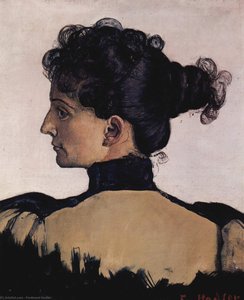
11Hilly Landscape with Ravens, in the Bernese Oberland (1910) čiji je Фердинанд ХодлерHilly Landscape with Ravens, in the Bernese Oberland1910 12View of Lake Leman from Chexbres (1905) čiji je Фердинанд ХодлерView of Lake Leman from Chexbres1905 · Kunstmuseum Basel 13Stockhorn chain (blue sky) čiji je Фердинанд ХодлерStockhorn chain (blue sky) 14Woman on her deathbed čiji je Фердинанд ХодлерWoman on her deathbed 15Lake Geneva from Chexbres (1904) čiji je Фердинанд ХодлерLake Geneva from Chexbres1904 · Musée cantonal des Beaux-Arts 16Portrait of Fraulein Kyburz (1873) čiji je Фердинанд ХодлерPortrait of Fraulein Kyburz1873 · Rhode Island School of Design Museum of Art 17Portrait of a Spanish woman čiji je Фердинанд ХодлерPortrait of a Spanish woman 18Studies of self-portrait (1911) čiji je Фердинанд ХодлерStudies of self-portrait1911 19Portrait of Berthe Hodler (1902) čiji je Фердинанд ХодлерPortrait of Berthe Hodler1902 · National Gallery of Bosnia and Herzegovina 20Landscape of the Swiss Alps (1918) čiji je Фердинанд ХодлерLandscape of the Swiss Alps1918 · Izraelski muzej 21The fall in Silvaplana (1907) čiji je Фердинанд ХодлерThe fall in Silvaplana1907 · Kunsthaus Zürich 22Thun with symmetric mirroring (1909) čiji je Фердинанд ХодлерThun with symmetric mirroring1909 · Musée d'Art et d'Histoire de Genève 23Jeanne Cerani-Charles čiji je Фердинанд ХодлерJeanne Cerani-Charles 24Day (Truth) čiji je Фердинанд ХодлерDay (Truth)Art Institute of Chicago 25From Le Grand Muveran Villars (1912) čiji je Фердинанд ХодлерFrom Le Grand Muveran Villars1912 · Von der Heydt Museum 26The cobbler by the window (1882) čiji je Фердинанд ХодлерThe cobbler by the window1882 27Forest Stream at Champery (1916) čiji je Фердинанд ХодлерForest Stream at Champery1916 28The shoemaker (1878) čiji je Фердинанд ХодлерThe shoemaker1878 29Modern Rütli (1878) čiji je Фердинанд ХодлерModern Rütli1878 · Gottfried Keller Foundation 30The Reaper (1878) čiji je Фердинанд ХодлерThe Reaper1878 31Gymnasts' Banquet (1877) čiji je Фердинанд ХодлерGymnasts' Banquet1877 · Kunsthaus Zürich 32The Miller, his Son and the Donkey (1888) čiji je Фердинанд ХодлерThe Miller, his Son and the Donkey1888 · Musée d'Art et d'Histoire de Genève 33The Disillusioned One (1892) čiji je Фердинанд ХодлерThe Disillusioned One1892 · Los Angeles County Museum of Art 34Study of the disappointed souls or Weary of life (1891) čiji je Фердинанд ХодлерStudy of the disappointed souls or Weary of life1891 35Overall study of the life of weary (1887) čiji je Фердинанд ХодлерOverall study of the life of weary1887 36Surprised by the Storm (1887) čiji je Фердинанд ХодлерSurprised by the Storm1887 37Night (1890) čiji je Фердинанд ХодлерNight1890 38Worship (1893) čiji je Фердинанд ХодлерWorship1893 39Childhood (1893) čiji je Фердинанд ХодлерChildhood1893 · Städel Museum 40Battle scenes (1896) čiji je Фердинанд ХодлерBattle scenes1896 41The Halberdier (1895) čiji je Фердинанд ХодлерThe Halberdier1895 · Dallas Museum of Art 42View into Infinity (1903) čiji je Фердинанд ХодлерView into Infinity1903 · Hamburger Kunsthalle 43The Adored Youth (1904) čiji je Фердинанд ХодлерThe Adored Youth1904 44Character study (1902) čiji je Фердинанд ХодлерCharacter study1902 45The Woodcutter (1910) čiji je Фердинанд ХодлерThe Woodcutter1910 · Von der Heydt Museum 46Character study (1906) čiji je Фердинанд ХодлерCharacter study1906 47Farewell participating female figure (1908) čiji je Фердинанд ХодлерFarewell participating female figure1908 48Pulling soldiers (1908) čiji je Фердинанд ХодлерPulling soldiers1908 49The working mower (1909) čiji je Фердинанд ХодлерThe working mower1909 50Pulling soldiers (1908) čiji je Фердинанд ХодлерPulling soldiers1908 51Woman in Ecstasy (1911) čiji je Фердинанд ХодлерWoman in Ecstasy1911 52Jeanne Günzburger (1912) čiji je Фердинанд ХодлерJeanne Günzburger1912 · Toledo Museum of Art 53Portrait of Emma Schmidt-Müller (1915) čiji je Фердинанд ХодлерPortrait of Emma Schmidt-Müller1915 54Josef Müller (1916) čiji je Фердинанд ХодлерJosef Müller1916 55Der Frühling (Fassung IV) (1912) čiji je Фердинанд ХодлерDer Frühling (Fassung IV)1912 56The Patient (1914) čiji je Фердинанд ХодлерThe Patient1914 · Kunstmuseum Basel 57Head of a Soldier (1917) čiji je Фердинанд ХодлерHead of a Soldier1917 · Art Institute of Chicago 58Valentine Godé-Darel one day before her death (1915) čiji je Фердинанд ХодлерValentine Godé-Darel one day before her death1915 · Kunstmuseum Basel 59Swearing from behind (1912) čiji je Фердинанд ХодлерSwearing from behind1912 60Two swearing (1912) čiji je Фердинанд ХодлерTwo swearing1912 61Study of self-portrait (1916) čiji je Фердинанд ХодлерStudy of self-portrait1916 62Standing draped figure (1913) čiji je Фердинанд ХодлерStanding draped figure1913 63Untitled (529) čiji je Фердинанд ХодлерUntitled (529) 64Lake Thun Landscape čiji je Фердинанд ХодлерLake Thun Landscape 65Female figure with garland (1895) čiji je Фердинанд ХодлерFemale figure with garland1895 · National Gallery of Bosnia and Herzegovina 66Self portrait (1916) čiji je Фердинанд ХодлерSelf portrait1916 67Prayer in the Saint Pierre Cathedral in Geneva (1882) čiji je Фердинанд ХодлерPrayer in the Saint Pierre Cathedral in Geneva1882 · Building of the Winterthur Museum of Art 68Mother and Child čiji je Фердинанд ХодлерMother and Child 69Pulling soldiers (1908) čiji je Фердинанд ХодлерPulling soldiers1908 70Walking at the forest edge (1885) čiji je Фердинанд ХодлерWalking at the forest edge1885 71Lake Geneva on the evening in Chexbres (1895) čiji je Фердинанд ХодлерLake Geneva on the evening in Chexbres1895 72Lake Thun, Symmetric reflection (1905) čiji je Фердинанд ХодлерLake Thun, Symmetric reflection1905 73The river Aare in Solothurn (1915) čiji je Фердинанд ХодлерThe river Aare in Solothurn1915 74The Orator (1912) čiji je Фердинанд ХодлерThe Orator1912 75What are flowers saing (1893) čiji je Фердинанд ХодлерWhat are flowers saing1893 76Lake Geneva with Mont Blanc in the morning light (1918) čiji je Фердинанд ХодлерLake Geneva with Mont Blanc in the morning light1918 77The Lake Geneva from Chexbres (1898) čiji je Фердинанд ХодлерThe Lake Geneva from Chexbres1898 78Spring (1901) čiji je Фердинанд ХодлерSpring1901 79Transfiguration (1906) čiji je Фердинанд ХодлерTransfiguration1906 80Valentine Godé-Darel on her Deathbed (1915) čiji je Фердинанд ХодлерValentine Godé-Darel on her Deathbed1915 81Emotion (study) (1902) čiji je Фердинанд ХодлерEmotion (study)1902 82valentine gode darel sun čiji je Фердинанд Ходлерvalentine gode darel sun 83The road to Evordes čiji je Фердинанд ХодлерThe road to Evordes 84The Black Lutschina (1905) čiji je Фердинанд ХодлерThe Black Lutschina1905 85A morning in Interlaken (1875) čiji je Фердинанд ХодлерA morning in Interlaken1875 · Kunstmuseum Bern 86Dying cadet (1896) čiji je Фердинанд ХодлерDying cadet1896 87Thun, Stockhornkette (1910) čiji je Фердинанд ХодлерThun, Stockhornkette1910 88Thunersee with Niesen čiji je Фердинанд ХодлерThunersee with Niesen 89The road to a particular interest (1890) čiji je Фердинанд ХодлерThe road to a particular interest1890 · Kunst Museum Winterthur | Reinhart am Stadtgarten 90Portrait of Berthe Jacques, wife of the artist (1894) čiji je Фердинанд ХодлерPortrait of Berthe Jacques, wife of the artist1894 91Figure study (1901) čiji je Фердинанд ХодлерFigure study1901 · National Gallery of Bosnia and Herzegovina 92Sensation (1901) čiji je Фердинанд ХодлерSensation1901 93Lake Silvaplana in Autumn (1907) čiji je Фердинанд ХодлерLake Silvaplana in Autumn1907 · Kunsthaus Zürich 94Dents du Midi in Clouds (1917) čiji je Фердинанд ХодлерDents du Midi in Clouds1917 95Grammont čiji je Фердинанд ХодлерGrammont 96Autumn Landscape near Solothurn čiji je Фердинанд ХодлерAutumn Landscape near Solothurn 97The reader 1 čiji je Фердинанд ХодлерThe reader 1Музеј Тисен-Борнемиза 98untitled (774) čiji je Фердинанд Ходлерuntitled (774) 99Prayer in the Cathedral of St. Pierre, Geneva (1882) čiji je Фердинанд ХодлерPrayer in the Cathedral of St. Pierre, Geneva1882 100At the foot of the Petit Saleve (1890) čiji je Фердинанд ХодлерAt the foot of the Petit Saleve1890

Čuvena dela Фердинанд Ходлер po periodima

Motivi koji su privlačili pažnju Фердинанд Ходлер

Četiri teme koje se najčešće ponavljaju u ovim originalima, svaka sa svojim vrhunskim primerom.

Muzeji u kojima se čuvaju originalna dela umetnika Фердинанд Ходлер

8 muzeja u kojima se nalazi najviše slika sa ove stranice.

Muzej Grad Radovi umetnika Фердинанд Ходлер Slike iz ovog spiska
National Gallery of Bosnia and Herzegovina, SarajevoNational Gallery of Bosnia and Herzegovina Sarajevo 74 Study of two figures, Composition study, Portrait of Berthe Hodler
Kunsthaus Zürich, ZrichKunsthaus Zürich Zrich 16 Sunset on Lake Geneva, The fall in Silvaplana, Gymnasts' Banquet
Kunstmuseum Basel, BaselKunstmuseum Basel Basel 5 View of Lake Leman from Chexbres, The Patient, Valentine Godé-Darel one day before her death
Musée d'Art et d'Histoire de Genève, ŽenevaMusée d'Art et d'Histoire de Genève Ženeva 8 Thun with symmetric mirroring, The Miller, his Son and the Donkey
Art Institute of Chicago, ČikagoArt Institute of Chicago Čikago 3 Day (Truth), Head of a Soldier
Von der Heydt Museum, WuppertalVon der Heydt Museum Wuppertal 3 From Le Grand Muveran Villars, The Woodcutter
Kunst Museum Winterthur | Reinhart am Stadtgarten, WinterthurKunst Museum Winterthur | Reinhart am Stadtgarten Winterthur 2 Self-portrait with stand, The road to a particular interest
Städel Museum, FrankfurtStädel Museum Frankfurt 3 Childhood

Фердинанд Ходлер, jedno autentično delo po deceniji

Radovi po decenijama

Izaberite deceniju da biste videli original koji je definiše.

Slike umetnika Фердинанд Ходлер: odgovori galerije

Koja je najpoznatija slika umetnika Фердинанд Ходлер?Otkrij odgovor

Eiger, Monch and Jungfrau in Moonlight (1908). Slede Woman in Ecstasy (1911) i Eiger, Monch and Jungfrau in Moonlight (1908).

Koliko je godina imao/la Фердинанд Ходлер kada je dovršio/la Eiger, Monch and Jungfrau in Moonlight?Otkrij odgovor

55 godina: Eiger, Monch and Jungfrau in Moonlight datira iz 1908, a Фердинанд Ходлер je rođen/a 1853.

Koja su najbolja 10 dela umetnika Фердинанд Ходлер?Otkrij odgovor

Eiger, Monch and Jungfrau in Moonlight, Woman in Ecstasy, Eiger, Monch and Jungfrau in Moonlight, Sunset on Lake Geneva, Study of two figures, Unity, Lake Geneva in Chexbres, Composition study, Self-portrait with stand i The Wetterhorn. Gornji rang pokazuje godinu i muzej za svako od njih.

Koliko je dela stvorio/la Фердинанд Ходлер?Otkrij odgovor

Naš katalog sadrži 609 dela umetnika Фердинанд Ходлер, datiranih od 1873 do 1918.

Gde se nalaze najpoznatiji originali umetnika Фердинанд Ходлер?Otkrij odgovor

Većinom u National Gallery of Bosnia and Herzegovina (Sarajevo), Kunsthaus Zürich (Zrich) i Kunstmuseum Basel (Basel). Tabela muzeja iznad sadrži njih sve.

Kada je Фердинанд Ходлер stvorio svoje najpoznatije slike?Otkrij odgovor

U 1910s: 29 od 100 dela na ovoj stranici nastalo je tada, od čega je Woman in Ecstasy.

Koja su najranija i najkasnija poznata dela umetnika Фердинанд Ходлер?Otkrij odgovor

Na ovoj stranici, najstarije delo je iz Portrait of Fraulein Kyburz (1873), a najnovije iz Landscape of the Swiss Alps (1918).

Kojim se motivima Фердинанд Ходлер najčešće bavio?Otkrij odgovor

Landscape (24), Mountains (13) i Swiss alps (9), kroz svih 100 dela na ovoj stranici.

U kojoj je tehnici najviše radio/la Фердинанд Ходлер?Otkrij odgovor

Oil On Canvas, za 41 od 100 dela na ovoj stranici.

Sa kojim umetničkim pravcem je Фердинанд Ходлер povezan/a?Otkrij odgovor

Romantic symbolism i Art nouveau, sudeći po originalima na ovoj stranici.

Koje originale umetnika Фердинанд Ходлер poseduje National Gallery of Bosnia and Herzegovina?Otkrij odgovor

Study of two figures, Composition study i Portrait of Berthe Hodler: National Gallery of Bosnia and Herzegovina, Sarajevo čuva 5 dela sa ove stranice.

Фердинанд Ходлер: umetnik

Arhitektura smrtnosti

Rođen u Bernu, u Švajcarskoj, 1853. godine, rani životni period koji je proživao Фердинанд Ходлер, bio je definisan tihim, upornim bolom. Pre nego što je ušao u pubertet, tuberkuloza koja je odnela njegovog oca i dva mlađa brata ostavila je prazninu u njegovom domu. Taj rani susret sa gubitkom postao je ponavljajući motiv u njegovom radu, senka koja će ga pratiti od skromnih početaka njegovog zanatstva pa sve do vrhovaca njegove profesionalne karijere. Svoje obezbeđivanje je započeo kao dekorativni slikar, pomažući očuhu u komercijalnim poslovima sa natpisima, što je bila praktična edukacija koja je u njemu usadila preciznu kontrolu linije i forme. Ovaj temelj zanatstva obezbedio je tehničku rigoroznost koja će kasnije podupreti njegova složenija filozofska istraživanja.

Njegov odlazak u Ženevu 1871. godine označio je odmak od komercijalnih zahteva njegove mladosti. U gradu je tražio dublji angažman sa umetnošću, pohađajući naučne predavanja i prepisujući dela majstora u lokalnom muzeju. Upravo je tu počeo da se udaljava od pedantnog realizma svojih ranih pejzaža i portreta. Više nije bio zadovoljan samim reprodukovanjem prizora Švajcarskih Alpa ili sličja modela; težio je da uhvati suštinske ritmove postojanja. Ovaj prelazak sa objektivnog na subjektivno na kraju će ga voditi ka razvoju potpuno sopstvenog vizuelnog jezika.

Logika paralelizma

Najznačajniji doprinos Hodlerovog rada evoluciji moderne slikarstva bio je njegovu teoriji paralelizma. To nije bila samo kompoziciona tehnika, već način posmatranja sveta kao niza međusobno povezanih, ritmičnih obrazaca. Primećivao je kako se oblici u prirodi—nagib planine, krivina ljudskog uda ili odraz u vodi—često ogledaju jedan u drugom u strukturiranoj, geometrijskoj harmoniji. Aranžiranjem figura i elemenata pejzaža u ovim repetitivnim, ritmičnim kadencama, pokušavao je da prikaže strukturni red koji je verovao da upravlja prirodnim svetom. Ovaj pristup omogućio mu je da premosti jaz između fizičke stvarnosti scene i emocionalnog stanja posmatrača.

Njegov rad je često zauzimao prostor između simbolizma i senzibiliteta koji je bio više strukturiran i moderan. U delima kao što je Noć, dovršenom 1890. godine, istraživao je teme odmora i smrtnosti kroz položene figure, što je bila tema koja je izazivala tadašnje prevaziđeno ukuse. Njegova sposobnost da spoji klasičnu formu sa modernim, gotovo strukturnim intenzitetom vidljiva je u delu Istina II (1897). Nije se oslanjao na haotične poteze četkicom svojih savremenika; umesto toga, koristio je promišljenu, često prigušenu paletu okra, braon i zelenih tonova kako bi stvorio osećaj trajnosti i težine. Njegova platna nisu bila samo prozori u scenu, već organizovana okruženja gde su ljudski duh i pejzaž bili povezani zajedničkom geometrijom.

Život u pejzažima

Švajcarski pejzaž ostao je konstantno prisutan u njegovom delu, posebno veličanstveni Alpi. Planine nije posmatrao samo kao topografske karakteristike, već kao duhovna bića. Njegovi prikazi Ajgera, Monha i Jungfraua, ili pogledi sa Dents du Midi, odražavaju želju da se veličina planina prevede u jezik emocionalnog odjeka. Često je koristio proces slojevitosti, nanoseći tanke slojeve boje preko debljeg impasta kako bi postigao specifičnu luminoznost, naročito u svojim kasnijim studijama svetlosti nad Ženevskim jezerom. Ova dela pokazuju majstorstvo u stvaranju atmosfere, hvatajući magličnu, eteričnu kvalitet svetlosti Alpa bez žrtvovanja strukturnog integriteta terena.

Do trenutka svoje smrti u Ženevi 1918. godine, Hodler se utvrdio kao centralna figura u švajcarskoj istoriji umetnosti. Njegov uticaj se može videti u razvoju ekspresionizma, jer je njegov naglasak na subjektivnoj emociji i ritmičkoj formi pružio temelj onima koji su želeli da se kreću izvan tradicionalnog predstavljanja. Ostao je slikar duboke psihološke dubine, koristeći alate svog zanata da se suoči sa fundamentalnim pitanjima života i smrti. Njegovo nasleđe nalazi se u načinu na koji je primoravao gledača da pogleda izvan površine sveta kako bi pronašao tihe, ponavljajuće obrasce koji ga drže na okupu.