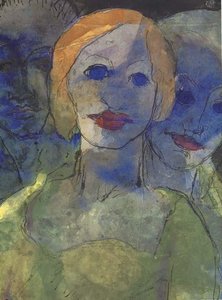
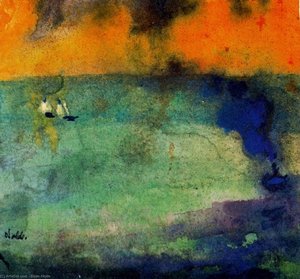
Portret Емил Нолде

Slike umetnika Емил Нолде: Najpoznatijih 100 kroz oči galerije

Ažurirano: октобар 2026 · rangirano prema našem koeficijentu popularnosti (pretrage, posete i porudžbine za svako delo) · 394 dela Емил Нолде u našem katalogu

Ukratko

Iz perspektive galerije, najpoznatije delo umetnika Емил Нолде je Sunset. Sea with Red Sky i Couple on the beach (1903) čine triju koju svako oko prepoznaje. Od 394 dela umetnika Емил Нолде u našem katalogu, galerija u nastavku predstavlja 100 najpoznatijih dela, od kojih je svako originalno, sa navedenom godinom nastanka, muzejom i onim što ga čini jedinstvenim.

1867 – 1956, Нордел Expressionism Najviše dela: Bavarske državne slikopisne kolekcije

Top 10 slika umetnika Емил Нолде u galeriji

1
Sunset čiji je Емил Нолде

Sunset

Oil On Canvas

The sun hangs as a heavy, bright circle at the center of the sky, a singular eye watching the descent of the day. Below it, the atmosphere burns with shades of yellow, orange, and red, bleeding into one another to create a warm, thick air. The ocean receives this light, its waves rolling gently toward the shore in a rhythmic, quiet motion. A lone boat floats upon the water, a…

2
Sea with Red Sky čiji je Емил Нолде

Sea with Red Sky

Oil

Sea with Red Sky is an expressionist painting by Emil Nolde. The canvas captures a moment of intense color, where the sky burns with a deep, saturated red. This work belongs to the early movements of expressionism, a style that prioritizes the internal pulse of a subject over its literal likeness. The artist sought to translate raw sensation into pigment, moving beyond the surface of the natural world to reach…

3
Couple on the beach (1903) čiji je Емил Нолде

Couple on the beach

1903 · Oil

In "Couple on the beach" by Emil Nolde, painted about 1903, the arrangement of figures creates a quiet sense of intimacy against a vast landscape. At the center of the composition, a man and a woman stand close together. He has his arm around her, and she is dressed in a long dress. Their bodies are oriented toward the water, their gazes fixed on the horizon. This shared focus directs…

4
Masks (1911) čiji je Емил Нолде

Masks

1911 · Acrylic On Canvas · Nelson-Atkins Museum of Art, Kansas City

Emil Nolde's "Masks," painted in 1911, isn’t merely a depiction of carnival revelry; it’s a profound exploration of identity, hidden desires, and the unsettling duality inherent within human nature. Created during his time as a key member of Die Brücke – “The Bridge” – a group pushing the boundaries of German Expressionism in Dresden and Berlin, the painting embodies the movement's core tenets: a rejection of academic realism in favor…

5
Christ among the Children čiji je Емил Нолде

Christ among the Children

Oil On Canvas

Emil Nolde’s “Christ Among the Children” is not merely a depiction of a biblical scene; it’s an immersive experience, a visceral outpouring of emotion rendered with the raw energy characteristic of his mature style. This large-scale painting captures a moment of profound intimacy – Christ surrounded by children – yet it vibrates with a primal intensity that speaks to the core of human connection and faith. The photograph reveals a…

6
The Great Gardener čiji je Емил Нолде

The Great Gardener

The Great Gardener emerges from the brush of Emil Nolde, a man whose very name carries the weight of his birthplace. Born in 1867 in Nolde, Denmark, the artist carries the essence of his origins into every stroke. He moves through the world of color with a sense of purpose, much like the subject of this work. The painting, titled The Great Gardener, captures a moment of quiet connection within…

8
Marshy Landscape under the Evening Sky čiji je Емил Нолде

Marshy Landscape under the Evening Sky

Watercolor

The scene unfolds in Marshy Landscape under the Evening Sky, a work that carries the unmistakable hand of the artist Emil Nolde. This piece captures a specific, quiet moment where the land meets a heavy, atmospheric sky. The artist, Emil Nolde, was born in Nolde, Denmark, in 1867, and his connection to the natural world remains palpable in the way he approaches the canvas. He lived until 1956, leaving behind…

9
Animal and Figures (1912) čiji je Емил Нолде

Animal and Figures

1912 · Black and White Photography · Bavarske državne slikopisne kolekcije, Minhen

A monochrome stillness settles over the scene. Two men stand in the rigid geometry of early 20th-century military attire, their forms anchored against a dark, featureless void. They are framed by a slender pedestal that divides the composition with mathematical precision. On the left, a hand rests firmly on a hip; on the right, a hand finds rest upon the stand. The fabric of their tunics, the heavy weave of…

10
Anna Wieds Garden čiji je Емил Нолде

Anna Wieds Garden

Acrylic

Emile Nolde, a prominent German-Danish painter and printmaker, is renowned for his vibrant and expressive works of art. One of his notable pieces, Anna Wieds Garden, exemplifies the essence of Expressionism, a modernist movement that emerged in the early 20th century. This captivating oil painting is a testament to Nolde's unique style, which blends elements of Expressionism with a deep appreciation for nature. The Expressionist Style Expressionism, as described by…

Slike umetnika Емил Нолде, rangirane od 11 do 100

11Festival Girls (1918) čiji je Емил НолдеFestival Girls1918 · Bavarske državne slikopisne kolekcije 12Child and Large Bird čiji je Емил НолдеChild and Large Bird 13Sea and ship in the sunset čiji je Емил НолдеSea and ship in the sunset 14Nordermühle (1932) čiji je Емил НолдеNordermühle1932 · Bavarske državne slikopisne kolekcije 15untitled (1534) čiji je Емил Нолдеuntitled (1534) 16Shivering Russians (1914) čiji je Емил НолдеShivering Russians1914 · Statens Museum For Kunst 17Summer Clouds čiji je Емил НолдеSummer Clouds 18Landscape in Red Light čiji je Емил НолдеLandscape in Red Light 19Light Sea Mood čiji je Емил НолдеLight Sea Mood 20Mountain Slope over the Sea čiji je Емил НолдеMountain Slope over the Sea 21Mountain Giant čiji je Емил НолдеMountain Giant 22Two Women (Yellow and Red Hair) čiji je Емил НолдеTwo Women (Yellow and Red Hair) 23Two Women against a Blue Sky čiji je Емил НолдеTwo Women against a Blue Sky 24Wild Animals (1921) čiji je Емил НолдеWild Animals1921 · Bavarske državne slikopisne kolekcije 25Autumn Sea čiji je Емил НолдеAutumn Sea 26Prophet čiji je Емил НолдеProphet 27Phantasie čiji je Емил НолдеPhantasie 28Friends čiji je Емил НолдеFriends 29The dancer (Mary Wigman) čiji je Емил НолдеThe dancer (Mary Wigman) 30Old Man Nude Girl čiji je Емил НолдеOld Man Nude Girl 31The enthusiastic čiji je Емил НолдеThe enthusiastic 32Dance around the golden calf čiji je Емил НолдеDance around the golden calf 33Mills (1924) čiji je Емил НолдеMills1924 · Bavarske državne slikopisne kolekcije 34Robbers at Bombüll (1917) čiji je Емил НолдеRobbers at Bombüll1917 · Statens Museum For Kunst 35Mask Still Life III, (1911) čiji je Емил НолдеMask Still Life III,1911 36Мокање Христа (1909) čiji je Емил НолдеМокање Христа1909 37Цветови башче (Девојка и прање) (1908) čiji je Емил НолдеЦветови башче (Девојка и прање)1908 · Museum Kunstpalast 38The Blacksmith (1912) čiji je Емил НолдеThe Blacksmith1912 · Statens Museum For Kunst 39untitled (1000) čiji je Емил Нолдеuntitled (1000) 40untitled (3444) čiji je Емил Нолдеuntitled (3444) 41Autumn Sunset čiji je Емил НолдеAutumn Sunset 42Flower Garden. Pansies čiji je Емил НолдеFlower Garden. Pansies 43Green Landscape with Red Colud čiji je Емил НолдеGreen Landscape with Red Colud 44Seacoast (Red Sky, Two White Sails) čiji je Емил НолдеSeacoast (Red Sky, Two White Sails) 45Christ and the Children (1910) čiji je Емил НолдеChrist and the Children1910 46Dancing Children (1909) čiji je Емил НолдеDancing Children1909 47Autumn Sea XVIII (1911) čiji je Емил НолдеAutumn Sea XVIII1911 48Ridicule (Verspottung) (1909) čiji je Емил НолдеRidicule (Verspottung)1909 · Brücke Museum 49Round Dance (1909) čiji je Емил НолдеRound Dance1909 50Dolls and Parrot (1912) čiji je Емил НолдеDolls and Parrot1912 · Bavarske državne slikopisne kolekcije 51Russian II (1914) čiji je Емил НолдеRussian II1914 52Bright Sea (1915) čiji je Емил НолдеBright Sea1915 53Girl in the Garden (1915) čiji je Емил НолдеGirl in the Garden1915 54Papua Youths (1914) čiji je Емил НолдеPapua Youths1914 55Tulips (1915) čiji je Емил НолдеTulips1915 56Entry into Jerusalem (1915) čiji je Емил НолдеEntry into Jerusalem1915 57Papua Youths (1914) čiji je Емил НолдеPapua Youths1914 58At the Fountain (1916) čiji je Емил НолдеAt the Fountain1916 · Staatliche Kunsthalle Karlsruhe 59Garden with flowers (1916) čiji je Емил НолдеGarden with flowers1916 60Masks IV (1920) čiji je Емил НолдеMasks IV1920 61Water Lilies Still Life (1922) čiji je Емил НолдеWater Lilies Still Life1922 62Tall Sunflowers (1926) čiji je Емил НолдеTall Sunflowers1926 · Bavarske državne slikopisne kolekcije 63Tiger Lilies (1925) čiji je Емил НолдеTiger Lilies1925 64Flower Garden (1924) čiji je Емил НолдеFlower Garden1924 65Hülltoft Hof (1932) čiji je Емил НолдеHülltoft Hof1932 66Begonias, Red and Yellow (1929) čiji je Емил НолдеBegonias, Red and Yellow1929 67Turtle čiji je Емил НолдеTurtle 68Legend (1935) čiji je Емил НолдеLegend1935 · Statens Museum For Kunst 69Young Women (1947) čiji je Емил НолдеYoung Women1947 · Statens Museum For Kunst 70Large Sunflowers (1928) čiji je Емил НолдеLarge Sunflowers1928 · Metropoliten музеј у Њујорку 71Figures and Dahlias (1919) čiji je Емил НолдеFigures and Dahlias1919 · Statens Museum For Kunst 72Garden path čiji je Емил НолдеGarden path 73Sea čiji je Емил НолдеSea 74untitled čiji je Емил Нолдеuntitled 75Sea in autumn čiji je Емил НолдеSea in autumn 76Marsh landscape with farm čiji je Емил НолдеMarsh landscape with farm 77Dark Sea (Green Sky) čiji je Емил НолдеDark Sea (Green Sky) 78Sunflower image I čiji je Емил НолдеSunflower image I 79Masks (1911) čiji je Емил НолдеMasks1911 · Nelson-Atkins Museum of Art 80Mother and Child čiji je Емил НолдеMother and Child 81Blue Sea and Red Clouds čiji je Емил НолдеBlue Sea and Red Clouds 82In the coffee čiji je Емил НолдеIn the coffee 83Marsh landscape čiji je Емил НолдеMarsh landscape 84Steamers and sailing boat čiji je Емил НолдеSteamers and sailing boat 85Hamburg, Katharinenkirche čiji je Емил НолдеHamburg, Katharinenkirche 86Hamburg's harbor, tugs and mooring posts čiji je Емил НолдеHamburg's harbor, tugs and mooring posts 87Marsh bridge čiji je Емил НолдеMarsh bridge 88Sailors and three small steamers čiji je Емил НолдеSailors and three small steamers 89Marsh landscape with peasent houses čiji je Емил НолдеMarsh landscape with peasent houses 90Dahlias čiji je Емил НолдеDahlias 91Red Clouds čiji je Емил НолдеRed Clouds 92Life by the Sea (in Evening Light) čiji je Емил НолдеLife by the Sea (in Evening Light) 93Vibrant Blooming čiji je Емил НолдеVibrant Blooming 94Irises čiji je Емил НолдеIrises 95Hunting Lodge at Alsem čiji je Емил НолдеHunting Lodge at Alsem 96Sea in autumn IX čiji je Емил НолдеSea in autumn IX 97Dancing Women (with Green Skirts) čiji je Емил НолдеDancing Women (with Green Skirts) 98Farmstead under Red Evening čiji je Емил НолдеFarmstead under Red Evening 99untitled (8174) čiji je Емил Нолдеuntitled (8174) 100Child and Large Bird (1912) čiji je Емил НолдеChild and Large Bird1912 · Statens Museum For Kunst

Čuvena dela Емил Нолде po periodima

Motivi koji su privlačili pažnju Емил Нолде

Četiri teme koje se najčešće ponavljaju u ovim originalima, svaka sa svojim vrhunskim primerom.

Muzeji u kojima se čuvaju originalna dela umetnika Емил Нолде

7 muzeja u kojima se nalazi najviše slika sa ove stranice.

Muzej Grad Radovi umetnika Емил Нолде Slike iz ovog spiska
Bavarske državne slikopisne kolekcije, MinhenBavarske državne slikopisne kolekcije Minhen 10 Animal and Figures, Festival Girls, Nordermühle
Statens Museum For Kunst, KopenhagenStatens Museum For Kunst Kopenhagen 10 Shivering Russians, Robbers at Bombüll, The Blacksmith
Nelson-Atkins Museum of Art, Kansas CityNelson-Atkins Museum of Art Kansas City 2 Masks, Masks
Staatliche Kunsthalle Karlsruhe, KarlsrueStaatliche Kunsthalle Karlsruhe Karlsrue 4 At the Fountain
Brücke Museum, BerlinBrücke Museum Berlin 2 Ridicule (Verspottung)
Museum Kunstpalast, DuseeldorfMuseum Kunstpalast Duseeldorf 1 Цветови башче (Девојка и прање)
Metropoliten музеј у Њујорку, ЊујоркMetropoliten музеј у Њујорку Њујорк 1 Large Sunflowers

Емил Нолде, jedno autentično delo po deceniji

Radovi po decenijama

Izaberite deceniju da biste videli original koji je definiše.

Slike umetnika Емил Нолде: odgovori galerije

Koja je najpoznatija slika umetnika Емил Нолде?Otkrij odgovor

Sunset. Slede Sea with Red Sky i Couple on the beach (1903).

Koja su najbolja 10 dela umetnika Емил Нолде?Otkrij odgovor

Sunset, Sea with Red Sky, Couple on the beach, Masks, Christ among the Children, The Great Gardener, Light-flooded Sea (Green), Marshy Landscape under the Evening Sky, Animal and Figures i Anna Wieds Garden. Gornji rang pokazuje godinu i muzej za svako od njih.

Koliko je dela stvorio/la Емил Нолде?Otkrij odgovor

Naš katalog sadrži 394 dela umetnika Емил Нолде, datiranih od 1903 do 1947.

Gde se nalaze najpoznatiji originali umetnika Емил Нолде?Otkrij odgovor

Većinom u Bavarske državne slikopisne kolekcije (Minhen), Statens Museum For Kunst (Kopenhagen) i Nelson-Atkins Museum of Art (Kansas City). Tabela muzeja iznad sadrži njih sve.

Kada je Емил Нолде stvorio svoje najpoznatije slike?Otkrij odgovor

U 1910s: 22 od 100 dela na ovoj stranici nastalo je tada, od čega je Masks.

Koja su najranija i najkasnija poznata dela umetnika Емил Нолде?Otkrij odgovor

Na ovoj stranici, najstarije delo je iz Couple on the beach (1903), a najnovije iz Young Women (1947).

Kojim se motivima Емил Нолде najčešće bavio?Otkrij odgovor

Figures (12), Sky (10) i Sea (10), kroz svih 100 dela na ovoj stranici.

U kojoj je tehnici najviše radio/la Емил Нолде?Otkrij odgovor

Oil On Canvas, za 14 od 100 dela na ovoj stranici.

Sa kojim umetničkim pravcem je Емил Нолде povezan/a?Otkrij odgovor

Expressionism, sudeći po originalima na ovoj stranici.

Koje originale umetnika Емил Нолде poseduje Bavarske državne slikopisne kolekcije?Otkrij odgovor

Animal and Figures, Festival Girls i Nordermühle: Bavarske državne slikopisne kolekcije, Minhen čuva 7 dela sa ove stranice.

Mogu li dobiti ručnu reprodukciju slike od Емил Нолде?Otkrij odgovor

Da, kao reprodukcija: original ostaje u svom muzeju, ali svaku sliku sa ove stranice može se ručno naslikati za vas, po vašoj narudžbi, pojedinačno, direktno sa stranice te slike.

Емил Нолде: umetnik

The Life and Identity of Emile Nolde

Born Hans Emil Hansen on 7 August 1867, the man who would become known as Emile Nolde grew up near the village of Nolde in the Duchy of Schleswig. His early years were shaped by the rural, agrarian life of his family. He eventually moved away from this path, choosing instead to work as a wood carver and furniture decorator. This tactile, physical labor preceded his shift toward painting and printmaking. He adopted his artistic name as a way to establish a separate identity from his family's expectations.

His presence in the early 20th century was marked by a move toward the internal and the subjective. As one of the first Expressionists, he sought to move beyond the surface of things. He became a member of the Die Brücke group, a collective that looked to break away from academic traditions. His work often focused on the psychological and the primal, using color and form to reach for something deeper than a simple likeness. He was a painter who looked at the world through a lens of intense, personal feeling.

Early Life and Artistic Beginnings

Born Hans Emil Hansen, he grew up on a farm in the Duchy of Schleswig. His parents were Danish and Frisian peasants, and the rhythms of rural life shaped his early years. He eventually realized that the life of a farmer was not his own. He felt a sense of unsuitability for the heavy, repetitive work of the land. Instead of the plow, his hands sought the grain of wood.

He turned to woodcarving as a craft, working with the material in a way that required a steady, tactile connection. This period of manual labor was not a detour but a foundation. He later moved through studies in Karlsruhe and Munich, though the academic constraints of those institutions often felt restrictive. He eventually adopted the name Emil Nolde, a choice that marked a departure from his family's expectations and a step toward his own identity.

Artistic Development and Influences

The way he approached a canvas was shaped by a deep connection to the Post-Impressionist style. He looked toward the work of Paul Gauguin and found a way to move beyond simple representation. This shift allowed him to focus on the inner weight of a subject rather than its outward appearance. His interest in the natural world often manifested in his preoccupation with flowers, a habit that mirrored the influence of Vincent van Gogh. He did not merely paint a garden; he sought the pulse within the petals.

His path was never a straight line. While he found a place among the artists of the Die Brücke group, his interests often pulled him toward different circles. In 1912, he exhibited alongside the members of Wassily Kandinsky's Der Blaue Reiter group. This period of his life was marked by a constant search for a visual language that could hold the intensity of his observations. He moved between the study of color and the study of form, always looking for a way to make the paint speak of something more than the surface of the world.

Membership in the Die Brücke Group

In early 1906, a shift occurred when his work was seen at Arnold’s in Dresden. This encounter led to an invitation to join the Die Brücke group. He remained part of this collective from February 1906 until November 1907. The group itself had been active in Dresden since 1905, seeking to move away from academic traditions through a search for a new pictorial language.

His time with the group was marked by a connection to Post-Impressionist influences. While the members shared a common goal of breaking from established norms, his own path remained distinct. He brought a specific interest in the expressive power of primitive masks and carvings from his native Schleswig-Holstein to the group's shared explorations. This period in Dresden helped define his early approach to color and form before he moved toward a more independent direction.

Technique and Expressive Style

The brushwork reveals a preoccupation with the immediate sensation of color. He was among the first oil painters and watercolorists of the early twentieth century to push the boundaries of how color could be used. His palette often leans into heavy, golden yellows and deep reds. These choices give a certain weight to the surface, making the colors feel present rather than merely decorative. He did not settle for the subtle shifts of light seen in earlier traditions, opting instead for a directness that prioritizes the feeling of a subject over its literal likeness.

Watercolor became a primary medium for him from the 1930s until his death. He found that the medium allowed him to translate his ideas and concepts to the paper much faster than oil painting. This speed is visible in the way he handled the pigment, creating vivid, brooding storm-scapes and brilliant florals. The paint often moves with a sense of urgency, capturing a specific moment of light or weather before it shifts. In his landscapes, the color is not just a layer on top of a shape; it is the substance of the shape itself.

Persecution and the Nazi Regime

The relationship between Nolde and the Nazi regime was a complicated one. He was a member of the Nazi Party, yet his own paintings were condemned by the state. His work was deemed “degenerate” by the regime, leading to a direct conflict between his political affiliations and his creative output. This tension resulted in the removal of 1,052 of his works from museums by the Nazi Party.

The restrictions on his practice grew more severe as the years passed. After 1941, he was forbidden to paint. During this period of silence, he turned to other means to keep his vision alive. He created hundreds of watercolors that he kept hidden, often referred to as his "Unpainted Pictures." These works remained out of sight while the official art world turned away from his style.

Notable Works and Artistic Achievements

His brushwork often sought the essence of a subject through a direct application of color. In 1912, he produced Man, Woman and Cat, a work that reflects his interest in the forms of objects and figures. By 1917, his focus turned toward the natural world in Blumengarten (Utenwarf). These pieces show a steady commitment to his specific way of seeing, using thick layers of paint to build up the surface.

As the years passed, his relationship with his medium shifted. From the 1930s until his death, watercolor became his primary way of working, allowing him to move his ideas onto the paper more quickly than with oil. This is evident in the 1930 watercolor Stormy Sea, where the movement of the water is captured through rapid, expressive strokes. Even when he was forbidden from painting in public, he continued to work in private, creating hundreds of hidden watercolors that he called his "Unpainted Pictures."

His later years saw a continued exploration of the human form and the psychological weight of a portrait. In 1937, he created Doppelbildnis, a double portrait that emerged from a series of his watercolor studies. His work remains a record of a man who used color to reach for a specific, internal truth.

  • Man, Woman and Cat (1912)
  • Blumengarten (Utenwarf) (1917)
  • Stormy Sea (1930)
  • Doppelbildnis (1937)

Legacy and Historical Impact

The weight of his influence is felt in the way color was allowed to move beyond mere description. By pushing the boundaries of what a canvas could hold, he helped shape the direction of Expressionism. His work moved away from the academic rules of the past, favoring a directness that prioritized the internal state over the external likeness. This shift allowed for a new kind of visual language, one where the application of paint and the choice of hue were used to communicate a raw, unmediated sense of being.

His presence in the early movements of the twentieth century helped establish a precedent for the artist as an individual voice, often at odds with the prevailing political or social climate. Even when his work was removed from public view and labeled as degenerate, he continued to produce art in private. This persistence ensured that his specific approach to color and form would eventually be recognized as a significant contribution to modern art. He left behind a body of work that continues to be studied for its intensity and its refusal to conform to the expectations of his time.

Where to See His Works Today

Tracing his presence in public collections reveals a scattered but significant trail. In Hanover, the Sprengel Museum holds his watercolor landscape, Stormy Sea. Moving north to Stockholm, Sweden, the Moderna Museet contains Blumengarten (Utenwarf). These pieces offer a way to see how his hand moved across different surfaces and subjects.

The Böttcherstraße Museums in Bremen also house his works, keeping his presence felt within the German landscape. For those looking for a more concentrated view of his life and output, the Nolde Stiftung Seebüll was created in 1956. This foundation remains a central point for his legacy.

  • Stormy Sea
  • Blumengarten (Utenwarf)

Sva 394 dela umetnika Емил Нолде →