Portrait of Kozimo Roseli

The 25 Most Famous Kozimo Roseli Paintings, Each One of a Kind

Updated октобар 2026 · ranked by our popularity score (searches, visits and orders for each work) · 25 works by Kozimo Roseli in our catalogue

In short

The Last Supper (detail) (8) (1481) is the Kozimo Roseli painting that draws the most eyes; the original belongs to the Kapela Sistina, Vatikan. After it, the eye goes to The Last Supper (1481) and The Last Supper (detail) (1481). Among the 25 works of Kozimo Roseli in our catalog, these 25 are the most famous, each a unique original presented with its year, its museum and the reason it endures.

1439 – 1507, Фиренца Renaissance Most works: Kapela Sistina

Top 10 paintings by Kozimo Roseli, through the gallery's eye

1
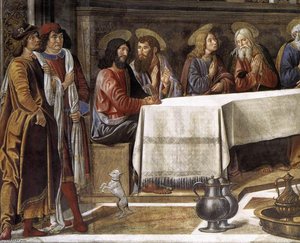
The Last Supper (detail) (8) (1481) by Kozimo Roseli

The Last Supper (detail) (8)

1481 · Fresco · Kapela Sistina, Vatikan

Cosimo Rosselli's “The Last Supper,” completed in 1481-82 during the High Renaissance, stands as one of the most iconic depictions of Christianity. More than just a painting; it’s a testament to artistic innovation and spiritual contemplation—a scene meticulously rendered by Rosselli and his collaborators within the grandeur of Michelangelo's Sistine Chapel.

2
The Last Supper (1481) by Kozimo Roseli

The Last Supper

1481 · Acrylic On Canvas · Kapela Sistina, Vatikan

Cosimo Rosselli’s “The Last Supper,” painted in 1481–82 for the Sistine Chapel in Rome, isn't merely a depiction of a biblical meal; it’s a profound meditation on faith, betrayal, and the human condition. Commissioned during a period of immense artistic innovation—a time when Leonardo da Vinci was laying the groundwork for modern painting—Rosselli’s fresco stands as a testament to the Florentine Renaissance’s vibrant spirit and its masterful command of perspective…

3
The Last Supper (detail) (1481) by Kozimo Roseli

The Last Supper (detail)

1481 · Fresco · Kapela Sistina, Vatikan

To gaze upon this detail from Cosimo Rosselli's rendition of The Last Supper is to be transported across the centuries, into a moment suspended between profound intimacy and monumental destiny. This scene, painted in 1481 within the sacred confines of the Cappella Sistina, transcends mere depiction; it captures the very breath of human drama set against the backdrop of divine revelation. Rosselli masterfully frames the final meal shared by Jesus…

4
The Last Supper (detail) (1481) by Kozimo Roseli

The Last Supper (detail)

1481 · Acrylic · Kapela Sistina, Vatikan

Cosimo Rosselli’s “The Last Supper,” a breathtaking detail from his monumental fresco cycle within the Cappella Sistina, offers an unparalleled glimpse into the heart of the late 15th century. Completed in 1481-82 amidst a complex political reconciliation between Florence and Rome, this work transcends mere biblical narrative; it’s a profound meditation on faith, betrayal, and the human condition. More than just a depiction of Christ's final meal with his disciples,…

5
The Last Supper (detail) (1481) by Kozimo Roseli

The Last Supper (detail)

1481 · Fresco · Kapela Sistina, Vatikan

Cosimo Rosselli’s “The Last Supper (Detail),” painted in 1481 as part of the monumental fresco cycle adorning the Sistine Chapel, is more than just a depiction of a biblical event; it's a vibrant testament to the burgeoning artistic spirit of the High Renaissance. This intimate detail captures a pivotal moment – the announcement of betrayal – with an intensity and emotional resonance that continues to captivate viewers centuries later. Commissioned…

6
Portrait of a Man (1481) by Kozimo Roseli

Portrait of a Man

1481 · Acrylic On Canvas · Metropoliten музеј у Њујорку, Њујорк

Cosimo Rosselli’s “Portrait of a Man,” painted around 1481 in Florence, is far more than a simple likeness; it's a carefully constructed tableau of status, ambition, and the burgeoning artistic currents of the High Renaissance. This remarkably preserved panel painting offers a rare window into the world of Florentine nobility, capturing not just a man’s appearance but also his projected persona – a testament to the era’s fascination with portraiture…

7
The Last Supper (after restauration) (1481) by Kozimo Roseli

The Last Supper (after restauration)

1481 · Acrylic On Canvas · Kapela Sistina, Vatikan

Artist and Title Cosimo Rosselli was an Italian Renaissance painter born in Florence in 1439. He is best known for his frescoes, including the one we will discuss here: The Last Supper. Size and Media This masterpiece measures 349 cm x 570 cm and was created using the fresco technique. Fresco is a painting method in which pigments are applied to wet plaster, allowing them to become part of the…

8
Saint Catherine of Siena as Spiritual Mother of the Second and Third Orders of Saint Dominic (1499) by Kozimo Roseli

Saint Catherine of Siena as Spiritual Mother of the Second and Third Orders of Saint Dominic

1499 · Tempera On Panel · Scottish National Gallery, Edinburgh

In this formal altarpiece from 1499, we find ourselves within a highly structured sacred space. The composition is centered upon Saint Catherine of Siena, who sits enthroned with a quiet, commanding presence. She is flanked by standing saints and surrounded by kneeling nuns, arranged in a pyramidal formation that directs the eye upward toward her figure. The scene is one of profound solemnity, a moment of communal devotion captured through…

9
Madonna and Child with the Young Saint John the Baptist (1490) by Kozimo Roseli

Madonna and Child with the Young Saint John the Baptist

1490 · Tempera On Panel · Metropoliten музеј у Њујорку, Њујорк

The composition centers on a tender, vertical arrangement of three figures: the Madonna, the Christ Child, and a young Saint John the Baptist. Set against a split background of ornate gold patterning and a distant, atmospheric landscape, the scene focuses on the intimate act of nursing. The Virgin wears a deep crimson tunic beneath a mantle of rich ultramarine blue, her features rendered with soft, fluid lines that define the…

10
The Adoration of the Christ Child (1500) by Kozimo Roseli

The Adoration of the Christ Child

1500 · Oil On Panel · Rijksmuseum, Amsterdam

The world settles into a quiet, circular hush within this tondo painting. At the very heart of the composition, the Virgin Mary kneels in prayer, her form anchored by the deep ultramarine blue of her mantle. Before her, the infant Jesus rests upon the earth, a small and precious focal point that draws every gaze toward the ground. Around them, the air feels soft and diffused, as if an overcast…

Kozimo Roseli's famous paintings, numbers 11 to 25

Kozimo Roseli's famous paintings, period by period

The subjects that held Kozimo Roseli's eye

The four subjects that come back most often in these originals, each with its finest example.

The museums that keep Kozimo Roseli's originals

The 8 museums that hold the most of the paintings on this page.

Museum City Works by Kozimo Roseli Paintings from this list
Kapela Sistina, VatikanKapela Sistina Vatikan 10 The Last Supper (detail) (8), The Last Supper, The Last Supper (detail)
Metropoliten музеј у Њујорку, ЊујоркMetropoliten музеј у Њујорку Њујорк 3 Portrait of a Man, Madonna and Child with the Young Saint John the Baptist, Madonna and Child with Angels
Gemäldegalerie, BerlinGemäldegalerie Berlin 3 The Virgin and Blessing Child Enthroned with Sts. John, Augustine, Dominic, Peter and Victims of the bethemitic Child Murder, The Virgin with the Blessing Child in Glory, adored by Angels, Saints, Prayers and a Donor, The Domination of Christ
Muzej finih umetnosti u Bostonu, BostonMuzej finih umetnosti u Bostonu Boston 2 Virgin and Child with an Angel, The Descent From the Cross
Scottish National Gallery, EdinburghScottish National Gallery Edinburgh 1 Saint Catherine of Siena as Spiritual Mother of the Second and Third Orders of Saint Dominic
Rijksmuseum, AmsterdamRijksmuseum Amsterdam 1 The Adoration of the Christ Child
Musée de Tessé, Le MansMusée de Tessé Le Mans 1 Portrait of Bartolomeo di Giovanni Berzichelli
Musée du Petit Palais, AvinjonaMusée du Petit Palais Avinjona 1 The Annunciation between Four Saints

Kozimo Roseli across the decades: one unique original for each

Works per decade

Pick a decade to see the original that defines it.

Kozimo Roseli's paintings: questions for the gallery

What is the single most famous work of Kozimo Roseli?Reveal the answer

The Last Supper (detail) (8) (1481), Kapela Sistina, Vatikan. The Last Supper (1481) and The Last Supper (detail) (1481) come next.

At what age did Kozimo Roseli create The Last Supper (detail) (8)?Reveal the answer

42 years old: The Last Supper (detail) (8) dates from 1481, and Kozimo Roseli was born in 1439.

Which ten paintings by Kozimo Roseli are the most famous?Reveal the answer

The Last Supper (detail) (8), The Last Supper, The Last Supper (detail), The Last Supper (detail), The Last Supper (detail), Portrait of a Man, The Last Supper (after restauration), Saint Catherine of Siena as Spiritual Mother of the Second and Third Orders of Saint Dominic, Madonna and Child with the Young Saint John the Baptist and The Adoration of the Christ Child. The ranking above gives each one's year and museum.

How many works by Kozimo Roseli are known?Reveal the answer

Our catalog holds 25 works by Kozimo Roseli, dated from 1450 to 1500.

Where can the most famous Kozimo Roseli originals be seen?Reveal the answer

Mostly in Kapela Sistina (Vatikan), Metropoliten музеј у Њујорку (Њујорк) and Gemäldegalerie (Berlin). The museum table above lists them all.

During which period did Kozimo Roseli create the best-known paintings?Reveal the answer

In 1480s: 12 of the 25 works on this page were made then, The Last Supper (detail) (8) among them.

Which famous Kozimo Roseli painting is the earliest, and which the latest?Reveal the answer

On this page, the earliest is Portrait of Bartolomeo di Giovanni Berzichelli (1450) and the latest The Adoration of the Christ Child (1500).

What subjects did Kozimo Roseli favour?Reveal the answer

Last supper (5), Apostles (4) and Religious art (3), across the 25 works on this page.

What materials did Kozimo Roseli paint with most?Reveal the answer

Fresco, for 6 of the 25 works on this page.

Which movement does the work of Kozimo Roseli belong to?Reveal the answer

Renaissance, judging by the originals on this page.

What Kozimo Roseli originals can I see at the Kapela Sistina?Reveal the answer

The Last Supper (detail) (8), The Last Supper and The Last Supper (detail): the Kapela Sistina, Vatikan holds 10 of the works on this page.

Where can I order a hand-painted Kozimo Roseli reproduction?Reveal the answer

Yes, as a reproduction: the original stays in its museum, but any painting on this page can be painted by hand for you, made to order one at a time, from the painting's own page.

Kozimo Roseli: a portrait of the artist

Firenčinska ruka u Rimu: Život i umetnost Kozima Roselija

Kozimo Roselji, rođen oko 1439. godine u živopisnom srcu Firence, izrastao je u porodici utvrđenih trgovaca—što mu je omogućilo stabilno detinjstvo i pristup naglo rastućem kulturnom životu renesanse. Za razliku od mnogih umetnika koji su svoje obuke započinjali još u mladosti, Roselijev umetnički put počeo je relativno kasno, oko dvadesete godine. Ušao je u radionicu Domenika Đirlandaia, vodeće figure firenčinske umetnosti, poznatog po svojim majstorskim freskima i izuzetno detaljnim oltarima. Ovo okruženje nije bilo samo mesto prakse; bilo je to uranjanje u užurbano čvorište kreativnosti gde su brojni asistenti doprineli neprekidnom toku porudžbina. Ovde je Roselji upijao osnove crtanja, kompozicije i pedantne tehnike koje će definisati njegov rani stil. Đirlandajev uticaj bio je dubok, ugrađujući u njega linearnu preciznost, živopisnu paletu i narativnu jasnoću koja je karakterisala veliki deo njegovog dela. Ipak, čak i unutar ovog formativnog perioda, Roselji je počeo da pokazuje individualni senzibilitet, suptilno usvajajući elemente ranijih majstora poput Maçacia i Fra Angelica—umetnika koji su već revolucionisali prikaz prostora, svetlosti i emocija u slikarstvu.

Sistinska kapela i trenutak papskog naklonosti

Ključni trenutak stigao je 1481. godine kada je Roselji primio poziv da učestvuje u monumentalnom ciklusu freski koji krase zidove Sistinske kapele u Rimu. Ova angažovanost, uz takve lavove poput Pjetra Peruginija i Sandra Bočelija, označila je značajnu prekretnicu u njegovoj karijeri, lansirajući ga na međunarodnu scenu. Glavna tema ovih freski bila je pažljivo konstruisana paralela između priča o Mojsiju i Hristu—namerni pokušaj legitimizacije pape kao autoriteta i isticanja kontinuiteta božanskog zakona. Roselijevi doprinosi fokusirali su se na scene iz Isusovog života, pokazujući njegovu sposobnost da složene narative pretvori u vizuelno upečatljive kompozicije. Iako su kasniji zapisi, naročito oni koje je napisao Đorđo Vazari, prikazivali ga kao jednog od manje nadarenih umetnika uključenih u projekat—izložen čak i ismevanju od strane kolega—zabeleženo je da su njegova hrabra upotreba boje i bogata primena zlatnog lista posebno obradovale samog papu Siksa IV. Ova papska naklonost sugeriše oštro razumevanje dekorativnog efekta i sposobnost prilagođavanja ukusima svog pokrovitelja, što su kvaliteti neophodni za uspeh u konkurentnom svetu renesansne umetnosti. Njegova *Večera* unutar kapele ostaje svedočanstvo ovog perioda, prikazujući dinamičnu kompoziciju i pažnju posvećenu detaljima koja otkriva njegovo rastuće majstorstvo.

Firenčinske porudžbine i razvijajući se stil

Nakon povratka u Firencu iz Rima, Roselji je nastavio da prima stalan priliv porudžbina za oltare, freske i panel-slike. Njegov zreli stil procvetao je tokom ovog perioda, karakterišući ga rafinisane kompozicije, elegantne figure i sve detaljniji pejzaži. Zadržao je linearnu preciznost i živopisne boje koje je naučio od Đirlandaia, ali je počeo da ugrađuje elemente Peruginijeg gracioznijeg i harmoničnijeg estetskog izraza. Značajna dela iz ovog vremena uključuju freske za crkvu Santissima Annunziata—važnu porudžbinu koja mu je omogućila da predstavi svoj evoluirajući stil na velikoj skali—kao i brojne oltare koji krase kapele širom Firence. Roselji je razvio specifičan pristup prikazivanju religioznih scena, naglašavom ljudskih emocija i interakcija, dok je istovremeno održavao atmosferu poštovanja i pobožnosti. Posedovao je talenat za portretiranje psiholoških stanja svojih figura, ulivajući im osećaj unutrašnjeg života koji je rezonovao sa savremenom publikom. Uključivanje savremenih portreta unutar njegovih biblijskih narativa dodalo je i sloj realizma i bliskosti, povezujući svete priče sa svakodnevnim životima onih koji su ih posmatrali.

Nasleđe i istorijski značaj

Kozimo Roselji je marljivo radio tokom početka 16. veka, osiguravajući porudžbine od istaknutih firenčkih porodica i religioznih institucija. Međutim, kako su se uzdizale nove umetničke zvezde—sa Rafaelom i Mikelangelom na čelu—njegov značaj je postepeno opadao. Preminuo je u Firenci oko 1520. godine, ostavljajući za sobom korpus dela koji odražava njegovu veštinu slikara i posvećenost prikazivanju religioznih tema sa jasnoćom i elegancijom. Danas se Roselji pamti kao vešti firenčanski umetnik koji je odigrao važnu ulogu u razvoju renesansne umetnosti. Njegovo učešće u freskama Sistinske kapele pomoglo je učvršćivanju pozicije Firence kao vodećeg centra umetničke inovacije, a njegova dela demonstriraju sposobnost da različite uticaje sintetizuje u specifičan i rafiniran stil. Iako možda nije dostigao isti nivo slave kao neki od njegovih savremenika, doprinosi Kozima Roselija ostaju značajni—kao svedočanstvo njegovog talenta, posvećenosti i trajnog nasleđa unutar bogate tapiserije renesansne umetnosti.

Uticaji i umetnički razvoj

  • Rani temelji: Đirlandajeva radionica pružila je Roseliju ključni temelj u tehnikama slikarstva i principima kompozicije, oblikujući njegove rane estetske senzibilitete.
  • Rimsko iskustvo: Rad pored drugih vodećih umetnika renesanse u Sistinskoj kapeli izložio ga je novim stilovima i pristupima, proširujući njegove umetničke horizonte i utičući na njegov kasniji rad. Ovakvo okruženje podsticalo je razmenu ideja i povećanu svest o savremenim trendovima.
  • Peruginijina gracioznost: Peruginijev graciozan stil i harmonične kompozicije imali su primetno uticaja na Roselijev umetnički razvoj, podstičući ga da usfine svoje figure i kreiraju uravnoteženije aranžmane.
  • Odjek prošlosti: Upijao je elemente starijih majstora poput Maçacia i Fra Angelica, ugrađujući njihove inovacije—kao što su realistični prikazi prostora i emocionalni izraz—u sopstveni prepoznatljiv stil. To pokazuje duboko razumevanje istorije umetnosti i spremnost da uči od onih koji su došli pre njega.
Roselijev umetnički put je upečatljiv primer toga kako su umetnici renesanse navigirali kroz složenu interakciju između tradicije, inovacije i pokroviteljstva, ostavljajući za sobom nasleđe koje nastavlja da inspiriše i očarava publiku i danas.

All 25 works by Kozimo Roseli →