Portret Bartolomeus Spranger

76 najpoznatijih slika umetnika Bartolomeus Spranger, svaka potpuno jedinstvena

Ažurirano: октобар 2026 · rangirano prema našem koeficijentu popularnosti (pretrage, posete i porudžbine za svako delo) · 76 dela Bartolomeus Spranger u našem katalogu

Ukratko

Adoration of the Magi (1606) je slika autora Bartolomeus Spranger koja privlači najviše pogleda. Nakon toga, pogled se seli na Ulysses and Circe (1586) i Allegory of Emperor Rudolf II (1592). Među 76 dela umetnika Bartolomeus Spranger u našem katalogu, ovih 76 su najpoznatija, od kojih je svako jedinstveni original predstavljen sa godinom nastanka, muzejom i razlogom zbog kojeg je i danas neprocenjivo.

1546 – 1611, Antverp Renaissance Najviše dela: Kunsthistorisches Museum

Top 10 slika umetnika Bartolomeus Spranger, iz ugla galerije

1
Adoration of the Magi (1606) čiji je Bartolomeus Spranger

Adoration of the Magi

1606 · Engraving

The work titled Adoration of the Magi, also recognized as The Adoration of the Kings, is a creation of the artist Bartholomeus Spranger. Born in Antwerp, Belgium, in 1546, Spranger brought a specific Northern sensibility to the religious scene. He remained active in his craft until his death in 1611. This specific piece emerged from his hand during a period of intense creative output, dated around 1590 or around 1595-6.

2
Ulysses and Circe (1586) čiji je Bartolomeus Spranger

Ulysses and Circe

1586 · Oil On Canvas · Kunsthistorisches Museum, Beč

The air in the room feels heavy, thick with the scent of old stone and spilled wine. In this Mannerist encounter, the bodies do not merely exist; they twist. Circe, seen from behind, turns her torso in a serpentine arc, her pale skin catching a sharp, luminous light that cuts through the gloom. Her form is a curve of white against the deep, dark shadows of the background. Opposite her,…

3
Allegory of Emperor Rudolf II (1592) čiji je Bartolomeus Spranger

Allegory of Emperor Rudolf II

1592 · Oil · Kunsthistorisches Museum, Beč

The Allegory of Emperor Rudolf II emerges from the brush of Bartholomeus Spranger, a painter who captures a moment of intense, swirling movement. Created in 1592, this work presents a complex arrangement of figures that seem to dance through a bright, open sky. The composition draws the eye upward toward a winged figure, while below, a pyramidal structure of deities and warriors creates a sense of layered depth. Every line…

4
Hercules, Deianira, and Nessus (1580) čiji je Bartolomeus Spranger

Hercules, Deianira, and Nessus

1580 · Oil · Kunsthistorisches Museum, Beč

The air in this scene feels heavy, thick with the sudden, violent shift of fate. In a swirling composition of interlocking limbs and muscular torsos, the figures of Hercules, Deianira, and Nessus collide in a moment of profound struggle. The movement is restless, a serpentine energy that pulls the eye through a tangle of bodies. Hercules dominates the center, his form rendered with a powerful anatomical precision that catches the…

5
Minerva Victorious over Ignorance (1591) čiji je Bartolomeus Spranger

Minerva Victorious over Ignorance

1591 · Oil On Canvas · Kunsthistorisches Museum, Beč

In this dynamic Mannerist oil painting, the goddess Minerva Victorious over Ignorance emerges as a central force of triumph. Created by Bartholomeus Spranger around 1591, the scene captures a moment of intense movement and theatrical energy. Minerva dominates the vertical space, her body held in an elegant, elongated contrapposto pose that suggests both grace and power. She wears a gleaming silver breastplate with a golden relief, paired with a light…

7
Fall of Man (1595) čiji je Bartolomeus Spranger

Fall of Man

1595 · Oil On Panel · Kunsthistorisches Museum, Beč

The religious art piece "Fall of Man" by Bartholomeus Spranger presents a scene centered on the biblical narrative of the expulsion from Paradise. The composition focuses on the figures of Adam and Eve in the immediate aftermath of their transgression. These two figures occupy the central space of the work, positioned within a landscape that reflects the consequences of their actions. The subject matter specifically addresses the moment of humanity's…

8
God the Father with the Holy Ghost and angels (1582) čiji je Bartolomeus Spranger

God the Father with the Holy Ghost and angels

1582 · Oil On Panel · Kunsthistorisches Museum, Beč

A celestial hierarchy unfolds within an oval composition, capturing a moment of profound spiritual descent. At the apex, God the Father gazes downward with a solemn expression, one hand raised in blessing while the other rests upon a luminous orb that represents the universe. Beneath him, the Holy Ghost descends as a white dove, enveloped in radiant golden light. The scene is populated by cherubic angel faces emerging from soft,…

9
Apollo and the Muses (1590) čiji je Bartolomeus Spranger

Apollo and the Muses

1590 · Oil · Kunsthistorisches Museum, Beč

In this Mannerist oil painting, we find ourselves drawn into a crowded, dynamic scene where mythology meets a lush, hilly landscape. Apollo sits at the center of this movement, a radiant figure distinguished by a halo, his fingers engaged with a stringed instrument. He is not alone; he is surrounded by several female Muses, each caught in a moment of music or quiet conversation. The composition feels intentional yet restless,…

Čuvena dela umetnika Bartolomeus Spranger, od 11 do 76

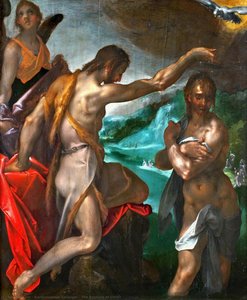
11The Fragrance (1578) čiji je Bartolomeus SprangerThe Fragrance1578 · Bavarske državne slikopisne kolekcije 12Saint Mary Magdalene (1578) čiji je Bartolomeus SprangerSaint Mary Magdalene1578 · Bavarske državne slikopisne kolekcije 13Holy Family (1578) čiji je Bartolomeus SprangerHoly Family1578 · Bavarske državne slikopisne kolekcije 14Lamentation of Christ (1576) čiji je Bartolomeus SprangerLamentation of Christ1576 · Bavarske državne slikopisne kolekcije 15Sine Cerere et Baccho friget Venus (1590) čiji je Bartolomeus SprangerSine Cerere et Baccho friget Venus1590 · Kunsthistorisches Museum 16Mountain landscape with a scene of the early history of man (1569) čiji je Bartolomeus SprangerMountain landscape with a scene of the early history of man1569 · Staatliche Kunsthalle Karlsruhe 17The contest between Apollo and Pan (1587) čiji je Bartolomeus SprangerThe contest between Apollo and Pan1587 · Bavarske državne slikopisne kolekcije 18Saint Luke painting the Virgin (1582) čiji je Bartolomeus SprangerSaint Luke painting the Virgin1582 · Bavarske državne slikopisne kolekcije 19The Flagellation of Christ (1586) čiji je Bartolomeus SprangerThe Flagellation of Christ1586 · Statens Museum For Kunst 20Jael Kills Sisera (1586) čiji je Bartolomeus SprangerJael Kills Sisera1586 · Statens Museum For Kunst 21Ecce Homo (1580) čiji je Bartolomeus SprangerEcce Homo1580 22God the father with the holy spirit and angels (1582) čiji je Bartolomeus SprangerGod the father with the holy spirit and angels1582 23Diana Resting after Hunt (1597) čiji je Bartolomeus SprangerDiana Resting after Hunt1597 · Szépművészeti Múzeum 24Diana - Luna (1600) čiji je Bartolomeus SprangerDiana - Luna1600 · Szépművészeti Múzeum 25Venus and Mercury put a blindfold over Cupid's eyes (1597) čiji je Bartolomeus SprangerVenus and Mercury put a blindfold over Cupid's eyes1597 · Germanisches Nationalmuseum 26Portrait of Zdenko Adalbert Popel, 1st Prince Lobkowicz (1568-1628) (1600) čiji je Bartolomeus SprangerPortrait of Zdenko Adalbert Popel, 1st Prince Lobkowicz (1568-1628)1600 · Narodna galerija Prag 27The Suicide of Sophonisba (1605) čiji je Bartolomeus SprangerThe Suicide of Sophonisba1605 · Narodna galerija Prag 28Amor fleeing Psyche (1599) čiji je Bartolomeus SprangerAmor fleeing Psyche1599 29Standing Nude Man (Bacchus) (1600) čiji je Bartolomeus SprangerStanding Nude Man (Bacchus)1600 30Diana and Actaeon (1600) čiji je Bartolomeus SprangerDiana and Actaeon1600 31Saint Barbara (1611) čiji je Bartolomeus SprangerSaint Barbara1611 · Szépművészeti Múzeum 32Venus and Mercury (1585) čiji je Bartolomeus SprangerVenus and Mercury1585 · Kunsthistorisches Museum 33Jupiter and Antiope (1596) čiji je Bartolomeus SprangerJupiter and Antiope1596 · Kunsthistorisches Museum 34Allegory of Justice and Prudence (1599) čiji je Bartolomeus SprangerAllegory of Justice and Prudence1599 · Luvr 35Venus and Adonis (1587) čiji je Bartolomeus SprangerVenus and Adonis1587 · Rijksmuseum 36Venus and Mars warned by Mercury (1587) čiji je Bartolomeus SprangerVenus and Mars warned by Mercury1587 · Kunsthistorisches Museum 37Hermes and Athena (1585) čiji je Bartolomeus SprangerHermes and Athena1585 · Прашки замak 38Venus and Vulcan (1610) čiji je Bartolomeus SprangerVenus and Vulcan1610 · Kunsthistorisches Museum 39Mountain landscape with a hermit (1567) čiji je Bartolomeus SprangerMountain landscape with a hermit1567 · Staatliche Kunsthalle Karlsruhe 40Figure Studies (1575) čiji je Bartolomeus SprangerFigure Studies1575 41Glaucus and Scylla (1582) čiji je Bartolomeus SprangerGlaucus and Scylla1582 · Kunsthistorisches Museum 42Diana and Actaeon (1585) čiji je Bartolomeus SprangerDiana and Actaeon1585 43Saint Margaret (1583) čiji je Bartolomeus SprangerSaint Margaret1583 44Engelen dragen het lichaam van Christus (Engelenpietà), Bartholomeus Spranger, c. 1587 (1587) čiji je Bartolomeus SprangerEngelen dragen het lichaam van Christus (Engelenpietà), Bartholomeus Spranger, c. 15871587 · Rijksmuseum 45Saint George Slaying the Dragon (1600) čiji je Bartolomeus SprangerSaint George Slaying the Dragon1600 · Szépművészeti Múzeum 46The Baptism of Christ (1603) čiji je Bartolomeus SprangerThe Baptism of Christ1603 · National Museum in Wrocław 47The Triumph of Venus (1600) čiji je Bartolomeus SprangerThe Triumph of Venus1600 48Study of a Female Nude (Venus in a Drapery) (1605) čiji je Bartolomeus SprangerStudy of a Female Nude (Venus in a Drapery)1605 · Narodni muzej u Varšavi 49Achelous and Deianeira (1600) čiji je Bartolomeus SprangerAchelous and Deianeira1600 50The Adoration of the Kings (1595) čiji je Bartolomeus SprangerThe Adoration of the Kings1595 · National Gallery 51Adoration of the Kings (1595) čiji je Bartolomeus SprangerAdoration of the Kings1595 · National Gallery 52Mercury Carrying Psyche to Mount Olympus (1611) čiji je Bartolomeus SprangerMercury Carrying Psyche to Mount Olympus1611 53Odysseus and Circe (1585) čiji je Bartolomeus SprangerOdysseus and Circe1585 · Kunsthistorisches Museum 54St Wenceslas and St Vitus čiji je Bartolomeus SprangerSt Wenceslas and St VitusNarodna galerija Prag 55St Sigismund and St Adalbert čiji je Bartolomeus SprangerSt Sigismund and St AdalbertNarodna galerija Prag 56Vulcan and Maia (1575) čiji je Bartolomeus SprangerVulcan and Maia1575 · Kunsthistorisches Museum 57Ceres and Bacchus čiji je Bartolomeus SprangerCeres and Bacchus 58Allegory čiji je Bartolomeus SprangerAllegoryMusee des Beaux-Arts 59Apotheosis of the Arts (Fame leading the Arts to Olympus) čiji je Bartolomeus SprangerApotheosis of the Arts (Fame leading the Arts to Olympus)Narodna galerija Prag 60Faun with Wounded Foot čiji je Bartolomeus SprangerFaun with Wounded Foot 61La Peinture, la Sculpture et l'Architecture čiji je Bartolomeus SprangerLa Peinture, la Sculpture et l'Architecture 62Le Christ sauveur du monde čiji je Bartolomeus SprangerLe Christ sauveur du monde 63ALLEGORIE DE LA JUSTICE čiji je Bartolomeus SprangerALLEGORIE DE LA JUSTICELuvr 64Venus + Mercury und Amus čiji je Bartolomeus SprangerVenus + Mercury und Amus 65bacchanal čiji je Bartolomeus Sprangerbacchanal 66Peter and John Heal a Cripple at the Gate of the Temple čiji je Bartolomeus SprangerPeter and John Heal a Cripple at the Gate of the Temple 67Salvator Mundi čiji je Bartolomeus SprangerSalvator Mundi 68Faith, Hope and Charity čiji je Bartolomeus SprangerFaith, Hope and Charity 69Sarah Presenting Hagar to Abraham čiji je Bartolomeus SprangerSarah Presenting Hagar to Abraham 70Christ blessing little children čiji je Bartolomeus SprangerChrist blessing little children 71Female Warrior Crushing a Satyr čiji je Bartolomeus SprangerFemale Warrior Crushing a Satyr 72Venus and Adonis (1597) čiji je Bartolomeus SprangerVenus and Adonis1597 · Kunsthistorisches Museum 73Epitaph of Goldsmith Nicolas Müller of Prague (1592) čiji je Bartolomeus SprangerEpitaph of Goldsmith Nicolas Müller of Prague1592 · Narodna galerija Prag 74Angelica and Medoro (1600) čiji je Bartolomeus SprangerAngelica and Medoro1600 · Alte Pinakothek 75Hermaphrodite and the nymph Salmacis (1582) čiji je Bartolomeus SprangerHermaphrodite and the nymph Salmacis1582 · Kunsthistorisches Museum 76Herakles and Omphale (1585) čiji je Bartolomeus SprangerHerakles and Omphale1585 · Kunsthistorisches Museum

Čuvena dela Bartolomeus Spranger po periodima

Motivi koji su privlačili pažnju Bartolomeus Spranger

Četiri teme koje se najčešće ponavljaju u ovim originalima, svaka sa svojim vrhunskim primerom.

Muzeji u kojima se čuvaju originalna dela umetnika Bartolomeus Spranger

8 muzeja u kojima se nalazi najviše slika sa ove stranice.

Muzej Grad Radovi umetnika Bartolomeus Spranger Slike iz ovog spiska
Kunsthistorisches Museum, BečKunsthistorisches Museum Beč 19 Ulysses and Circe, Allegory of Emperor Rudolf II, Hercules, Deianira, and Nessus
Bavarske državne slikopisne kolekcije, MinhenBavarske državne slikopisne kolekcije Minhen 7 Mercury and Venus, The Fragrance, Saint Mary Magdalene
Narodna galerija Prag, PragNarodna galerija Prag Prag 6 Portrait of Zdenko Adalbert Popel, 1st Prince Lobkowicz (1568-1628), The Suicide of Sophonisba, St Wenceslas and St Vitus
Szépművészeti Múzeum, BudimpeštaSzépművészeti Múzeum Budimpešta 4 Diana Resting after Hunt, Diana - Luna, Saint Barbara
Staatliche Kunsthalle Karlsruhe, KarlsrueStaatliche Kunsthalle Karlsruhe Karlsrue 2 Mountain landscape with a scene of the early history of man, Mountain landscape with a hermit
Statens Museum For Kunst, KopenhagenStatens Museum For Kunst Kopenhagen 2 The Flagellation of Christ, Jael Kills Sisera
Luvr, ParizLuvr Pariz 2 Allegory of Justice and Prudence, ALLEGORIE DE LA JUSTICE
Rijksmuseum, AmsterdamRijksmuseum Amsterdam 2 Venus and Adonis, Engelen dragen het lichaam van Christus (Engelenpietà), Bartholomeus Spranger, c. 1587

Bartolomeus Spranger kroz decenije: jedan jedinstveni original za svaku

Radovi po decenijama

Izaberite deceniju da biste videli original koji je definiše.

Slike umetnika Bartolomeus Spranger: pitanja za galeriju

Koje je najpoznatije delo umetnika Bartolomeus Spranger?Otkrij odgovor

Adoration of the Magi (1606). Slede Ulysses and Circe (1586) i Allegory of Emperor Rudolf II (1592).

U kojoj je godini Bartolomeus Spranger stvorio/la Adoration of the Magi?Otkrij odgovor

60 godina: Adoration of the Magi datira iz 1606, a Bartolomeus Spranger je rođen/a 1546.

Koji je deset najpoznatijih slika autora Bartolomeus Spranger?Otkrij odgovor

Adoration of the Magi, Ulysses and Circe, Allegory of Emperor Rudolf II, Hercules, Deianira, and Nessus, Minerva Victorious over Ignorance, Self-portrait, Fall of Man, God the Father with the Holy Ghost and angels, Apollo and the Muses i Mercury and Venus. Gornji rang pokazuje godinu i muzej za svako od njih.

Koliko je poznatih dela umetnika Bartolomeus Spranger?Otkrij odgovor

Naš katalog sadrži 76 dela umetnika Bartolomeus Spranger, datiranih od 1567 do 1611.

Gde se mogu videti najpoznatiji originali umetnika Bartolomeus Spranger?Otkrij odgovor

Većinom u Kunsthistorisches Museum (Beč), Bavarske državne slikopisne kolekcije (Minhen) i Narodna galerija Prag (Prag). Tabela muzeja iznad sadrži njih sve.

U kom periodu je Bartolomeus Spranger stvorio/la svoje najpoznatije slike?Otkrij odgovor

U 1580s: 21 od 76 dela na ovoj stranici nastalo je tada, od čega je Ulysses and Circe.

Ko je najraniji, a koje je najkasnije čuveno delo umetnika Bartolomeus Spranger?Otkrij odgovor

Na ovoj stranici, najstarije delo je iz Mountain landscape with a hermit (1567), a najnovije iz Saint Barbara (1611).

Koje su teme Bartolomeus Spranger preferirao/la?Otkrij odgovor

Man (15), Woman (14) i Drapery (5), kroz svih 76 dela na ovoj stranici.

Sa kojim materijalima je Bartolomeus Spranger najčešće slikao?Otkrij odgovor

Oil, za 11 od 76 dela na ovoj stranici.

Kojem umetničkom pravcu pripada delo umetnika Bartolomeus Spranger?Otkrij odgovor

Renaissance i Northern mannerism, sudeći po originalima na ovoj stranici.

Koja originalna dela Bartolomeus Spranger mogu videti u Kunsthistorisches Museum?Otkrij odgovor

Ulysses and Circe, Allegory of Emperor Rudolf II i Hercules, Deianira, and Nessus: Kunsthistorisches Museum, Beč čuva 19 dela sa ove stranice.

Gde mogu da naručim ručno oslikanu reprodukciju Bartolomeus Spranger?Otkrij odgovor

Da, kao reprodukcija: original ostaje u svom muzeju, ali svaku sliku sa ove stranice može se ručno naslikati za vas, po vašoj narudžbi, pojedinačno, direktno sa stranice te slike.

Bartolomeus Spranger: portret umetnika

Bartolomeus Spranger: Dvorarski slikar erotike i veličine

Bartholomäus Spranger (1546–1611), ime koje odjekuje hodnicima severnog manirizma, bio je mnogo više od običnog slikara; bio je ključna figura koja je oblikovala umetničke senzibilitete svog vremena. Rođen u Antverpenu, kao sin trgovca sa bogatim iskustvom u putovanjima, Sprangerov rani život najavljivao je budućnost duboko prožetu umetnošću i stranim uticajima. Njegovo početno obrazovanje pod vodstvom Jana Mandijna, Fransa Mostaerta i Kornelisa van Dalema pružilo mu je čvrste temelje u slikarstvu pejzaža – što je bilo iznenađujući polaznička tačka za umetnika koji će kasnije postati čuven po svojim intenzivno senzualnim prikazima nagaćenih figura. Ipak, upravo je njegovo boravište u Parizu 1565. godine, u studiju Marca Duvala, zaista zapalilo njegov umetnički put, izlažući ga novim tehnikama i perspektivama.

Rani uticaji i putovanja kroz Italiju


Sprangerov umetnički razvoj nije bio ograničen na Holandiju. On je marljivo kopirao grafike Fransa Florisa i Parmidžanina, upijajući njihove elegantne linije i sofisticovane kompozicije. Ključno je bilo to što su njegova putovanja obuhvatila i Italiju, gde je proveo osam meseci u Milanu i tri meseca u Parmi, pomažući Bernardinou Gattiju na ambicioznom projektu freski za kupolu crkve Santa Maria della Steccata. Ovo iskustvo pružilo mu je neprocenjivi uvid u tehnike slikanja na velikim formatima i izložilo ga živopisnoj umetničkoj sceni renesansne Italije. Njegov boravak u Rimu pokazao se kao posebno formativan, uspostavljajući vezu sa Đulijom Klovio, čuvenim manirističkim slikarom i dizajnerom, koji je postao njegov protežé. Upravo je tamo upoznao Karela van Mandera, čija će knjiga Schilder-boeck kasnije pružiti detaljan prikaz Sprangerovog života i dela – što je pravi dokaz umetnikovog značaja unutar umetničke zajednice.

Dvororski dvor u Pragu

Sprangerova karijera je zaista dosegla svoj vrhunac kada je 1570. godine imenovan za dvorskog slikara pape Pija V. Ipak, njegovo najtrajnije nasleđe leži u službi Svetog rimskog imperatora Rudolfa II, strastvenog kolekcionara umetnosti i ezoteričnog znanja. Preseljenje imperatorskog dvora u Prag 1581. godine označilo je prekretnicu u Sprangerovom životu. Carova fascinacija klasičnom antikom, mitologijom i alhemijom duboko je uticala na umetnikov rad. Spranger je direktno odgovorio na ove preferencije, stvarajući korpus slika u kojima dominiraju izvrsno izvedeni aktovi – često prikazani od leđa, što prenosi auru misterije i senzualnosti. To nisu bili samo dekorativni studiji; bili su to pažljivo konstruisani alegorije koje su odražavale filozofska sklonost Rudolfa II i njegovu želju da projektuje sliku moći i sofisticiranosti.

Stil i tehnika: Severni manirizam na svom vrhuncu

Sprangerov stil predstavlja autentični primer severnog manirizma, koji se odlikuje izduženim figuralnim proporcijama, složenim pozama i namernim naglašenom elegancijom i prefinjenošću. Njegova dela prepoznaju se po glatkom modeliranju forme, pedantnim detaljima i suptilnom korišćenju boje. On je vešto uspeo da stopi nederlandski realizam sa italijanskim manirističkim uticajima, naročito sa rimskom tradicijom prikazivanja klasične mitologije. Njegovi crteži, naročito, poseduju izuzetnu energiju i slobodu, što služi kao dokaz njegovog majstorskog crtačkog talenta. Radovi Bartolomeusa Sprangera odlikuju se dinamizmom koji je postignut kroz pažljivo orchestrirane dijagonale i osećaj kretanja unutar svake kompozicije. Uticaj njegovog ranijeg obrazovanja u pejzažnom slikarstvu može se primetiti u atmosferskim pozadinama koje je često koristio, pružajući dubinu i kontekst njegovim figuralnim prikazima.

Nasleđe i uticaj

Uticaj koji je Bartolomeus Spranger ostavio na evropsku umetnost zaista je neprocenjiv. Njegova dela, a posebno ona koja se čuvaju u Bečkom muzeju umetnosti (Kunsthistorisches Museum), predstavljaju vrhunac severnog manirizma. Radovi ovog umetnika služili su kao neiscrpna inspiracija narednim generacijama stvaralaca, uključujući i umetnike iz Holandske Republike, gde se njegov specifični stil širio široko putem grafika i kroz delovanje njegovih saradnika. Precizni detalji i senzualni privlačnost njegovih akata i dalje očaravaju gledaoce i danas, čvrsto utvrđujući mesto koje Bartolomeus Spranger zauzima kao majstor svog zanata i značajna figura u istoriji zapadne umetnosti. Njegova priča je priča o umetničkoj evoluciji, oblikovanoj raznolikim uticajima i na kraju definisanoj njegovom jedinstvenom vizijom — vizijom koja je neprimetno i harmonično prožela erotizam, alegoriju i imperijalni sjaj.

Sva 76 dela umetnika Bartolomeus Spranger →