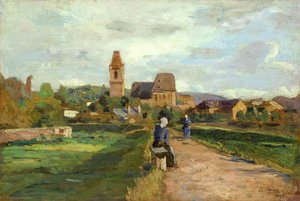
Portret Тина Блау

Slike umetnika Тина Блау: Najpoznatijih 30 kroz oči galerije

Ažurirano: новембар 2026 · rangirano prema našem koeficijentu popularnosti (pretrage, posete i porudžbine za svako delo) · 30 dela Тина Блау u našem katalogu

Ukratko

Iz perspektive galerije, najpoznatije delo umetnika Тина Блау je Spring in the Prater (1882). Lady with Child (1881) i In Krieau (1882) čine triju koju svako oko prepoznaje. Od 30 dela umetnika Тина Блау u našem katalogu, galerija u nastavku predstavlja 30 najpoznatijih dela, od kojih je svako originalno, sa navedenom godinom nastanka, muzejom i onim što ga čini jedinstvenim.

1845 – 1916, Beč Najviše dela: Bavarske državne slikopisne kolekcije

Top 10 slika umetnika Тина Блау u galeriji

1
Spring in the Prater (1882) čiji je Тина Блау

Spring in the Prater

1882 · Oil On Canvas

The oil on canvas titled Spring in the Prater captures a specific moment of seasonal transition. Created in 1882, this landscape oil painting by Tina Blau focuses on the quiet vitality of the Vienna Prater park. The artist, born in Vienna, Austria, translates the atmosphere of the public grounds into a study of light and earth.

2
Lady with Child (1881) čiji je Тина Блау

Lady with Child

1881 · Oil On Canvas

The air feels heavy and still, as if a soft, overcast sky has paused its movement to watch this intimate encounter. A woman and a young child stand together, their figures emerging from a landscape of deep burgundies and forest greens. There is a profound sense of stillness in the way they occupy the space, positioned slightly off-center as if caught in a private moment of contemplation. The light is…

3
In Krieau (1882) čiji je Тина Блау

In Krieau

1882 · Oil On Canvas

In In Krieau, Tina Blau captures a quiet afternoon within a park or woodland setting. The scene unfolds through a winding path that draws the eye deep into the distance, creating a sense of profound depth. Flanking this trail, trees stand in various stages of autumn, their foliage displaying a palette of brown, yellow, and orange. A woman and a child sit together on a bench near the path, their…

Slike umetnika Тина Блау, rangirane od 11 do 30

Motivi koji su privlačili pažnju Тина Блау

Četiri teme koje se najčešće ponavljaju u ovim originalima, svaka sa svojim vrhunskim primerom.

Muzeji u kojima se čuvaju originalna dela umetnika Тина Блау

3 muzeja u kojima se nalazi najviše slika sa ove stranice.

Muzej Grad Radovi umetnika Тина Блау Slike iz ovog spiska
Bavarske državne slikopisne kolekcije, MinhenBavarske državne slikopisne kolekcije Minhen 2 From Fischau near Wiener Neustadt, In the Krieau
Lenbachhaus, MinhenLenbachhaus Minhen 1 Hungarian Village
Leopold Museum, BečLeopold Museum Beč 1 Canal in Holland

Тина Блау, jedno autentično delo po deceniji

Radovi po decenijama

Izaberite deceniju da biste videli original koji je definiše.

Slike umetnika Тина Блау: odgovori galerije

Koja je najpoznatija slika umetnika Тина Блау?Otkrij odgovor

Spring in the Prater (1882). Slede Lady with Child (1881) i In Krieau (1882).

Koliko je godina imao/la Тина Блау kada je dovršio/la Spring in the Prater?Otkrij odgovor

37 godina: Spring in the Prater datira iz 1882, a Тина Блау je rođen/a 1845.

Koja su najbolja 10 dela umetnika Тина Блау?Otkrij odgovor

Spring in the Prater, Lady with Child, In Krieau, Hungarian Village, Studio Corner, Street in Amsterdam, Rafters on the Theiss, Egyptian Palace at the Great Exhibition in Vienna, From Fischau near Wiener Neustadt i In the Prater by the Rotunde. Gornji rang pokazuje godinu i muzej za svako od njih.

Koliko je dela stvorio/la Тина Блау?Otkrij odgovor

Naš katalog sadrži 30 dela umetnika Тина Блау, datiranih od 1872 do 1914.

Gde se nalaze najpoznatiji originali umetnika Тина Блау?Otkrij odgovor

Većinom u Bavarske državne slikopisne kolekcije (Minhen), Lenbachhaus (Minhen) i Leopold Museum (Beč). Tabela muzeja iznad sadrži njih sve.

Kada je Тина Блау stvorio svoje najpoznatije slike?Otkrij odgovor

U 1880s: 9 od 30 dela na ovoj stranici nastalo je tada, od čega je Spring in the Prater.

Koja su najranija i najkasnija poznata dela umetnika Тина Блау?Otkrij odgovor

Na ovoj stranici, najstarije delo je iz Studio Corner (1872), a najnovije iz Oetz 1901 (1914).

Kojim se motivima Тина Блау najčešće bavio?Otkrij odgovor

Gardens and parks (4) i Grass (2), kroz svih 30 dela na ovoj stranici.

U kojoj je tehnici najviše radio/la Тина Блау?Otkrij odgovor

Oil On Canvas, za 3 od 30 dela na ovoj stranici.

Koje originale umetnika Тина Блау poseduje Bavarske državne slikopisne kolekcije?Otkrij odgovor

From Fischau near Wiener Neustadt i In the Krieau: Bavarske državne slikopisne kolekcije, Minhen čuva 2 dela sa ove stranice.

Тина Блау: umetnik

Tina Blau: A Pioneering Austrian Landscape Painter

Early Life and Education

  • Born: Vienna, Austria in 1845.
  • Tina Blau, later known as Tina Blau-Lang, demonstrated a strong desire to pursue painting from a young age. Her father, a doctor in the Austro-Hungarian medical corps, provided unwavering support for her artistic ambitions.
  • She began formal training in Munich (1869–1873) with August Schaeffer and then Wilhelm Lindenschmit.
  • From 1875 to 1876, she shared a studio with Emil Jakob Schindler, though their collaboration ended after a disagreement. She briefly revisited his tutelage at Plankenberg Castle.

Artistic Development and Influences

  • Blau’s early work reflects the influence of her teachers, focusing on landscape painting.
  • Emil Jakob Schindler's impact is notable, though their relationship was complex. His emphasis on plein air painting likely influenced Blau’s later style.
  • Her artistic development saw a shift towards capturing the nuances of light and atmosphere in her landscapes.

Personal Life and Career

  • In 1883, Blau converted from Judaism to the Evangelical Lutheran Church and married Heinrich Lang, a painter specializing in horses and battle scenes.
  • The couple moved to Munich where, starting in 1889, Blau taught landscape and still life painting at the Women's Academy of the Münchner Künstlerinnenverein (Munich Women Artists' Association).
  • Her first major exhibition was held there in 1890.
  • She exhibited her work at the Palace of Fine Arts during the 1893 World's Columbian Exposition in Chicago, Illinois.

Major Achievements and Contributions

  • Following her husband’s death, Blau traveled extensively through Holland and Italy for a decade, enriching her artistic perspective.
  • In 1897, she co-founded the Wiener Frauenakademie, an art school dedicated to women's education, alongside Olga Prager, Rosa Mayreder, and Karl Federn. She taught there until 1915.
  • Her paintings often depict serene scenes of Vienna, Italy, and Holland, characterized by a delicate use of color and light.

Later Life and Legacy

  • Blau spent her final summer working in Bad Gastein before seeking medical attention in Vienna.
  • She died of cardiac arrest in 1916 and was granted an Ehrengrab (honor grave) in the Zentralfriedhof cemetery.
  • A major retrospective exhibition of her work was held by the Vienna Künstlerhaus in 1917, showcasing her significant contribution to Austrian art.
  • Historical Significance: Tina Blau is recognized as a pioneering female artist who challenged conventional norms and played a vital role in advancing art education for women. Her landscapes capture a unique sensitivity to the natural world and remain admired for their atmospheric qualities.