Portret Nikolaj Astrup

96 najpoznatijih slika umetnika Nikolaj Astrup, izbor iz galerije

Ažurirano: новембар 2026 · rangirano prema našem koeficijentu popularnosti (pretrage, posete i porudžbine za svako delo) · 96 dela Nikolaj Astrup u našem katalogu

Ukratko

Od svih originala koje je Nikolaj Astrup ostavio, najpoznatiji je Early Snow (1926), koji se nalazi u kolekciji Bergen Kunstmuseum, Bergen. Odmah za njima slede Foxgloves (1920) i Landscape with Seated Woman (1892). Naš katalog sadrži 96 dela umetnika Nikolaj Astrup; galerija je čuvala 96 dela koja svet najviše admira, od kojih je svako prikazano sa svojim datumom, muzejom i pričom.

1880 – 1928, Bremanger Neo-romanticism Najviše dela: Bergen Kunstmuseum

Top 10 slika umetnika Nikolaj Astrup: izbor galerije

1
Early Snow (1926) čiji je Nikolaj Astrup

Early Snow

1926 · Oil On Canvas · Bergen Kunstmuseum, Bergen

In Early Snow, Nikolai Astrup captures a quiet moment within a winter landscape. The scene focuses on a rustic wooden cabin nestled in a snowy environment, where the weight of the season begins to settle over the terrain. It is a depiction of rural life, showing a profound connection to the natural world through the presence of a simple dwelling amidst the elements. The subject matter suggests a stillness that…

2
Foxgloves (1920) čiji je Nikolaj Astrup

Foxgloves

1920 · Painting · Bergen Kunstmuseum, Bergen

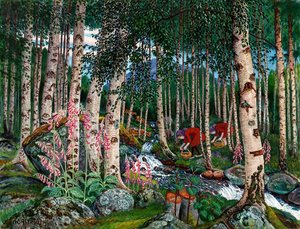
In the heart of the Norwegian landscape, where the mist clings to the valleys of Vestlandet, Nikolai Astrup captured a world that feels simultaneously grounded in reality and touched by magic. His 1920 masterpiece, Foxgloves, is far more than a mere botanical study; it is an immersive journey into a thriving, breathing ecosystem. The canvas unfolds as a lush forest sanctuary, where the dense canopy of healthy green leaves creates…

3
Landscape with Seated Woman (1892) čiji je Nikolaj Astrup

Landscape with Seated Woman

1892 · Oil On Panel · Sogn og Fjordane Kunstmuseum, Førde

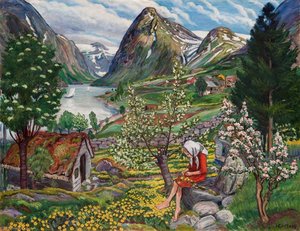
In Landscape with Seated Woman, Nikolai Astrup presents a serene rural scene that invites a quiet contemplation of the Norwegian countryside. Painted in 1892, the work captures a moment of stillness within the natural world. The landscape unfolds with a sense of calm, focusing on the quietude of a remote setting. It is a scene that feels lived-in and deeply connected to the earth.

5
Cowshed Courting (1903) čiji je Nikolaj Astrup

Cowshed Courting

In this oil painting, Cowshed Courting by Nikolai Astrup, we find ourselves drawn into a private, dimly lit space. Created about 1903, the work captures a romantic encounter held within the rustic confines of a cowshed. On the left side of the foreground, a young man and woman are locked in an embrace. Their figures form a quiet, vertical focal point amidst the shadows of the barn. The man is…

6
The Artist's Father (1900) čiji je Nikolaj Astrup

The Artist's Father

1900 · Oil On Canvas · Sogn og Fjordane Kunstmuseum, Førde

In this intimate oil portrait, Nikolai Astrup turns his gaze toward a deeply personal subject: his father. Painted about 1900, the work captures an older man in a moment of quiet presence. It is a study of character and lineage, rendered with a focus on the individual's physical presence and the weight of years. The portrait moves beyond a mere likeness to offer a glimpse into the artist's own domestic…

7
The Artist's Mother (1900) čiji je Nikolaj Astrup

The Artist's Mother

1900 · Oil · Sogn og Fjordane Kunstmuseum, Førde

is an oil portrait by the Norwegian artist Nikolai Astrup. Executed about 1900, the work captures an intimate moment of domestic life. The subject is an elderly woman captured in a medium close-up, presented from the waist up as she engages in the quiet task of knitting.

10
Sandalstrand (1926) čiji je Nikolaj Astrup

Sandalstrand

1926 · Oil On Canvas · KODE Art museums and composer homes, Bergen

Executed in 1926, Sandalstrand by Nikolai Astrup presents a serene rural scene in Norway. The work captures a specific moment of pastoral life, focusing on the quietude of the Norwegian countryside. It reflects the artist's deep connection to the landscape of Vestlandet, specifically the area around Jølster.

Izbor umetnika Nikolaj Astrup se nastavlja, od 11 do 96

11In Paradise čiji je Nikolaj AstrupIn ParadiseBergen Kunstmuseum 12Job čiji je Nikolaj AstrupJobBergen Kunstmuseum 13From Sunde (1921) čiji je Nikolaj AstrupFrom Sunde1921 · Bergen Kunstmuseum 14June Night and Old West Country Farmyard (1908) čiji je Nikolaj AstrupJune Night and Old West Country Farmyard1908 · Bergen Kunstmuseum 15Gethsemane (1926) čiji je Nikolaj AstrupGethsemane1926 · Bergen Kunstmuseum 16Svanøybukta (1905) čiji je Nikolaj AstrupSvanøybukta1905 · KODE Art museums and composer homes 17Landscape with Children (1903) čiji je Nikolaj AstrupLandscape with Children1903 · National Museum of Art, Architecture and Design 18Autumnrain in the Mountain Valley (1899) čiji je Nikolaj AstrupAutumnrain in the Mountain Valley1899 · National Museum of Art, Architecture and Design 19Night (1902) čiji je Nikolaj AstrupNight1902 · Sogn og Fjordane Kunstmuseum 20Going to the Mill (1905) čiji je Nikolaj AstrupGoing to the Mill1905 · Bergen Kunstmuseum 21Landscape in Spring (1908) čiji je Nikolaj AstrupLandscape in Spring1908 · National Museum of Art, Architecture and Design 22Mountainlandscape (1908) čiji je Nikolaj AstrupMountainlandscape1908 · National Museum of Art, Architecture and Design 23Foxgloves (1909) čiji je Nikolaj AstrupFoxgloves1909 · National Museum of Art, Architecture and Design 24Landscape in Moonlight (1907) čiji je Nikolaj AstrupLandscape in Moonlight1907 · National Museum of Art, Architecture and Design 25Landscape with Figures čiji je Nikolaj AstrupLandscape with FiguresNational Museum of Art, Architecture and Design 26The white Horse in Spring (1910) čiji je Nikolaj AstrupThe white Horse in Spring1910 · National Museum of Art, Architecture and Design 27Warmth Enters the Earth (1908) čiji je Nikolaj AstrupWarmth Enters the Earth1908 · Lillehammer Art Museum 28Rhubarb čiji je Nikolaj AstrupRhubarbKODE Art museums and composer homes 29Spring night in the garden (1909) čiji je Nikolaj AstrupSpring night in the garden1909 · KODE Art museums and composer homes 30Midsummer Eve Bonfire by Lake Jølstravatnet (1909) čiji je Nikolaj AstrupMidsummer Eve Bonfire by Lake Jølstravatnet1909 31Night in Spring (1909) čiji je Nikolaj AstrupNight in Spring1909 · Bergen Kunstmuseum 32Old Man with Beard čiji je Nikolaj AstrupOld Man with BeardSogn og Fjordane Kunstmuseum 33The Farewell čiji je Nikolaj AstrupThe FarewellBergen Kunstmuseum 34Head, Old Man with Beard čiji je Nikolaj AstrupHead, Old Man with BeardBergen Kunstmuseum 35Man Plowing (also known as Ploughman) čiji je Nikolaj AstrupMan Plowing (also known as Ploughman)Bergen Kunstmuseum 36The Fisherman čiji je Nikolaj AstrupThe FishermanBergen Kunstmuseum 37Bird on Stone (1912) čiji je Nikolaj AstrupBird on Stone1912 · KODE Art museums and composer homes 38Downy Night (1912) čiji je Nikolaj AstrupDowny Night1912 · Bergen Kunstmuseum 39Mill Water (1916) čiji je Nikolaj AstrupMill Water1916 · Bergen Kunstmuseum 40Midsummer Night Bonfire (1915) čiji je Nikolaj AstrupMidsummer Night Bonfire1915 · Bergen Kunstmuseum 41Corn Store (1920) čiji je Nikolaj AstrupCorn Store1920 · KODE Art museums and composer homes 42March Morning (1920) čiji je Nikolaj AstrupMarch Morning1920 · Bergen Kunstmuseum 43Kari Motif from Sunde (1918) čiji je Nikolaj AstrupKari Motif from Sunde1918 · Bergen Kunstmuseum 44Spring in Jølster (1925) čiji je Nikolaj AstrupSpring in Jølster1925 · National Museum of Art, Architecture and Design 45Interior with Cradle (1925) čiji je Nikolaj AstrupInterior with Cradle1925 · Bergen Kunstmuseum 46The Goose (1926) čiji je Nikolaj AstrupThe Goose1926 · Bergen Kunstmuseum 47Clear June Night čiji je Nikolaj AstrupClear June NightKODE Art museums and composer homes 48The Parsonage Garden čiji je Nikolaj AstrupThe Parsonage GardenKODE Art museums and composer homes 49At 2 PM July 14th čiji je Nikolaj AstrupAt 2 PM July 14th 50The Old Woman with the Lantern čiji je Nikolaj AstrupThe Old Woman with the LanternKODE Art museums and composer homes 51Grain Stacks čiji je Nikolaj AstrupGrain StacksSogn og Fjordane Kunstmuseum 52Storehouse in Jølster čiji je Nikolaj AstrupStorehouse in JølsterNational Museum of Art, Architecture and Design 53Wood in Winter čiji je Nikolaj AstrupWood in WinterNational Museum of Art, Architecture and Design 54Myklebust čiji je Nikolaj AstrupMyklebustSogn og Fjordane Kunstmuseum 55Fisherman čiji je Nikolaj AstrupFisherman 56Landscape from Ålhus čiji je Nikolaj AstrupLandscape from ÅlhusBergen Kunstmuseum 57Naked Trees čiji je Nikolaj AstrupNaked TreesBergen Kunstmuseum 58The Farmer čiji je Nikolaj AstrupThe FarmerBergen Kunstmuseum 59Girl Spinning čiji je Nikolaj AstrupGirl SpinningBergen Kunstmuseum 60Marigold Night (also known as Soleienatt) čiji je Nikolaj AstrupMarigold Night (also known as Soleienatt) 61Menu 9 7.22 čiji je Nikolaj AstrupMenu 9 7.22Bergen Kunstmuseum 62Jølster Woman with Hood čiji je Nikolaj AstrupJølster Woman with HoodBergen Kunstmuseum 63Juninatt i haven (A Night in June in the Garden) čiji je Nikolaj AstrupJuninatt i haven (A Night in June in the Garden) 64Man's Head with Cap čiji je Nikolaj AstrupMan's Head with CapBergen Kunstmuseum 65Ålhustunet, Jølster čiji je Nikolaj AstrupÅlhustunet, Jølster 66Landscape Ålhusdalen čiji je Nikolaj AstrupLandscape ÅlhusdalenBergen Kunstmuseum 67Landscape with Pine čiji je Nikolaj AstrupLandscape with PineBergen Kunstmuseum 68Men Binding Hay Racks čiji je Nikolaj AstrupMen Binding Hay RacksBergen Kunstmuseum 69Kari paa Sunde čiji je Nikolaj AstrupKari paa Sunde 70Inger Grimsbø, Old Jølster Girl čiji je Nikolaj AstrupInger Grimsbø, Old Jølster GirlBergen Kunstmuseum 71The Hat Thief čiji je Nikolaj AstrupThe Hat ThiefBergen Kunstmuseum 72May Moon čiji je Nikolaj AstrupMay MoonBergen Kunstmuseum 73Man Cutting Branches from Sallow čiji je Nikolaj AstrupMan Cutting Branches from SallowBergen Kunstmuseum 74Landscape with Hay Rack and House čiji je Nikolaj AstrupLandscape with Hay Rack and HouseBergen Kunstmuseum 75Elements from Spring and Will čiji je Nikolaj AstrupElements from Spring and WillBergen Kunstmuseum 76The Godly Cobbler čiji je Nikolaj AstrupThe Godly CobblerBergen Kunstmuseum 77Landscape with White House čiji je Nikolaj AstrupLandscape with White HouseBergen Kunstmuseum 78Knitting Woman čiji je Nikolaj AstrupKnitting WomanBergen Kunstmuseum 79Great Grandfather of Half the Village čiji je Nikolaj AstrupGreat Grandfather of Half the VillageBergen Kunstmuseum 80The Eager Suitor čiji je Nikolaj AstrupThe Eager SuitorBergen Kunstmuseum 81June Night čiji je Nikolaj AstrupJune NightBergen Kunstmuseum 82Jølster Tale čiji je Nikolaj AstrupJølster TaleBergen Kunstmuseum 83Early Summer in Jølster čiji je Nikolaj AstrupEarly Summer in JølsterBergen Kunstmuseum 84Home from Work čiji je Nikolaj AstrupHome from WorkBergen Kunstmuseum 85Marigold Night čiji je Nikolaj AstrupMarigold NightBergen Kunstmuseum 86Growing Weather in Sandalstrand čiji je Nikolaj AstrupGrowing Weather in SandalstrandBergen Kunstmuseum 87Large Stook čiji je Nikolaj AstrupLarge StookBergen Kunstmuseum 88Midsummer Night Bonfire (sketch) čiji je Nikolaj AstrupMidsummer Night Bonfire (sketch)Bergen Kunstmuseum 89Mill Water (woodcut) čiji je Nikolaj AstrupMill Water (woodcut)Bergen Kunstmuseum 90The Gypsy Girl čiji je Nikolaj AstrupThe Gypsy GirlBergen Kunstmuseum 91May Moon, Winter Night čiji je Nikolaj AstrupMay Moon, Winter NightBergen Kunstmuseum 92Haymaking čiji je Nikolaj AstrupHaymakingBergen Kunstmuseum 93Midsummer Night Bonfire (woodcut) čiji je Nikolaj AstrupMidsummer Night Bonfire (woodcut)Bergen Kunstmuseum 94The Doll House čiji je Nikolaj AstrupThe Doll HouseBergen Kunstmuseum 95Mother and Child(ren ) by the Garden Table čiji je Nikolaj AstrupMother and Child(ren ) by the Garden TableBergen Kunstmuseum 96Bonfire celebrating Midsummer Night (1912) čiji je Nikolaj AstrupBonfire celebrating Midsummer Night1912 · National Museum of Art, Architecture and Design

Čuvena dela Nikolaj Astrup po periodima

Motivi koji su privlačili pažnju Nikolaj Astrup

Četiri teme koje se najčešće ponavljaju u ovim originalima, svaka sa svojim vrhunskim primerom.

Muzeji u kojima se čuvaju originalna dela umetnika Nikolaj Astrup

5 muzeja u kojima se nalazi najviše slika sa ove stranice.

Muzej Grad Radovi umetnika Nikolaj Astrup Slike iz ovog spiska
Bergen Kunstmuseum, BergenBergen Kunstmuseum Bergen 56 Early Snow, Foxgloves, In Paradise
National Museum of Art, Architecture and Design, OsloNational Museum of Art, Architecture and Design Oslo 15 Portrait of a young Girl, Landscape with Figures, Spring Evening in Jølster
KODE Art museums and composer homes Bergen 10 Cowshed Courting, Sandalstrand, Svanøybukta
Sogn og Fjordane Kunstmuseum, FørdeSogn og Fjordane Kunstmuseum Førde 7 Landscape with Seated Woman, The Artist's Father, The Artist's Mother
Lillehammer Art Museum, LillehammerLillehammer Art Museum Lillehammer 1 Warmth Enters the Earth

Nikolaj Astrup deceniju po deceniju: original koji definiše svaku od njih

Radovi po decenijama

Izaberite deceniju da biste videli original koji je definiše.

Pitanja kolekcionara o slikama umetnika Nikolaj Astrup

Po kojem delu je Nikolaj Astrup najpoznatiji/a?Otkrij odgovor

Early Snow (1926), Bergen Kunstmuseum, Bergen. Slede Foxgloves (1920) i Landscape with Seated Woman (1892).

Koliko je godina imao/la Nikolaj Astrup kada je nastalo delo Early Snow?Otkrij odgovor

46 godina: Early Snow datira iz 1926, a Nikolaj Astrup je rođen/a 1880.

Koja su deset najpoznatijih slika umetnika Nikolaj Astrup?Otkrij odgovor

Early Snow, Foxgloves, Landscape with Seated Woman, Portrait of a young Girl, Cowshed Courting, The Artist's Father, The Artist's Mother, Landscape with Figures, Spring Evening in Jølster i Sandalstrand. Gornji rang pokazuje godinu i muzej za svako od njih.

Koliko je slika ostavio Nikolaj Astrup?Otkrij odgovor

Naš katalog sadrži 96 dela umetnika Nikolaj Astrup, datiranih od 1892 do 1926.

U kojim muzejima se nalaze remek-dela umetnika Nikolaj Astrup?Otkrij odgovor

Većinom u Bergen Kunstmuseum (Bergen), National Museum of Art, Architecture and Design (Oslo) i KODE Art museums and composer homes (Bergen). Tabela muzeja iznad sadrži njih sve.

U kojim godinama je Nikolaj Astrup naslikao svoja najpoznatija dela?Otkrij odgovor

U 1900s: 18 od 96 dela na ovoj stranici nastalo je tada, od čega je Portrait of a young Girl.

Koja su prva i poslednja čuvena originalna dela umetnika Nikolaj Astrup?Otkrij odgovor

Na ovoj stranici, najstarije delo je iz Landscape with Seated Woman (1892), a najnovije iz Early Snow (1926).

Koje je motive Nikolaj Astrup najčešće birao/la?Otkrij odgovor

Trees (6), Woman (5) i Landscape (4), kroz svih 96 dela na ovoj stranici.

Koju je tehniku najčešće koristio/la Nikolaj Astrup?Otkrij odgovor

Oil On Canvas, za 7 od 96 dela na ovoj stranici.

Kojem umetničkom pravcu pripada Nikolaj Astrup?Otkrij odgovor

Neo-romanticism, sudeći po originalima na ovoj stranici.

Čija se dela umetnika Nikolaj Astrup nalaze u Bergen Kunstmuseum?Otkrij odgovor

Early Snow, Foxgloves i In Paradise: Bergen Kunstmuseum, Bergen čuva 56 dela sa ove stranice.

Nikolaj Astrup: život i delo

Vizionar norveške divljine

Nikolaj Astrup stoji kao jedinstvena figura u istoriji norveške umetnosti — slikar čija je duboka povezanost sa pejzažima i tradicijama Vestlandena učvrstila njegovo mesto među najprepoznatljivijim neoromantičnim umetnicima svog vremena. Rođen 30. avgusta 1880. godine u obalnom selu Kalvåg, u surovoj regiji Bremanger, Astrupovo rano detinjstvo bilo je prožeto atmosferskim lepoti fjorda i planina. Kao najstariji sin župnog sveštenika, njegovo odrastanje obeležila je određena porodična pobožnost, ali njegovo srce je nepovratno bilo privučeno živom, pulsirajućom energiji prirodnog sveta. Ova duboka veza sa njegovim korenima na kraju će ga usmeriti ka stilu koji karakterišu intenzivne palete boja i nepokolebljiva posvećenost prikazivanju svakodnevnog života i folklorne baštine ruralne Norveške.

Njegov put ka umetničkom majstorstvu nije bio pravolinijski, već duševno istraživanje tradicije i modernizma. Iako su prvobitni nagoni sugerisali život u teološkim studijama, Astrupova strast prema crtanju odvela ga je iz Katedralne škole u Trondheimu ka rastućoj umetničkoj sceni u Kristianiji (Oslo). Upravo je tamo, pod uticajnim mentorstvom Harriet Backer, počeo da usavršava svoje tehničke veštine. Kratak, ali transformativan boravak u Parizu dodatno je obogatio njegovu viziju, izlažući ga avangardnim pokretima tog doba i podstičući veze sa kolegama umetnicima poput Christiana Krohga. Ovi susreti sa impresionističkim tehnikama i širim evropskim perspektivom pružili su mu alate da na kraju utka tradiciju i inovaciju u jedan jedinstven, koherentan umetnički jezik.

Duh Jølstera i magija realizma

Godine 1902. Astrup je doneo ključnu odluku da se vrati svom rodnom domu u Jølsteru, naselivši se na imanju Sandalstrand. Ovaj povratak bio je više od povratka kući; bio je to čin uranjanja u muzu koja će ga pratiti celog života. Uz svoju suprugu, Engel Sunde, podigao je osmoro dece usred zahtevnih ekonomskih realija ruralnog života, ali upravo je ta teškoća podstakla njegovu kreativnu snagu. Postao je majstor u hvatanju magičnog realizma norveškog pejzaža, gde su bujna zelenena letnjih dana i surova, tiha samoća zime prikazani sa gotovo natprirodnim intenzitetom. Njegovo delo često prevazilazi puku reprezentaciju, koristeći živopisnu i bogatu paletu boja kako bi izazvalo mističnu atmosferu planina i sezonske promene fjorda.

Astrupova tehnika bila je podjednako povezana sa emocijom kao i sa posmatranjem. Bio je vešt grafičar i hortikulturnar, osobine koje su oblikovale njegov složeni pristup kompoziciji. U njegovim drvoreznim štampama i slikama može se primetiti kako je modifikovao raspoloženja kroz suptilne promene u boji i strateško dodavanje ili uklanjanje motiva. Njegovo delo je slavljeno zbog sposobnosti da uhvati uzvišeno — taj očaravajući presek lepote i strahopoštovanja. Bilo da je prikazivao spokojnu zimsku scenu poput Mill Water ili sablasno lepe monohromatske pejzaže u delu Naked Trees, Astrupova umetnost poziva posmatrača u svet u kojem su granice između fizičkog pejzaža i duhovnog domena prelepo zamagljene.

Nasleđe nacionalnog vizuelnog jezika

Pored njegovih pojedinačnih platana, istorijski značaj Nikolaja Astrupa leži u njegovom pionirskom naporu da uhvati nacionalni vizuelni jezik. On nije samo slikao prirodu; on je dokumentovao samu esenciju norveškog identiteta, slaveći tradicionalni način života i folklor koji je definisao region Vestlandena. Njegova sposobnost da spoji lokalno sa univerzalnim omogućila je njegovom radu da odjekne daleko izvan granica Norveške, čak i ako je tokom svog života ostao uglavnom nepoznat široj međunarodnoj zajednici. On ostaje stub norveškog modernizma, umetnik koji je pronašao beskonačno u onome što je najintimnije.

Trajni uticaj njegovog života i rada može se sažeti kroz ove ključne elemente:

  • Umetnička inovacija: Besprekorna integracija impresionističkih poteza četkicom sa neoromantičkim temama.
  • Kulturno čuvanje: Posvećen fokus na tradicije, običaje i pejzaže regiona Jølster.
  • Tehničko majstorstvo: Izuzetna kontrola nad bojom i grafičkim tehnikama koja je omogućila duboku emocionalnu rezonancu.
  • Ekološka povezanost: Njegov život na Sandalstrandu služio je kao rani manifest dubokog poštovanja prema prirodnom okruženju i očuvanju prirode.

Iako je njegov život bio tragično kratak, završen 1928. godine u pedeset sedam. godini, nasleđe Nikolaja Astrupa nastavlja da cveta. Njegine slike ostaju vibrantni prozori u izgubljeno doba, nudeći vanvremenski uvid u srce norveške divljine.