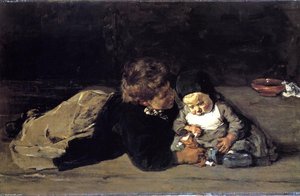
Portret Макс Либерман

100 najpoznatijih slika umetnika Макс Либерман, izbor iz galerije

Ažurirano: октобар 2026 · rangirano prema našem koeficijentu popularnosti (pretrage, posete i porudžbine za svako delo) · 280 dela Макс Либерман u našem katalogu

Ukratko

Od svih originala koje je Макс Либерман ostavio, najpoznatiji je Slobodan čas u amsterdamskom sirovišta (1876). Odmah za njima slede Self Portrait with Kitchen Still LIfe (1873) i Corner of a Dutch Village with Washing Hung up to Dry (1890). Naš katalog sadrži 280 dela umetnika Макс Либерман; galerija je čuvala 100 dela koja svet najviše admira, od kojih je svako prikazano sa svojim datumom, muzejom i pričom.

1847 – 1935, Берлин Impressionism Najviše dela: Alte Nationalgalerie

Top 10 slika umetnika Макс Либерман: izbor galerije

1
Slobodan čas u amsterdamskom sirovišta (1876) čiji je Макс Либерман

Slobodan čas u amsterdamskom sirovišta

1876 · Ulje na platnu

Max Liebermannovo delo "Slobodan čas u amsterdamskom sirovišta", nastalo 1876. godine, nije samo slika; to je prozor u jedan specifičan trenutak života u 19. veku, pažljivo zabilježen kroz prizmu impresionizma. Ova kompozicija nas poziva da se prisetimo svakodnevice, zajednice i ljudske povezanosti, a sve to kroz perspektivu umetnika koji je bio majstor u hvatanju prolaznih trenutaka.

2
Self Portrait with Kitchen Still LIfe (1873) čiji je Макс Либерман

Self Portrait with Kitchen Still LIfe

1873 · Oil On Canvas · Stadtisches Museum, Gelsenkirchen

To stand before Max Liebermann’s Self Portrait with Kitchen Still Life is not merely to observe a painting; it is to step directly into the vibrant, sun-drenched moments of late nineteenth-century Berlin. Created in 1873, this oil on canvas captures more than just a likeness; it encapsulates the artist's profound belief that true beauty resides within the quotidian—the humble objects and simple acts of daily life. Liebermann, a master whose…

3
Corner of a Dutch Village with Washing Hung up to Dry (1890) čiji je Макс Либерман

Corner of a Dutch Village with Washing Hung up to Dry

1890 · Oil On Panel · Harvard Art Museums, Kembriđ

The air feels heavy with the scent of damp fabric and the salt of a nearby coast. In this corner of a Dutch village, time seems to pause, caught in the soft, overcast light of 1890. A white building dominates the immediate view, its red door and blue shutters providing the only sharp interruptions to the muted, earthy tones of the village. Above the doorway, laundry hangs from a line,…

4
Portrait of Richard Strauss (1918) čiji je Макс Либерман

Portrait of Richard Strauss

1918 · Oil · Alte Nationalgalerie, Berlin

This 1918 impressionist painting by Max Liebermann presents a black and white portrait of Richard Strauss. The subject is depicted sitting in a chair with his hands clasped together, wearing a suit and tie. He is shown with a mustache and appears to be looking directly at the viewer. To provide depth to the scene, the background features a curtain behind the seated man.

5
Restaurant De oude Vink (1905) čiji je Макс Либерман

Restaurant De oude Vink

1905 · Oil

There is a certain quietude found in the middle of a crowd, a feeling captured here in 1905. In Restaurant De oude Vink, we find ourselves seated among patrons enjoying a meal under the dappled shade of trees. The scene is one of casual, unhurried leisure. Green chairs are scattered around tables, some occupied by figures lost in conversation, others left empty as if the guests have only just stepped…

6
Self-portrait (1916) čiji je Макс Либерман

Self-portrait

1916 · Oil On Canvas · Kunsthalle Bremen, Bremen

An older man sits in a moment of quiet creation, his presence filling the space with a heavy, contemplative dignity. He faces the viewer directly, his gaze steady and unblinking, even as his hands remain occupied with the tools of his trade. In his right hand, he holds a palette, while his left hand brings a brush toward an easel, capturing a fragment of life in real-time. The light enters…

7
The Preserve Makers (1879) čiji je Макс Либерман

The Preserve Makers

1879 · Oil On Canvas · Museum der bildenden Künste, Leipzig

The Preserve Makers is a somber and intimate realist painting that captures a group of women gathered within a dimly lit, rustic interior. The composition is dense and crowded, utilizing a shallow depth of field that brings the figures into the immediate foreground to create a sense of enclosure and shared labor. These women are engaged in the communal task of preparing vegetables, their presence evoking a sense of quiet…

8
Schreitender Bauer (1894) čiji je Макс Либерман

Schreitender Bauer

1894 · Oil On Canvas

An elderly man traverses a grassy landscape, his form weighted by a large bag slung over his shoulder and a backpack. He moves with the measured pace of age, supported by a cane that meets the earth with steady intent. His attire, including a hat and practical clothing, suggests a life defined by outdoor toil. In the distance, two other figures punctuate the horizon, grounding the solitary traveler within a…

9
KIRCHGANG IN Laren čiji je Макс Либерман

KIRCHGANG IN Laren

Oil On Canvas

In KIRCHGANG IN Laren, Max Liebermann captures a quiet moment of movement along a winding path. A group of figures, primarily women, stroll through a wooded area or park, their presence breathing life into the landscape. They wear traditional clothing that suggests a connection to a specific way of life, moving steadily through the greenery. The scene unfolds as a leisurely walk in nature, a simple slice of everyday existence…

Izbor umetnika Макс Либерман se nastavlja, od 11 do 100

11The farrier (1874) čiji je Макс ЛиберманThe farrier1874 · Staatliche Kunsthalle Karlsruhe 12Young Boys Bathing at Zandvoort (1896) čiji je Макс ЛиберманYoung Boys Bathing at Zandvoort1896 13Albert Einstein (1879–1955) (1922) čiji je Макс ЛиберманAlbert Einstein (1879–1955)1922 · Royal Society 14Portrait Study of Emil Rathenau (1908) čiji je Макс ЛиберманPortrait Study of Emil Rathenau1908 · Alte Nationalgalerie 15Portrait Dr. Wilhelm Bode (1909) čiji je Макс ЛиберманPortrait Dr. Wilhelm Bode1909 · Alte Nationalgalerie 16The Siblings (1876) čiji je Макс ЛиберманThe Siblings1876 · Staatliche Kunstsammlungen 17Swimmers (1875) čiji je Макс ЛиберманSwimmers1875 · Dallas Museum of Art 18The Basketweavers (Die Korbflechter) (1872) čiji je Макс ЛиберманThe Basketweavers (Die Korbflechter)1872 · Staatliche Kunsthalle Karlsruhe 19Infant school in Amsterdam (1880) čiji je Макс ЛиберманInfant school in Amsterdam1880 · Alte Nationalgalerie 20Road in Dutch Village (1885) čiji je Макс ЛиберманRoad in Dutch Village1885 21Girl from Laren Peeling Potatoes with Sleeping Child in a Basket (1887) čiji je Макс ЛиберманGirl from Laren Peeling Potatoes with Sleeping Child in a Basket1887 · Museum Kunst der Westküste 22The Net Menders (1888) čiji je Макс ЛиберманThe Net Menders1888 · Hamburger Kunsthalle 23Dr. Max Linde (1897) čiji je Макс ЛиберманDr. Max Linde1897 · Narodna galerija Prag 24Going to School in Laren - Composition Study (1898) čiji je Макс ЛиберманGoing to School in Laren - Composition Study1898 25Samson and Delilah (1902) čiji je Макс ЛиберманSamson and Delilah1902 · Städel Museum 26Painting of the artist's mother (1900) čiji je Макс ЛиберманPainting of the artist's mother1900 · Slovak National Gallery 27Two Riders on the Beach to the left (1901) čiji je Макс ЛиберманTwo Riders on the Beach to the left1901 28Copy of the Bohémienne after Frans Hals (Young woman) (1870) čiji je Макс ЛиберманCopy of the Bohémienne after Frans Hals (Young woman)1870 · Staatliche Kunsthalle Karlsruhe 29The Terrace at the Hotel Louis C. Jacob in Nienstedten on the Elbe (1902) čiji je Макс ЛиберманThe Terrace at the Hotel Louis C. Jacob in Nienstedten on the Elbe1902 · Hamburger Kunsthalle 30Two riders on the beach (1903) čiji je Макс ЛиберманTwo riders on the beach1903 · Wallraf-Richartz-Museum 31Man with parrots (1900) čiji je Макс ЛиберманMan with parrots1900 32Dutch Farmhouse with Woman (1882) čiji je Макс ЛиберманDutch Farmhouse with Woman1882 · Frye Art Museum 33Rider on the Beach (1904) čiji je Макс ЛиберманRider on the Beach1904 34On the Alster in Hamburg (1910) čiji je Макс ЛиберманOn the Alster in Hamburg1910 · Staatliche Kunstsammlungen Dresden 35The Lifeguard's cart (1908) čiji je Макс ЛиберманThe Lifeguard's cart1908 36Self-portrait (1908) čiji je Макс ЛиберманSelf-portrait1908 · Wallraf-Richartz-Museum 37Self-Portrait with Panama Hat (1911) čiji je Макс ЛиберманSelf-Portrait with Panama Hat1911 38Self-Portrait with Straw Hat (1914) čiji je Макс ЛиберманSelf-Portrait with Straw Hat1914 · Dordrechts Museum 39Self-portrait, standing in three-quarter figure, both hands in trouser pockets (Selbstbildnis, stehend in Dreiviertelfigur, beide Hände in den Hosentaschen) (1915) čiji je Макс ЛиберманSelf-portrait, standing in three-quarter figure, both hands in trouser pockets (Selbstbildnis, stehend in Dreiviertelfigur, beide Hände in den Hosentaschen)1915 · Alte Nationalgalerie 40Self-Portrait with Palette to the Left (1912) čiji je Макс ЛиберманSelf-Portrait with Palette to the Left1912 · Berlinische Galerie 41Käthe Liebermann – The Artist's Daughter (1916) čiji je Макс ЛиберманKäthe Liebermann – The Artist's Daughter1916 42The artist's daughter riding (1913) čiji je Макс ЛиберманThe artist's daughter riding1913 · Wallraf-Richartz-Museum 43Study: Bust of a Man / Bust of a Woman – Two-sided Painting (1875) čiji je Макс ЛиберманStudy: Bust of a Man / Bust of a Woman – Two-sided Painting1875 · Nacionalni muzej u Krakovu 44Ulrich von Wilamowitz Moellendorff (1915) čiji je Макс ЛиберманUlrich von Wilamowitz Moellendorff1915 45Sketches of Jozef Israëls (1912) čiji je Макс ЛиберманSketches of Jozef Israëls1912 · Ben Uri Gallery and Museum 46Portrait of the Berlin Garden Director Albert Brodersen (1920) čiji je Макс ЛиберманPortrait of the Berlin Garden Director Albert Brodersen1920 47Self portrait in painting smock (Selbstbildnis im Malkittel) (1922) čiji je Макс ЛиберманSelf portrait in painting smock (Selbstbildnis im Malkittel)1922 · Bavarske državne slikopisne kolekcije 48Portrait of Jeanette Cornelia A. Onnes van Nijenrode-Cockuijt (1883-1936) (1918) čiji je Макс ЛиберманPortrait of Jeanette Cornelia A. Onnes van Nijenrode-Cockuijt (1883-1936)1918 · Centraal Museum 49Portrait August Batschari (1918) čiji je Макс ЛиберманPortrait August Batschari1918 · Westfälisches Landesmuseum 50Self-Portrait (1922) čiji je Макс ЛиберманSelf-Portrait1922 51The Liebermann Family (1926) čiji je Макс ЛиберманThe Liebermann Family1926 · Stiftung Stadtmuseum 52Self-Portrait with sports cap at the easel (1925) čiji je Макс ЛиберманSelf-Portrait with sports cap at the easel1925 · Alte Nationalgalerie 53A Dutch lacemaker (1881) čiji je Макс ЛиберманA Dutch lacemaker1881 · Hamburger Kunsthalle 54Gerhart Hauptmann (1912) čiji je Макс ЛиберманGerhart Hauptmann1912 · Hamburger Kunsthalle 55The Surgeon Dr. Ferdinand Sauerbruch (1932) čiji je Макс ЛиберманThe Surgeon Dr. Ferdinand Sauerbruch1932 · Hamburger Kunsthalle 56Digging for Potatoes in the Dunes at Zandvoort (1895) čiji je Макс ЛиберманDigging for Potatoes in the Dunes at Zandvoort1895 · Germanisches Nationalmuseum 57Bust Selfportrait in Paiting Overall (1922) čiji je Макс ЛиберманBust Selfportrait in Paiting Overall1922 · Stiftung Brandenburger Tor 58Study for Flax Barn in Laren (1886) čiji je Макс ЛиберманStudy for Flax Barn in Laren1886 · Grohmann Museum 59On the Beach at Noordwijk (1908) čiji je Макс ЛиберманOn the Beach at Noordwijk1908 60Children Bathing in the Sea (1899) čiji je Макс ЛиберманChildren Bathing in the Sea1899 · Bavarske državne slikopisne kolekcije 61Landschaft mit schafherde čiji je Макс ЛиберманLandschaft mit schafherde 62Albert einstein čiji je Макс ЛиберманAlbert einstein 63Arbeiterin im rübenfeld čiji je Макс ЛиберманArbeiterin im rübenfeld 64Flower Terrace in the Wannsee Garden, Facing East (1924) čiji je Макс ЛиберманFlower Terrace in the Wannsee Garden, Facing East1924 65Recess in the Amsterdam Orphanage - View of the Inner Courtyard, Study (1876) čiji je Макс ЛиберманRecess in the Amsterdam Orphanage - View of the Inner Courtyard, Study1876 · Alte Nationalgalerie 66Terrace in the Garden near the Wannsee toward Southwest (1919) čiji je Макс ЛиберманTerrace in the Garden near the Wannsee toward Southwest1919 67Flowers at the Gardener's House toward the Northwest (sketch) (1921) čiji je Макс ЛиберманFlowers at the Gardener's House toward the Northwest (sketch)1921 68The Flower Terrace in the Wannsee Garden, Facing Northwest (1923) čiji je Макс ЛиберманThe Flower Terrace in the Wannsee Garden, Facing Northwest1923 · Stadtisches Museum 69Old Men's Home in Amsterdam, Study (1880) čiji je Макс ЛиберманOld Men's Home in Amsterdam, Study1880 70Study Head of a Man (also known as Sephardic Jew with a Prayer Shawl, Facing Left) (1878) čiji je Макс ЛиберманStudy Head of a Man (also known as Sephardic Jew with a Prayer Shawl, Facing Left)1878 · Kunsthaus Zürich 71View of the Wannsee with sailing boats (1924) čiji je Макс ЛиберманView of the Wannsee with sailing boats1924 · Alte Nationalgalerie 72View over the Tall Linden Hedge into the Cutting Garden toward the West (1929) čiji je Макс ЛиберманView over the Tall Linden Hedge into the Cutting Garden toward the West1929 73The Terrace in the Wannsee Garden toward the Northwest (1926) čiji je Макс ЛиберманThe Terrace in the Wannsee Garden toward the Northwest1926 74Parrot Avenue (1902) čiji je Макс ЛиберманParrot Avenue1902 · Kunsthalle Bremen 75Table with Pieces of Meat (1877) čiji je Макс ЛиберманTable with Pieces of Meat1877 · Neue Pinakothek 76Birch grow čiji je Макс ЛиберманBirch grow 77A rider on the beach čiji je Макс ЛиберманA rider on the beach 78Amsterdam Orphans in the Garden (1885) čiji je Макс ЛиберманAmsterdam Orphans in the Garden1885 79The Surgeon, Ferdinand Sauerbruch (1932) čiji je Макс ЛиберманThe Surgeon, Ferdinand Sauerbruch1932 80Outdoor Garden on the Havel, Nikolskoe (1916) čiji je Макс ЛиберманOutdoor Garden on the Havel, Nikolskoe1916 81The Cutting Garden in Wannsee toward the West, with a Woman Gardener on the Path (1924) čiji je Макс ЛиберманThe Cutting Garden in Wannsee toward the West, with a Woman Gardener on the Path1924 82Flowers at the Gardener's House (1927) čiji je Макс ЛиберманFlowers at the Gardener's House1927 83Terrace in the Garden near the Wannsee toward Northwest (1916) čiji je Макс ЛиберманTerrace in the Garden near the Wannsee toward Northwest1916 · Muzej fine umetnosti u Hjustonu 84The Circular Bed in the Hedge Garden with a Woman Watering Flowers (1925) čiji je Макс ЛиберманThe Circular Bed in the Hedge Garden with a Woman Watering Flowers1925 85Portrait of Felix Liebermann (1865) čiji je Макс ЛиберманPortrait of Felix Liebermann1865 86Jewish Street in Amsterdam (1908) čiji je Макс ЛиберманJewish Street in Amsterdam1908 · Städel Museum 87Still life of meat (Fleischstillleben) (1878) čiji je Макс ЛиберманStill life of meat (Fleischstillleben)1878 · Bavarske državne slikopisne kolekcije 88Hand of an officer of the Haarlem Guard (1876) čiji je Макс ЛиберманHand of an officer of the Haarlem Guard1876 89Grain Harvest (1874) čiji je Макс ЛиберманGrain Harvest1874 · Westfälisches Landesmuseum 90Amsterdam Orphanage (1876) čiji je Макс ЛиберманAmsterdam Orphanage1876 · Arp Museum Bahnhof Rolandseck 91Terrace in the Garden near the Wannsee towards Northwest (1916) čiji je Макс ЛиберманTerrace in the Garden near the Wannsee towards Northwest1916 · Muzej fine umetnosti u Hjustonu 92Nets and Sails Spread over a Meadow: Study for the Net Menders (1884) čiji je Макс ЛиберманNets and Sails Spread over a Meadow: Study for the Net Menders1884 · Izraelski muzej 93Shoemaker (1881) čiji je Макс ЛиберманShoemaker1881 · Alte Nationalgalerie 94Girl Sewing with Cat - Dutch Interior (1884) čiji je Макс ЛиберманGirl Sewing with Cat - Dutch Interior1884 95Village Pond in Etzenhauser - Village Idyll (1879) čiji je Макс ЛиберманVillage Pond in Etzenhauser - Village Idyll1879 96Village Street in MIlitsh - Landscape with Pond (1883) čiji je Макс ЛиберманVillage Street in MIlitsh - Landscape with Pond1883 97Children's playground in Tiergarten park in Berlin (1885) čiji je Макс ЛиберманChildren's playground in Tiergarten park in Berlin1885 98Privy Councilor Benjamin Liebermann (1887) čiji je Макс ЛиберманPrivy Councilor Benjamin Liebermann1887 99Stevenstift in Leiden (1889) čiji je Макс ЛиберманStevenstift in Leiden1889 100Portrait of Professor Dr. Carl Bernstein (1892) čiji je Макс ЛиберманPortrait of Professor Dr. Carl Bernstein1892

Čuvena dela Макс Либерман po periodima

Motivi koji su privlačili pažnju Макс Либерман

Četiri teme koje se najčešće ponavljaju u ovim originalima, svaka sa svojim vrhunskim primerom.

Muzeji u kojima se čuvaju originalna dela umetnika Макс Либерман

8 muzeja u kojima se nalazi najviše slika sa ove stranice.

Muzej Grad Radovi umetnika Макс Либерман Slike iz ovog spiska
Alte Nationalgalerie, BerlinAlte Nationalgalerie Berlin 17 Portrait of Richard Strauss, Portrait Study of Emil Rathenau, Portrait Dr. Wilhelm Bode
Hamburger Kunsthalle, HamburgHamburger Kunsthalle Hamburg 8 The Net Menders, The Terrace at the Hotel Louis C. Jacob in Nienstedten on the Elbe, A Dutch lacemaker
Wallraf-Richartz-Museum, KelnWallraf-Richartz-Museum Keln 6 Two riders on the beach, Self-portrait, The artist's daughter riding
Bavarske državne slikopisne kolekcije, MinhenBavarske državne slikopisne kolekcije Minhen 6 Self portrait in painting smock (Selbstbildnis im Malkittel), Children Bathing in the Sea, Still life of meat (Fleischstillleben)
Staatliche Kunsthalle Karlsruhe, KarlsrueStaatliche Kunsthalle Karlsruhe Karlsrue 5 The farrier, The Basketweavers (Die Korbflechter), Copy of the Bohémienne after Frans Hals (Young woman)
Stadtisches Museum, GelsenkirchenStadtisches Museum Gelsenkirchen 3 Self Portrait with Kitchen Still LIfe, The Flower Terrace in the Wannsee Garden, Facing Northwest
Kunsthalle Bremen, BremenKunsthalle Bremen Bremen 3 Self-portrait, Parrot Avenue
Staatliche Kunstsammlungen Dresden, DrezdenStaatliche Kunstsammlungen Dresden Drezden 3 Alfred von Berger, On the Alster in Hamburg

Макс Либерман deceniju po deceniju: original koji definiše svaku od njih

Radovi po decenijama

Izaberite deceniju da biste videli original koji je definiše.

Pitanja kolekcionara o slikama umetnika Макс Либерман

Po kojem delu je Макс Либерман najpoznatiji/a?Otkrij odgovor

Slobodan čas u amsterdamskom sirovišta (1876). Slede Self Portrait with Kitchen Still LIfe (1873) i Corner of a Dutch Village with Washing Hung up to Dry (1890).

Koliko je godina imao/la Макс Либерман kada je nastalo delo Slobodan čas u amsterdamskom sirovišta?Otkrij odgovor

29 godina: Slobodan čas u amsterdamskom sirovišta datira iz 1876, a Макс Либерман je rođen/a 1847.

Koja su deset najpoznatijih slika umetnika Макс Либерман?Otkrij odgovor

Slobodan čas u amsterdamskom sirovišta, Self Portrait with Kitchen Still LIfe, Corner of a Dutch Village with Washing Hung up to Dry, Portrait of Richard Strauss, Restaurant De oude Vink, Self-portrait, The Preserve Makers, Schreitender Bauer, KIRCHGANG IN Laren i Alfred von Berger. Gornji rang pokazuje godinu i muzej za svako od njih.

Koliko je slika ostavio Макс Либерман?Otkrij odgovor

Naš katalog sadrži 280 dela umetnika Макс Либерман, datiranih od 1865 do 1932.

U kojim muzejima se nalaze remek-dela umetnika Макс Либерман?Otkrij odgovor

Većinom u Alte Nationalgalerie (Berlin), Hamburger Kunsthalle (Hamburg) i Wallraf-Richartz-Museum (Keln). Tabela muzeja iznad sadrži njih sve.

U kojim godinama je Макс Либерман naslikao svoja najpoznatija dela?Otkrij odgovor

U 1910s: 18 od 100 dela na ovoj stranici nastalo je tada, od čega je Portrait of Richard Strauss.

Koja su prva i poslednja čuvena originalna dela umetnika Макс Либерман?Otkrij odgovor

Na ovoj stranici, najstarije delo je iz Portrait of Felix Liebermann (1865), a najnovije iz The Surgeon Dr. Ferdinand Sauerbruch (1932).

Koje je motive Макс Либерман najčešće birao/la?Otkrij odgovor

Man (11), People (7) i Portrait (6), kroz svih 100 dela na ovoj stranici.

Koju je tehniku najčešće koristio/la Макс Либерман?Otkrij odgovor

Oil On Canvas, za 31 od 100 dela na ovoj stranici.

Kojem umetničkom pravcu pripada Макс Либерман?Otkrij odgovor

Impressionism, sudeći po originalima na ovoj stranici.

Čija se dela umetnika Макс Либерман nalaze u Alte Nationalgalerie?Otkrij odgovor

Portrait of Richard Strauss, Portrait Study of Emil Rathenau i Portrait Dr. Wilhelm Bode: Alte Nationalgalerie, Berlin čuva 9 dela sa ove stranice.

Макс Либерман: život i delo

Живот у светлу: Свет Макса Либермана

Рођен у имућној јеврејској породици 1847. године у Берлину, пут Макса Либермана до постаоног од водећих импресионистичких сликара Немачке није био предодређен. Првобитно усмерен ка поштованим професијама права и филозофије на Универзитету у Берлину, његов прави позив је одзвањао много снажније са платна него са суднице. Међутим, ово рани раздобље интелектуалног истраживања несумњиво је обликовало његово оштро око и промишљен приступ приказивању света око себе. Управо одлучна промена – студије у Вајмару, Паризу и Холандији – заиста је запалила његову уметничку страст, изложивши га различитим стиловима и постављајући основу каријере дефинисане хватањем мимолетних тренутака уз изузетну осетљивост на светлост и боју. Он није само сликао оно што је видео; он је преводио саму суштину искуства на платно. Рани радови Либермана често су приказивали сцене из свакодневног живота, посебно оне радничке класе, рендероване реализмом који је изазвао преовладајућу романтизовану естетику тог времена. Ове слике нису биле намењене као друштвена критика, већ као искрени портрети људског постојања, прожети достојанством и поштовањем.

Прихватање импресионизма у немачком контексту

Уметнички развој Либермана је био дубоко под утицајем његовог излагања француском реализму и, што је још важније, растућем импресионистичком покрету. Дух Едуара Манеа – његова смелост, одбацивање академске конвенције, фокус на савременом животу – дубоко је резоновао са Либерманом. Међутим, он ниједноставно реплицирао оно што је видео у Паризу; уместо тога, адаптирао је те принципе немачкој осетљивости, стварајући импресионизам који је био јединствен за њега. Његова палета је постала светлија, потези четком лабавнији и спонтанији, а теме су му се пребациле на сцене буржоаског слободног времена и мирну лепоту његове баште у близини Вајнсее језера. Ова башта, посебно, постала је поновљени мотив током његове каријере, нудећи уточиште од брзо променљивог света споља и пружајући бесконачно инспирацију за његова истраживања светлости и атмосфере. Он није само сликао цвеће и лишће; он је заробио саму осећај лета, топлину сунца, нежни поветар који се вије уз лишће. Осим пејзажа, Либерман се утврдио као тражени портретиста, завршивши преко 200 наручених радова, укључујући иконичне прилике Алберта Ајнштајна и Паула фон Хинденбурга. Ови портрети нису били само ликови; то су биле проницљиве студије карактера, откривајуће унутрашње животе својих субјеката кроз суптилне гестове и изразе.

Шампион уметничке слободе

Либерман није био задовољан само сликањем; он је активно заговарао уметничку иновацију и независност. Препознајући гушеће ограничења која намеће традиционална уметничка установа, постао је водећа сила иза Берлинске сецесије 1898. године, предводећи ову авангардну групу више од деценије. Сецесија је изазвала конвенционалне норме, пружајући платформу за уметнике који раде изван оквира академске традиције. Ова посвећеност уметничкој слободи протезала се даље од његовог сопственог рада; Либерман је страсно веровао да би уметници требало да буду слободни да истражују своју визију без мешања политичких или идеолошких притисака. Његов избор за Пруску академију уметности 1909. године и касније председништво 1920. године били су сведочење његовог растућег утицаја у немачком свету уметности, али су га ове позиције такође суочиле са растућим плимом антисемитизма и национализма који би на крају угрозио његов животни рад.

Сенке мењајућег света: наслеђе и отпорност

Успон нацизма је бацио тамну сенку над каснијим годинама Либермана. Његов принципијелни став против дискриминације довео је до његове оставке са Пруске академије 1933. године, храбар чин који је сигнализирао његово одбијање да компромитује своје вредности. Упркос све већим прогонима, наставио је да слика, проналазећи утеху и сврху у својој уметности. Преминуо је у Берлину 1935. године, оставивши за собом богато наслеђе слика, отисака и дубоке посвећености уметничкој слободи. Његова супруга, Марта, трагично је извршила самоубиство 1943. године како би избегла депортацију, разбијајући сведочење ужаса Холокауста. Годинама након рата, Либерманов рад је био некако пренебренут, али последњих деценија постоји обновљена признања за његов допринос немачком импресионизму и историји модерне уметности. Данас се памти не само као брилијантан сликар, већ и као храбар заговорник изражавања уметности и симбол отпора тиранији. Његове слике настављају да очаравају гледаоце својом луминозном лепотом, проницљивим опажањима и трајном човечношћу.

Кључна достигнућа и трајан утицај

  • "Двенадцатигодишњи Исус у храму": Ова рана дела изазвала су значајну дебату због свог неконвенционалног приказа семитског Исуса, изазивајући традиционалну религиозну иконографију.
  • Вођство Берлинске сецесије: Његова кључна улога у вођењу овог авангардног покрета изазвала је уметничке норме и отворила пут модерној уметности у Немачкој.
  • Председништво Пруске академије уметности: Значио признање његове уметничке вредности, ипак компромитовано успоном нацизма.
  • Мајсторско портретисање: Његова способност да зароби суштину својих субјеката у преко 200 наручених портрета учврстила је његов углед као водећег портретског сликара.
  • Утицај на немачки импресионизам: Либерман је успешно превео принципе импресионизма у јединствени немачки контекст, инспиришући генерације уметника.