Portret John de Critz

19 najpoznatijih slika umetnika John de Critz, izbor iz galerije

Ažurirano: новембар 2026 · rangirano prema našem koeficijentu popularnosti (pretrage, posete i porudžbine za svako delo) · 19 dela John de Critz u našem katalogu

Ukratko

Od svih originala koje je John de Critz ostavio, najpoznatiji je Henry Wriothesley, 3rd Earl of Southampton (1573-1624) (1590), koji se nalazi u kolekciji Hatchlands Park, Guildford. Odmah za njima slede Sir Francis Walsingham (1589) i James VI and I (1606). Naš katalog sadrži 19 dela umetnika John de Critz; galerija je čuvala 19 dela koja svet najviše admira, od kojih je svako prikazano sa svojim datumom, muzejom i pričom.

1551 – 1642, Antwerp Najviše dela: National Portrait Gallery

Top 10 slika umetnika John de Critz: izbor galerije

1
Henry Wriothesley, 3rd Earl of Southampton (1573-1624) (1590) čiji je John de Critz

Henry Wriothesley, 3rd Earl of Southampton (1573-1624)

1590 · Oil On Panel · Hatchlands Park, Guildford

A young man emerges from a dark, indistinct void. He is Henry Wriothesley, 3rd Earl of Southampton, captured in the early 1590s. His skin possesses the pale, smooth quality of porcelain, catching a soft light that descends from the upper left. This light traces the delicate lines of his face and the soft curves of his features. He wears a heavy black garment that absorbs the light, its texture appearing…

2
Sir Francis Walsingham (1589) čiji je John de Critz

Sir Francis Walsingham

1589 · Oil On Canvas · National Portrait Gallery, London

John de Critz rendered this portrait of Sir Francis Walsingham about 1589. The subject is presented in a three-quarter view, a common convention for formal Elizabethan portraiture. This specific work is held within the Yale Center for British Art, Paul Mellon Collection, New Haven.

3
James VI and I (1606) čiji je John de Critz

James VI and I

1606 · Oil On Canvas · Dulwich Picture Gallery, London

A single figure occupies the center of this vertical space, leaning with practiced ease against a draped table. King James VI and I meets the viewer's gaze from an eye-level perspective, his presence anchored by the heavy, patterned carpet beneath his feet. The air in the portrait feels still, held in place by the meticulous rendering of silk and fur. Light falls evenly across the scene, catching the crisp edges…

4
Anna of Denmark, 1574 - 1619. Queen Consort of James VI and I (1605) čiji je John de Critz

Anna of Denmark, 1574 - 1619. Queen Consort of James VI and I

1605 · Oil On Panel · Scottish National Portrait Gallery, Edinburg

To look upon this portrait of Anna of Denmark is to encounter the quiet gravity of the Jacobean court. Painted in 1605, the work presents the Queen Consort in a bust-length composition, her presence defined by a calm and dignified composure. She is set against a dark, monochromatic brown background, a choice that pushes her pale skin and the luminous textures of her attire toward the viewer. There is a…

5
Robert Cecil, 1st Earl of Salisbury (1602) čiji je John de Critz

Robert Cecil, 1st Earl of Salisbury

1602 · Oil

The gaze of Robert Cecil, 1st Earl of Salisbury, meets the viewer from across the centuries. This bust-length portrait captures the statesman in a moment of quiet, dignified presence. John de Critz, the artist behind this likeness, renders the subject with a meticulous realism that brings the man into the immediate space of the observer. Every line of the face and every fold of the attire speaks to a life…

Izbor umetnika John de Critz se nastavlja, od 11 do 19

Motivi koji su privlačili pažnju John de Critz

Četiri teme koje se najčešće ponavljaju u ovim originalima, svaka sa svojim vrhunskim primerom.

Muzeji u kojima se čuvaju originalna dela umetnika John de Critz

8 muzeja u kojima se nalazi najviše slika sa ove stranice.

Muzej Grad Radovi umetnika John de Critz Slike iz ovog spiska
National Portrait Gallery, LondonNational Portrait Gallery London 2 Sir Francis Walsingham, Anne of Denmark
Scottish National Portrait Gallery, EdinburgScottish National Portrait Gallery Edinburg 2 Anna of Denmark, 1574 - 1619. Queen Consort of James VI and I, James VI and I (1566–1625), King of Scotland (1567–1625), King of England and Ireland (1603–1625)
National Maritime Museum, LondonNational Maritime Museum London 2 Anne of Denmark (1574–1619), James I (1566–1625)
Government Art Collection, LondonGovernment Art Collection London 2 King James I of England and VI of Scotland (1566–1625), King James I of England and VI of Scotland (1566–1625)
Hatchlands Park, GuildfordHatchlands Park Guildford 1 Henry Wriothesley, 3rd Earl of Southampton (1573-1624)
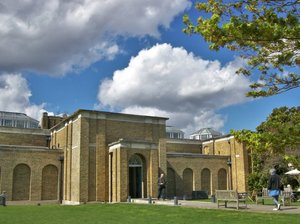
Dulwich Picture Gallery, LondonDulwich Picture Gallery London 1 James VI and I
Old Schools, CambridgeOld Schools Cambridge 1 Robert Cecil (1563–1612), 1st Earl of Salisbury, Chancellor of the University (1601–1612)
Bolton Museum And Art Gallery, BoltonBolton Museum And Art Gallery Bolton 1 Sir Philip Sidney (1554–1586)

John de Critz deceniju po deceniju: original koji definiše svaku od njih

Radovi po decenijama

Izaberite deceniju da biste videli original koji je definiše.

Pitanja kolekcionara o slikama umetnika John de Critz

Po kojem delu je John de Critz najpoznatiji/a?Otkrij odgovor

Henry Wriothesley, 3rd Earl of Southampton (1573-1624) (1590), Hatchlands Park, Guildford. Slede Sir Francis Walsingham (1589) i James VI and I (1606).

Koliko je godina imao/la John de Critz kada je nastalo delo Henry Wriothesley, 3rd Earl of Southampton (1573-1624)?Otkrij odgovor

39 godina: Henry Wriothesley, 3rd Earl of Southampton (1573-1624) datira iz 1590, a John de Critz je rođen/a 1551.

Koja su deset najpoznatijih slika umetnika John de Critz?Otkrij odgovor

Henry Wriothesley, 3rd Earl of Southampton (1573-1624), Sir Francis Walsingham, James VI and I, Anna of Denmark, 1574 - 1619. Queen Consort of James VI and I, Robert Cecil, 1st Earl of Salisbury, Robert Cecil (1563–1612), 1st Earl of Salisbury, Chancellor of the University (1601–1612), James VI and I (1566–1625), King of Scotland (1567–1625), King of England and Ireland (1603–1625), Anne of Denmark (1574–1619), Anne of Denmark i King James I of England and VI of Scotland (1566–1625). Gornji rang pokazuje godinu i muzej za svako od njih.

Koliko je slika ostavio John de Critz?Otkrij odgovor

Naš katalog sadrži 19 dela umetnika John de Critz, datiranih od 1589 do 1620.

U kojim muzejima se nalaze remek-dela umetnika John de Critz?Otkrij odgovor

Većinom u National Portrait Gallery (London), Scottish National Portrait Gallery (Edinburg) i National Maritime Museum (London). Tabela muzeja iznad sadrži njih sve.

U kojim godinama je John de Critz naslikao svoja najpoznatija dela?Otkrij odgovor

U 1600s: 7 od 19 dela na ovoj stranici nastalo je tada, od čega je James VI and I.

Koja su prva i poslednja čuvena originalna dela umetnika John de Critz?Otkrij odgovor

Na ovoj stranici, najstarije delo je iz Sir Francis Walsingham (1589), a najnovije iz Sir Philip Sidney (1554–1586) (1620).

Koje je motive John de Critz najčešće birao/la?Otkrij odgovor

Man (3), Jewelry (3) i Dark background (2), kroz svih 19 dela na ovoj stranici.

Koju je tehniku najčešće koristio/la John de Critz?Otkrij odgovor

Oil On Panel, za 2 od 19 dela na ovoj stranici.

Čija se dela umetnika John de Critz nalaze u National Portrait Gallery?Otkrij odgovor

Sir Francis Walsingham i Anne of Denmark: National Portrait Gallery, London čuva 2 dela sa ove stranice.

John de Critz: život i delo

A Courtly Hand: The Life and Art of John de Critz the Elder

John de Critz the Elder, a name perhaps less immediately recognizable than his continental contemporaries, nevertheless occupies a pivotal position in the history of English portraiture. Born in 1551, his life unfolded during a period of immense transformation for England – the waning years of the Tudor dynasty and the ascendance of the Stuarts. While details of his early training remain somewhat elusive, it is widely believed he received his formative artistic education in the Netherlands, likely within the vibrant circle of Flemish painters who were profoundly influencing Northern European art at the time. This background would prove crucial to shaping his distinctive style, a meticulous realism tempered by an elegant formality that perfectly suited the tastes of the English court. De Critz wasn’t merely a painter; he was a chronicler of power, capturing the likenesses of those who steered the nation through turbulent times.

From Flemish Roots to Royal Patronage

The artistic landscape de Critz entered upon arriving in England was already rich with talent, but his particular skill set – an ability to render textures with astonishing accuracy and a gift for conveying both status and personality – quickly garnered attention. He became deeply embedded within the orbit of Robert Cecil, 1st Earl of Salisbury, James I’s powerful chief minister. Cecil wasn't simply a patron; he was instrumental in establishing de Critz as *the* premier portraitist of the Jacobean court. De Critz’s workshop flourished, becoming a hub for artistic production and attracting other skilled painters who assisted him with commissions. This collaborative nature of his practice is important to note – while many portraits bear his signature, they often represent the combined efforts of several hands under his direction. His early works demonstrate a clear debt to Flemish masters like Hans Holbein the Younger, particularly in their precise detail and restrained color palettes. However, de Critz gradually developed a more uniquely English sensibility, characterized by a greater emphasis on decorative elements and a subtle psychological depth in his portrayals.

The Art of Representation: Style and Technique

De Critz’s portraits are not simply likenesses; they are statements of authority, wealth, and social standing. He excelled at depicting the opulent fabrics, intricate jewelry, and elaborate costumes that signified a person's position within the hierarchical structure of Jacobean society. His technique was painstaking, built upon layers of carefully applied paint to create a remarkable sense of three-dimensionality. He favored a relatively small scale for his portraits, which contributed to their intimacy and allowed for an exceptional level of detail. The use of light is particularly noteworthy, often directed to illuminate the face and hands, drawing the viewer’s attention to these key features of identity. He wasn't interested in dramatic chiaroscuro or emotional intensity; instead, he sought a calm, dignified representation that emphasized the sitter’s inherent nobility. His portraits are imbued with a sense of quiet confidence, reflecting the stability and order that Cecil and James I aimed to project.

Key Works and Lasting Legacy

Among de Critz's most celebrated works is his portrait of James I, which exists in numerous versions and served as a template for countless copies. These portraits are not merely images of the king; they are carefully constructed symbols of royal power, emphasizing his authority and divine right to rule. His portraits of Robert Cecil himself are equally significant, offering insights into the mind and character of this influential statesman. Beyond these iconic depictions of royalty and nobility, de Critz also painted a number of portraits of lesser-known figures, providing valuable glimpses into the lives of those who inhabited the Jacobean court.
  • His influence extended beyond portraiture
  • He was involved in designing decorative schemes for royal buildings.
  • De Critz’s workshop continued to thrive after his death in 1642

A Chronicler of an Era

John de Critz the Elder died in 1642, leaving behind a substantial body of work that continues to fascinate and inform our understanding of Jacobean England. He wasn’t a revolutionary artist; he didn't seek to break with tradition or explore new artistic frontiers. Instead, he perfected an existing style, adapting it to the specific needs and tastes of his patrons. His lasting significance lies in his ability to capture the essence of a particular moment in English history – a time of political intrigue, religious tension, and burgeoning national identity. He stands as a testament to the power of portraiture not simply as a means of recording likenesses, but as a powerful tool for shaping perceptions and constructing narratives about those who held positions of authority. His portraits remain invaluable historical documents, offering us a glimpse into the world of the Jacobean court and the individuals who shaped its destiny.