Jean-Louis Theodore Gentilz: A French Painter’s Texan Vision
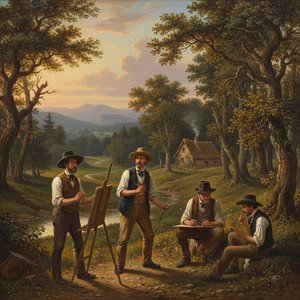
Born in Paris in 1819, Jean-Louis Theodore Gentilz, also known as Theodore Gentilz, embarked on a remarkable journey that led him from the bustling streets of France to the vast and untamed landscapes of Texas. Initially trained as a surveyor – a skill undoubtedly informing his keen observational eye – Gentilz’s true passion lay in capturing the essence of the American West through his art. His relocation to Texas in 1844 marked a pivotal moment, transforming him from a professional surveyor into a dedicated artist documenting the lives and landscapes of this burgeoning frontier territory.
Gentilz's work offers a unique window into mid-19th century Texan life. Unlike many artists who focused solely on grand vistas or heroic figures, Gentilz meticulously portrayed everyday scenes – cattle drives, Native American encampments, interactions between settlers and indigenous populations, and the simple routines of frontier existence. His paintings aren’t romanticized depictions; they are imbued with a palpable sense of realism, reflecting the hardships and challenges faced by those who carved out a life in this challenging environment. The influence of French Realism, particularly artists like Jean-Louis Ernest Meissonier, is evident in his commitment to accurate detail and his ability to convey the gritty realities of frontier life.
A Painter of People and Places
Gentilz’s artistic style evolved significantly during his time in Texas. Initially, his work leaned towards a more academic approach, reminiscent of the Salon painters of Paris. However, as he immersed himself in the Texan landscape and its inhabitants, his technique became looser and more expressive. He employed a vibrant palette, capturing the intense colors of the desert sunsets and the rich hues of the native textiles. His brushwork grew bolder, conveying movement and texture with remarkable skill.
Several key works exemplify this evolution. “Ox Cart Returning From Town” offers a quintessential view of frontier life, depicting a weary ox cart making its way back to settlement after a long day’s labor. The painting's composition is carefully balanced, drawing the viewer's eye along the dusty trail and highlighting the figures struggling against the elements. Similarly, "Comanche Chief" presents a powerful portrait of an indigenous leader, capturing his dignity and bearing with impressive detail. “Camp of the Lipan” provides a glimpse into the daily routines of a Native American encampment, showcasing their clothing, tools, and interactions within their community.
Themes and Symbolism in Texan Landscapes
Beyond simply documenting scenes, Gentilz’s paintings often carry subtle symbolic weight. His depictions of Native Americans aren't merely ethnographic studies; they explore the complex dynamics between settlers and indigenous populations – a fraught relationship marked by both cooperation and conflict. The vastness of the Texas landscape itself is frequently portrayed as both beautiful and unforgiving, reflecting the challenges of survival in this remote region. The recurring motif of the ox cart symbolizes the relentless pursuit of prosperity and the enduring connection to agriculture, a cornerstone of frontier life.
Interestingly, Gentilz’s work predates the widespread romanticization of the American West often depicted in later art movements. He offered a more grounded, nuanced perspective, emphasizing the realities of hardship, resilience, and cultural exchange – elements that continue to resonate with viewers today. His paintings serve as valuable historical records, providing intimate glimpses into a formative period in Texan history.
Legacy and Historical Significance
Though largely overlooked during his lifetime, Jean-Louis Theodore Gentilz’s work has gained increasing recognition in recent years for its unique perspective on the American West. His paintings offer invaluable insights into the lives of early settlers, Native Americans, and the evolving landscape of Texas during a crucial era of expansion and transformation. OriginalUniqueArt.com is proud to offer meticulously reproduced versions of these remarkable works, allowing collectors and art enthusiasts alike to experience the artistry and historical significance of this often-forgotten French painter’s Texan vision.
Further exploration can be found in OriginalUniqueArt's database, where you can examine detailed images and learn more about his artistic process and the context surrounding his work. His legacy as a chronicler of the 19th-century American West continues to grow, solidifying his place as an important figure in both French and Texan art history.