Portret Ђулио Романо

100 najpoznatijih slika umetnika Ђулио Романо, svaka potpuno jedinstvena

Ažurirano: октобар 2026 · rangirano prema našem koeficijentu popularnosti (pretrage, posete i porudžbine za svako delo) · 114 dela Ђулио Романо u našem katalogu

Ukratko

Vault: The Assembly of Gods around Jupiter's Throne (1532) je slika autora Ђулио Романо koja privlači najviše pogleda. Nakon toga, pogled se seli na View of the Sala dei Giganti (vault and south wall) (1526) i Tapestry with Playing Putti (1545). Među 114 dela umetnika Ђулио Романо u našem katalogu, ovih 100 su najpoznatija, od kojih je svako jedinstveni original predstavljen sa godinom nastanka, muzejom i razlogom zbog kojeg je i danas neprocenjivo.

1499 – 1546, Рим Manirizam Najviše dela: Palazzo del Tè

Top 10 slika umetnika Ђулио Романо, iz ugla galerije

1
Vault: The Assembly of Gods around Jupiter's Throne (1532) čiji je Ђулио Романо

Vault: The Assembly of Gods around Jupiter's Throne

1532 · Fresco

Vault: The Assembly of Gods around Jupiter's Throne is a significant fresco by Giulio Romano. Executed in 1532, the work occupies the ceiling of the Sala dei Giganti within the Palazzo del Tè in Mantua, Italy. This monumental decoration reflects the artist's departure from the classical harmony of the High Renaissance toward the expressive tension of Mannerism.

2
View of the Sala dei Giganti (vault and south wall) (1526) čiji je Ђулио Романо

View of the Sala dei Giganti (vault and south wall)

1526 · Fresco · Palazzo del Tè, Mantova

To gaze upon this magnificent fresco, View of the Sala dei Giganti (vault and south wall), is to step directly into the vibrant heart of the High Renaissance. Painted in 1526 by the masterful hand of Giulio Romano, this work transcends mere decoration; it is a profound narrative tapestry woven from human drama, natural vitality, and divine symbolism. The scene explodes with life, drawing the viewer into a monumental gathering…

3
Tapestry with Playing Putti (1545) čiji je Ђулио Романо

Tapestry with Playing Putti

1545 · Tapestry · Museo Poldi Pezzoli, Milano

To gaze upon this depiction of a tapestry with playing putti is to step directly into an idealized moment plucked from the heart of the Italian Renaissance. It is more than just a painting; it is a captured breath of youthful exuberance, rendered with the masterful touch characteristic of Giulio Romano. The scene unfolds as a vibrant pastoral tableau, where several cherubic figures—the beloved putti—engage in playful revelry. Their presence…

4
Allegory of the Virtues of Federico II Gonzaga (1531) čiji je Ђулио Романо

Allegory of the Virtues of Federico II Gonzaga

1531 · Fresco · J. Paul Getty Museum, Los Anđeles

To stand before an image like the Allegory of the Virtues of Federico II Gonzaga is to step directly into the vibrant, intellectual heart of the Italian High Renaissance transitioning into Mannerism. This monumental work, executed in 1531 by Giulio Romano, is far more than a mere depiction of figures; it is a carefully orchestrated philosophical statement rendered in pigment and plaster. The scene unfolds with an almost theatrical richness,…

5
The Lovers (1525) čiji je Ђулио Романо

The Lovers

1525 · Oil On Canvas · Ermitaž, Sankt Peterburg

Giulio Romano’s “The Lovers,” painted around 1525, isn't merely a depiction of intimacy; it’s a meticulously crafted tableau brimming with symbolism and echoing the complex currents of the High Renaissance. Born Giulio Pippi in Rome around 1499, Romano swiftly ascended through the ranks of Raphael’s studio, absorbing the master’s classical ideals while simultaneously forging his own distinctive Mannerist style – a style characterized by heightened emotion, distorted forms, and an…

6
Adoration of the Shepherds (detail) (1535) čiji je Ђулио Романо

Adoration of the Shepherds (detail)

1535 · Oil · Luvr, Pariz

This detail from 1535 captures a fragment of a larger religious narrative, focusing on the human response to a divine presence. A central figure, distinguished by a large staff topped with a cross, anchors the composition. The arrangement of figures creates a sense of depth through overlapping forms and varying scales, drawing the eye from the immediate foreground into a complex, crowded space. The composition avoids the static balance of…

7
The Birth of Bacchus (1533) čiji je Ђулио Романо

The Birth of Bacchus

1533 · Acrylic On Canvas · J. Paul Getty Museum, Los Anđeles

Giulio Romano's "The Birth of Bacchus," a monumental charcoal and chalk drawing from 1533, isn’t merely a depiction of a mythological scene; it’s a visceral exploration of human drama, a raw sketch brimming with energy and symbolic weight. Born Giulio Pippi in Rome around 1499, Romano emerged as a pivotal figure within the waning embers of the High Renaissance, swiftly absorbing the influence of Raphael while forging his own distinctive…

8
Flaying of Marsyas (1525) čiji je Ђулио Романо

Flaying of Marsyas

1525 · Oil On Canvas · Luvr, Pariz

Giulio Romano’s “Flaying of Marsyas” isn't merely a depiction of a mythological punishment; it’s a visceral embodiment of struggle, humiliation, and the brutal intersection of divine power and mortal defiance. Painted in 1525-35 during his tenure as court artist for Duke Federico Gonzaga of Mantua, this monumental fresco – now meticulously reproduced on canvas – plunges the viewer directly into the heart of Ovid’s *Metamorphoses*. The story itself is a…

9
Victory, Janus, Chronos, and Gaea (1532) čiji je Ђулио Романо

Victory, Janus, Chronos, and Gaea

1532 · Acrylic On Canvas · J. Paul Getty Museum, Los Anđeles

A Tapestry of Time and Transformation: Giulio Romano’s “Victory, Janus, Chronos, and Gaea” Giulio Romano's "Victory, Janus, Chronos, and Gaea," painted in 1532-1534 during his illustrious tenure as court artist for Federico II Gonzaga of Mantua, is more than just a visually arresting fresco; it’s a profound meditation on the cyclical nature of time, the duality of existence, and the very essence of Roman mythology. Born Giulio Pippi in Rome…

10
View of the Palazzo del Tè (1526) čiji je Ђулио Романо

View of the Palazzo del Tè

1526 · Acrylic On Canvas · Palazzo del Tè, Mantova

A Vision of Renaissance Grandeur: Exploring Giulio Romano’s Palazzo del Té Giulio Romano's *View of the Palazzo del Té* stands as a testament to the zenith of Mannerist art and architectural ambition—a project conceived by Federico Gonzaga, Duke of Mantua, between 1526 and 1534. More than just a building, it embodies an entire worldview: a deliberate rejection of linear perspective and idealized beauty in favor of dramatic illusionism and psychological…

Čuvena dela umetnika Ђулио Романо, od 11 do 100

11Evangelist symbols (1522) čiji je Ђулио РоманоEvangelist symbols1522 · Kunsthistorisches Museum 12View of the Salone dei Cavalli (1526) čiji je Ђулио РоманоView of the Salone dei Cavalli1526 13The Old Woman and Vulcan, Tribute to Apollo (1526) čiji je Ђулио РоманоThe Old Woman and Vulcan, Tribute to Apollo1526 14Nude Child with Open Arms čiji je Ђулио РоманоNude Child with Open ArmsGalerija Ufizi 15The Holy Family (1520) čiji je Ђулио РоманоThe Holy Family1520 · J. Paul Getty Museum 16An Allegory of Immortality (1540) čiji je Ђулио РоманоAn Allegory of Immortality1540 · Detroit Institute of Arts 17The Holy Family, St John with a small Bird in his Hand (1530) čiji je Ђулио РоманоThe Holy Family, St John with a small Bird in his Hand1530 · Statens Museum For Kunst 18The Holy Family with the Infant Saint John the Baptist (1520) čiji je Ђулио РоманоThe Holy Family with the Infant Saint John the Baptist1520 · Scottish National Gallery 19Madonna and Child with the Infant St. John (1516) čiji je Ђулио РоманоMadonna and Child with the Infant St. John1516 20The Virgin and Child (1518) čiji je Ђулио РоманоThe Virgin and Child1518 · Apsley House 21Tarquin and Lucretia (1536) čiji je Ђулио РоманоTarquin and Lucretia1536 · Palazzo Ducale 22'The Horse ''Morel favorito''' (1526) čiji je Ђулио Романо'The Horse ''Morel favorito'''1526 23St. John the Baptist in the Wilderness (1520) čiji je Ђулио РоманоSt. John the Baptist in the Wilderness1520 24Nurture of Jupiter (1533) čiji je Ђулио РоманоNurture of Jupiter1533 · Blickling Hall 25Group of three lictors (1530) čiji je Ђулио РоманоGroup of three lictors1530 · Nacionalni muzej u Varšavi 26Tapestry Cartoon: Two Heads from the Massacre of the Innocents (1522) čiji je Ђулио РоманоTapestry Cartoon: Two Heads from the Massacre of the Innocents1522 · Scottish National Gallery 27Bacchus and Ariadne (1530) čiji je Ђулио РоманоBacchus and Ariadne1530 · Statens Museum For Kunst 28Vertumnus and Pomona (1530) čiji je Ђулио РоманоVertumnus and Pomona1530 · Statens Museum For Kunst 29Female nude, half figure (1527) čiji je Ђулио РоманоFemale nude, half figure1527 30Vaulted ceiling (8) (1526) čiji je Ђулио РоманоVaulted ceiling (8)1526 31Fresco on the east wall (detail) (1532) čiji je Ђулио РоманоFresco on the east wall (detail)1532 32View of the Sala di Psiche (west wall) (1526) čiji je Ђулио РоманоView of the Sala di Psiche (west wall)1526 33Fresco on the south wall (detail) (9) (1532) čiji je Ђулио РоманоFresco on the south wall (detail) (9)1532 34Jupiter Seducing Olympias (1526) čiji je Ђулио РоманоJupiter Seducing Olympias1526 35Self-portrait (1540) čiji je Ђулио РоманоSelf-portrait1540 36Tomb of Pietro Strozzi (1529) čiji je Ђулио РоманоTomb of Pietro Strozzi1529 · Sant'Andrea 37Virgin and Child with the Infant St John (1523) čiji je Ђулио РоманоVirgin and Child with the Infant St John1523 · Galleria Borghese 38Façade (1526) čiji je Ђулио РоманоFaçade1526 · Palazzo del Tè 39The Madonna and Child with Saint John the Baptist (1522) čiji je Ђулио РоманоThe Madonna and Child with Saint John the Baptist1522 · Walters Art Museum 40The Fall of the Gigants from Mount Olympus čiji je Ђулио РоманоThe Fall of the Gigants from Mount Olympus 41Chariot of the Sun (1526) čiji je Ђулио РоманоChariot of the Sun1526 42Frieze (detail) (1532) čiji je Ђулио РоманоFrieze (detail)1532 43Hunting Scene (1527) čiji je Ђулио РоманоHunting Scene1527 44Hunting Scene (1527) čiji je Ђулио РоманоHunting Scene1527 45Polyphemus (1526) čiji je Ђулио РоманоPolyphemus1526 46Ceiling decoration (detail) (12) (1527) čiji je Ђулио РоманоCeiling decoration (detail) (12)1527 47View of the Sala di Psiche (north and east walls) (1526) čiji je Ђулио РоманоView of the Sala di Psiche (north and east walls)1526 48View of the Sala di Psiche (south wall) (1526) čiji je Ђулио РоманоView of the Sala di Psiche (south wall)1526 49Psyche's Second Task (River Deity) (1526) čiji je Ђулио РоманоPsyche's Second Task (River Deity)1526 50Vaulted ceiling (detail) (10) (1526) čiji je Ђулио РоманоVaulted ceiling (detail) (10)1526 51Vaulted ceiling (detail) (18) (1526) čiji je Ђулио РоманоVaulted ceiling (detail) (18)1526 52Psyche Appealing in Vain to Juno (1526) čiji je Ђулио РоманоPsyche Appealing in Vain to Juno1526 53Portrait of a Woman (detail) (1531) čiji je Ђулио РоманоPortrait of a Woman (detail)1531 · Royal Collection 54View of the Sala dei Giganti (south and west walls) (1532) čiji je Ђулио РоманоView of the Sala dei Giganti (south and west walls)1532 55View of the Sala dei Giganti (south wall) (1532) čiji je Ђулио РоманоView of the Sala dei Giganti (south wall)1532 56The Prisoners (1527) čiji je Ђулио РоманоThe Prisoners1527 57View of the Sala di Psiche (east wall) (1526) čiji je Ђулио РоманоView of the Sala di Psiche (east wall)1526 58Vault: The Assembly of Gods around Jupiter's Throne (detail) (1532) čiji je Ђулио РоманоVault: The Assembly of Gods around Jupiter's Throne (detail)1532 59Ceiling decoration (detail) (11) (1527) čiji je Ђулио РоманоCeiling decoration (detail) (11)1527 60Fresco on the north wall (detail) (1532) čiji je Ђулио РоманоFresco on the north wall (detail)1532 61Vaulted ceiling (detail) (17) (1526) čiji je Ђулио РоманоVaulted ceiling (detail) (17)1526 62Vaulted ceiling (detail) (19) (1526) čiji je Ђулио РоманоVaulted ceiling (detail) (19)1526 63Emperor Alexander (1532) čiji je Ђулио РоманоEmperor Alexander1532 64Coat-of-arms (1532) čiji je Ђулио РоманоCoat-of-arms1532 65View of the Sala dei Giganti (west wall) (1532) čiji je Ђулио РоманоView of the Sala dei Giganti (west wall)1532 66River Landscape with Springs (1526) čiji je Ђулио РоманоRiver Landscape with Springs1526 67View of the Salone dei Cavalli (1526) čiji je Ђулио РоманоView of the Salone dei Cavalli1526 68Fresco on the south wall (detail) (1532) čiji je Ђулио РоманоFresco on the south wall (detail)1532 69Vaulted ceiling (detail) (16) (1526) čiji je Ђулио РоманоVaulted ceiling (detail) (16)1526 70Tribute to Apollo (1526) čiji je Ђулио РоманоTribute to Apollo1526 71Vaulted ceiling (1526) čiji je Ђулио РоманоVaulted ceiling1526 72View of the Sala dei Giganti (north wall) (1532) čiji je Ђулио РоманоView of the Sala dei Giganti (north wall)1532 73View of the Sala dei Giganti (east wall) (1532) čiji je Ђулио РоманоView of the Sala dei Giganti (east wall)1532 74Ceiling decoration (1527) čiji je Ђулио РоманоCeiling decoration1527 75Cupid and Psyche (1526) čiji je Ђулио РоманоCupid and Psyche1526 76Design for a Saltcellar (1524) čiji je Ђулио РоманоDesign for a Saltcellar1524 77Fresco on the south wall (detail) (12) (1532) čiji je Ђулио РоманоFresco on the south wall (detail) (12)1532 78Fresco on the north wall (detail) (1532) čiji je Ђулио РоманоFresco on the north wall (detail)1532 79Mars Chasing Adonis from Venus's Pavilion (1526) čiji je Ђулио РоманоMars Chasing Adonis from Venus's Pavilion1526 80Vault: The Assembly of Gods around Jupiter's Throne (detail) (1532) čiji je Ђулио РоманоVault: The Assembly of Gods around Jupiter's Throne (detail)1532 81Fresco on the south wall (detail) (10) (1532) čiji je Ђулио РоманоFresco on the south wall (detail) (10)1532 82The Old Woman and Vulcan (1526) čiji je Ђулио РоманоThe Old Woman and Vulcan1526 83Ceiling (detail) (1526) čiji je Ђулио РоманоCeiling (detail)1526 84Tribute to Apollo (1526) čiji je Ђулио РоманоTribute to Apollo1526 85Ajax Defends Patroclus's Corps (1538) čiji je Ђулио РоманоAjax Defends Patroclus's Corps1538 · Palazzo Ducale 86View of the Sala di Troia (10) (1536) čiji je Ђулио РоманоView of the Sala di Troia (10)1536 87View of the Sala di Troia (12) (1538) čiji je Ђулио РоманоView of the Sala di Troia (12)1538 88Ajax Defends Patroclus's Corps (1538) čiji je Ђулио РоманоAjax Defends Patroclus's Corps1538 89View of the Sala di Troia (11) (1536) čiji je Ђулио РоманоView of the Sala di Troia (11)1536 90Façade and courtyard view (1526) čiji je Ђулио РоманоFaçade and courtyard view1526 · Palazzo del Tè 91Monteluce madonna čiji je Ђулио РоманоMonteluce madonna 92Venus and Vulcan čiji je Ђулио РоманоVenus and Vulcan 93Satyr and Boy čiji je Ђулио РоманоSatyr and Boy 94Copy after Giulio Romano (1536) čiji je Ђулио РоманоCopy after Giulio Romano1536 · Cleveland Museum of Art 95Virgin with the Child (1520) čiji je Ђулио РоманоVirgin with the Child1520 · Galerija Ufizi 96Triumph of Titus and Vespasian (1537) čiji je Ђулио РоманоTriumph of Titus and Vespasian1537 · Luvr 97Study for the Holy Family (1518) čiji je Ђулио РоманоStudy for the Holy Family1518 · Luvr 98Banquet of Cupid and Psyche čiji je Ђулио РоманоBanquet of Cupid and PsychePalazzo del Tè 99Saint Mary Magdalene borne by Angels čiji je Ђулио РоманоSaint Mary Magdalene borne by AngelsNational Gallery 100The Circumcision čiji je Ђулио РоманоThe CircumcisionLuvr

Čuvena dela Ђулио Романо po periodima

Motivi koji su privlačili pažnju Ђулио Романо

Četiri teme koje se najčešće ponavljaju u ovim originalima, svaka sa svojim vrhunskim primerom.

Muzeji u kojima se čuvaju originalna dela umetnika Ђулио Романо

8 muzeja u kojima se nalazi najviše slika sa ove stranice.

Muzej Grad Radovi umetnika Ђулио Романо Slike iz ovog spiska
Palazzo del Tè, MantovaPalazzo del Tè Mantova 6 View of the Sala dei Giganti (vault and south wall), View of the Palazzo del Tè, Façade
Luvr, ParizLuvr Pariz 6 Adoration of the Shepherds (detail), Flaying of Marsyas, Triumph of Titus and Vespasian
J. Paul Getty Museum, Los AnđelesJ. Paul Getty Museum Los Anđeles 5 Allegory of the Virtues of Federico II Gonzaga, The Birth of Bacchus, Victory, Janus, Chronos, and Gaea
Statens Museum For Kunst, KopenhagenStatens Museum For Kunst Kopenhagen 3 The Holy Family, St John with a small Bird in his Hand, Bacchus and Ariadne, Vertumnus and Pomona
Galerija Ufizi, FirencaGalerija Ufizi Firenca 2 Nude Child with Open Arms, Virgin with the Child
Scottish National Gallery, EdinburghScottish National Gallery Edinburgh 2 The Holy Family with the Infant Saint John the Baptist, Tapestry Cartoon: Two Heads from the Massacre of the Innocents
Palazzo Ducale, MantovaPalazzo Ducale Mantova 2 Tarquin and Lucretia, Ajax Defends Patroclus's Corps
Royal Collection, LondonRoyal Collection London 2 Portrait of a Woman (detail)

Ђулио Романо kroz decenije: jedan jedinstveni original za svaku

Radovi po decenijama

Izaberite deceniju da biste videli original koji je definiše.

Slike umetnika Ђулио Романо: pitanja za galeriju

Koje je najpoznatije delo umetnika Ђулио Романо?Otkrij odgovor

Vault: The Assembly of Gods around Jupiter's Throne (1532). Slede View of the Sala dei Giganti (vault and south wall) (1526) i Tapestry with Playing Putti (1545).

U kojoj je godini Ђулио Романо stvorio/la Vault: The Assembly of Gods around Jupiter's Throne?Otkrij odgovor

33 godina: Vault: The Assembly of Gods around Jupiter's Throne datira iz 1532, a Ђулио Романо je rođen/a 1499.

Koji je deset najpoznatijih slika autora Ђулио Романо?Otkrij odgovor

Vault: The Assembly of Gods around Jupiter's Throne, View of the Sala dei Giganti (vault and south wall), Tapestry with Playing Putti, Allegory of the Virtues of Federico II Gonzaga, The Lovers, Adoration of the Shepherds (detail), The Birth of Bacchus, Flaying of Marsyas, Victory, Janus, Chronos, and Gaea i View of the Palazzo del Tè. Gornji rang pokazuje godinu i muzej za svako od njih.

Koliko je poznatih dela umetnika Ђулио Романо?Otkrij odgovor

Naš katalog sadrži 114 dela umetnika Ђулио Романо, datiranih od 1516 do 1545.

Gde se mogu videti najpoznatiji originali umetnika Ђулио Романо?Otkrij odgovor

Većinom u Palazzo del Tè (Mantova), Luvr (Pariz) i J. Paul Getty Museum (Los Anđeles). Tabela muzeja iznad sadrži njih sve.

U kom periodu je Ђулио Романо stvorio/la svoje najpoznatije slike?Otkrij odgovor

U 1520s: 50 od 100 dela na ovoj stranici nastalo je tada, od čega je View of the Sala dei Giganti (vault and south wall).

Ko je najraniji, a koje je najkasnije čuveno delo umetnika Ђулио Романо?Otkrij odgovor

Na ovoj stranici, najstarije delo je iz Madonna and Child with the Infant St. John (1516), a najnovije iz Tapestry with Playing Putti (1545).

Koje su teme Ђулио Романо preferirao/la?Otkrij odgovor

Buildings (20), Woman (13) i Scenes (12), kroz svih 100 dela na ovoj stranici.

Sa kojim materijalima je Ђулио Романо najčešće slikao?Otkrij odgovor

Fresco, za 11 od 100 dela na ovoj stranici.

Kojem umetničkom pravcu pripada delo umetnika Ђулио Романо?Otkrij odgovor

Manirizam, sudeći po originalima na ovoj stranici.

Koja originalna dela Ђулио Романо mogu videti u Palazzo del Tè?Otkrij odgovor

View of the Sala dei Giganti (vault and south wall), View of the Palazzo del Tè i Façade: Palazzo del Tè, Mantova čuva 5 dela sa ove stranice.

Ђулио Романо: portret umetnika

Римски почетак и учење под мајсторском руком

Ђулио Романо, рођен као Ђулио Пипи око 1499. године у Риму, изашао је из периода изузетне уметничке ферментације. Детаљи око његовог раног живота остају прилично нејасни, али се зна да је брзо ушао у орбиту Рафаела, вероватно најславнијег сликара Високе ренесансе. Ова ученичка пракса се показала као преломна тачка, обликујући не само његове техничке вештине, већ и постављајући основу за његова будућа стилска истраживања. Он није био само студијски асистент; Ђулио је брзо постао незаменљив сарадник, доприносећи значајним пројектима попут декорације Ватиканских стаја – оних величинствених соба које су наручили папе Јулије Други и Лав Десети. Његова рука се може идентификовати на монументалној фресци *Пожар у Боргу*, где је помогао Рафаелу да представи драматичну сцену чуда. Након Рафаеловог прераног одласка 1520. године, Ђулио је наследио одговорност за завршетак бројних незавршених поруџбина, укључујући амбициозну декорацију Виле Мадама за кардинала Ђулијана де Медичи. Ово рано излагање пројектима великих размера и захтевима аристократског покровитељства у њега је улило самопоуздање и амбиције које ће дефинисати каснију каријеру.

Рађање манеризма: Одлазак од класичне хармоније

Иако дубоко укорењен у ренесансној традицији, уметничка трајекторија Ђулија Романа се ускоро одвојила од преовлађућег нагласка на класичној равнотежи и хармонији. Он је постао кључна фигура у развоју манеризма – стила карактерисаног вештачком лепотом, елеганцијом и често узнемирујућим изобличењима облика. Под дубоким утицајем Микеланђелових моћних фигура и динамичних композиција, као и шире климе уметничког експериментисања, Ђулио је почео да прихвата асиметрију, напетост и емоционални интензитет у свом раду. Ово није било одбацивање ренесансних идеала већ свесна потрага за њиховим ограничењима, гурање изван граница натурализма како би се створила дела која су била експресивнија и интелектуално стимулативнија. Он је све више мењао Рафаелове планове, убризгавајући нову сензибилност у римску уметност – изјаву манеризма у великом обиму. Ова промена је лако видљива у његовим цртежима, који показују изучанту слободу линије и склоност драматичном скраћењу перспективе.

Мајстор Мантове: Палацо Те и архитектонске иновације

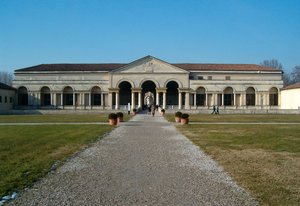
Године 1524. Ђулио је прихватио позив Федерика Гонзаге, војводе Мантове, да постане дворски сликар и архитекта. Ово је обележило преломну тачку у његовој каријери, пружајући му без преседана креативну слободу и ресурсе. Он је практично постао одговоран за сву уметничку делатност у војводству, надгледајући не само слике и фреске већ и архитектонске пројекте, дизајн вртове и чак позоришне продукције. Његово најславније достигнуће током овог периода је без сумње Палацо Те, изузетан приградски двор који стоји као сведочанство његовог иновативног генија. Унутрашњост палате украшена је илузионистичким фрескама запањујуће сложености и психолошке дубине. *Сала деи Ђиганти* (Дворана гиганта), на пример, представља хаотичну битку између богова и гиганта, урањајући гледаоца у вртлог фигура и архитектонских фрагмената. Овај мајсторски манипулисање простором и перспективом ствара импресивно искуство које је истовремено страховито и узнемирујуће. Поред Палацо Те, Ђулио је предузео значајне реновације војводске палате и катедрале у Мантови, остављајући неизбрисив траг на градском пејзажу.

Завештање и трајан утицај

Ђулио Романо је умро у Мантови 1546. године, оставивши позади наслеђе које се протезало далеко изван граница Италије. Његови цртежи су били високо цењени од стране колекционара, а гравуре засноване на његовом раду – посебно оне Маркантонија Раимондија – играле су кључну улогу у ширењу италијанских уметничких стилова широм Европе. Био је толико познат после смрти да га је Виљам Шекспир споменуо као јединог „модерног“ уметника у представи – сведочанство његове широко распрострањене славе. Његов утицај се може видети у делима бројних каснијих уметника, који су усвојили његове динамичне композиције, издужене фигуре и експресивну употребу боје. Иако је манеризам на крају уступио место другим стилским покретима, допринос Ђулија Романа остаје суштински за разумевање еволуције западне уметности. Он представља преломни тренутак – прелаз са хармоничних идеала Високе ренесансе на сложенију и емоционалније наелектрисовану естетику касног 16. века. *Његов рад наставља да очарава и изазива гледаоце данас, подсећајући нас на моћ уметности да рефлектује и обликује наше разумевање света.*