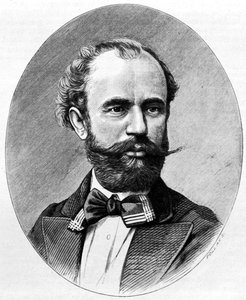
Portret Geza Meszoly

Slike umetnika Geza Meszoly: Najpoznatijih 20 kroz oči galerije

Ažurirano: новембар 2026 · rangirano prema našem koeficijentu popularnosti (pretrage, posete i porudžbine za svako delo) · 21 dela Geza Meszoly u našem katalogu

Ukratko

Za ljubitelje galerije, najpoznatije delo umetnika Geza Meszoly je Flat Land with Haystacks (1872), čiji se original nalazi u muzeju Mađarska nacionalna galerija, Budimpešta. Landscape with Windmill (1879) i Siófok (1872) čine triju koju svako oko prepoznaje. Od 21 dela umetnika Geza Meszoly u našem katalogu, galerija u nastavku predstavlja 20 najpoznatijih dela, od kojih je svako originalno, sa navedenom godinom nastanka, muzejom i onim što ga čini jedinstvenim.

1844 – 1887, Sárbogárd Najviše dela: Mađarska nacionalna galerija

Top 10 slika umetnika Geza Meszoly u galeriji

1
Flat Land with Haystacks (1872) čiji je Geza Meszoly

Flat Land with Haystacks

1872 · Oil · Mađarska nacionalna galerija, Budimpešta

The composition finds its strength in the rhythm of the plains. There is no sudden movement, only the slow, steady pulse of the countryside. The haystacks act as anchors in a sea of shifting light, providing a sense of permanence against the fleeting nature of the fog. It is a vision of a world caught in a moment of transition, where the solid earth begins to melt into the sky.…

2
Landscape with Windmill (1879) čiji je Geza Meszoly

Landscape with Windmill

1879 · Watercolor · Mađarska nacionalna galerija, Budimpešta

The work moves away from the sharp edges of academic realism toward a more poetic, impressionistic approach. The use of light and shadow emphasizes emotional depth and psychological states. Rather than a literal depiction of a landscape, the piece functions as a meditation on atmosphere. The interplay of organic lines and pigment sedimentation creates a sense of movement, as if the figure is dissolving into the surrounding mist.

Slike umetnika Geza Meszoly, rangirane od 11 do 20

Motivi koji su privlačili pažnju Geza Meszoly

Četiri teme koje se najčešće ponavljaju u ovim originalima, svaka sa svojim vrhunskim primerom.

Muzeji u kojima se čuvaju originalna dela umetnika Geza Meszoly

3 muzeja u kojima se nalazi najviše slika sa ove stranice.

Muzej Grad Radovi umetnika Geza Meszoly Slike iz ovog spiska
Mađarska nacionalna galerija, BudimpeštaMađarska nacionalna galerija Budimpešta 9 Flat Land with Haystacks, Landscape with Windmill, Siófok
Herman Ottó Museum, MiskolcHerman Ottó Museum Miskolc 2 Crossing at Szántód, Bath-house at lake Balaton
Ernest Zmeták Art Gallery Nové Zámky 1 At the End of the Village

Geza Meszoly, najprepoznatljivija dela svake godine

Karijera umetnika Geza Meszoly na ovoj stranici traje 14 godine, od 1872 do 1885: svaka godina je prikazana sa njegovim najpoznatijim originalima.

Radovi po godinama

Izaberite godinu da biste videli originalna dela.

Slike umetnika Geza Meszoly: odgovori galerije

Koja je najpoznatija slika umetnika Geza Meszoly?Otkrij odgovor

Flat Land with Haystacks (1872), Mađarska nacionalna galerija, Budimpešta. Slede Landscape with Windmill (1879) i Siófok (1872).

Koliko je godina imao/la Geza Meszoly kada je dovršio/la Flat Land with Haystacks?Otkrij odgovor

28 godina: Flat Land with Haystacks datira iz 1872, a Geza Meszoly je rođen/a 1844.

Koja su najbolja 10 dela umetnika Geza Meszoly?Otkrij odgovor

Flat Land with Haystacks, Landscape with Windmill, Siófok, Crossing at Szántód, At the End of the Village, Lido, Fisherman's Hut at Lake Balaton, Farmstead, Bath-house at lake Balaton i The Herd. Gornji rang pokazuje godinu i muzej za svako od njih.

Koliko je dela stvorio/la Geza Meszoly?Otkrij odgovor

Naš katalog sadrži 21 dela umetnika Geza Meszoly, datiranih od 1872 do 1885.

Gde se nalaze najpoznatiji originali umetnika Geza Meszoly?Otkrij odgovor

Većinom u Mađarska nacionalna galerija (Budimpešta), Herman Ottó Museum (Miskolc) i Ernest Zmeták Art Gallery (Nové Zámky). Tabela muzeja iznad sadrži njih sve.

Kada je Geza Meszoly stvorio svoje najpoznatije slike?Otkrij odgovor

U 1879: 3 od 20 dela na ovoj stranici nastalo je tada, od čega je Landscape with Windmill.

Koja su najranija i najkasnija poznata dela umetnika Geza Meszoly?Otkrij odgovor

Na ovoj stranici, najstarije delo je iz Flat Land with Haystacks (1872), a najnovije iz Bath-house at lake Balaton (1885).

Kojim se motivima Geza Meszoly najčešće bavio?Otkrij odgovor

Man (2), Portraits (2) i Portrait (2), kroz svih 20 dela na ovoj stranici.

Koje originale umetnika Geza Meszoly poseduje Mađarska nacionalna galerija?Otkrij odgovor

Flat Land with Haystacks, Landscape with Windmill i Siófok: Mađarska nacionalna galerija, Budimpešta čuva 9 dela sa ove stranice.

Geza Meszoly: umetnik

The Visionary of the Mist: The Life and Art of Géza Mészöly

Born amidst the rolling landscapes of Sárbogárd, Hungary, in 1844, Géza Mészöly emerged as a profound voice in nineteenth-century European art. His journey was one of transformation, moving from the rigid structures of legal ambition to the ethereal realms of light and atmosphere. While his early education at the Calvinist College in Debrecen provided him with a disciplined mind, it was his eventual departure for the prestigious academies of Vienna and Munich that truly ignited his creative spirit. Under the tutelage of masters like Robert Russ and Albert Zimmermann, Mészöly mastered the rigorous techniques of academic landscape painting, yet he would soon find that true artistry lay not in mere imitation of form, but in the capture of a fleeting, soulful essence.

The evolution of Mészöly’s style represents a beautiful departure from the structured traditions of his training. Upon returning to his beloved Hungary, the artist underwent a stylistic metamorphosis that would define his legacy. He moved away from the sharp, defined edges of academic realism toward a more poetic, impressionistic approach. His canvases began to breathe with a delicate, silvery light, often characterized by grayish tones and a fine, thin vapor that seemed to veil the Hungarian countryside. This mastery of atmosphere allowed him to transform ordinary vistas into dreamlike meditations on nature, where the boundaries between earth and sky dissolved into a soft, luminous haze.

A Tapestry of Hungarian Life and Landscape

Mészöly’s heart belonged to the rugged beauty of the Hungarian plains and the tranquil shores of Lake Balaton. He possessed a rare ability to find the extraordinary within the ordinary, turning his gaze toward the Tisza riverside and the reeds of Akaratty. His work was never merely about scenery; it was an intimate exploration of the human connection to the land. Through his brush, the lives of peasants and fishermen were elevated to the level of high art, depicted with a sense of idyllic peace and profound dignity. He captured the quiet rhythms of their existence—the stillness of a fisherman’s hut, the movement of shadows across a marsh—with an intimacy that resonated deeply with the burgeoning national identity of his era.

As his career progressed into the 1880s, Mészöly’s technique grew increasingly relaxed and expressive. His later works bear a striking resemblance to the atmospheric sensibilities of the French master Corot, as he abandoned meticulous detail in favor of conveying pure emotion and mood. This period marked his most significant achievement: the creation of a unique genre of Balaton life scenes that immortalized the ephemeral beauty of the region. His paintings became more than just records of geography; they were vessels for nostalgia and a celebration of the quiet, enduring spirit of the Hungarian landscape.

Legacy and Artistic Significance

Though his life was tragically short, ending in 1887, the impact of Géza Mészöly remains etched in the history of Hungarian painting. He stands as a bridge between the disciplined academicism of the mid-nineteenth century and the more emotive, atmospheric movements that would follow. His ability to blend the technical precision learned in Munich and Vienna with a deeply personal, localized vision allowed him to create something entirely unique.

Today, Mészöly is remembered for several key contributions to the art world:

  • Mastery of Atmosphere: His pioneering use of misty, tonalist techniques to evoke mood and weather.
  • Cultural Documentation: The poetic preservation of Hungarian rural life and the social fabric of the Balaton region.
  • Stylistic Innovation: The successful transition from rigid academic landscape painting to a more fluid, romanticized naturalism.

Through his eyes, we see a Hungary that is both grounded in its soil and elevated by its light—a world where every mist-covered reed and every quiet fisherman tells a story of timeless beauty.