Portret Žorž D'Espanjat

Slike umetnika Žorž D'Espanjat: Najpoznatijih 50 kroz oči galerije

Ažurirano: новембар 2026 · rangirano prema našem koeficijentu popularnosti (pretrage, posete i porudžbine za svako delo) · 50 dela Žorž D'Espanjat u našem katalogu

Ukratko

Iz perspektive galerije, najpoznatije delo umetnika Žorž D'Espanjat je Untitled (A Set of Seven Decorative Panels) (1900). Tuna Vessels Saint-gilles Croix De Vié i Girl Painting at an Easel (1910) čine triju koju svako oko prepoznaje. Od 50 dela umetnika Žorž D'Espanjat u našem katalogu, galerija u nastavku predstavlja 50 najpoznatijih dela, od kojih je svako originalno, sa navedenom godinom nastanka, muzejom i onim što ga čini jedinstvenim.

1870 – 1950, Мелен Impressionism Najviše dela: Petit Palais

Top 10 slika umetnika Žorž D'Espanjat u galeriji

1
Untitled (A Set of Seven Decorative Panels) (1900) čiji je Žorž D'Espanjat

Untitled (A Set of Seven Decorative Panels)

1900 · Painting

A set of seven decorative panels captures a quiet moment of feminine connection. Within the composition, two women occupy the foreground; one sits upon a bench while the other stands beside her, their long dresses suggesting a bygone era of formal grace. A third figure lingers in the background, partially obscured, adding a layer of depth to the social tableau. The arrangement of figures creates a sense of private conversation,…

2
Tuna Vessels Saint-gilles Croix De Vié čiji je Žorž D'Espanjat

Tuna Vessels Saint-gilles Croix De Vié

Oil On Canvas

The artwork Tuna Vessels Saint-gilles Croix De Vié is an impressionistic oil painting on canvas that captures a lively harbor scene. The composition is horizontally oriented, featuring a horizon line positioned near the center of the frame. In the foreground, several figures are situated near smaller boats, while the midground is occupied by larger vessels and various activities. The background shows additional boats receding into the distance, which creates a…

3
Girl Painting at an Easel (1910) čiji je Žorž D'Espanjat

Girl Painting at an Easel

1910 · Oil

In this 1910 work, we find ourselves in a private, domestic space where time seems to have slowed. A woman sits before an easel, her attention entirely consumed by the canvas before her. There is a profound sense of focus in her posture, a stillness that suggests the world outside the room has ceased to exist. On the dining table nearby, a simple arrangement of two apples and a vase…

4
Woman Reading čiji je Žorž D'Espanjat

Woman Reading

Oil On Canvas

We are looking at Woman Reading, a work by the French artist Georges D'Espagnat. This piece offers a quiet glimpse into the artist's ability to capture a private, domestic moment. D'Espagnat was born in Melun in 1870 and spent much of his life immersed in the French art scene, eventually passing away in Paris in 1950.

5
Femmes et enfants dans la terrasse du moulin de Beaulieu à Villennes sur Seine (1898) čiji je Žorž D'Espanjat

Femmes et enfants dans la terrasse du moulin de Beaulieu à Villennes sur Seine

1898 · Oil On Canvas

The oil painting depicts a group of figures gathered on a terrace within a lush garden setting. In the center, four children and an adult woman are positioned together, focused on the act of collecting flowers. Nearby, another woman sits in a relaxed posture. A small dog is situated within the composition, adding to the domestic atmosphere. The scene is framed by trees that create a sense of enclosure around…

6
Woman and Child (1925) čiji je Žorž D'Espanjat

Woman and Child

1925 · Oil On Canvas

In the quietude of a grassy landscape, the figures of Woman and Child emerge through the soft, hazy light of a distant afternoon. This work, painted by Georges D'Espagnat, captures a tender moment of connection set against a backdrop of rolling hills and a far-off castle. The scene feels suspended in time, as if the air itself holds its breath around the mother and her young one. It is a…

7
Woman and Children in an Orchard: Sketch for the Cloister of the Girls' School of Avenue Simon-Bolivar, 19th Arrondissement of Paris (1933) čiji je Žorž D'Espanjat

Woman and Children in an Orchard: Sketch for the Cloister of the Girls' School of Avenue Simon-Bolivar, 19th Arrondissement of Paris

1933 · Oil · Petit Palais, Pariz

This landscape sketch, created in 1933, depicts a serene outdoor scene within an orchard. The composition is characterized by a roughly symmetrical arrangement, framed by two slender, arching trees that establish a natural border on the left and right sides of the image. Within this verdant setting, human figures are integrated into the lush vegetation: a woman is positioned on the left holding a child, while a young girl stands…

8
The Sewing: Sketch for the cloister of the girls' school on avenue Simon-Bolivar, 19th arrondissement of Paris (1933) čiji je Žorž D'Espanjat

The Sewing: Sketch for the cloister of the girls' school on avenue Simon-Bolivar, 19th arrondissement of Paris

1933 · Oil · Petit Palais, Pariz

In this 1933 oil painting, a woman and a child are seated together on a bench within an outdoor setting. They are positioned beneath a canopy formed by the arching branches of trees, which frame the central figures. The woman and child appear engaged in a quiet activity, specifically sewing. The scene is rendered with loose, gestural lines and visible, textured brushstrokes that prioritize the play of light and atmosphere…

9
Maisonette by the Sea (1900) čiji je Žorž D'Espanjat

Maisonette by the Sea

1900 · Oil On Canvas

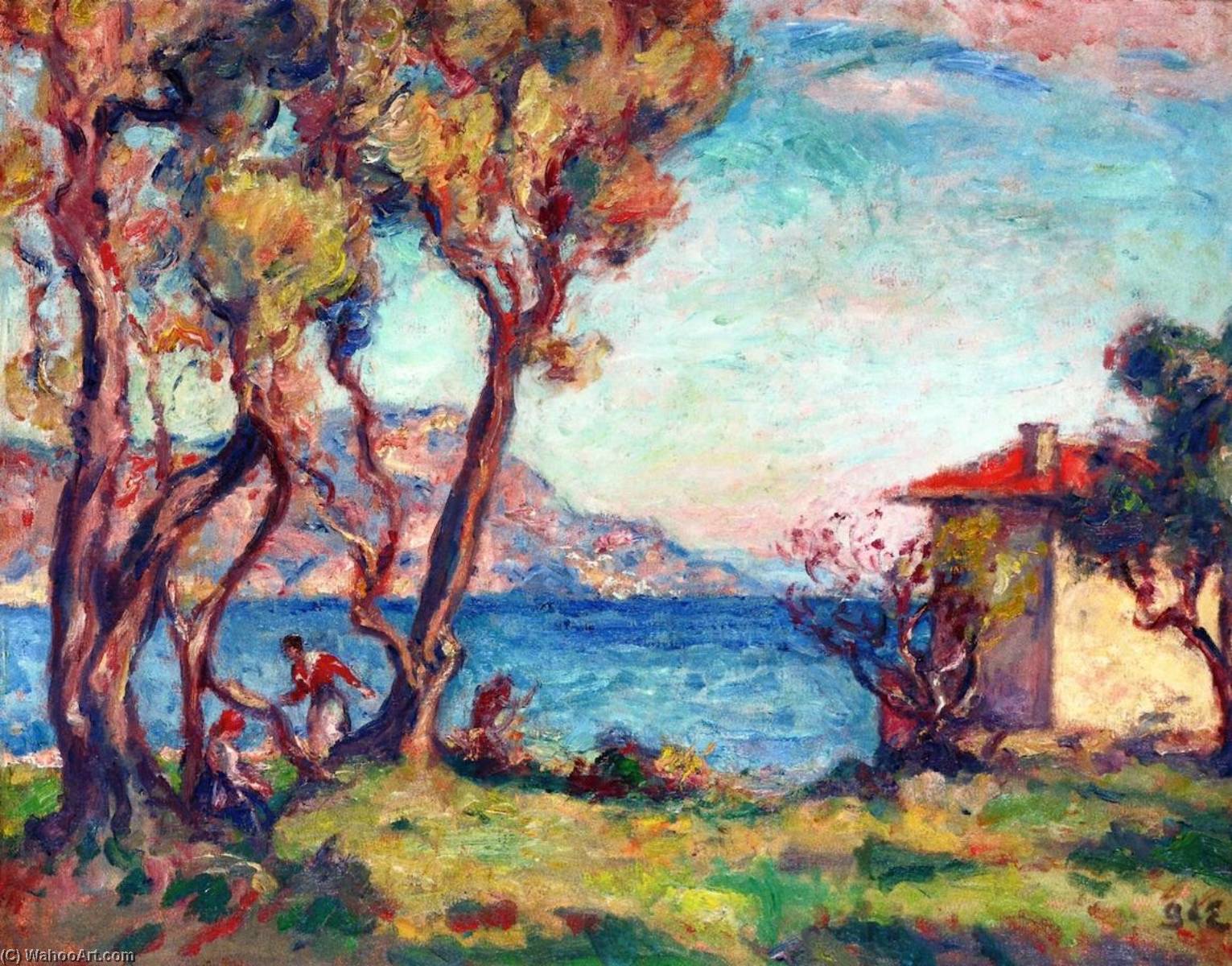
A solitary figure stands near a tree, pausing to observe the sea. This 1900 oil on canvas captures a quiet afternoon where life moves at the pace of the tide. Scattered figures populate the shoreline, some near the water's edge and others further back, creating a sense of lived-in space. A single boat rests upon the water, anchoring the composition within a peaceful maritime setting. The scene is framed by…

10
Naked Styling čiji je Žorž D'Espanjat

Naked Styling

Oil

The soft glow of early light spills into a private room, catching the curve of a woman's shoulder as she prepares for the day. She sits amidst the quiet intimacy of a domestic setting, her dark hair swept up in a loose, elegant style. A red headscarf provides a sudden, sharp pulse of color against the muted, earthy tones that surround her. There is a stillness here, a suspended moment…

Slike umetnika Žorž D'Espanjat, rangirane od 11 do 50

Motivi koji su privlačili pažnju Žorž D'Espanjat

Četiri teme koje se najčešće ponavljaju u ovim originalima, svaka sa svojim vrhunskim primerom.

Muzeji u kojima se čuvaju originalna dela umetnika Žorž D'Espanjat

4 muzeja u kojima se nalazi najviše slika sa ove stranice.

Muzej Grad Radovi umetnika Žorž D'Espanjat Slike iz ovog spiska
Petit Palais, ParizPetit Palais Pariz 2 Woman and Children in an Orchard: Sketch for the Cloister of the Girls' School of Avenue Simon-Bolivar, 19th Arrondissement of Paris, The Sewing: Sketch for the cloister of the girls' school on avenue Simon-Bolivar, 19th arrondissement of Paris
Wallraf-Richartz-Museum, KelnWallraf-Richartz-Museum Keln 1 Garden in Verneuil
Kraljevski muzeji fine umetnosti Belgije, BriselKraljevski muzeji fine umetnosti Belgije Brisel 1 Portrait Of Andrée
Dallas Museum of Art, DallasDallas Museum of Art Dallas 1 Jeune Fille Assise

Žorž D'Espanjat, jedno autentično delo po deceniji

Radovi po decenijama

Izaberite deceniju da biste videli original koji je definiše.

Slike umetnika Žorž D'Espanjat: odgovori galerije

Koja je najpoznatija slika umetnika Žorž D'Espanjat?Otkrij odgovor

Untitled (A Set of Seven Decorative Panels) (1900). Slede Tuna Vessels Saint-gilles Croix De Vié i Girl Painting at an Easel (1910).

Koliko je godina imao/la Žorž D'Espanjat kada je dovršio/la Untitled (A Set of Seven Decorative Panels)?Otkrij odgovor

30 godina: Untitled (A Set of Seven Decorative Panels) datira iz 1900, a Žorž D'Espanjat je rođen/a 1870.

Koja su najbolja 10 dela umetnika Žorž D'Espanjat?Otkrij odgovor

Untitled (A Set of Seven Decorative Panels), Tuna Vessels Saint-gilles Croix De Vié, Girl Painting at an Easel, Woman Reading, Femmes et enfants dans la terrasse du moulin de Beaulieu à Villennes sur Seine, Woman and Child, Woman and Children in an Orchard: Sketch for the Cloister of the Girls' School of Avenue Simon-Bolivar, 19th Arrondissement of Paris, The Sewing: Sketch for the cloister of the girls' school on avenue Simon-Bolivar, 19th arrondissement of Paris, Maisonette by the Sea i Naked Styling. Gornji rang pokazuje godinu i muzej za svako od njih.

Koliko je dela stvorio/la Žorž D'Espanjat?Otkrij odgovor

Naš katalog sadrži 50 dela umetnika Žorž D'Espanjat, datiranih od 1893 do 1933.

Gde se nalaze najpoznatiji originali umetnika Žorž D'Espanjat?Otkrij odgovor

Većinom u Petit Palais (Pariz), Wallraf-Richartz-Museum (Keln) i Kraljevski muzeji fine umetnosti Belgije (Brisel). Tabela muzeja iznad sadrži njih sve.

Kada je Žorž D'Espanjat stvorio svoje najpoznatije slike?Otkrij odgovor

U 1900s: 10 od 50 dela na ovoj stranici nastalo je tada, od čega je Untitled (A Set of Seven Decorative Panels).

Koja su najranija i najkasnija poznata dela umetnika Žorž D'Espanjat?Otkrij odgovor

Na ovoj stranici, najstarije delo je iz Garden in Verneuil (1893), a najnovije iz Woman and Children in an Orchard: Sketch for the Cloister of the Girls' School of Avenue Simon-Bolivar, 19th Arrondissement of Paris (1933).

Kojim se motivima Žorž D'Espanjat najčešće bavio?Otkrij odgovor

Flowers (8), Woman (6) i Vase (6), kroz svih 50 dela na ovoj stranici.

U kojoj je tehnici najviše radio/la Žorž D'Espanjat?Otkrij odgovor

Oil On Canvas, za 5 od 50 dela na ovoj stranici.

Sa kojim umetničkim pravcem je Žorž D'Espanjat povezan/a?Otkrij odgovor

Impressionism i Post-impressionism, sudeći po originalima na ovoj stranici.

Koje originale umetnika Žorž D'Espanjat poseduje Petit Palais?Otkrij odgovor

Woman and Children in an Orchard: Sketch for the Cloister of the Girls' School of Avenue Simon-Bolivar, 19th Arrondissement of Paris i The Sewing: Sketch for the cloister of the girls' school on avenue Simon-Bolivar, 19th arrondissement of Paris: Petit Palais, Pariz čuva 2 dela sa ove stranice.

Žorž D'Espanjat: umetnik

Nasleđ svetlosti: Život i umetnost Žorža D'Espanjata

U živopisnom tapiseriji francuske umetnosti kasnog 19. i početka 20. veka, malo je figura koje su tako graciozno otelotvorile prelaz iz tradicije u modernizam kao Žorž D'Espanjat. Rođen u Melunu 1870. godine, D'Espanjat je bio predodređen za život prožet estetikom lepote. Osnivanje legendarne Galerije Durand-Ruel od strane njegovog oca pružilo mu je neprevaziđen prozor u evoluciju modernizma, smeštajući ga u samo srce pariskog umetničkog sveta. Ovakva rana izloženost omogućila mu je da iz prve posmatra promenljive talase istorije umetnosti, negujući jedinstvenu perspektivu koja će mu kasnije omogućiti da premosti jaz između grubog realizma škole Barbizon i svetlucavih, prolaznih senzacija impresionizma.

Umetnički put D'Espanjata bio je put duboke sinteze. Iako su njegove formativne godine oblikovali teški, iskreni prikazi ruralnog života koje su zastupali majstori poput Žorža Kuroa i Žan-Fransoa Mile, njegovo srce je gravitiralo ka liričnijem i atmosferskom izrazu. Preselio je u Pariz 1888. godine, gde je započeo autonomni proces obuke, povremeno vođen umetnicima kao što je Žist-Klod-Etjen Kuro. Njegov stil je na kraju procvetao u sofisticiran jezik postimpresionizma, u velikoj meri zadužen za meku, tačkastu svetlost Pjera Ogusta Renoara i delikatne teksture Alfreda Sislija. Ova stilska dualnost—strukturni integritet realizma uparen sa emotivnom snagom boje—postala je zaštitni znak njegovog dela.

Majstorstvo predmeta i duha

Širina D'Espanjatove tematike odražava duboko, neprestano poštovanje prema ljudskom obliku i prirodnom svetu. Njegovi pejzaži nisu samo topografski zapisi, već emocionalne evokacije francuske ruralne sredine. U delima kao što je njegovo remek-delo iz 1900. godine "Pejzaž", može se primetiti kako labavi, plešući potezi četkicom stvaraju iluziju pokreta, hvatajući samu suštinu prolaznog povetarca ili promenljive sunčeve svetlosti. Njegova sposobnost da prenese mir kroz vibrantne nijanse i teksturalne slojeve omogućava posmatraču da zakorači direktno u seren i prirodan trenutak.

Izvan horizonta prirode, D'Espanjat je istraživao intimnost ljudskog iskustva kroz svoje aktove i domace scene. Njegovi prikazi ljudske figure slave se zbog anatomske preciznosti, ali nikada nisu klinički; umesto toga, poseduju gracioznu, poetsku kvalitet postignutu suptilnim senčenjem i mekom svetlošću. Ova nežnost proteže se i na njegove žanrovske slike, kao što je "Žene i deca na terasi vodenice Beaulieu u Villennes sur Seine", gde hvata tihu magiju porodičnog života unutar bujnih, zelenih vrtova. Bilo da je reč o slikanju mrtve prirode poput živopisnog dela "Crveno cveće i voće" ili nežnog majčinskog trenutka u slici "Žena i dete," njegov rad ostaje usidren u opipljivom osećaju atmosfere i emocije.

Istorijski značaj i trajni uticaj

D'Espanjat je bio mnogo više od slikara; bio je vitalni učesnik u kulturnom tkivu svog doba. Njegova karijera obuhvatala je izlaganje u prestižnom Salon des Refusés, a kasnije je doprineo samim temeljima Salona d'Automne, gde je na kraju služio kao potpredsednik. Njegov intelektualni domet protezao se i na književnost i scenografiju, jer je ilustrovao dela renomiranih autora kao što su Alfonse Dođe i Remi de Gormon, dokazujući da je njegova umetnička vizija bila duboko isprepletena sa širim književnim pokretima Francuske.

Danas je istorijski značaj Žorža D'Espanjata potvrđen prisustvom njegovih dela u najcenjenijim svetskim institucijama. Njegovo nasleđe živi kroz kolekcije kao što su:

  • Musée d’Orsay u Parizu, koji čuva njegov doprinos francuskoj impresionističkoj tradiciji.
  • Metropolitan Museum of Art u New Yorku, koji prikazuje njegov međunarodni domet.
  • Art Institute of Chicago, gde njegovo majstorstvo svetlosti i forme nastavlja da inspiriše.
  • Museo Thyssen-Bornemisza, ističući njegovo mesto među značajnim predstavnicima postimpresionizma.

Dok se osvrnemo na život koji je obuhvatio period od vrhunca uticaja škole Barbizon do zore moderne apstrakcije, D'Espanjat ostaje svetlucava figura. Naučio nas je da umetnost može poštovati težinu tradicije dok istovremeno prihvata efemernu lepotu trenutka, ostavljajući za sobom korpus dela koji i danas diše svetlošću i životom.