Portret Кетлин Џорџ

100 najpoznatijih slika umetnika Кетлин Џорџ, svaka potpuno jedinstvena

Ažurirano: октобар 2026 · rangirano prema našem koeficijentu popularnosti (pretrage, posete i porudžbine za svako delo) · 908 dela Кетлин Џорџ u našem katalogu

Ukratko

Say-say-gon, Hail Storm, War Chief (1845) je slika autora Кетлин Џорџ koja privlači najviše pažnje; original se nalazi u muzeju Smithsonian American Art Museum, Vašington, D.C.. Nakon toga, pogled se seli na Sky se ró ka, Second Chief of the Tribe (1834) i Ee mat lá , King Phillip, Second Chief (1838). Među 908 dela umetnika Кетлин Џорџ u našem katalogu, ovih 100 su najpoznatija, od kojih je svako jedinstveni original predstavljen sa godinom nastanka, muzejom i razlogom zbog kojeg je i danas neprocenjivo.

1796 – 1872, Вилкс-Бери Romanticism Najviše dela: Smithsonian American Art Museum

Top 10 slika umetnika Кетлин Џорџ, iz ugla galerije

1
Say-say-gon, Hail Storm, War Chief (1845) čiji je Кетлин Џорџ

Say-say-gon, Hail Storm, War Chief

1845 · Oil On Canvas · Smithsonian American Art Museum, Vašington, D.C.

George Catlin’s arresting oil on canvas, "Say-say-gon, Hail Storm, War Chief," is far more than a mere portrait; it is a profound historical document rendered with the immediacy of a living memory. Created in 1845, this work plunges the viewer directly into the dramatic confluence of cultures at the American frontier. The subject—a Native American man adorned with feathers and bearing an air of solemn authority—commands attention through his unwavering,…

2
Sky se ró ka, Second Chief of the Tribe (1834) čiji je Кетлин Џорџ

Sky se ró ka, Second Chief of the Tribe

1834 · Oil On Canvas · Smithsonian American Art Museum, Vašington, D.C.

To stand before this portrait of Sky se ró ka, Second Chief of the Tribe, is to encounter not merely paint on canvas, but a profound echo from a bygone era. George Catlin’s masterful rendering captures more than just a likeness; it arrests a moment in time—a moment steeped in dignity, contemplation, and the quiet weight of history. The subject dominates the composition with an undeniable presence. His gaze, seemingly…

3
Ee mat lá , King Phillip, Second Chief (1838) čiji je Кетлин Џорџ

Ee mat lá , King Phillip, Second Chief

1838 · Oil On Canvas · Smithsonian American Art Museum, Vašington, D.C.

Before us rests a profoundly moving portrait, George Catlin’s evocative depiction of Ee mat lá , King Phillip, Second Chief. This 1838 work transcends mere representation; it is a solemn meditation on culture, resilience, and the passing of time. The subject commands attention with an undeniable dignity that seems to emanate from within the very texture of the paint. Catlin has gifted us not just a likeness, but a window…

4
Eeh nís kim, Crystal Stone, Wife of the Chief (1832) čiji je Кетлин Џорџ

Eeh nís kim, Crystal Stone, Wife of the Chief

1832 · Oil On Canvas · Smithsonian American Art Museum, Vašington, D.C.

To stand before George Catlin’s portrait, Eeh nís kim, Crystal Stone, Wife of the Chief, is to step across the threshold of time itself. This 1832 oil painting is far more than a mere likeness; it is a profound historical document rendered with the delicate touch of an artist obsessed with preservation. Catlin, whose life spanned the collision of two worlds—the burgeoning American frontier and the ancient cultures of Native…

5
Steeh tcha kó me co, Great King (called Ben Perryman), a Chief (1834) čiji je Кетлин Џорџ

Steeh tcha kó me co, Great King (called Ben Perryman), a Chief

1834 · Oil On Canvas · Smithsonian American Art Museum, Vašington, D.C.

To stand before George Catlin’s Steeh tcha kó me co, Great King (called Ben Perryman), a Chief is to step across the threshold of time itself. This arresting portrait, executed in 1834, is far more than a mere likeness; it is a profound historical document rendered with the passionate brushstrokes of Romanticism. Catlin, forever drawn to the edges of civilization, captured here the dignity and complex spirit of an Indigenous…

6
Cáh be múb bee, He Who Sits Everywhere, a Brave (1835) čiji je Кетлин Џорџ

Cáh be múb bee, He Who Sits Everywhere, a Brave

1835 · Oil On Canvas · Smithsonian American Art Museum, Vašington, D.C.

To stand before George Catlin’s depiction of Cáh be múb bee, He Who Sits Everywhere, a Brave is to step across the threshold of time and into a world both vividly real and deeply mythic. Painted in 1835, this work transcends mere portraiture; it is an eloquent testament to a vanishing culture, rendered with the passionate intensity characteristic of Romanticism blended seamlessly with meticulous Realism. The central figure commands attention,…

7
Os ce o lá, The Black Drink, a Warrior of Great Distinction (1838) čiji je Кетлин Џорџ

Os ce o lá, The Black Drink, a Warrior of Great Distinction

1838 · Oil On Canvas · Smithsonian American Art Museum, Vašington, D.C.

To stand before George Catlin’s Os ce o lá, The Black Drink, a Warrior of Great Distinction is not merely to observe a painting; it is to step across the threshold of time. This arresting portrait, executed in 1838, captures more than just the likeness of an Indigenous man, believed to be from the Shawnee tribe—it arrests the viewer with the profound weight of cultural memory. Catlin, forever positioned as…

8
Stán au pat, Bloody Hand, Chief of the Tribe (1832) čiji je Кетлин Џорџ

Stán au pat, Bloody Hand, Chief of the Tribe

1832 · Oil On Canvas · Smithsonian American Art Museum, Vašington, D.C.

To stand before George Catlin’s portrait, Stán au pat, Bloody Hand, Chief of the Tribe, is to step across the threshold of time itself. Painted in 1832, this work transcends mere depiction; it is a profound act of witnessing. Catlin, whose life spanned the tumultuous collision between burgeoning American civilization and the ancient ways of the Native American peoples, captured more than just a likeness on canvas. He immortalized a…

9
Wa kon chásh kaw, He Who Comes on the Thunder (1828) čiji je Кетлин Џорџ

Wa kon chásh kaw, He Who Comes on the Thunder

1828 · Oil On Canvas · Smithsonian American Art Museum, Vašington, D.C.

George Catlin’s depiction, *Wa kon chásh kaw, He Who Comes on the Thunder*, is far more than a mere portrait; it is a vibrant, arresting tableau vivant plucked from the heart of a vanishing world. The scene immediately immerses the viewer in the raw energy and profound cultural richness of the American frontier in 1828. At the center stands the principal figure, radiating an almost mythic power. His outstretched arms…

10
Wah chee háhs ka, Man Who Puts All Out of Doors (1835) čiji je Кетлин Џорџ

Wah chee háhs ka, Man Who Puts All Out of Doors

1835 · Painting · Smithsonian American Art Museum, Vašington, D.C.

To stand before George Catlin’s depiction of Wah chee háhs ka, Man Who Puts All Out of Doors is to step across the threshold of time itself. This painting, executed in 1835, is far more than a mere portrait; it is a profound ethnographic document imbued with the raw energy of a culture on the precipice of change. Catlin, forever drawn to the mystery and resilience of Native American life,…

Čuvena dela umetnika Кетлин Џорџ, od 11 do 100

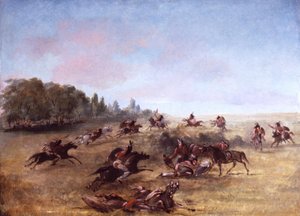
11Né-hee-ó-ee-wóo-tis, Wolf on the Hill, Chief of the Tribe (1832) čiji je Кетлин ЏорџNé-hee-ó-ee-wóo-tis, Wolf on the Hill, Chief of the Tribe1832 · Smithsonian American Art Museum 12Mún ne o ye, a Woman (1832) čiji je Кетлин ЏорџMún ne o ye, a Woman1832 · Smithsonian American Art Museum 13Mah táhp ta a, Rushes through the Middle, a Brave (1832) čiji je Кетлин ЏорџMah táhp ta a, Rushes through the Middle, a Brave1832 · Smithsonian American Art Museum 14A'h tee wát o mee, a Woman (1830) čiji je Кетлин ЏорџA'h tee wát o mee, a Woman1830 · Smithsonian American Art Museum 15Chin cha pee, Fire Bug That Creeps, Wife of Pigeon's Egg Head (1832) čiji je Кетлин ЏорџChin cha pee, Fire Bug That Creeps, Wife of Pigeon's Egg Head1832 · Smithsonian American Art Museum 16A'h sha la cóots ah, Mole in the Forehead, Chief of the Republican Pawnee (1832) čiji je Кетлин ЏорџA'h sha la cóots ah, Mole in the Forehead, Chief of the Republican Pawnee1832 · Smithsonian American Art Museum 17Stu mick o súcks, Buffalo Bull's Back Fat, Head Chief, Blood Tribe (1832) čiji je Кетлин ЏорџStu mick o súcks, Buffalo Bull's Back Fat, Head Chief, Blood Tribe1832 18Du cór re a, Chief of the Tribe, and His Family (1830) čiji je Кетлин ЏорџDu cór re a, Chief of the Tribe, and His Family1830 · Smithsonian American Art Museum 19Ish a ró yeh, He Who Carries a Wolf, a Distinguished Brave (1834) čiji je Кетлин ЏорџIsh a ró yeh, He Who Carries a Wolf, a Distinguished Brave1834 · Smithsonian American Art Museum 20Mun ne pús kee, He Who Is Not Afraid Ko ha túnk a, Big Crow and Nah cóm ee shee, Man of the Bed, Three Young Warriors (1834) čiji je Кетлин ЏорџMun ne pús kee, He Who Is Not Afraid Ko ha túnk a, Big Crow and Nah cóm ee shee, Man of the Bed, Three Young Warriors1834 · Smithsonian American Art Museum 21Hidatsa Village, Earth covered Lodges, on the Knife River, 1810 Miles above St. Louis (1832) čiji je Кетлин ЏорџHidatsa Village, Earth covered Lodges, on the Knife River, 1810 Miles above St. Louis1832 · Smithsonian American Art Museum 22Two Comanche Girls (1834) čiji je Кетлин ЏорџTwo Comanche Girls1834 · Smithsonian American Art Museum 23Náh se ús kuk, Whirling Thunder, Eldest Son of Black Hawk (1832) čiji je Кетлин ЏорџNáh se ús kuk, Whirling Thunder, Eldest Son of Black Hawk1832 · Smithsonian American Art Museum 24Le sháw loo láh le hoo, Big Elk, Chief of the Skidi (Wolf) Pawnee (1832) čiji je Кетлин ЏорџLe sháw loo láh le hoo, Big Elk, Chief of the Skidi (Wolf) Pawnee1832 · Smithsonian American Art Museum 25Wash ka mon ya, Fast Dancer, a Warrior (1844) čiji je Кетлин ЏорџWash ka mon ya, Fast Dancer, a Warrior1844 · Smithsonian American Art Museum 26No ho mun ya, One Who Gives No Attention (1844) čiji je Кетлин ЏорџNo ho mun ya, One Who Gives No Attention1844 · Smithsonian American Art Museum 27Shón ka ki he ga, Horse Chief, Grand Pawnee Head Chief (1832) čiji je Кетлин ЏорџShón ka ki he ga, Horse Chief, Grand Pawnee Head Chief1832 · Smithsonian American Art Museum 28Kid á day, a Distinguished Brave (1834) čiji je Кетлин ЏорџKid á day, a Distinguished Brave1834 · Smithsonian American Art Museum 29Tchán dee, Tobacco, an Oglala Chief (1832) čiji je Кетлин ЏорџTchán dee, Tobacco, an Oglala Chief1832 · Smithsonian American Art Museum 30Tóh to wah kón da pee, Blue Medicine, a Medicine Man of the Ting ta to ah Band (1835) čiji je Кетлин ЏорџTóh to wah kón da pee, Blue Medicine, a Medicine Man of the Ting ta to ah Band1835 · Smithsonian American Art Museum 31Hee láh dee, Pure Fountain, Wife of The Smoke (1832) čiji je Кетлин ЏорџHee láh dee, Pure Fountain, Wife of The Smoke1832 · Smithsonian American Art Museum 32Lay láw she kaw, Goes Up the River, an Aged Chief (1830) čiji je Кетлин ЏорџLay láw she kaw, Goes Up the River, an Aged Chief1830 · Smithsonian American Art Museum 33Wá nah de túnk ah, Big Eagle (or Black Dog), Chief of the O hah kas ka toh y an te Band (1835) čiji je Кетлин ЏорџWá nah de túnk ah, Big Eagle (or Black Dog), Chief of the O hah kas ka toh y an te Band1835 · Smithsonian American Art Museum 34Shon ta yi ga, Little Wolf, a Famous Warrior (1844) čiji je Кетлин ЏорџShon ta yi ga, Little Wolf, a Famous Warrior1844 · Smithsonian American Art Museum 35Big Bend on the Upper Missouri, 1900 Miles above St. Louis (1832) čiji je Кетлин ЏорџBig Bend on the Upper Missouri, 1900 Miles above St. Louis1832 · Smithsonian American Art Museum 36Battle Between Sioux and Sac and Fox (1848) čiji je Кетлин ЏорџBattle Between Sioux and Sac and Fox1848 · Smithsonian American Art Museum 37H'co a h'co a h'cotes min, No Horns on His Head, a Brave (1832) čiji je Кетлин ЏорџH'co a h'co a h'cotes min, No Horns on His Head, a Brave1832 · Smithsonian American Art Museum 38Eé shah kó nee, Bow and Quiver, First Chief of the Tribe (1834) čiji je Кетлин ЏорџEé shah kó nee, Bow and Quiver, First Chief of the Tribe1834 · Smithsonian American Art Museum 39Fort Pierre, Mouth of the Teton River, 1200 Miles above Saint Louis (1832) čiji je Кетлин ЏорџFort Pierre, Mouth of the Teton River, 1200 Miles above Saint Louis1832 · Smithsonian American Art Museum 40Lay lóo ah pee ái shee kaw, Grass, Bush, and Blossom, Semicivilized (1830) čiji je Кетлин ЏорџLay lóo ah pee ái shee kaw, Grass, Bush, and Blossom, Semicivilized1830 · Smithsonian American Art Museum 41Mah kée mee teuv, Grizzly Bear, Chief of the Tribe (1831) čiji je Кетлин ЏорџMah kée mee teuv, Grizzly Bear, Chief of the Tribe1831 · Smithsonian American Art Museum 42Ha na tá nu maúk, Wolf Chief, Head Chief of the Tribe (1832) čiji je Кетлин ЏорџHa na tá nu maúk, Wolf Chief, Head Chief of the Tribe1832 · Smithsonian American Art Museum 43Prairie Bluffs Burning (1832) čiji je Кетлин ЏорџPrairie Bluffs Burning1832 · Smithsonian American Art Museum 44Hard Hickory, an Amiable Man (1831) čiji je Кетлин ЏорџHard Hickory, an Amiable Man1831 · Smithsonian American Art Museum 45Bread, Chief of the Tribe (1831) čiji je Кетлин ЏорџBread, Chief of the Tribe1831 · Smithsonian American Art Museum 46On sáw kie, The Sauk, in the Act of Praying (1830) čiji je Кетлин ЏорџOn sáw kie, The Sauk, in the Act of Praying1830 · Smithsonian American Art Museum 47Ye hów lo gee, The Cloud, a Chief (1838) čiji je Кетлин ЏорџYe hów lo gee, The Cloud, a Chief1838 · Smithsonian American Art Museum 48Wá hón ga shee, No Fool, a Great Fop (1832) čiji je Кетлин ЏорџWá hón ga shee, No Fool, a Great Fop1832 · Smithsonian American Art Museum 49Máh to tóh pa, Four Bears, Second Chief in Mourning (1832) čiji je Кетлин ЏорџMáh to tóh pa, Four Bears, Second Chief in Mourning1832 · Smithsonian American Art Museum 50W'y ee yogh, Man of Sense, a Brave (1832) čiji je Кетлин ЏорџW'y ee yogh, Man of Sense, a Brave1832 · Smithsonian American Art Museum 51Is sa wáh tám ah, Wolf Tied with Hair, a Chief (1834) čiji je Кетлин ЏорџIs sa wáh tám ah, Wolf Tied with Hair, a Chief1834 · Smithsonian American Art Museum 52Ru ton ye wee ma, Strutting Pigeon, Wife of White Cloud (1844) čiji je Кетлин ЏорџRu ton ye wee ma, Strutting Pigeon, Wife of White Cloud1844 · Smithsonian American Art Museum 53Meach o shín gaw, Little White Bear, a Distinguished Brave (1832) čiji je Кетлин ЏорџMeach o shín gaw, Little White Bear, a Distinguished Brave1832 · Smithsonian American Art Museum 54Mandan Dance (also known as The Last Race, Mandan O-kee-pa Ceremony) (1832) čiji je Кетлин ЏорџMandan Dance (also known as The Last Race, Mandan O-kee-pa Ceremony)1832 55Tul lock chísh ko, Drinks the Juice of the Stone, in Ball player's Dress (1834) čiji je Кетлин ЏорџTul lock chísh ko, Drinks the Juice of the Stone, in Ball player's Dress1834 · Smithsonian American Art Museum 56Há-tchoo-túc-knee, Snapping Turtle, a Half-breed (1834) čiji je Кетлин ЏорџHá-tchoo-túc-knee, Snapping Turtle, a Half-breed1834 · Smithsonian American Art Museum 57White Sand Bluffs, on Santa Rosa Island, Near Pensacola (1835) čiji je Кетлин ЏорџWhite Sand Bluffs, on Santa Rosa Island, Near Pensacola1835 58Little Wolf (Shon-ta-ye-ga) (1846) čiji je Кетлин ЏорџLittle Wolf (Shon-ta-ye-ga)1846 59La-dóo-ke-a, Buffalo Bull, a Grand Pawnee Warrior (1832) čiji je Кетлин ЏорџLa-dóo-ke-a, Buffalo Bull, a Grand Pawnee Warrior1832 · Smithsonian American Art Museum 60Hón-je-a-pút-o, Wife of Bear-catcher (1832) čiji je Кетлин ЏорџHón-je-a-pút-o, Wife of Bear-catcher1832 · Smithsonian American Art Museum 61Tuch-ee, A Celebrated War Chief of the Cherokees (1834) čiji je Кетлин ЏорџTuch-ee, A Celebrated War Chief of the Cherokees1834 · Virginia Museum of Fine Arts 62Múk-a-tah-mish-o-káh-kaik, Black Hawk, Prominent Sac Chief (1832) čiji je Кетлин ЏорџMúk-a-tah-mish-o-káh-kaik, Black Hawk, Prominent Sac Chief1832 · Smithsonian American Art Museum 63The White Cloud, Head Chief of the Iowas (1844) čiji je Кетлин ЏорџThe White Cloud, Head Chief of the Iowas1844 · National Gallery of Art 64Bird (1839) čiji je Кетлин ЏорџBird1839 · Smithsonian American Art Museum 65Háw che ke súg ga, He Who Kills the Osages, Chief of the Tribe (1832) čiji je Кетлин ЏорџHáw che ke súg ga, He Who Kills the Osages, Chief of the Tribe1832 · Smithsonian American Art Museum 66Mó-sho-la-túb-bee, He Who Puts Out and Kills, Chief of the Tribe (1834) čiji je Кетлин ЏорџMó-sho-la-túb-bee, He Who Puts Out and Kills, Chief of the Tribe1834 · Smithsonian American Art Museum 67Portrait of a Gentleman (1827) čiji je Кетлин ЏорџPortrait of a Gentleman1827 · Metropoliten музеј у Њујорку 68Boy Chief - Ojibbeway (1843) čiji je Кетлин ЏорџBoy Chief - Ojibbeway1843 · National Gallery of Art 69Mounted War Party Scouring a Thicket (1848) čiji je Кетлин ЏорџMounted War Party Scouring a Thicket1848 · Smithsonian American Art Museum 70See-non-ty-a, an Iowa Medicine Man (1844) čiji je Кетлин ЏорџSee-non-ty-a, an Iowa Medicine Man1844 · National Gallery of Art 71The Cheyenne Brothers Starting on Their Fall Hunt (1861) čiji je Кетлин ЏорџThe Cheyenne Brothers Starting on Their Fall Hunt1861 · National Gallery of Art 72Tul lock chísh ko, Drinks the Juice of the Stone (1834) čiji je Кетлин ЏорџTul lock chísh ko, Drinks the Juice of the Stone1834 · Smithsonian American Art Museum 73Wah pón jee a, The Swan, a Warrior (1830) čiji je Кетлин ЏорџWah pón jee a, The Swan, a Warrior1830 · Smithsonian American Art Museum 74Nóm ba mon nee, Double Walker, a Brave (1832) čiji je Кетлин ЏорџNóm ba mon nee, Double Walker, a Brave1832 · Smithsonian American Art Museum 75Naugh háigh hee kaw, He Who Moistens the Wood (1828) čiji je Кетлин ЏорџNaugh háigh hee kaw, He Who Moistens the Wood1828 · Smithsonian American Art Museum 76Turtle Hunt (1869) čiji je Кетлин ЏорџTurtle Hunt1869 77Ru-ton-wee-me, Pigeon on the Wing (1844) čiji je Кетлин ЏорџRu-ton-wee-me, Pigeon on the Wing1844 · Smithsonian American Art Museum 78William Clark (1832) čiji je Кетлин ЏорџWilliam Clark1832 · National Portrait Gallery 79Peh-tó-pe-kiss, Eagle's Ribs, a Piegan Chief (1832) čiji je Кетлин ЏорџPeh-tó-pe-kiss, Eagle's Ribs, a Piegan Chief1832 · Smithsonian American Art Museum 80Canoe Race Near Sault Ste. Marie (1837) čiji je Кетлин ЏорџCanoe Race Near Sault Ste. Marie1837 · Smithsonian American Art Museum 81Elk and Buffalo Grazing among Prairie Flowers, Texas (1848) čiji je Кетлин ЏорџElk and Buffalo Grazing among Prairie Flowers, Texas1848 · Smithsonian American Art Museum 82Túnk aht óh ye, Thunderer, a Boy, and Wun pán to mee, White Weasel, a Girl (1834) čiji je Кетлин ЏорџTúnk aht óh ye, Thunderer, a Boy, and Wun pán to mee, White Weasel, a Girl1834 · Smithsonian American Art Museum 83An Old Nayas Indian, His Granddaughter, and a Boy (1875) čiji je Кетлин ЏорџAn Old Nayas Indian, His Granddaughter, and a Boy1875 · National Gallery of Art 84Mrs. George Catlin (Clara Bartlet Gregory) (1830) čiji je Кетлин ЏорџMrs. George Catlin (Clara Bartlet Gregory)1830 · Metropoliten музеј у Њујорку 85Theodore Burr Catlin, in Indian Costume (1840) čiji je Кетлин ЏорџTheodore Burr Catlin, in Indian Costume1840 · Smithsonian American Art Museum 86Háh nee, The Beaver, a Warrior (1834) čiji je Кетлин ЏорџHáh nee, The Beaver, a Warrior1834 · Smithsonian American Art Museum 87Pash ee pa hó, Little Stabbing Chief, the Younger, One of Black Hawk's Braves (1832) čiji je Кетлин ЏорџPash ee pa hó, Little Stabbing Chief, the Younger, One of Black Hawk's Braves1832 · Smithsonian American Art Museum 88Kotz a tó ah, Smoked Shield, a Distinguished Warrior (1834) čiji je Кетлин ЏорџKotz a tó ah, Smoked Shield, a Distinguished Warrior1834 · Smithsonian American Art Museum 89Eé hee a duck cée a, He Who Ties His Hair Before (1832) čiji je Кетлин ЏорџEé hee a duck cée a, He Who Ties His Hair Before1832 · Smithsonian American Art Museum 90Three Blackfoot Men (1862) čiji je Кетлин ЏорџThree Blackfoot Men1862 · National Gallery of Art 91Pash ee pa hó, Little Stabbing Chief, a Venerable Sauk Chief (1835) čiji je Кетлин ЏорџPash ee pa hó, Little Stabbing Chief, a Venerable Sauk Chief1835 · Smithsonian American Art Museum 92View on the Missouri, Alluvial Banks Falling in, 600 Miles above St. Louis (1832) čiji je Кетлин ЏорџView on the Missouri, Alluvial Banks Falling in, 600 Miles above St. Louis1832 · Smithsonian American Art Museum 93Two Apachee Warriors and a Woman (1862) čiji je Кетлин ЏорџTwo Apachee Warriors and a Woman1862 · National Gallery of Art 94Camanchees Lancing a Buffalo Bull (1865) čiji je Кетлин ЏорџCamanchees Lancing a Buffalo Bull1865 · National Gallery of Art 95Lengua Indians Ascending the Rapids of the Rio Uruguay (1861) čiji je Кетлин ЏорџLengua Indians Ascending the Rapids of the Rio Uruguay1861 · National Gallery of Art 96Mauhees Encampment (1869) čiji je Кетлин ЏорџMauhees Encampment1869 · National Gallery of Art 97A Lagoon of the Upper Amazon (1871) čiji je Кетлин ЏорџA Lagoon of the Upper Amazon1871 · National Gallery of Art 98The Last Race, Mandan O-Kee-Pa Ceremony (1832) čiji je Кетлин ЏорџThe Last Race, Mandan O-Kee-Pa Ceremony1832 · Smithsonian American Art Museum 99Assinneboine Chief before and after Civilization (1869) čiji je Кетлин ЏорџAssinneboine Chief before and after Civilization1869 · National Gallery of Art 100Nayas Village at Sunset (1875) čiji je Кетлин ЏорџNayas Village at Sunset1875 · National Gallery of Art

Čuvena dela Кетлин Џорџ po periodima

Motivi koji su privlačili pažnju Кетлин Џорџ

Četiri teme koje se najčešće ponavljaju u ovim originalima, svaka sa svojim vrhunskim primerom.

Muzeji u kojima se čuvaju originalna dela umetnika Кетлин Џорџ

5 muzeja u kojima se nalazi najviše slika sa ove stranice.

Muzej Grad Radovi umetnika Кетлин Џорџ Slike iz ovog spiska
Smithsonian American Art Museum, Vašington, D.C.Smithsonian American Art Museum Vašington, D.C. 471 Say-say-gon, Hail Storm, War Chief, Sky se ró ka, Second Chief of the Tribe, Ee mat lá , King Phillip, Second Chief
National Gallery of Art, WashingtonNational Gallery of Art Washington 345 The White Cloud, Head Chief of the Iowas, Boy Chief - Ojibbeway, See-non-ty-a, an Iowa Medicine Man
Metropoliten музеј у Њујорку, ЊујоркMetropoliten музеј у Њујорку Њујорк 4 Portrait of a Gentleman, Mrs. George Catlin (Clara Bartlet Gregory)
Virginia Museum of Fine Arts, RichmondVirginia Museum of Fine Arts Richmond 1 Tuch-ee, A Celebrated War Chief of the Cherokees
National Portrait Gallery, Vašington, D.C.National Portrait Gallery Vašington, D.C. 1 William Clark

Кетлин Џорџ kroz decenije: jedan jedinstveni original za svaku

Radovi po decenijama

Izaberite deceniju da biste videli original koji je definiše.

Slike umetnika Кетлин Џорџ: pitanja za galeriju

Koje je najpoznatije delo umetnika Кетлин Џорџ?Otkrij odgovor

Say-say-gon, Hail Storm, War Chief (1845), Smithsonian American Art Museum, Vašington, D.C.. Slede Sky se ró ka, Second Chief of the Tribe (1834) i Ee mat lá , King Phillip, Second Chief (1838).

U kojoj je godini Кетлин Џорџ stvorio/la Say-say-gon, Hail Storm, War Chief?Otkrij odgovor

49 godina: Say-say-gon, Hail Storm, War Chief datira iz 1845, a Кетлин Џорџ je rođen/a 1796.

Koji je deset najpoznatijih slika autora Кетлин Џорџ?Otkrij odgovor

Say-say-gon, Hail Storm, War Chief, Sky se ró ka, Second Chief of the Tribe, Ee mat lá , King Phillip, Second Chief, Eeh nís kim, Crystal Stone, Wife of the Chief, Steeh tcha kó me co, Great King (called Ben Perryman), a Chief, Cáh be múb bee, He Who Sits Everywhere, a Brave, Os ce o lá, The Black Drink, a Warrior of Great Distinction, Stán au pat, Bloody Hand, Chief of the Tribe, Wa kon chásh kaw, He Who Comes on the Thunder i Wah chee háhs ka, Man Who Puts All Out of Doors. Gornji rang pokazuje godinu i muzej za svako od njih.

Koliko je poznatih dela umetnika Кетлин Џорџ?Otkrij odgovor

Naš katalog sadrži 908 dela umetnika Кетлин Џорџ, datiranih od 1827 do 1871.

Gde se mogu videti najpoznatiji originali umetnika Кетлин Џорџ?Otkrij odgovor

Većinom u Smithsonian American Art Museum (Vašington, D.C.), National Gallery of Art (Washington) i Metropoliten музеј у Њујорку (Њујорк). Tabela muzeja iznad sadrži njih sve.

U kom periodu je Кетлин Џорџ stvorio/la svoje najpoznatije slike?Otkrij odgovor

U 1830s: 72 od 100 dela na ovoj stranici nastalo je tada, od čega je Sky se ró ka, Second Chief of the Tribe.

Ko je najraniji, a koje je najkasnije čuveno delo umetnika Кетлин Џорџ?Otkrij odgovor

Na ovoj stranici, najstarije delo je iz Portrait of a Gentleman (1827), a najnovije iz A Lagoon of the Upper Amazon (1871).

Koje su teme Кетлин Џорџ preferirao/la?Otkrij odgovor

Native american (58), Indigenous culture (27) i Portraiture (27), kroz svih 100 dela na ovoj stranici.

Sa kojim materijalima je Кетлин Џорџ najčešće slikao?Otkrij odgovor

Oil On Canvas, za 69 od 100 dela na ovoj stranici.

Kojem umetničkom pravcu pripada delo umetnika Кетлин Џорџ?Otkrij odgovor

Romanticism, sudeći po originalima na ovoj stranici.

Koja originalna dela Кетлин Џорџ mogu videti u Smithsonian American Art Museum?Otkrij odgovor

Say-say-gon, Hail Storm, War Chief, Sky se ró ka, Second Chief of the Tribe i Ee mat lá , King Phillip, Second Chief: Smithsonian American Art Museum, Vašington, D.C. čuva 78 dela sa ove stranice.

Кетлин Џорџ: portret umetnika

Rane godine i poziv na granicu

Džordž Katlin, rođen u Wilkes-Barre, Pensilvaniji, 1796. godine, bio je čovek sudbinom da postane most između uspostavljenog američkog društva svog vremena i brzo nestajućih kultura indijanskih plemena. Njegovo detinjstvo bilo je duboko utisnutim pričama o granici, priče koje je prepričala njegova majka, Pola Saton, koja je sama preživela užasnu ekspediciju zarobljavanja tokom Indijskog napada 1778. Ove priče su u mladom Katlinu zapalile fascinaciju Zapadom, zemljom koja se smatrala i opasnom i duboko romantičnom. Iako je prvobitno obučen za pravnika, otkrio je svoj pravi poziv ne u sudnici, već u hvatanje suštine načina života koji je smatrao da nestaje. Napustio je pravnu praksu nakon samo dve godine, vođen umetničkim impulsom i rastućim ubeđenjem da tradicije i izglede Indijanaca zaslužuju pažljivo dokumentovanje za buduće generacije. Nije reč samo o estetskoj radoznalosti; bila je to osećanje hitnosti, premonicija da će ekspanzija na zapadu neizbrisivo promeniti ove kulture. Njegov rani rad uključivao je gravure koje prikazuju scene duž Eri kanala, što demonstrira njegovu tehničku veštinu i pažnju na detalje – kvalitete koje su postale oznake njegove kasnije, ambicioznije projekte. Ovi početni nastojanja poslužili su kao ključna osnova, usavršavajući njegove sposobnosti posmatranja i uspostavljajući njegovu predanost vizuelnom pripovedanju.

Dokumentovanje nestajućeg sveta: Indijanska galerija

Katlinovo definisano postignuće bila je nesumnjivo kreacija „Indijske galerije”, izvanredne kolekcije od preko 500 slika posvećenih prikazivanju indijanaca i kulture. Počevši od 1830-ih, krenuo je na pet opsežnih ekspedicija u američki Zapad, putujući uz reku Misisipi i upućujući se u teritorije naseljavene plemenima kao što su Mandani, Sijuksi, Blejkfuti i Čokto. Nije bio samo posmatrač; Katlin se uranio u ove zajednice, učestvovao je u ceremonijama, svedočio svakodnevnom životu i sticao odnose sa vođama plemena. Njegove slike su izvanredne zbog realizma i živopisnih boja, hvatajući ne samo fizičke sličnosti, već i osećaj dostojanstva i složenosti indijanskih običaja. Bal-igra Čoktoa je dinamičan prikaz tradicionalne igre, koja pokazuje atletizam i društveni duh plemena. Slično tome, njegov portret Mo-sho-la-túb-bee, Onaj koji izbacuje i ubija, poglavar plemena otkriva moćnog vođu sa neokolevajućim pogledom, prenoseći autoritet i mudrost. Stil Katlina se odlikuje pažnjom na detalje, često uključujući bogata pozadina koja pruža kontekst za njegove subjekte – pejzaže, tipije, ceremonijalne predmete - sve su prikazane sa oštrom sposobnošću razaznavanja. Težio je da Indijance prikaže ne kao divljačke stereotipe, već kao pojedince sa bogatim kulturnim tradicijama i složenim društvenim strukturama, osporavajući uobičajene predrasude svog vremena.

Izazovi i priznanje: Život posvećen očuvanju

Uprkos umetničkoj vrjednosti i istorijskom značaju Indijske galerije, Katlin je suočen sa značajnim izazovima u sticanju priznanja i finansijske podrške za svoj rad. On je zamislio da donira kolekciju američkoj vladi, nadajući se da će biti očuvana kao nacionalno blago, ali su njegovi početni predlozi ponavljano odbijeni. Neustrašiv, poneo je svoju galeriju na turneju, izlažući je prvo u Londonu, a zatim u Parizu i Briselu tokom 1840-ih i 50-ih godina. Ove evropske izložbe stekle su značajnu pažnju, upoznavajući publiku sa svetom koji su do tada poznavali samo kroz druge izvore. Katlin je takođe objavio nekoliko knjiga u kojima je detaljno opisao svoja putovanja i zapažanja, uključujući Manire, običaji i stanje severnoameričkih Indijanaca (1841) i Poslednja šetnja među Indijancima Stenovitih planina i Anda (1868), čime je dodatno učvrstio svoj ugled kao vodeće autoritete o indijanskoj kulturi. Ipak, finansijske poteškoće su nastavile da ga muče tokom celog života. U očajničkoj pokušaju da povrati deo svoje investicije, rekonstruisao je više od 400 slika u manji „kartonski kolektiv”, ali ni ovaj napor nije doneo značajan povrat. Ovaj period je bio obeležen stalnom borbom i paradoksalnošću – čovek posvećen očuvanju kulture koja se suočava sa nestajanjem našao se da se bori za svoj sopstveni opstanak.

Istorijsko značenje i nasleđe

Džordž Katlin je umro 1872. godine, ostavivši iza sebe nasleđe koje i danas rezonuje. Iako njegov rad nije bio u potpunosti cenjen tokom njegovog života, od tada je prepoznat kao neprocenjiva istorijska evidencija indijanskog života pre sveobuhvatnih promena koje su izazvale ekspanzija na zapadu. Njegove slike nude pogled u kulture koje su često bile pogrešno predstavljene ili ignorisane u glavnom narativu. Prairie Meadows Burning, sa dramatičnim prikazom kontrolisanog sagorevanja i pratećih jahača, ne hvata samo pejzaž, već i intimnu vezu između Indijanaca i njihovog okruženja. Pipestone Quarry, Coteau Des Prairies ilustruje duhovno značenje ovog svetog mesta za mnoga plemena. Katlinova detaljna dokumentacija pruža uvid u običaje plemena, društvene strukture, verska ubeđenja i umetničke tradicije – informacije koje bi bile izgubljene u istoriji bez njegovih posvećenih napora. Njegov rad je snažna podsetnica na važnost očuvanja kulture i potrebu da se ospore predrasude o domorodačkim narodima. On nije bio samo umetnik; bio je hroničar, svedok i strastveni zagovornik nestajućeg načina života – nasleđe koje nastavlja da inspiriše i informiše naše razumevanje američke istorije i kulture.

Glavna dela

  • Sham Fight, Mandan Boys (1832-1833): Živopisno prikazivanje igrivog lažne borbe među mladim Mandan ratnicima.
  • Mrs. George Catlin (Clara Bartlett Gregory) (1850): Portret koji prikazuje umetnikovu suprugu, nudeći uvid u njegov lični život.
  • Pipestone Quarry, Coteau Des Prairies (1848): Ilustruje sveto mesto za mnoga plemena i njihovu duhovnu vezu sa zemljom.
  • Medicine Buffalo of the Sioux (1839): Zapanjujući portret koji hvata dostojanstvo i moć istaknutog Sijuks lidera.
  • Prairie Meadows Burning (1832): Prikazuje dramatičnu scenu kontrolisanog sagorevanja, naglašavajući odnos između Indijanaca i njihovog okruženja.
  • Dubuque's Grave, Upper Mississippi (1836): Pejzažna slika koja hvata mirnu lepotu gornjeg Misisipija sa impresionističkim potezima kista.
  • Eagle Dance, Choctaw (1837): Živopisno prikazivanje tradicionalne ceremonije Čoktoa, koja pokazuje njihovo bogato kulturno nasleđe