The Vibrant Legacy of Francis Campbell Cadell
Born into the refined atmosphere of Edinburgh in 1883, Francis Campbell Cadell was destined for a life touched by the arts. As the son of the esteemed surgeon Dr. Francis Cadell and Mary Hamilton Boileau, his upbringing at 22 Ainslie Place within the prestigious Moray Estate provided a backdrop of cultural sophistication. This environment, enriched by the theatrical presence of his sister, the renowned actress Jean Cadell, nurtured a sensibility that would later define his approach to the canvas. From the tender age of sixteen, Cadell sought the pulse of the modern art world, traveling to Paris to study at the Académie Julian. It was within the vibrant, experimental atmosphere of the French capital that his artistic identity began to coalesce, as he moved away from rigid academicism toward a more liberated expression of light and hue.
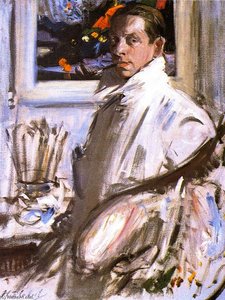
The evolution of Cadell’s technique was profoundly shaped by the arrival of Fauvism. Inspired by the radical color palettes of masters like Matisse, Cadell embraced a style that prioritized emotional resonance over mere photographic accuracy. He became a key figure among the Scottish Colourists, a group celebrated for their ability to infuse landscapes and interiors with a rhythmic, almost musical use of pigment. His brushwork, often bold and decisive, sought to capture the fleeting essence of light hitting a surface, whether it was the rugged coastlines of Iona or the polished elegance of an Edinburgh drawing room. This mastery of color allowed him to transform ordinary scenes into extraordinary studies of atmosphere and mood.
A Master of Light and Interiority
Cadell’s oeuvre is perhaps most celebrated for its exquisite depiction of high-society interiors and the quiet dignity of domestic life. He possessed a singular ability to render the textures of silk, the sheen of porcelain, and the soft glow of afternoon light filtering through a window. These works are not merely portraits of rooms, but rather psychological landscapes that reflect the elegance and social nuances of early 20th-century Scotland. His compositions often feature a sophisticated interplay between structured form and fluid color, creating a sense of modern vitality within traditional settings.
Beyond the confines of the salon, Cadell found profound inspiration in the natural world. His landscapes, particularly those capturing the rugged beauty of the Hebridean islands, demonstrate a different facet of his genius. In these works, the influence of French Impressionism and Fauvism merges with a deep, localized appreciation for the Scottish terrain. The following elements characterize his most significant artistic contributions:
- Chromatic Boldness: A fearless use of pure, unadulterated color to define shape and depth.
- Luminous Interiors: The creation of atmospheric spaces that evoke a sense of timeless elegance.
- Textural Mastery: An expert command over the physical properties of paint to simulate light and fabric.
- Modernist Spirit: A rejection of Victorian sentimentality in favor of a more direct, sensory experience.
An Unconventional Spirit and Lasting Significance
The persona of Francis Campbell Cadell was as striking as his palette. Known for his wit and a certain rebellious intellect, he famously embraced his identity as a left-handed painter. When faced with the skepticism of traditionalists who questioned his unconventional methods, he would wryly invoke the greatness of Michelangelo, using historical precedent to silence his critics. This characteristic defiance of convention mirrored his artistic mission: to break free from the stifling grip of academic tradition and pursue a more authentic, colorful reality.
Though his life was relatively short, ending in 1937, Cadell’s impact on British art history remains indelible. He helped bridge the gap between the traditional Scottish landscape tradition and the radical innovations of the European avant-garde. Today, his works are cherished not only for their aesthetic beauty but as vital historical documents of a period of immense cultural transition. Through his vibrant portraits and sweeping landscapes, Cadell continues to invite viewers into a world where color is the primary language of emotion and light is the ultimate architect of form.