Portret Ернст Лудвиг Кирхнер

100 najpoznatijih slika umetnika Ернст Лудвиг Кирхнер, izbor iz galerije

Ažurirano: новембар 2026 · rangirano prema našem koeficijentu popularnosti (pretrage, posete i porudžbine za svako delo) · 929 dela Ернст Лудвиг Кирхнер u našem katalogu

Ukratko

Od svih originala koje je Ернст Лудвиг Кирхнер ostavio, najpoznatiji je Suđenje Pariza. Odmah za njima slede Kupci u Moritzburgu (1909) i Ulica u Berlinu. Naš katalog sadrži 929 dela umetnika Ернст Лудвиг Кирхнер; galerija je čuvala 100 dela koja svet najviše admira, od kojih je svako prikazano sa svojim datumom, muzejom i pričom.

1880 – 1938, Ашафенбург German expressionism Najviše dela: Städel Museum

Top 10 slika umetnika Ернст Лудвиг Кирхнер: izbor galerije

1
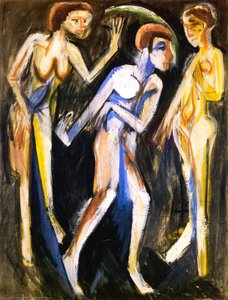
Suđenje Pariza čiji je Ернст Лудвиг Кирхнер

Suđenje Pariza

Ulje na platnu

Delo „Suđenje Parisu” Ernsta Ludviga Kirchnera predstavlja očaravajući primer nemačkog ekspresionizma, pokreta koji je težio da prenese emociju i subjektivno iskustvo kroz smelu upotrebu boja i dinamičnih formi. Ovo umetničko delo poziva posmatrače u svet intenzivnog emocionalnog izražavanja i živopisnih boja, čineći ga upečatljivim dodatkom svakoj umetničkoj kolekciji ili unutrašnjem prostoru.

2
Kupci u Moritzburgu (1909) čiji je Ернст Лудвиг Кирхнер

Kupci u Moritzburgu

1909 · Ulje na platnu · Tate Modern, London

Slika Kupci u Moritzburgu predstavlja remek-delo koje je stvorio čuveni nemački umetnik Ernst Ludwig Kirchner u periodu između 1909. i 1926. godine. Ovo monumentalno delo, izvedeno kao ulje na platnu, služi kao vrhunski primer ekspresionističkog pokreta, koji se prepoznaje kroz svoje odvažne i vibrantne boje, izobličene forme i duboko emotivne poteze četkicom.

3
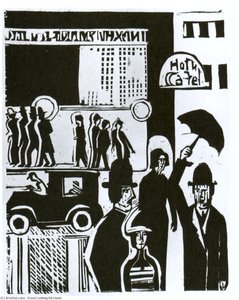
Ulica u Berlinu čiji je Ернст Лудвиг Кирхнер

Ulica u Berlinu

Ulje na platnu

Ernst Ludwig Kirchner’s “Berlin Street” – painted in 1913, a pivotal year before the eruption of World War I – isn't merely a depiction of a city scene; it’s a visceral embodiment of urban anxiety and alienation. This oil on canvas, now housed within the Neue Galerie in New York, plunges us directly into the heart of Berlin’s burgeoning modernity, a period marked by rapid industrialization, social upheaval, and a…

4
Fränzi vor geschnitztem Stuhl (1910) čiji je Ернст Лудвиг Кирхнер

Fränzi vor geschnitztem Stuhl

1910 · Oil On Panel · Städel Museum, Frankfurt

Introduction Ernst Ludwig Kirchner was a prominent German Expressionist painter, printmaker, and sculptor. Born in 1880, he co-founded the artists' group Die Brücke (The Bridge) in Dresden in 1905, which aimed to bridge traditional art with modernity. One of his notable works is 'Fränzi vor geschnitztem Stuhl' (Fränzi before a Carved Chair), painted in 1910. Historical Context Kirchner's work was heavily influenced by the cultural and social changes of his…

5
Self Portrait with Cat (1919) čiji je Ернст Лудвиг Кирхнер

Self Portrait with Cat

1919 · Oil On Canvas · Harvard Art Museums, Kembriđ

In the turbulent landscape of 1919, as the echoes of World War I still reverberated through the shattered psyche of Europe, Ernst Ludwig Kirchner captured a moment of profound psychological intimacy. Self Portrait with Cat is far more than a mere likeness; it is a visual distillation of an artist navigating the delicate boundary between solitude and solace. Painted during his retreat to the serene surroundings of Frauenkirch near Davos,…

6
Пијец (Селопоглед) (1914) čiji je Ернст Лудвиг Кирхнер

Пијец (Селопоглед)

1914 · Ulje na platnu · Germanisches Nationalmuseum, Nurenberg

Увод у психику Кирхнера: „Пијец“ (Самопортрет) Ернст Лудвиг Кирхнер, име које се памти као синоним моћне емоционалне снаге немачке експресионистичке слике, рођено је у свету који је био пред дивљим историјским прекретницама. Његово појављење у Ашафењебругу, Баварској, 1880. године, обележило је живот дубоко везан за стваралачку иновацију и личну тугу. Покретање према Франкфурту и Перлену, а затим утврђивање у Чемињицу, млади Кирхнер је поглобио се ангажманта градског живота који је…

7
Landscape with blue rocks čiji je Ернст Лудвиг Кирхнер

Landscape with blue rocks

Oil On Canvas

Ernst Ludwig Kirchner's "Landscape with Blue Rocks" isn’t merely a depiction of a natural scene; it’s a visceral expression of the anxieties and uncertainties simmering beneath the surface of early 20th-century Germany. Painted in 1919, this work embodies the core tenets of Expressionism – a movement that sought to convey subjective emotions rather than objective reality. Kirchner, a founding member of Die Brücke (The Bridge), used bold brushstrokes, jarring colors,…

8
Self-portrait with Model čiji je Ернст Лудвиг Кирхнер

Self-portrait with Model

Akril na platnu · Hamburger Kunsthalle, Hamburg

In the annals of German Expressionism, few works possess the visceral, psychological weight of Ernst Ludwig Kirchner’s Self-portrait with Model. Painted during a period of profound global transition, this masterpiece serves as much more than a mere studio record; it is a hauntingly beautiful window into the artist's fractured psyche. As one gazes upon the canvas, the immediate sensation is one of controlled chaos. Kirchner does not seek to replicate…

9
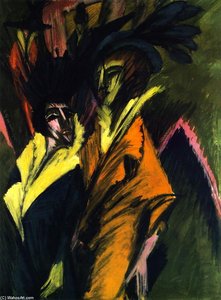
Two Women (1911) čiji je Ернст Лудвиг Кирхнер

Two Women

1911 · Oil On Canvas · Los Angeles County Museum of Art, Los Anđeles

A Moment Frozen in Color Two figures stand side-by-side, their presence pressing against the very edge of the frame. The woman on the left wears a dark navy blue coat, her wide-brimmed hat catching flashes of orange and blue light. She holds a small, dark object close to her chest, a gesture that feels private and guarded. Beside her, the second figure is draped in a long black coat with…

10
Villaggio con viottoli blu čiji je Ернст Лудвиг Кирхнер

Villaggio con viottoli blu

Oil On Canvas

We are looking at Villaggio con viottoli blu, a work by the German expressionist painter and printmaker Ernst Ludwig Kirchner. This piece reflects the specific visual language developed by an artist who sought to move beyond academic tradition through a radical simplification of form. Kirchner’s approach often prioritized the internal experience of a landscape over a literal, objective representation of the world.

Izbor umetnika Ернст Лудвиг Кирхнер se nastavlja, od 11 do 100

11Two Girls under an Umbrella (1910) čiji je Ернст Лудвиг КирхнерTwo Girls under an Umbrella1910 · National Gallery of Art 12Varieté, Englisches Tanzpaar (1910) čiji je Ернст Лудвиг КирхнерVarieté, Englisches Tanzpaar1910 · Städel Museum 13Der Tanz zwischen den Frauen (1915) čiji je Ернст Лудвиг КирхнерDer Tanz zwischen den Frauen1915 · Staatsgalerie Moderner Kunst 14Dancing Mary Wigman (1933) čiji je Ернст Лудвиг КирхнерDancing Mary Wigman1933 15Rote Kokotte (1914) čiji je Ернст Лудвиг КирхнерRote Kokotte1914 16Street Scene (1914) čiji je Ернст Лудвиг КирхнерStreet Scene1914 · Brücke Museum 17Two Women with a Washbasin (1913) čiji je Ернст Лудвиг КирхнерTwo Women with a Washbasin1913 · Städel Museum 18Тур од Црвени у Хале (1914) čiji je Ернст Лудвиг КирхнерТур од Црвени у Хале1914 · Museum Folkwang 19Invitation čiji je Ернст Лудвиг КирхнерInvitation 20Street in the Rain (1926) čiji je Ернст Лудвиг КирхнерStreet in the Rain1926 21The Drinker (1914) čiji je Ернст Лудвиг КирхнерThe Drinker1914 · Germanisches Nationalmuseum 22Circus (also known as Circus Rider) (1913) čiji je Ернст Лудвиг КирхнерCircus (also known as Circus Rider)1913 · Bayerische Staatsgemaldesammlungen 23Alpine Hut (1919) čiji je Ернст Лудвиг КирхнерAlpine Hut1919 · Staatliche Kunsthalle Karlsruhe 24Die tanzende Mary Wigman čiji je Ернст Лудвиг КирхнерDie tanzende Mary WigmanMuseum Folkwang 25Colourful Dance (1933) čiji je Ернст Лудвиг КирхнерColourful Dance1933 26Leaping Dancer, Gret Palucca čiji je Ернст Лудвиг КирхнерLeaping Dancer, Gret PaluccaMuseum Folkwang 27Portrat Gewecke (1914) čiji je Ернст Лудвиг КирхнерPortrat Gewecke1914 · Virginia Museum of Fine Arts 28Coastal Landscape on Fehmarn (1913) čiji je Ернст Лудвиг КирхнерCoastal Landscape on Fehmarn1913 · Detroit Institute of Arts 29Marcella (1909) čiji je Ернст Лудвиг КирхнерMarcella1909 30Herrenbildnis, Hans Frisch (1907) čiji je Ернст Лудвиг КирхнерHerrenbildnis, Hans Frisch1907 31Villa in Dresden (1910) čiji je Ернст Лудвиг КирхнерVilla in Dresden1910 · Museum of Fine Arts Ghent (MSK) 32Lovers (The kiss) (1930) čiji je Ернст Лудвиг КирхнерLovers (The kiss)1930 33Streetcar (in Dresden) (1909) čiji je Ернст Лудвиг КирхнерStreetcar (in Dresden)1909 34English Dance Couple (1913) čiji je Ернст Лудвиг КирхнерEnglish Dance Couple1913 35Mountain Atelier (1937) čiji je Ернст Лудвиг КирхнерMountain Atelier1937 · Kirchner Museum Davos 36Bathers (1923) čiji je Ернст Лудвиг КирхнерBathers1923 · Kunstmuseum Den Haag 37Colourful Dance (1932) čiji je Ернст Лудвиг КирхнерColourful Dance1932 38Fehmarn Dunes with Bathers under Japanese Umbrellas (1913) čiji je Ернст Лудвиг КирхнерFehmarn Dunes with Bathers under Japanese Umbrellas1913 39Two Nudes in the Wood II (1926) čiji je Ернст Лудвиг КирхнерTwo Nudes in the Wood II1926 · Städel Museum 40Street, Berlin (1913) čiji je Ернст Лудвиг КирхнерStreet, Berlin1913 41Frühlingslandscaft (1909) čiji je Ернст Лудвиг КирхнерFrühlingslandscaft1909 42Self-Portrait, Double Portrait (1914) čiji je Ернст Лудвиг КирхнерSelf-Portrait, Double Portrait1914 43Nude Group II (1907) čiji je Ернст Лудвиг КирхнерNude Group II1907 44Fünf Badende am See (1911) čiji je Ернст Лудвиг КирхнерFünf Badende am See1911 45Улица у Берлину (1914) čiji je Ернст Лудвиг КирхнерУлица у Берлину1914 · Neue Galerie New York 46Rückkehr der Tiere (1919) čiji je Ернст Лудвиг КирхнерRückkehr der Tiere1919 47Coast of Fehmarn čiji je Ернст Лудвиг КирхнерCoast of Fehmarn 48Portrait of Bosshart čiji je Ернст Лудвиг КирхнерPortrait of Bosshart 49Street Scene čiji je Ернст Лудвиг КирхнерStreet Scene 50Lady in the woods čiji je Ернст Лудвиг КирхнерLady in the woods 51Vita alpina. Triptico 1 čiji je Ернст Лудвиг КирхнерVita alpina. Triptico 1 52Two Women on the Street (1914) čiji je Ернст Лудвиг КирхнерTwo Women on the Street1914 · Kunstsammlung Nordrhein-Westfalen 53Mask Dance (1929) čiji je Ернст Лудвиг КирхнерMask Dance1929 54Toilette, Frau vor Spiegel (1913) čiji je Ернст Лудвиг КирхнерToilette, Frau vor Spiegel1913 · Centre Pompidou 55Japanisches Theater (Japanese Theatre) (1909) čiji je Ернст Лудвиг КирхнерJapanisches Theater (Japanese Theatre)1909 · Scottish National Gallery of Modern Art 56Liegender Akt vor Siegel (1909) čiji je Ернст Лудвиг КирхнерLiegender Akt vor Siegel1909 57Female Nudes Striding into the Sea (1912) čiji je Ернст Лудвиг КирхнерFemale Nudes Striding into the Sea1912 · Staatsgalerie Stuttgart 58Stehender Akt mit Hut (1910) čiji je Ернст Лудвиг КирхнерStehender Akt mit Hut1910 · Städel Museum 59Self-Portrait (1931) čiji je Ернст Лудвиг КирхнерSelf-Portrait1931 60Nocturnal street scene čiji je Ернст Лудвиг КирхнерNocturnal street scene 61Bay on the Coast of Fehmarn (1913) čiji je Ернст Лудвиг КирхнерBay on the Coast of Fehmarn1913 · Städel Museum 62Four nudes under the trees čiji je Ернст Лудвиг КирхнерFour nudes under the trees 63Dance School (1914) čiji je Ернст Лудвиг КирхнерDance School1914 64Striding into the Sea (1912) čiji je Ернст Лудвиг КирхнерStriding into the Sea1912 65Davis im Schnee (1923) čiji je Ернст Лудвиг КирхнерDavis im Schnee1923 66Streetscene 3 čiji je Ернст Лудвиг КирхнерStreetscene 3 67Portrait of Will Grohmann, Large čiji je Ернст Лудвиг КирхнерPortrait of Will Grohmann, Large 68Bathers on the Lawn čiji je Ернст Лудвиг КирхнерBathers on the Lawn 69Nude Woman Combing Her Hair (1913) čiji je Ернст Лудвиг КирхнерNude Woman Combing Her Hair1913 · Brücke Museum 70Portrait of a Woman (Frauenbildnis) čiji je Ернст Лудвиг КирхнерPortrait of a Woman (Frauenbildnis) 71Streetlife in Dresden (Strassenleben in Dresden) čiji je Ернст Лудвиг КирхнерStreetlife in Dresden (Strassenleben in Dresden) 72Die Zirkusreiterin (1912) čiji je Ернст Лудвиг КирхнерDie Zirkusreiterin1912 · Staatsgalerie Moderner Kunst 73Selbstbildnis als Kranker (1917) čiji je Ернст Лудвиг КирхнерSelbstbildnis als Kranker1917 · Staatsgalerie Moderner Kunst 74Seated female nude. study čiji je Ернст Лудвиг КирхнерSeated female nude. studyМузеј Тисен-Борнемиза 75Circus Rider (1914) čiji je Ернст Лудвиг КирхнерCircus Rider1914 · Saint Louis Art Museum 76Lying nude in front of the mirror čiji je Ернст Лудвиг КирхнерLying nude in front of the mirror 77Dancing Couple of the Variety čiji je Ернст Лудвиг КирхнерDancing Couple of the Variety 78Three Nudes in the Mountain Forest (1928) čiji je Ернст Лудвиг КирхнерThree Nudes in the Mountain Forest1928 · Staatliche Kunsthalle Karlsruhe 79The Shadow of Life čiji je Ернст Лудвиг КирхнерThe Shadow of LifeHammer Museum 80before Sunrise čiji je Ернст Лудвиг Кирхнерbefore Sunrise 81Girls who bathe in the lake čiji je Ернст Лудвиг КирхнерGirls who bathe in the lake 82Dr. Alfred Döblin (1912) čiji je Ернст Лудвиг КирхнерDr. Alfred Döblin1912 · Fogg Art Museum 83Doris standing čiji je Ернст Лудвиг КирхнерDoris standing 84Winter lunar landscape (1919) čiji je Ернст Лудвиг КирхнерWinter lunar landscape1919 85The monociclist čiji je Ернст Лудвиг КирхнерThe monociclist 86Dancing School (also known as Ballet Scene) (1914) čiji je Ернст Лудвиг КирхнерDancing School (also known as Ballet Scene)1914 · Bayerische Staatsbibliothek 87Планина Клостер čiji je Ернст Лудвиг КирхнерПланина Клостер 88Straße (1908) čiji je Ернст Лудвиг КирхнерStraße1908 · MoMA - Muzej moderne umetnosti 89Doris with high neck čiji je Ернст Лудвиг КирхнерDoris with high neckМузеј Тисен-Борнемиза 90Three naked women with children čiji je Ернст Лудвиг КирхнерThree naked women with children 91Red houses čiji je Ернст Лудвиг КирхнерRed houses 92Colorful Dance I: Design for the Ceremonial Hall at the Museum Folkwang čiji je Ернст Лудвиг КирхнерColorful Dance I: Design for the Ceremonial Hall at the Museum FolkwangMuseum Folkwang 93Nude at the Studio (1910) čiji je Ернст Лудвиг КирхнерNude at the Studio1910 · Städel Museum 94Seagull Hunter in the Woods (1912) čiji je Ернст Лудвиг КирхнерSeagull Hunter in the Woods1912 · Städel Museum 95The Soldier Bath čiji je Ернст Лудвиг КирхнерThe Soldier Bath 96Woman in a Green Blouse (1913) čiji je Ернст Лудвиг КирхнерWoman in a Green Blouse1913 · Saint Louis Art Museum 97Interior with Two Girls (1908) čiji je Ернст Лудвиг КирхнерInterior with Two Girls1908 · Germanisches Nationalmuseum 98Davos in Snow čiji je Ернст Лудвиг КирхнерDavos in Snow 99Paar vor den Menschen (1924) čiji je Ернст Лудвиг КирхнерPaar vor den Menschen1924 · Hamburger Kunsthalle 100Bathers beneath Trees, Fehmarn (1913) čiji je Ернст Лудвиг КирхнерBathers beneath Trees, Fehmarn1913 · Norton Simon Museum

Čuvena dela Ернст Лудвиг Кирхнер po periodima

Motivi koji su privlačili pažnju Ернст Лудвиг Кирхнер

Četiri teme koje se najčešće ponavljaju u ovim originalima, svaka sa svojim vrhunskim primerom.

Muzeji u kojima se čuvaju originalna dela umetnika Ернст Лудвиг Кирхнер

8 muzeja u kojima se nalazi najviše slika sa ove stranice.

Muzej Grad Radovi umetnika Ернст Лудвиг Кирхнер Slike iz ovog spiska
Städel Museum, FrankfurtStädel Museum Frankfurt 14 Two Nudes in the Wood II, Bay on the Coast of Fehmarn, Nude at the Studio
Museum Folkwang, EsenMuseum Folkwang Esen 13 Тур од Црвени у Хале, Die tanzende Mary Wigman, Leaping Dancer, Gret Palucca
Städel Museum, FrankfurtStädel Museum Frankfurt 5 Fränzi vor geschnitztem Stuhl, Varieté, Englisches Tanzpaar, Two Women with a Washbasin
Staatsgalerie Moderner Kunst, MinhenStaatsgalerie Moderner Kunst Minhen 5 Der Tanz zwischen den Frauen, Die Zirkusreiterin, Selbstbildnis als Kranker
Germanisches Nationalmuseum, NurenbergGermanisches Nationalmuseum Nurenberg 3 Пијец (Селопоглед), The Drinker, Interior with Two Girls
Музеј Тисен-Борнемиза, MadridМузеј Тисен-Борнемиза Madrid 9 Seated female nude. study, Doris with high neck
Brücke Museum, BerlinBrücke Museum Berlin 7 Street Scene, Nude Woman Combing Her Hair
Saint Louis Art Museum, Sent LuisSaint Louis Art Museum Sent Luis 7 Circus Rider, Woman in a Green Blouse

Ернст Лудвиг Кирхнер deceniju po deceniju: original koji definiše svaku od njih

Radovi po decenijama

Izaberite deceniju da biste videli original koji je definiše.

Pitanja kolekcionara o slikama umetnika Ернст Лудвиг Кирхнер

Po kojem delu je Ернст Лудвиг Кирхнер najpoznatiji/a?Otkrij odgovor

Suđenje Pariza. Slede Kupci u Moritzburgu (1909) i Ulica u Berlinu.

Koja su deset najpoznatijih slika umetnika Ернст Лудвиг Кирхнер?Otkrij odgovor

Suđenje Pariza, Kupci u Moritzburgu, Ulica u Berlinu, Fränzi vor geschnitztem Stuhl, Self Portrait with Cat, Пијец (Селопоглед), Landscape with blue rocks, Self-portrait with Model, Two Women i Villaggio con viottoli blu. Gornji rang pokazuje godinu i muzej za svako od njih.

Koliko je slika ostavio Ернст Лудвиг Кирхнер?Otkrij odgovor

Naš katalog sadrži 929 dela umetnika Ернст Лудвиг Кирхнер, datiranih od 1907 do 1937.

U kojim muzejima se nalaze remek-dela umetnika Ернст Лудвиг Кирхнер?Otkrij odgovor

Većinom u Städel Museum (Frankfurt), Museum Folkwang (Esen) i Städel Museum (Frankfurt). Tabela muzeja iznad sadrži njih sve.

U kojim godinama je Ернст Лудвиг Кирхнер naslikao svoja najpoznatija dela?Otkrij odgovor

U 1910s: 42 od 100 dela na ovoj stranici nastalo je tada, od čega je Fränzi vor geschnitztem Stuhl.

Koja su prva i poslednja čuvena originalna dela umetnika Ернст Лудвиг Кирхнер?Otkrij odgovor

Na ovoj stranici, najstarije delo je iz Herrenbildnis, Hans Frisch (1907), a najnovije iz Mountain Atelier (1937).

Koje je motive Ернст Лудвиг Кирхнер najčešće birao/la?Otkrij odgovor

Urban landscape (16), Landscape (16) i Anxiety (12), kroz svih 100 dela na ovoj stranici.

Koju je tehniku najčešće koristio/la Ернст Лудвиг Кирхнер?Otkrij odgovor

Oil On Canvas, za 58 od 100 dela na ovoj stranici.

Kojem umetničkom pravcu pripada Ернст Лудвиг Кирхнер?Otkrij odgovor

German expressionism, sudeći po originalima na ovoj stranici.

Čija se dela umetnika Ернст Лудвиг Кирхнер nalaze u Städel Museum?Otkrij odgovor

Two Nudes in the Wood II, Bay on the Coast of Fehmarn i Nude at the Studio: Städel Museum, Frankfurt čuva 4 dela sa ove stranice.

Ернст Лудвиг Кирхнер: život i delo

Ernst Ludwig Kirchner (1880-1938): A Life Forged in Expression

Ernst Ludwig Kirchner, a name inextricably linked to the visceral heart of German Expressionism, wasn’t merely an artist; he was a conduit for anxieties simmering beneath the surface of early 20th-century Europe. Born into Bavaria's quiet countryside in 1880, his formative years instilled within him a profound awareness of displacement—a feeling that would become a cornerstone of his artistic vision. From Frankfurt’s bustling streets to Perlen’s serene lakes and finally settling in Chemnitz, Kirchner absorbed the accelerating pace of modernity, grappling with its promises and perils. Initially pursuing architecture at Dresden University, he swiftly recognized painting as his true calling – driven by an admiration for masters like Albrecht Dürer and a rebellious rejection of academic conventions. He found solace and camaraderie amongst fellow artists—Fritz Bleyl, Karl Schmidt-Rottluff, Erich Heckel—forming bonds that would propel them to forge a revolutionary artistic movement.

The Genesis of Die Brücke: Seeking Authenticity Amidst Change

Kirchner’s artistic journey gained momentum in 1905 with the founding of *Die Brücke* (“The Bridge”), an artistic collective determined to transcend prevailing aesthetic norms and embrace raw emotional expression. This wasn't simply stylistic ambition; it was a philosophical crusade. The group drew inspiration from sources often dismissed by mainstream art circles—primitive art from Africa and Oceania, the turbulent hues of Vincent van Gogh, and Edvard Munch’s haunting explorations of psychological torment. Rejecting idealized beauty championed by academic painting, *Die Brücke* artists deliberately distorted forms, employed jarring color palettes, and utilized expressive brushwork to convey the pervasive anxieties surrounding urbanization and societal transformation. Kirchner's early canvases pulsed with restless energy—a reflection of the collective’s shared conviction that art could confront uncomfortable truths and challenge accepted ideologies. The studio became a crucible for experimentation, mirroring the broader cultural landscape of its time.

A Painter's Palette: Style and Technique

Kirchner’s distinctive artistic style was immediately recognizable for its bold visual language. He eschewed meticulous realism in favor of conveying emotion—a deliberate rejection of academic precision. His palette embraced vibrant, often unconventional colors—drawing heavily from the influence of Henri Matisse and Edvard Munch—creating a dramatic contrast between light and dark that heightened the intensity of his compositions. Furthermore, Kirchner’s brushstrokes were energetic and visible, contributing to an overall feeling of immediacy and unfiltered emotion. Figures and objects appeared distorted or elongated, reflecting not objective observation but subjective experience—a hallmark of Expressionist aesthetics. Recurring motifs included urban landscapes—particularly Berlin street scenes—and nude figures—often depicted in intimate poses—serving as vehicles for exploring themes of isolation, vulnerability, and the human condition. He skillfully utilized woodblock printing techniques, reviving a tradition rooted in German artistic heritage while simultaneously rejecting academic conventions.

Major Works: Capturing Modern Angst

Kirchner’s oeuvre encompasses a remarkable range of subjects—from haunting landscapes to psychologically charged portraits—each imbued with an unmistakable sense of unease and disillusionment. Paintings like *The Street* (1908) exemplify his masterful depiction of urban life, capturing the frenetic energy and emotional detachment characteristic of the era. Similarly, *Leaping Dancer* (1912) embodies Kirchner’s fascination with movement and dynamism—a deliberate departure from academic stillness—while simultaneously conveying a profound sense of psychological complexity. His exploration of human form—particularly nude figures—continues to resonate today, reflecting his conviction that art could illuminate the darker recesses of human consciousness. Notable prints include *The Bridge* (1908), *Five Women* (1913) and *Self-Portrait* (1910).

Legacy: An Artist Amidst Darkness

Kirchner’s artistic career tragically intersected with the tumultuous political landscape of Nazi Germany. Despite his unwavering commitment to artistic integrity—a stance that contrasted sharply with the regime's embrace of “degenerate art”—he endured persecution and suffered debilitating illness. Over 600 of his artworks were confiscated and destroyed—a devastating blow that underscored the chilling consequences of ideological intolerance. Facing despair and failing health, Kirchner succumbed to suicide in Davos, Switzerland, in 1938—leaving behind a legacy as one of Germany’s most influential Expressionist artists. His work continues to inspire contemporary artists with its unflinching portrayal of human emotion and its bold rejection of artistic conventions—a testament to the enduring power of art to confront societal injustices and grapple with existential questions. Kirchner's influence extends beyond his own paintings; he championed primitive art, revitalized woodblock printing, and fostered a spirit of experimentation that profoundly shaped the trajectory of 20th-century art.