German Expressionism
Doris standing (Ернст Лудвиг Кирхнер)
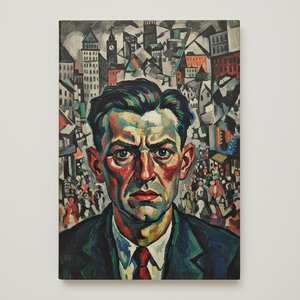
Ернст Лудвиг Кирхнер (1880–1938) je napravio Doris standing. Pripada pokretu German Expressionism. Izrađeno je u Acrylic On Canvas.
- Acrylic On Canvas

 Pregledaj u prostoru

 Ručno oslikano uljanim bojama
 Pošalji
 Podeli
 Informativni list


 Preuzmi
 Slični predmeti
 Rendgenski snimak
 Automatska prezentacija
 Pitanja i odgovori

 Statistika
Doris standing, ukratko
- Naslov
- Doris standing
- Umetnik
- Ернст Лудвиг Кирхнер (1880–1938)
- Rođen/a u
- Ашафенбург, Немачка
- Tehnika
- Acrylic On Canvas
- Pokret
- German Expressionism
- Tema
- woman, interior, texture, color palette, bold brushstrokes, urban landscape
Šta prikazuje Doris standing?
Doris Standing: A Study in Expressionist Tension
Ernst Ludwig Kirchner’s “Doris Standing” is more than just a portrait; it's a distillation of the anxieties and emotional complexities characteristic of German Expressionism. Painted circa 1923, this artwork captures a moment frozen in time—a woman posed formally against a backdrop that pulsates with restless energy.
- Subject Matter: The painting depicts Doris Speed, an English actress known for her role in “Coronation Street,” presenting her as a figure of quiet contemplation amidst the vibrant chaos of modern life.
- Style & Technique: Kirchner’s signature Expressionist style is evident in every brushstroke. Thick impasto—a technique where paint is applied thickly onto the canvas—dominates the composition, creating palpable texture and conveying an immediacy that transcends mere representation. Bold colors – deep blues and purples for Doris' dress juxtaposed with yellows and greens in the background – heighten the emotional impact.
- Composition: The portrait adheres to a vertical format, emphasizing Doris’ posture and attire. Her hands clasped before her contribute to a sense of stillness despite the dynamic environment behind her. Lines are employed expressively rather than realistically; short, choppy brushstrokes generate movement and texture throughout the painting.
Historical Context: The Brücke Movement
Kirchner’s work emerged from “Die Brücke,” a pivotal artistic group that challenged academic conventions and sought to depict the psychological realities of the era. Founded in Dresden in 1909, Die Brücke aimed to express inner turmoil and disillusionment—themes powerfully reflected in Kirchner's oeuvre. The movement reacted against the prevailing optimism of bourgeois society, embracing distortion and fragmentation as tools for conveying emotional truth.
- Influence: Kirchner’s exploration of psychological depth aligns with broader artistic currents of his time, reflecting a desire to confront uncomfortable realities and explore the darker side of human experience.
- Symbolism: The vibrant background—particularly the reds—symbolizes the turbulent energy of urban life, contrasting sharply with Doris' serene expression. This juxtaposition underscores the tension between inner stillness and external pressures.
Emotional Resonance
"Doris Standing" evokes feelings of melancholy and restraint. Kirchner’s deliberate use of muted colors and simplified forms contributes to a mood of introspection—a quiet contemplation that invites viewers to consider themes of isolation and vulnerability. The painting's textured surface encourages tactile engagement, mirroring the emotional intensity conveyed through its visual elements.
- Artist’s Intent: Kirchner sought to capture not just an image but also a feeling—a profound awareness of human condition amidst the uncertainties of modernity.
- Interior Design Inspiration: The artwork's palette and textural qualities could inspire designers seeking to create spaces that convey understated elegance and emotional depth.
Material & Reproduction Considerations
Executed in oil paint on canvas, “Doris Standing” exemplifies the meticulous craftsmanship of Expressionist artists. Reproductions aim to faithfully recreate the original’s textural richness and color vibrancy using high-quality printing techniques. Careful attention to detail ensures that the artwork's emotive power is preserved in a durable and aesthetically pleasing format.
Slike visoke rezolucije za Doris standing
Ернст Лудвиг Кирхнер, Doris standing. Javno dobro.
Odgovori na pitanja o Doris standing
Kojom tehnikom je urađeno „Doris standing”, autor Ернст Лудвиг Кирхнер?
Tehnika dela „Doris standing”, autor Ернст Лудвиг Кирхнер je Acrylic On Canvas. Reprodukcije imaju za cilj da dočaraju izgled ove tehnike.
Koje su teme prikazane u delu „Doris standing”, autor Ернст Лудвиг Кирхнер?
Teme prisutne u delu „Doris standing”, autor Ернст Лудвиг Кирхнер obuhvataju woman, interior, texture, color palette, bold brushstrokes, urban landscape, emotion, što zajedno sažima suštinu ovog umetničkog dela.
Da li se prikaz „Doris standing”, autor Ернст Лудвиг Кирхнер može slobodno reprodukovati?
„Doris standing”, autor Ернст Лудвиг Кирхнер pripada u javnom vlasništvu – autorska prava su istekla. Ovaj status određuje način na koji se slika dela može reprodukovati.
Ko je autor dela "Doris standing"?
Delo "Doris standing" je kreirao/la Ернст Лудвиг Кирхнер. Informacije na ovoj stranici opisuju originalno delo umetnika Ернст Лудвиг Кирхнер.
Koji umetnički pravac obuhvata „Doris standing”, autor Ернст Лудвиг Кирхнер?
„Doris standing“ je delo German Expressionism pokreta. Ovaj pokret označava umetničku tradiciju kojoj je delo pripada.
U kojoj periodi karijere umetnika Ернст Лудвиг Кирхнер pripada delo "Doris standing"?
"Doris standing" predstavlja Berlin Period umetnika Ернст Лудвиг Кирхнер.
Zašto je status autorskih prava za "Doris standing" takav kakav jeste?
Status autorskih prava za delo "Doris standing" - u javnom vlasništvu – autorska prava su istekla - proizilazi iz godine smrti umetnika, 1938.
Gde se "Doris standing" nalazi u okviru opusa umetnika Ернст Лудвиг Кирхнер?
„Doris standing“ pripada German Expressionism periodu stvaralaštka umetnika Ернст Лудвиг Кирхнер, čije su upečatljive teme obuhvatale dürer inspiration, modern anxiety, social critique, expressionist legacy, psychological depth.
Gde se "Doris standing" nalazi među uobičajenim motivima umetnika Ернст Лудвиг Кирхнер?
Učestale teme umetnika Ернст Лудвиг Кирхнер obuhvataju dürer inspiration, modern anxiety, social critique, expressionist legacy, psychological depth; delo "Doris standing" fokusira se na woman, interior, texture, color palette, bold brushstrokes, urban landscape, emotion.
O umetniku, Ернст Лудвиг Кирхнер

1880–1938, Немачка
Ернст Лудвиг Кирхнер
Ernst Ludwig Kirchner (1880-1938): A Life Forged in Expression Ernst Ludwig Kirchner, a name inextricably linked to the visceral heart of German Expressionism, wasn’t merely an artist; he was a conduit for anxieties simmering beneath the surface of early 20th-century Europe. Born into Bavaria's quiet countryside in 1880, his formative years instilled within him a profound awareness of displacement—a feeling that would become a cornerstone of his artistic vision. From Frankfurt’s bustling streets to Perlen’s serene lakes and finally settling in Chemnitz, Kirchner absorbed the accelerating pace of modernity, grappling with its promises and perils. Initially pursuing architecture at Dresden University, he swiftly recognized painting as his true calling – driven by an admiration for masters like Albrecht Dürer and a rebellious rejection of academic conventions.
O Ернст Лудвиг Кирхнер Značajna dela umetnika Ернст Лудвиг Кирхнер
Takođe i Ернст Лудвиг Кирхнер
 Suđenje Pariza
 Kupci u Moritzburgu1909
 Berlin Street
 Fränzi vor geschnitztem Stuhl1910
Eseji o delu Doris standing
 25 Masterpieces by Ernst Ludwig Kirchner: The Soul of German ExpressionismImmerse yourself in the raw emotion of German Expressionism. Explore 25 iconic masterpieces by Ernst Ludwig Kirchner, from bold urban scene…
 The Vibrant World of Ernst Ludwig Kirchner: A Definitive Guide to German ExpressionismExplore the raw emotion of German Expressionism through a definitive guide to Ernst Ludwig Kirchner. Discover how his bold colors and disto…
 Comparing Der Blaue Reiter and Die Brücke: Two Paths of German ExpressionismMaster the differences between Die Brücke and Der Blaue Reiter. Explore the roots of German Expressionism now.