Portret Emanuel Filips Fok

40 najpoznatijih slika umetnika Emanuel Filips Fok, svaka potpuno jedinstvena

Ažurirano: октобар 2026 · rangirano prema našem koeficijentu popularnosti (pretrage, posete i porudžbine za svako delo) · 44 dela Emanuel Filips Fok u našem katalogu

Ukratko

Autumn showers (1900) je slika autora Emanuel Filips Fok koja privlači najviše pažnje; original se nalazi u muzeju Art Gallery of New South Wales, Sidnej. Nakon toga, pogled se seli na Portrait of My Cousin (1893) i Untitled (AQZBK4) (1910). Među 44 dela umetnika Emanuel Filips Fok u našem katalogu, ovih 40 su najpoznatija, od kojih je svako jedinstveni original predstavljen sa godinom nastanka, muzejom i razlogom zbog kojeg je i danas neprocenjivo.

1865 – 1915, Filtroi Impressionism Najviše dela: Art Gallery of New South Wales

Top 10 slika umetnika Emanuel Filips Fok, iz ugla galerije

1
Autumn showers (1900) čiji je Emanuel Filips Fok

Autumn showers

1900 · Oil On Canvas · Art Gallery of New South Wales, Sidnej

The painting Autumn showers is a work by E. Phillips Fox, completed in 1900. It emerged from a specific period in the artist's life, specifically during his 1899 residency at Charterisville, a homestead situated near Eaglemont in Victoria. This setting provided the backdrop for the creation of this oil on canvas piece.

6
English Landing of Captain Cook at Botany Bay, 1770 (1902) čiji je Emanuel Filips Fok

English Landing of Captain Cook at Botany Bay, 1770

1902 · Acrylic On Canvas · The Ian Potter Centre - Ngv Australia, Melburn

A Window into Colonial Australia: Emanuel Phillips Fox’s “English Landing of Captain Cook at Botany Bay” Emanuel Phillips Fox's "English Landing of Captain Cook at Botany Bay," completed in 1902, transcends mere depiction; it embodies a pivotal moment in Australian history and artistic innovation. More than just a picturesque landscape, this painting serves as a tangible reminder of the dawn of European settlement and the burgeoning Impressionist movement’s fascination with…

Čuvena dela umetnika Emanuel Filips Fok, od 11 do 40

Motivi koji su privlačili pažnju Emanuel Filips Fok

Četiri teme koje se najčešće ponavljaju u ovim originalima, svaka sa svojim vrhunskim primerom.

Muzeji u kojima se čuvaju originalna dela umetnika Emanuel Filips Fok

7 muzeja u kojima se nalazi najviše slika sa ove stranice.

Muzej Grad Radovi umetnika Emanuel Filips Fok Slike iz ovog spiska
Art Gallery of New South Wales, SidnejArt Gallery of New South Wales Sidnej 6 Autumn showers, Heidelberg, Art Students
The Ian Potter Centre - Ngv Australia, MelburnThe Ian Potter Centre - Ngv Australia Melburn 3 Untitled (AQZBKC), English Landing of Captain Cook at Botany Bay, 1770, English The Arbour
Nacionalna galerija Australije, KanberaNacionalna galerija Australije Kanbera 2 Untitled (AQZBJJ), Untitled (AQZBJQ)
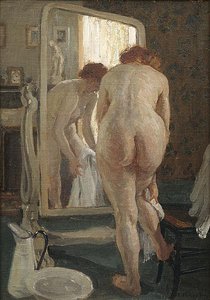
Art Gallery of South Australia, AdelaideArt Gallery of South Australia Adelaide 2 English After the bath Français Après le bain, Al Fresco
Nacionalna galerija Viktorije, MelburnNacionalna galerija Viktorije Melburn 1 Portrait of My Cousin
Kerry Stokes Collection, PerthKerry Stokes Collection Perth 1 Français Etude de nu
National Portrait Gallery, CanberraNational Portrait Gallery Canberra 1 Ina Gregory

Emanuel Filips Fok kroz decenije: jedan jedinstveni original za svaku

Radovi po decenijama

Izaberite deceniju da biste videli original koji je definiše.

Slike umetnika Emanuel Filips Fok: pitanja za galeriju

Koje je najpoznatije delo umetnika Emanuel Filips Fok?Otkrij odgovor

Autumn showers (1900), Art Gallery of New South Wales, Sidnej. Slede Portrait of My Cousin (1893) i Untitled (AQZBK4) (1910).

U kojoj je godini Emanuel Filips Fok stvorio/la Autumn showers?Otkrij odgovor

35 godina: Autumn showers datira iz 1900, a Emanuel Filips Fok je rođen/a 1865.

Koji je deset najpoznatijih slika autora Emanuel Filips Fok?Otkrij odgovor

Autumn showers, Portrait of My Cousin, Untitled (AQZBK4), Untitled (AQZBK8), Untitled (AQZBKC), English Landing of Captain Cook at Botany Bay, 1770, The Cabbage Patch, English The Setting Sun, Untitled (AQZBJU) i Untitled (AQZBJJ). Gornji rang pokazuje godinu i muzej za svako od njih.

Koliko je poznatih dela umetnika Emanuel Filips Fok?Otkrij odgovor

Naš katalog sadrži 44 dela umetnika Emanuel Filips Fok, datiranih od 1889 do 1913.

Gde se mogu videti najpoznatiji originali umetnika Emanuel Filips Fok?Otkrij odgovor

Većinom u Art Gallery of New South Wales (Sidnej), The Ian Potter Centre - Ngv Australia (Melburn) i Nacionalna galerija Australije (Kanbera). Tabela muzeja iznad sadrži njih sve.

U kom periodu je Emanuel Filips Fok stvorio/la svoje najpoznatije slike?Otkrij odgovor

U 1910s: 12 od 40 dela na ovoj stranici nastalo je tada, od čega je Untitled (AQZBK4).

Ko je najraniji, a koje je najkasnije čuveno delo umetnika Emanuel Filips Fok?Otkrij odgovor

Na ovoj stranici, najstarije delo je iz The Cabbage Patch (1889), a najnovije iz Untitled (AQZBKU) (1913).

Koje su teme Emanuel Filips Fok preferirao/la?Otkrij odgovor

Landscape (3), Leisure (3) i Reading (3), kroz svih 40 dela na ovoj stranici.

Kojem umetničkom pravcu pripada delo umetnika Emanuel Filips Fok?Otkrij odgovor

Impressionism, sudeći po originalima na ovoj stranici.

Koja originalna dela Emanuel Filips Fok mogu videti u Art Gallery of New South Wales?Otkrij odgovor

Autumn showers, Heidelberg i Art Students: Art Gallery of New South Wales, Sidnej čuva 6 dela sa ove stranice.

Emanuel Filips Fok: portret umetnika

A Vision of Light and Leisure

Emanuel Phillips Fox stands as a luminous figure in the history of Australian art, a painter whose brush captured the ephemeral beauty of light and the quiet elegance of modern life. Born in Melbourne, Victoria, his artistic journey was one of profound movement, bridging the landscapes of Australia and the vibrant studios of Europe. As an Impressionist, Fox possessed a rare ability to translate the atmosphere of a moment onto canvas, creating scenes that feel less like static images and even more like breathing memories. His work often centers on the serene, capturing figures immersed in nature or the gentle rhythms of daily leisure, rendered with a mastery of color and light that evokes a sense of profound tranquility.

The development of his style was deeply influenced by his time spent abroad. After studying at the National Gallery of Victoria Art School, Fox traveled to Paris in 1886, where he remained in Europe for several years. This period of immersion in the heart of the Impressionist movement allowed him to absorb the techniques of light and shadow that would become hallmarks of his oeuvre. Upon returning to Melbourne, he became a pivotal figure in the second phase of the Heidelberg School, bringing a sophisticated, European sensibility to the Australian Impressionist tradition. His ability to blend the structural elements of composition with the fluid, atmospheric qualities of light allowed him to lead a new era of artistic expression in his homeland.

Mastery of the Impressionist Spirit

The essence of Fox’s artistry lies in his capacity to find the extraordinary within the ordinary. His paintings frequently feature women in contemplative or relaxed poses, often set against lush, sun-drenched backgrounds. Whether it is a figure reading a book beneath the shade of a tree or people gathered near the water's edge, there is an unmistakable sense of harmony and balance in his work. He utilized oil on canvas to build textures that mimic the natural world, from the delicate petals of flowers to the shimmering surface of a river.

His technical achievements are characterized by several key elements:

  • Luminous Landscapes: A profound ability to capture the specific quality of light, creating depth and dimensionality through subtle shifts in tone.
  • Atmospheric Composition: The use of nature—such as climbing vines, trees, and water—to frame subjects and create a sense of immersive environment.
  • Capturing the Moment: A focus on scenes of relaxation and leisure that convey a peaceful, almost dreamlike atmosphere.

Through his dedication to the Impressionist style, Emanuel Phillips Fox left an indelible mark on the Australian art canon. His legacy is not merely found in the beauty of his individual works, but in his role as a bridge between continents, bringing the light of Paris to the landscapes of Victoria and forever altering the trajectory of Australian painting.