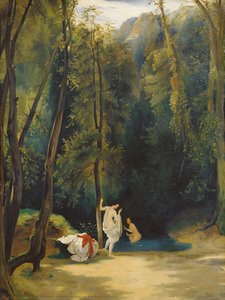
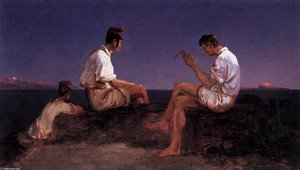
Portret Карл Блехен

94 najpoznatijih slika umetnika Карл Блехен, svaka potpuno jedinstvena

Ažurirano: новембар 2026 · rangirano prema našem koeficijentu popularnosti (pretrage, posete i porudžbine za svako delo) · 97 dela Карл Блехен u našem katalogu

Ukratko

Sanssouci Palace (1830) je slika autora Карл Блехен koja privlači najviše pažnje; original se nalazi u muzeju Nationalgalerie, Berlin. Nakon toga, pogled se seli na The Interior of the Palm House on the Pfaueninsel Near Potsdam (1834) i Afternoon on Capri (1829). Među 97 dela umetnika Карл Блехен u našem katalogu, ovih 94 su najpoznatija, od kojih je svako jedinstveni original predstavljen sa godinom nastanka, muzejom i razlogom zbog kojeg je i danas neprocenjivo.

1798 – 1840, Котбус Romantic industrialization Najviše dela: Alte Nationalgalerie

Top 10 slika umetnika Карл Блехен, iz ugla galerije

1
Sanssouci Palace (1830) čiji je Карл Блехен

Sanssouci Palace

1830 · Oil On Canvas · Nationalgalerie, Berlin

Subject Carl Blechen’s 1830 canvas invites the viewer into a dramatic yet serene tableau of Sanssouci Palace, its stately gardens framed by a storm‑laden sky that breathes both tension and awe. The central fountain glistens beneath swirling clouds, while a lone horse stands poised in the midst of the park, an emblem of grace amid turmoil. Figures—families, couples, solitary wanderers—are scattered across the scene, their silhouettes hinting at stories untold.…

2
The Interior of the Palm House on the Pfaueninsel Near Potsdam (1834) čiji je Карл Блехен

The Interior of the Palm House on the Pfaueninsel Near Potsdam

1834 · Oil On Canvas · Art Institute of Chicago, Čikago

The work before us is titled The Interior of the Palm House on the Pfaueninsel Near Potsdam, a significant oil on canvas by the German artist Carl Blechen. Created in 1834, this painting captures a specific moment of architectural and botanical splendor within the Prussian royal grounds. It offers a view into a space where the structured lines of design meet the untamed growth of tropical flora.

3
Afternoon on Capri (1829) čiji je Карл Блехен

Afternoon on Capri

1829 · Oil On Canvas

The oil painting depicts a coastal scene on the island of Capri, captured from an elevated perspective. In the upper right, massive cliffs of ochre and sienna rise toward the center-left, their jagged surfaces textured by light and shadow. These geological formations descend toward a calm, blue sea that occupies the middle ground. A solitary figure sits upon a rocky outcrop in the lower left, positioned against the scale of…

4
Napoleon on Horseback, Surrounded by Generals and Troops (1823) čiji je Карл Блехен

Napoleon on Horseback, Surrounded by Generals and Troops

1823 · Watercolor

In Napoleon on Horseback, Surrounded by Generals and Troops, Carl Blechen organizes a scene of profound historical and heroic weight. The composition is centered upon a prominent figure on horseback, presumably Napoleon, who commands the viewer's immediate attention. This central figure is encircled by a dense gathering of military personnel and troops, creating a sense of crowded, purposeful movement. Whether the scene depicts a moment of intense military engagement or…

5
Tarantella (1830) čiji je Карл Блехен

Tarantella

1830 · Oil On Canvas · Städel Museum, Frankfurt

In this 1830 oil on canvas, we find ourselves drawn into a lively scene of folk celebration. A group of people has gathered for a traditional dance, the Tarantella, set against a picturesque coastal landscape. The composition is built around a central dancing figure, whose movement acts as a focal point for the seated observers and the figures drifting in the background. There is a sense of rhythm here, captured…

6
Two monks in the park of Terni (1830) čiji je Карл Блехен

Two monks in the park of Terni

1830 · Oil On Canvas · Alte Nationalgalerie, Berlin

The painting, titled Two monks in the park of Terni, was executed by the German artist Carl Blechen in 1830. It is also known by the alternative title Parthie aus dem Park des Grafen Graziani bei Terni. This work captures a quiet moment within the Park of Count Graziani, situated in the Nera river valley at Terni. The scene focuses on two monks engaged in conversation, positioned beneath a leafy…

7
Two Ladies in the Park (1830) čiji je Карл Блехен

Two Ladies in the Park

This romanticized landscape painting, dating from 1830, captures a tranquil scene of two women enjoying a moment of quiet companionship within an elegant park. The composition is carefully balanced, featuring the two figures positioned slightly off-center. They are framed by lush greenery on the right, while the left side of the work offers a receding view of trees and water. The women are dressed in soft white and cream garments,…

8
"Tarantella" Merry-society at Italian shore (1823) čiji je Карл Блехен

"Tarantella" Merry-society at Italian shore

1823 · Oil

"Tarantella" Merry-society at Italian shore is an oil painting by the German artist Carl Blechen. Executed about 1823, the work captures a lively social gathering set against a coastal landscape. The scene focuses on human interaction within a picturesque environment, featuring figures engaged in various activities, including dance and seated observation.

10
Fishermen on Capri (1834) čiji je Карл Блехен

Fishermen on Capri

1834 · Oil On Canvas · Alte Nationalgalerie, Berlin

In Fishermen on Capri, Carl Blechen captures a quiet moment on a pebbled shore. The scene is a serene and atmospheric coastal landscape set against the dramatic natural backdrop of the Italian coast. A woman in a flowing white dress sits upon the rocks, leaning toward a man kneeling before her. Nearby, a second man stands with his back to the viewer, his red cap a sharp point of color…

Čuvena dela umetnika Карл Блехен, od 11 do 94

11Shepherd boy (1832) čiji je Карл БлехенShepherd boy1832 12Forest path near Spandau (1835) čiji je Карл БлехенForest path near Spandau1835 · Alte Nationalgalerie 13Weathered Tree Trunks in a Park (recto), c. 1834 (1834) čiji je Карл БлехенWeathered Tree Trunks in a Park (recto), c. 18341834 · Albertina 14Stormy Weather over the Roman Campagna (1829) čiji je Карл БлехенStormy Weather over the Roman Campagna1829 · Nationalgalerie 15Galgenberg (1833) čiji je Карл БлехенGalgenberg1833 · Galerie Neue Meister 16Italian Monastery Building on the Water's Edge (1832) čiji je Карл БлехенItalian Monastery Building on the Water's Edge1832 · Alte Nationalgalerie 17Memorial Column in the Forest (1837) čiji je Карл БлехенMemorial Column in the Forest1837 · Alte Nationalgalerie 18Sleeping Faun in the Reeds (1827) čiji je Карл БлехенSleeping Faun in the Reeds1827 · Alte Nationalgalerie 19Gothic Church Ruins (1826) čiji je Карл БлехенGothic Church Ruins1826 · Staatliche Kunstsammlungen Dresden 20Rocky Landscape with Monk (1825) čiji je Карл БлехенRocky Landscape with Monk1825 · Alte Nationalgalerie 21View of Rooftops and Gardens (1835) čiji je Карл БлехенView of Rooftops and Gardens1835 · Nationalgalerie 22The Woods near Spandau (1834) čiji je Карл БлехенThe Woods near Spandau1834 · Nationalgalerie 23Grotto in the Gulf of Naples (1829) čiji je Карл БлехенGrotto in the Gulf of Naples1829 · Wallraf-Richartz-Museum 24Woman Bathing in the Park of Terni (1829) čiji je Карл БлехенWoman Bathing in the Park of Terni1829 · Städel Museum 25Italian Landscape (1829) čiji je Карл БлехенItalian Landscape1829 · Alte Nationalgalerie 26Sleeping Faun (1820) čiji je Карл БлехенSleeping Faun1820 27Romantic Painting with Ruins (1820) čiji je Карл БлехенRomantic Painting with Ruins1820 · Westfälisches Landesmuseum 28Landscape with Hermit (1822) čiji je Карл БлехенLandscape with Hermit1822 29Friedrich Wilhelm III's Palm Court (1832) čiji je Карл БлехенFriedrich Wilhelm III's Palm Court1832 · Nationalgalerie 30In the Berliner Tiergarten / Forest Path with Water (1825) čiji je Карл БлехенIn the Berliner Tiergarten / Forest Path with Water1825 31The Roman Forum (1829) čiji je Карл БлехенThe Roman Forum1829 32Forest Gorge with Red Deer (1828) čiji je Карл БлехенForest Gorge with Red Deer1828 · Niedersächsisches Landesmuseum 33View of Monte Castiglione in Capri (1829) čiji je Карл БлехенView of Monte Castiglione in Capri1829 · Staatliche Kunsthalle Karlsruhe 34Young Oak Tree (1828) čiji je Карл БлехенYoung Oak Tree1828 · Nacionalna galerija Kanade 35Fantasy Mountain Scene (1823) čiji je Карл БлехенFantasy Mountain Scene1823 · Alte Nationalgalerie 36Ruins of Oybin Monastery (1823) čiji je Карл БлехенRuins of Oybin Monastery1823 · Alte Nationalgalerie 37Track to Castle Gandolfo (1830) čiji je Карл БлехенTrack to Castle Gandolfo1830 · Alte Nationalgalerie 38The Shattered Tower of Heidelberg Castle (1829) čiji je Карл БлехенThe Shattered Tower of Heidelberg Castle1829 · Alte Nationalgalerie 39Trees at Sunrise in Autumn (1823) čiji je Карл БлехенTrees at Sunrise in Autumn1823 · Alte Nationalgalerie 40Knight's castle at the fir pond (1823) čiji je Карл БлехенKnight's castle at the fir pond1823 · Alte Nationalgalerie 41Campagna landscape (1830) čiji je Карл БлехенCampagna landscape1830 · Berlinische Galerie 42Stormy sea with Lighthouse (1826) čiji je Карл БлехенStormy sea with Lighthouse1826 · Hamburger Kunsthalle 43The Capuchin Convent at Amalfi (1829) čiji je Карл БлехенThe Capuchin Convent at Amalfi1829 · National Gallery 44The Valley of Mills near Amalfi (1830) čiji je Карл БлехенThe Valley of Mills near Amalfi1830 45boat at the coast (1823) čiji je Карл Блехенboat at the coast1823 46Winterlandscape + wanderer (1823) čiji je Карл БлехенWinterlandscape + wanderer1823 47landscape with figures (1823) čiji je Карл Блехенlandscape with figures1823 48Winter- Landscape (1823) čiji je Карл БлехенWinter- Landscape1823 49Mill Valley at Amalfi with Capuchin monk and farmer (1823) čiji je Карл БлехенMill Valley at Amalfi with Capuchin monk and farmer1823 50Landscape with ruin, with motives of Webers "Freischütz" (1823) čiji je Карл БлехенLandscape with ruin, with motives of Webers "Freischütz"1823 51Sleeping satyr in landscape (1823) čiji je Карл БлехенSleeping satyr in landscape1823 52forest with pond + deers (1826) čiji je Карл Блехенforest with pond + deers1826 53Gravestone (1823) čiji je Карл БлехенGravestone1823 · Alte Nationalgalerie 54Mountain Gorge in Winter (1825) čiji je Карл БлехенMountain Gorge in Winter1825 · Alte Nationalgalerie 55Mill in the valley near Amalfi (1829) čiji je Карл БлехенMill in the valley near Amalfi1829 · Hamburger Kunsthalle 56Monastery of Saint Scholastica (1830) čiji je Карл БлехенMonastery of Saint Scholastica1830 · Von der Heydt Museum 57Landscape (1823) čiji je Карл БлехенLandscape1823 · Schloss Weimar 58Study for a Funerary Monument (1824) čiji je Карл БлехенStudy for a Funerary Monument1824 · Nationalgalerie 59Gorge at Amalfi (1831) čiji je Карл БлехенGorge at Amalfi1831 · Alte Nationalgalerie 60Forest Path in the Harz (1833) čiji je Карл БлехенForest Path in the Harz1833 61Waterfalls near Tivoli (1832) čiji je Карл БлехенWaterfalls near Tivoli1832 · Alte Nationalgalerie 62In the park of Villa Borghese (1837) čiji je Карл БлехенIn the park of Villa Borghese1837 · Alte Nationalgalerie 63Schloss Sanssouci (1833) čiji je Карл БлехенSchloss Sanssouci1833 · Alte Nationalgalerie 64Forest Landscape at Dawn (1835) čiji je Карл БлехенForest Landscape at Dawn1835 · Bavarske državne slikopisne kolekcije 65Spinning women in Cervara (1835) čiji je Карл БлехенSpinning women in Cervara1835 · Alte Nationalgalerie 66Monk on Terrace (1835) čiji je Карл БлехенMonk on Terrace1835 · Alte Nationalgalerie 67Mill in a valley (1833) čiji je Карл БлехенMill in a valley1833 68Landscape in Winter at Moonlight (1836) čiji je Карл БлехенLandscape in Winter at Moonlight1836 · Museum Behnhaus Drägerhaus 69In the Palm House in Potsdam (1832) čiji je Карл БлехенIn the Palm House in Potsdam1832 · Hamburger Kunsthalle 70Girls on a Hill at the Beach (1840) čiji je Карл БлехенGirls on a Hill at the Beach1840 71Fisherman (1839) čiji je Карл БлехенFisherman1839 · Staatliche Kunsthalle Karlsruhe 72View of the Santa Scolastica Monastery near Subiaco (1832) čiji je Карл БлехенView of the Santa Scolastica Monastery near Subiaco1832 · Staatliche Kunsthalle Karlsruhe 73In the Park at Terni čiji je Карл БлехенIn the Park at TerniStaatsgalerie Stuttgart 74Alpine Pass in Winter with Monks (1833) čiji je Карл БлехенAlpine Pass in Winter with Monks1833 · Staatliche Graphische Sammlung 75Bathers in Terni Park (1836) čiji je Карл БлехенBathers in Terni Park1836 · Nationalgalerie 76Tivoli Gardens at the Villa d'Este (1831) čiji je Карл БлехенTivoli Gardens at the Villa d'Este1831 · Nationalgalerie 77View of Assisi (1832) čiji je Карл БлехенView of Assisi1832 · Neue Pinakothek 78Self-Portrait (1823) čiji je Карл БлехенSelf-Portrait1823 · Nationalgalerie 79Scaffold in Storm (1833) čiji je Карл БлехенScaffold in Storm1833 · Gemäldegalerie 80Forest landscape with flowing water and two hunters čiji je Карл БлехенForest landscape with flowing water and two huntersKupferstichkabinett 81Hermit in a rocky landscape čiji je Карл БлехенHermit in a rocky landscape 82The studio of the sculptor Rudolf Schadow čiji je Карл БлехенThe studio of the sculptor Rudolf SchadowKunsthalle Bremen 83Resting Pilgrim in a Church's ruin čiji je Карл БлехенResting Pilgrim in a Church's ruin 84Wooded landscape with castle čiji je Карл БлехенWooded landscape with castle 85Tiberius rocks at Capri čiji je Карл БлехенTiberius rocks at CapriNiedersächsisches Landesmuseum 86Rest in the Forest čiji je Карл БлехенRest in the Forest 87Heidelberg Ruins čiji je Карл БлехенHeidelberg RuinsKunsthalle Bremen 88The Waterfall čiji je Карл БлехенThe WaterfallDetroit Institute of Arts 89Fishermen at the Gulf of Naples (1829) čiji je Карл БлехенFishermen at the Gulf of Naples1829 · Nationalgalerie 90The Bay of Rapallo (1829) čiji je Карл БлехенThe Bay of Rapallo1829 · Nationalgalerie 91Grotte im Park der Villa d’Este (1828) čiji je Карл БлехенGrotte im Park der Villa d’Este1828 92Tower Ruins with Dragon (1827) čiji je Карл БлехенTower Ruins with Dragon1827 · Alte Nationalgalerie 93Building the Devil's Bridge (1833) čiji je Карл БлехенBuilding the Devil's Bridge1833 · Neue Pinakothek 94Rolling Mill (1834) čiji je Карл БлехенRolling Mill1834 · Nationalgalerie

Čuvena dela Карл Блехен po periodima

Motivi koji su privlačili pažnju Карл Блехен

Četiri teme koje se najčešće ponavljaju u ovim originalima, svaka sa svojim vrhunskim primerom.

Muzeji u kojima se čuvaju originalna dela umetnika Карл Блехен

8 muzeja u kojima se nalazi najviše slika sa ove stranice.

Muzej Grad Radovi umetnika Карл Блехен Slike iz ovog spiska
Alte Nationalgalerie, BerlinAlte Nationalgalerie Berlin 24 Two monks in the park of Terni, Pifferaro and Girls in Rome, Fishermen on Capri
Nationalgalerie, BerlinNationalgalerie Berlin 12 Sanssouci Palace, Stormy Weather over the Roman Campagna, View of Rooftops and Gardens
Staatliche Kunsthalle Karlsruhe, KarlsrueStaatliche Kunsthalle Karlsruhe Karlsrue 3 View of Monte Castiglione in Capri, Fisherman, View of the Santa Scolastica Monastery near Subiaco
Hamburger Kunsthalle, HamburgHamburger Kunsthalle Hamburg 3 Stormy sea with Lighthouse, Mill in the valley near Amalfi, In the Palm House in Potsdam
Städel Museum, FrankfurtStädel Museum Frankfurt 2 Tarantella, Woman Bathing in the Park of Terni
Bavarske državne slikopisne kolekcije, MinhenBavarske državne slikopisne kolekcije Minhen 2 Two Ladies in the Park, Forest Landscape at Dawn
Niedersächsisches Landesmuseum, HanoverNiedersächsisches Landesmuseum Hanover 2 Forest Gorge with Red Deer, Tiberius rocks at Capri
Neue Pinakothek, MinhenNeue Pinakothek Minhen 2 View of Assisi, Building the Devil's Bridge

Карл Блехен kroz decenije: jedan jedinstveni original za svaku

Radovi po decenijama

Izaberite deceniju da biste videli original koji je definiše.

Slike umetnika Карл Блехен: pitanja za galeriju

Koje je najpoznatije delo umetnika Карл Блехен?Otkrij odgovor

Sanssouci Palace (1830), Nationalgalerie, Berlin. Slede The Interior of the Palm House on the Pfaueninsel Near Potsdam (1834) i Afternoon on Capri (1829).

U kojoj je godini Карл Блехен stvorio/la Sanssouci Palace?Otkrij odgovor

32 godina: Sanssouci Palace datira iz 1830, a Карл Блехен je rođen/a 1798.

Koji je deset najpoznatijih slika autora Карл Блехен?Otkrij odgovor

Sanssouci Palace, The Interior of the Palm House on the Pfaueninsel Near Potsdam, Afternoon on Capri, Napoleon on Horseback, Surrounded by Generals and Troops, Tarantella, Two monks in the park of Terni, Two Ladies in the Park, "Tarantella" Merry-society at Italian shore, Pifferaro and Girls in Rome i Fishermen on Capri. Gornji rang pokazuje godinu i muzej za svako od njih.

Koliko je poznatih dela umetnika Карл Блехен?Otkrij odgovor

Naš katalog sadrži 97 dela umetnika Карл Блехен, datiranih od 1820 do 1840.

Gde se mogu videti najpoznatiji originali umetnika Карл Блехен?Otkrij odgovor

Većinom u Alte Nationalgalerie (Berlin), Nationalgalerie (Berlin) i Staatliche Kunsthalle Karlsruhe (Karlsrue). Tabela muzeja iznad sadrži njih sve.

U kom periodu je Карл Блехен stvorio/la svoje najpoznatije slike?Otkrij odgovor

U 1820s: 43 od 94 dela na ovoj stranici nastalo je tada, od čega je Afternoon on Capri.

Ko je najraniji, a koje je najkasnije čuveno delo umetnika Карл Блехен?Otkrij odgovor

Na ovoj stranici, najstarije delo je iz Sleeping Faun (1820), a najnovije iz Girls on a Hill at the Beach (1840).

Koje su teme Карл Блехен preferirao/la?Otkrij odgovor

Landscape (31), Sky (30) i Trees (26), kroz svih 94 dela na ovoj stranici.

Sa kojim materijalima je Карл Блехен najčešće slikao?Otkrij odgovor

Oil On Canvas, za 46 od 94 dela na ovoj stranici.

Kojem umetničkom pravcu pripada delo umetnika Карл Блехен?Otkrij odgovor

Romantic industrialization i Romanticism, sudeći po originalima na ovoj stranici.

Koja originalna dela Карл Блехен mogu videti u Alte Nationalgalerie?Otkrij odgovor

Two monks in the park of Terni, Pifferaro and Girls in Rome i Fishermen on Capri: Alte Nationalgalerie, Berlin čuva 24 dela sa ove stranice.

Карл Блехен: portret umetnika

Pionir Romantične Industrializacije: Život i Umjetnost Karla Blehena

Karl Eduard Ferdinand Blehen, rođen u Kotbusu, Njemačka, 1798. godine, zauzima jedinstvenu i često zanemarenu poziciju unutar tradicije pejzažnog slikarstva. Njegov život bio je obilježen umjetničkom briljantnošću i ličnim nemirima, dualitet koji je duboko uticao na njegovu sugestivnu i inovativnu djela. Prvobitno osuđen na pragmatičnu karijeru u bankarstvu zbog finansijskih poteškoća porodice, Blehenova urođena umjetnička sklonost na kraju je prevladala. Upisao je studije na Berlinskoj akademiji umjetnosti 1822. godine, započevši put koji će ga učiniti jednim od prvih umjetnika koji su se suočili sa estetskim izazovima – i mogućnostima – koje je predstavljala rana industrializacija.

Blehenove rane godine bile su prožete romantičarskim idealima koji su preplavili Evropu. Međutim, za razliku od mnogih svojih savremenika koji su se fokusirali isključivo na idealizovanu ljepotu prirode ili istorijsku veličinu, Blehenov pogled bio je usmjeren ka svijetu u promjeni. Ključno putovanje u Italiju 1828-1829. godine pokazalo se transformativnim. Uronjen u svjetlost i atmosferu italijanske ruralne sredine, usavršio je svoje vještine skiciranja na otvorenom, hvatajući prolazne trenutke i dramatične efekte sa izuzetnom osjetljivošću. Te skice nisu bile samo pripremne studije; bile su prožete živahnom energijom koja će karakterizirati njegov zreli stil. Vratio se u Berlin ne samo kao tehnički vješt slikar, već kao umjetnik sa posebnom vizijom – vizijom koja je težila da pomiri uzvišenu ljepotu prirode sa nadolazećom stvarnošću modernosti.

Navigacija Tradicije i Transformacije

Blehenov umjetnički opus karakteriše uvjerljiva tenzija između romantičarske osjetljivosti i nascentnog realizma. Nije izbjegavao prikazivanje rastućih industrijskih pejzaža, ali ih nije ni kritički proslavljao. Djela poput Bau der Teufelsbrücke (Izgradnja Đavoljeg mosta), slikana između 1830. i 1832. godine, ilustruju ovaj pristup. Slika ne slavi inženjerski podvig; umjesto toga, predstavlja scenu napornog rada na dramatičnoj pozadini, nagoveštavajući ljudske ambicije i potencijal za narušavanje prirodnog poretka. Ova spremnost da se suoči sa složenošću svog vremena izdvaja ga od mnogih njegovih savremenika.

Njegovi pejzaži su često prožete melankoličnom atmosferom, što odražava ne samo promjenjivo fizičko okruženje, već i njegove sopstvene unutrašnje borbe. Waldweg bei Spandau (Šumski put kod Spandaa), na primjer, evocira osjećaj usamljenosti i introspekcije, istovremeno pokazujući Blehenovu majstoriju svjetlosti i sjene. Vješto je koristio atmosfersku perspektivu kako bi stvorio dubinu i raspoloženje, uvlačeći gledaoca u scenu i pozivajući na kontemplaciju. Nije samo bilježio ono što je vidio; prenosio je emocionalni odgovor na to.

Genije Umučen i Trajno Nasleđe

Uprkos svojim umjetničkim dostignućima, Blehenov život je tragično skraćen mentalnom bolešću. Postavljen za profesora slikarstva pejzaža na Berlinskoj akademiji 1831. godine – svjedočanstvo njegove rastuće reputacije – njegovo stanje je počelo da se rapidno pogoršava nakon 1835. godine. Primoran na bolovanje i eventualnu hospitalizaciju, nastavio je stvarati umjetnost čak i usred patnje, proizvodeći potresne crteže koji nude uvid u njegov unutrašnji svijet.

Iako je njegova karijera bila relativno kratka, uticaj Karla Blehena na sledeće generacije umetnika je neosporan. Njegovi pionirski prikazi industrijskih pejzaža otvorili su put kasnijim realistima i impresionistima koji su težili da uhvate promjenjivo lice modernog života. Pokazao je da je moguće pronaći ljepotu – i značenje – čak i usred transformacije, lekcija koja i danas inspiriše umjetnike. Njegovo djelo ostaje moćan podsetnik na složen odnos između čoveka, prirode i napretka.

Ključna Dela & Kolekcije

  • Im Berliner Tiergarten (Berlinski zoološki vrt), 1825: Rani primjer njegove sposobnosti da uhvati atmosferske efekte i svakodnevne scene sa romantičarskom osjetljivošću.
  • Waldweg bei Spandau (Šumski put kod Spandaa): Zastrašujući pejzaž koji ilustruje njegovu majstoriju svjetlosti, sjene i raspoloženja.
  • Bau der Teufelsbrücke (Izgradnja Đavoljeg mosta), 1830–32: Inovativan prikaz rane industrializacije, pokazujući ljudske ambicije i njen uticaj na prirodni svijet.

Danas se Blehenova dela mogu pronaći u istaknutim muzejskim kolekcijama širom sveta, uključujući Kunsthalle Bielefeld u Njemačkoj, Fitzwilliam Museum u Kembridžu i Nacionalnu galeriju u Londonu. Ove institucije čuvaju njegovo nasleđe za buduće generacije, osiguravajući da njegova inovativna vizija nastavi da inspiriše i izaziva gledaoce.