Bottega Veneta Settentrionale: A Legacy of Florentine Craftsmanship
The Bottega dell’Italia Settentrionale, or Northern Italian Workshop, represents a pivotal moment in artistic history—specifically the Baroque era—characterized by an extraordinary fusion of tradition and innovation. Emerging from Florence during the mid-17th century, this collective of artists profoundly reshaped decorative arts and furniture design, establishing a distinctive aesthetic that continues to inspire contemporary creators. Understanding its origins, methodologies, and enduring impact requires delving into the socio-cultural context of Renaissance Italy and tracing the transmission of artistic knowledge across generations.
Origins and Artistic Influences
The workshop’s genesis can be traced back to Domenico Ghirlandaio's studio in Florence—a bastion of humanist ideals and artistic excellence—where Michelangelo Buonarroti began his apprenticeship at the tender age of thirteen. Ghirlandaio, a celebrated painter known for his frescoes adorning Palazzo Vecchio and Santa Maria Novella, championed a meticulous approach to craftsmanship rooted in classical principles. This emphasis on disegno (drawing) – careful observation and anatomical accuracy – served as a cornerstone for shaping the workshop’s artistic vision. Michelangelo's formative years under Ghirlandaio instilled within him not only technical proficiency but also an unwavering commitment to mastering the art of imitation, mirroring the stylistic nuances of his mentor.
Furthermore, the workshop absorbed influences from Mannerism—a reaction against the idealized beauty of High Renaissance art—characterized by elongated figures, dramatic poses, and unsettling perspectives. Artists like Giovanni Battista Sant'Anna skillfully blended Mannerist techniques with Florentine decorative traditions, resulting in opulent interiors adorned with intricate carvings and vibrant polychromy. The stylistic choices reflected a broader cultural preoccupation with grandeur and theatricality—a hallmark of the Baroque period’s ambition to evoke emotion and inspire awe.
Technique and Production
The Bottega dell’Italia Settentrionale distinguished itself through its mastery of several artistic disciplines, including painting, sculpture, stucco decoration, and furniture fabrication. Artists employed techniques honed over decades of experience—such as tempera on wood panels and oil paint on canvas—to produce artworks that commanded considerable prestige. The workshop's output encompassed a diverse range of decorative objects—ranging from gilded mirrors to monumental sculptures—demonstrating the versatility of Florentine artisans.
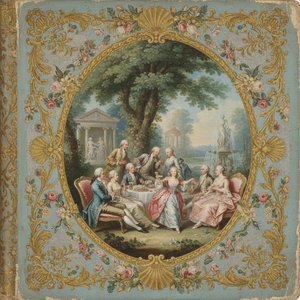
A particularly noteworthy achievement was the creation of fifteen oval frames, commissioned by Palazzo Pitti in Florence. These frames exemplify the workshop’s meticulous attention to detail and its ability to execute ambitious projects with unparalleled precision. The craftsmen utilized techniques such as inlaying precious metals (gold leaf) and applying intricate decorative motifs—inspired by arabesque patterns and floral designs—to elevate the aesthetic quality of these artworks.
Historical Significance and Legacy
The Bottega dell’Italia Settentrionale played a crucial role in disseminating Florentine artistic ideals throughout Europe, particularly in Spain and Portugal. Its influence extended beyond mere stylistic imitation; it fostered an intellectual dialogue between artists and scholars—promoting the study of classical texts and fostering experimentation with new artistic concepts. The workshop's legacy continues to resonate today—inspiring contemporary designers who seek to recapture the elegance and sophistication of Baroque craftsmanship.
The Bottega’s enduring appeal lies in its embodiment of humanist values—namely, respect for human dignity and an appreciation for beauty—principles that underpinned Florentine culture during the Renaissance. By upholding tradition while embracing innovation, the workshop established a paradigm for artistic excellence—a testament to the transformative power of apprenticeship and the transmission of knowledge across generations. Its contribution to European art history remains undeniable—a beacon of creativity and refinement that illuminates the splendor of the Baroque era.