Early Life & Influences: Shaping a Renaissance Master
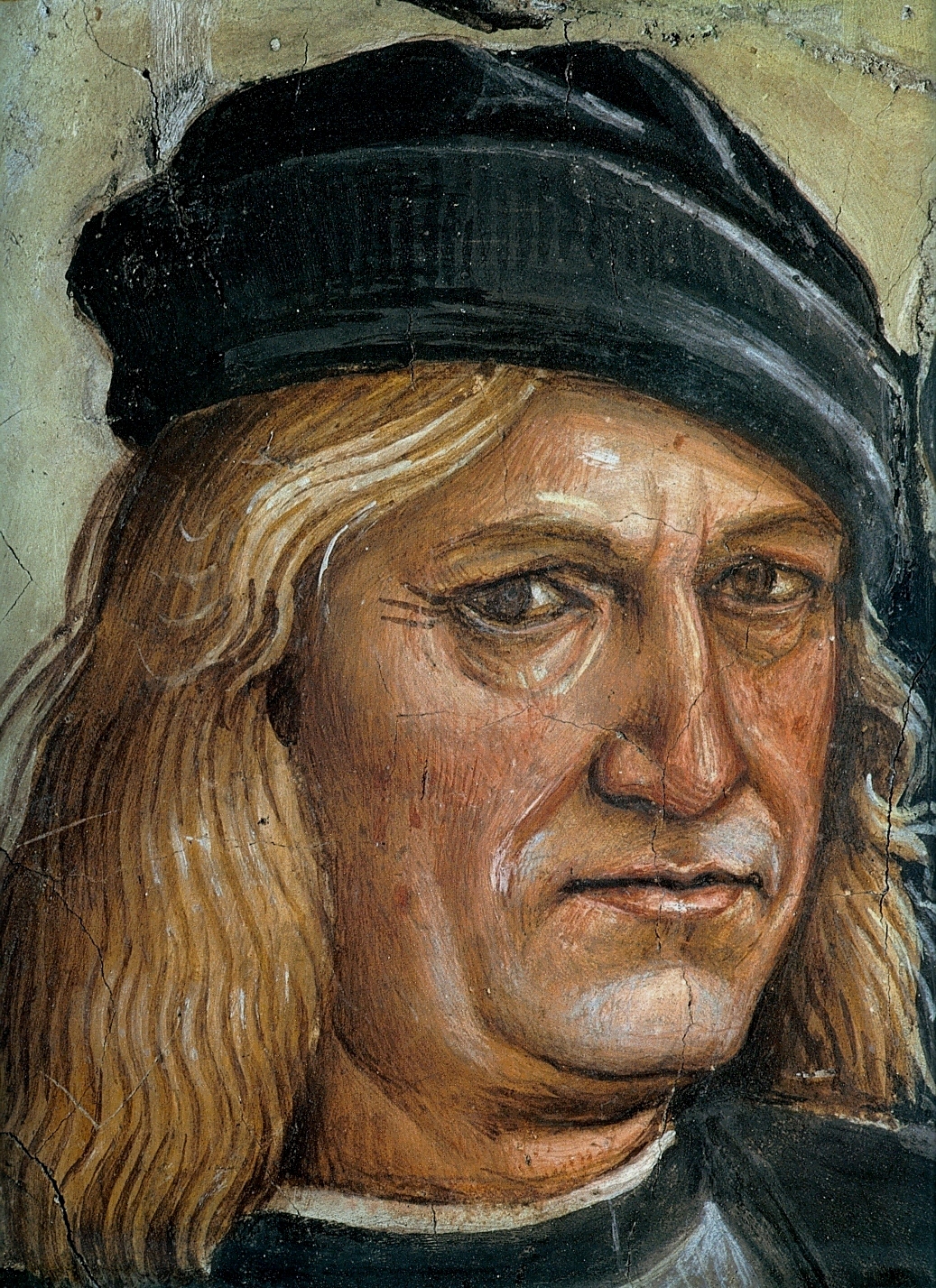 Wikipedia: Luca Signorelli
Luca Signorelli (c. 1441/1445 – 16 October 1523) was an Italian Renaissance painter from Cortona, in Tuscany, who was noted in particular for his ability as a draftsman and his use of foreshortening. His massive frescos of the Last Judgment (1499–150...
Luca Signorelli, born Luca d’Egidio di Ventura de’ Signorelli sometime between 1441 and 1450 in Cortona, Tuscany, emerged during a period of profound artistic transformation. While the precise details of his early training remain somewhat elusive, it is widely believed that he benefited from the tutelage of Piero della Francesca, a pivotal figure whose mastery of perspective and serene compositions profoundly shaped Signorelli’s developing style. Cortona itself, nestled amidst the rolling hills of Tuscany, provided a fertile ground for artistic inspiration, steeped in humanist ideals and a renewed interest in classical antiquity. However, Signorelli wasn't merely an imitator; he absorbed these influences and began to forge his own distinct path, one characterized by a dynamic energy and a burgeoning fascination with the human form. Early works reveal a sensitivity to light and shadow reminiscent of Piero, yet already hint at a more robust physicality and a growing inclination towards dramatic narrative—qualities that would become hallmarks of his mature style. His initial exposure to artists like Benedetto Bonfigli and Fiorenzo di Lorenzo in Perugia also contributed to the breadth of his early artistic vocabulary.
Signorelli's Fresco Technique: A Marriage of Art and Science
Fresco (pl. frescos or frescoes) is a technique of mural painting executed upon freshly laid ("wet") lime plaster. Water is used as the vehicle for the dry-powder pigment to merge with the plaster, and with the setting of the plaster, the painting be...
The defining medium of Luca Signorelli’s oeuvre was undoubtedly fresco—the art of painting upon freshly laid, wet lime plaster. This demanding technique, inherited from antiquity and perfected during the Renaissance, required not only exceptional artistic skill but also a deep understanding of chemistry and architectural surfaces. Unlike oil painting, which allowed for greater flexibility and revision, fresco demanded meticulous planning and swift execution. The artist had to work *alla prima*, completing sections of the wall before the plaster dried—a process known as the “giornata,” or day’s work. Signorelli excelled in this challenging art form, demonstrating a remarkable ability to translate complex compositions onto large-scale surfaces with breathtaking precision and vibrancy. He skillfully employed the technique of *sinopia*, using reddish pigment to sketch preliminary designs directly onto the plaster before applying the final layers of color. The enduring power of his frescoes lies not only in their aesthetic beauty but also in the inherent durability of the medium, a testament to Signorelli’s mastery of its intricacies. The chemical reaction between the pigments and the lime plaster ensured that his works would become an integral part of the wall itself, resisting the ravages of time.
The Orvieto Cathedral Frescoes: A Culmination of Dramatic Vision
 Resurrection of the Dead
Luca Signorelli’s ‘Resurrection of the Dead’ (1502) – a monumental fresco showcasing Renaissance artistry & biblical drama. Explore its powerful composition, masterful technique & historical significance.
Signorelli’s magnum opus—the frescoes adorning the Chapel of San Brizio in Orvieto Cathedral—stands as a towering achievement of Renaissance art. Commissioned between 1499 and 1503, these monumental paintings depict scenes from the Last Judgment, the Apocalypse, and related biblical narratives. What sets Signorelli’s interpretation apart is its unprecedented level of dramatic intensity and psychological realism. Unlike earlier depictions that often emphasized divine majesty and otherworldly serenity, Signorelli’s vision is visceral and profoundly human. The figures are not idealized saints but rather individuals caught in moments of intense suffering, ecstasy, or terror. His depiction of the *Resurrection of the Dead* (1502) is particularly striking—a swirling vortex of nude bodies ascending towards heaven, their expressions conveying a range of emotions from hope and joy to anguish and despair. The composition is dynamic and chaotic, reflecting the tumultuous nature of the event itself. The sheer scale of the frescoes, combined with Signorelli’s masterful use of perspective and foreshortening, creates an immersive experience that draws the viewer into the heart of the narrative.
Anatomical Precision & Foreshortening: Pioneering Realism in the Renaissance
 luca di egidio
Discover Luca Signorelli's stunning frescoes & paintings! High Renaissance master known for dramatic Last Judgments & anatomical precision in Orvieto & Cortona.
A defining characteristic of Signorelli’s art is his exceptional anatomical knowledge and his innovative use of *foreshortening*—the technique of representing objects or figures as if they are receding into space. He meticulously studied the human body, capturing its musculature, bone structure, and movement with remarkable accuracy. This dedication to realism was not merely an aesthetic choice but also a reflection of the Renaissance humanist emphasis on the dignity and beauty of the human form. In the Orvieto frescoes, Signorelli’s figures are often depicted in dynamic poses, their bodies contorted and twisted in ways that challenge conventional artistic conventions. The *Damned Cast into Hell* is a particularly compelling example—a harrowing depiction of suffering souls writhing in agony, their bodies rendered with unflinching detail. The use of foreshortening creates a sense of depth and spatial illusion, drawing the viewer into the scene and amplifying its emotional impact. This pioneering approach to anatomical representation had a profound influence on subsequent generations of artists, including Michelangelo and Raphael.
Legacy and Impact: Signorelli’s Influence on Subsequent Artists
Luca Signorelli’s artistic innovations extended far beyond his own lifetime. His dramatic compositions, anatomical precision, and mastery of fresco technique profoundly influenced the development of Renaissance art. Artists such as Michelangelo, who studied Signorelli’s frescoes in Orvieto before embarking on his own monumental projects in the Sistine Chapel, clearly absorbed his lessons in figure drawing and dynamic composition. Raphael also drew inspiration from Signorelli’s work, particularly his use of foreshortening and expressive gestures. The impact of Signorelli's style can be seen in the works of numerous other Renaissance painters, solidifying his position as a pivotal figure in the transition from the Early to High Renaissance. His emphasis on human emotion and psychological realism paved the way for more naturalistic and expressive depictions of biblical narratives. Furthermore, his frescoes served as a model for subsequent generations of muralists, demonstrating the power of large-scale painting to convey complex theological ideas and evoke profound emotional responses.
Rediscovering Signorelli Today: Preserving a Master's Work for Future Generations
 The Fresco as Family Legacy: Preserving Heritage Through Wall Art
Explore the rich history & enduring legacy of fresco painting. Discover how to preserve family heritage through stunning wall art. Expert insights & restoration guidance.
While Luca Signorelli enjoyed considerable renown during his lifetime, his reputation waned in subsequent centuries. However, recent scholarship and restoration efforts have led to a renewed appreciation of his artistic achievements. The frescoes in Orvieto Cathedral, painstakingly cleaned and conserved, now reveal their original vibrancy and dramatic power. Today, art historians recognize Signorelli as a pivotal figure in the Renaissance—a master innovator who bridged the gap between the Early and High Renaissance styles. OriginalUniqueArt.com offers stunning reproductions of Signorelli’s masterpieces, allowing art enthusiasts to experience the beauty and drama of his work firsthand. Through high-quality prints and handmade oil paintings, we strive to preserve his legacy for future generations. Exploring works like *The Circumcision* (1495) or *Moses' Testament and Death* allows a deeper understanding of his artistic evolution. The enduring power of Signorelli’s art lies in its ability to connect with viewers on an emotional level—a testament to the timeless beauty and profound humanity of his vision. Discover the captivating world of Luca Signorelli and experience the Renaissance as never before.