The Genesis of Artistic Rebellion: Challenging Academic Tradition
Formalism may mean a methodological orienta- tion in art studies, a specific conception of an artwork, or a position taken on the theory of value and valuation ...
For centuries, the trajectory of art was largely dictated by academies – institutions that enshrined a particular canon of beauty and technique. The Renaissance ideals of perspective, anatomical accuracy, and narrative clarity held sway, shaping artistic production across Europe. But beneath this veneer of order lay simmering discontent. By the 19th century, artists began to question these established norms, perceiving them as stifling creativity and hindering genuine expression. This wasn’t merely a stylistic shift; it was a fundamental rejection of authority, a desire to forge new paths untethered from historical precedent. The seeds of rebellion were sown in Romanticism's emphasis on emotion and individuality, but it was with the rise of Realism that a direct challenge to academic subject matter emerged – a focus not on idealized forms, but on the gritty realities of contemporary life. Édouard Manet’s Le Déjeuner sur l’herbe (1863), scandalized for its frank depiction of nudity and modern figures, became a pivotal moment, signaling a break with convention and paving the way for more radical experimentation.
The Impressionists further dismantled academic principles by prioritizing fleeting moments of light and color over precise representation. Their outdoor studies, loose brushwork, and unconventional compositions were initially met with derision but ultimately revolutionized painting. However, even Impressionism’s focus on optical perception would be superseded by movements seeking to delve deeper into the subjective experience and explore the very nature of form itself.
Cubism & Beyond: Fragmentation, Multiple Perspectives, and the Rejection of Representation
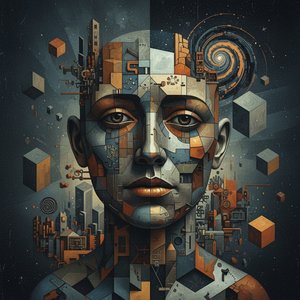
The early 20th century witnessed an explosion of artistic innovation unlike any seen before. At its epicenter was Cubism, pioneered by Pablo Picasso and Georges Braque. This wasn’t simply about depicting objects from different angles; it was a radical deconstruction of visual reality. Picasso's El Sueño (1932) exemplifies this fragmentation – figures are broken down into geometric shapes, reassembled in a way that challenges traditional notions of space and form. The influence extended beyond painting, impacting sculpture and even literature. Braque’s analytical Cubism initially employed a muted palette, focusing on the interplay of planes and lines, while Picasso's later synthetic Cubism introduced collage elements, further blurring the boundaries between representation and reality.
The rejection of single-point perspective was paramount. Artists sought to represent objects as they existed in three dimensions, simultaneously revealing multiple viewpoints. This pursuit led to a questioning of the very nature of perception – how do we *see*? This exploration wasn’t isolated; Futurism in Italy celebrated speed and technology, embracing dynamism and rejecting static forms. Simultaneously, artists like Robert Delaunay explored Orphism, focusing on pure color and abstract shapes, seeking a spiritual resonance through visual harmony.
Russian Avant-Garde: Spiritual Symbolism, Constructivism, and Utopian Visions
While Western Europe grappled with Cubism and its derivatives, Russia was undergoing its own artistic revolution. Kuzma Petrov-Vodkin, a key figure in Russian spiritual symbolism, sought to imbue his art with religious and nationalistic fervor. His works often feature elongated figures and symbolic landscapes, reflecting a yearning for a uniquely Russian aesthetic. However, the October Revolution of 1917 dramatically altered the course of Russian art.
Constructivism emerged as a dominant force, rejecting purely representational art in favor of functional design and abstract forms intended to serve social purposes. Aleksandra Ekster’s vibrant paintings and stage designs embodied this spirit – bold geometric shapes, dynamic compositions, and a belief in art's ability to transform society. Artists like Vladimir Tatlin envisioned monumental structures that were both artistic statements and blueprints for a new world. This period was characterized by an intense optimism and a desire to create art that was directly relevant to the lives of ordinary people. The movement’s focus on industrial materials and geometric abstraction reflected the utopian ideals of the revolution, though it would eventually be suppressed under Stalinist rule.
Surrealism's Subconscious Landscapes: Automatism, Dreams, and Psychological Exploration
Following the devastation of World War I, a sense of disillusionment permeated European society. Surrealism, born out of Dada’s nihilistic rejection of reason, sought to tap into the power of the subconscious mind. Inspired by the psychoanalytic theories of Sigmund Freud, artists like Salvador Dalí and René Magritte explored dreams, fantasies, and irrationality.
Automatism – a technique of spontaneous creation without conscious control – became central to Surrealist practice. Artists sought to bypass rational thought and access the unfiltered depths of their imagination. The resulting works often feature bizarre juxtapositions, illogical scenes, and unsettling imagery. This wasn’t merely about creating visually striking compositions; it was an attempt to challenge conventional perceptions of reality and unlock hidden truths within the human psyche. The movement's influence extended beyond painting, impacting literature, film, and photography.
Abstract Expressionism: Emotional Intensity & Formal Innovation in Post-War America
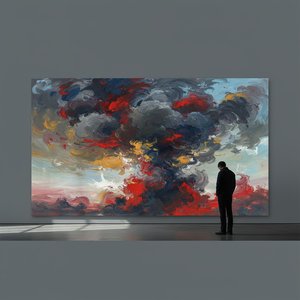
After World War II, New York City emerged as a new center for artistic innovation. Abstract Expressionism, characterized by its large-scale canvases, gestural brushwork, and emphasis on emotional intensity, dominated the American art scene. Artists like Jackson Pollock and Mark Rothko rejected representational forms altogether, focusing instead on the act of painting itself.
Pollock’s drip paintings – created by pouring and flinging paint onto canvas – were a radical departure from traditional techniques. Rothko's color field paintings – large rectangular blocks of luminous color – sought to evoke profound emotional responses in viewers. This wasn’t about depicting specific objects or scenes; it was about creating an immersive experience that tapped into universal human emotions. The movement represented a shift away from European dominance and established America as a major force in the art world. The scale, energy, and subjective nature of Abstract Expressionism continue to resonate with audiences today.
The Legacy of Experimentation: Modernism’s Enduring Influence on Contemporary Art
The artistic revolutions of the early 20th century didn't simply disappear; they laid the foundation for countless subsequent movements. Minimalism, Pop Art, Conceptual Art – all owe a debt to the pioneers who dared to challenge convention and explore new forms of expression. Even today, artists continue to push boundaries, experimenting with materials, techniques, and ideas.
The spirit of experimentation remains vital. The questioning of representation, the exploration of the subconscious, the embrace of abstraction – these themes continue to be relevant in contemporary art. OriginalUniqueArt.com offers a unique opportunity to connect with this rich artistic heritage, providing high-quality reproductions of masterpieces from across the ages. Whether you’re drawn to the fragmented forms of Picasso, the spiritual symbolism of Petrov-Vodkin, or the emotional intensity of Rothko, our collection allows you to bring these iconic works into your own home. Investing in art is not merely acquiring an object; it's embracing a legacy of innovation and supporting the enduring power of human creativity. Explore our extensive library today and discover the artwork that speaks to your soul.