Lorenzo il Magnifico among Philosophers and Scholars – A Window into Florentine Renaissance Thought A Gathering of Minds: Giorgio Vasari’s fresco, “Lorenzo il Magnifico among philosophers and scholars,” offers a captivating glimpse into the intellect...
In the mid-16th century, the concept of intellectual progress was often visualized through the gathering of diverse, brilliant individuals within a single frame. Giorgio Vasari’s 1558 fresco, Lorenzo il Magnifico among philosophers and scholars, captures this precisely. Located in the Palazzo Vecchio in Florence, the work depicts Lorenzo de' Medici surrounded by a group of thinkers, artists, and learned men engaged in active debate. Vasari uses a dynamic pyramidal composition to guide the eye toward Lorenzo at the apex, suggesting that true leadership is found at the center of intellectual exchange. This arrangement does not merely record a moment; it celebrates the humanist movement where philosophy, literature, and architecture were viewed as inseparable components of civic life.
This Renaissance ideal of the shared salon finds a distant echo in the 19th-century establishment of The Literary and Philosophical Society of Newcastle. What began as a simple conversation club in 1793 evolved into a significant independent library in the United Kingdom, much like the private studies of the Medici era became public legacies. While Vasari used paint to freeze a moment of Florentine debate, the Newcastle institution preserved the actual voices of history through its collection of over 16,000 volumes. Both settings emphasize that knowledge is not a solitary pursuit but a communal endeavor that requires a dedicated space for dialogue.
Illuminating Reason: The Dramatic Light of Enlightenment Inquiry
Russian symbolism was an intellectual, literary and artistic movement predominant at the end of the 19th and beginning of the 20th century. It arose separately from West European symbolism, and emphasized defamiliarization and the mysticism of Sophio...
As the centuries progressed, the visual representation of thought shifted from the group debate to the intense, singular moment of discovery. During the Enlightenment, artists began using light as a metaphor for the clarity provided by rationalism and scientific inquiry. Joseph Wright of Derby’s A Philosopher Lecturing on the Orrery (1764-66) is a primary example of this technique. Through a dramatic use of chiaroscuro, the artist shows how the glow from the mechanical model illuminates the faces of the observers, suggesting that the process of learning is both profound and solemn. The light does not just reveal the machine; it symbolizes the illumination of the human mind by reason.
This focus on the transformative power of light finds a parallel in the works of the Russian symbolist movement at the turn of the 20th century. While Enlightenment artists used light to represent clarity, poets like Alexander Blok and Andrei Bely explored more mystical, atmospheric qualities of light and shadow to express the tension between ideal beauty and industrial reality. Where Wright of Derby used light to ground the viewer in scientific truth, the Russian symbolists used it to suggest the unseen forces of the soul. Despite these different intentions, both eras utilized the interplay of light and dark to communicate that true understanding often requires looking beyond the surface of the visible world.
The Language of Objects: Decoding the Scholar’s Tools
A Window into Scholarly Life: Cornelis van Haarlem’s “A Scholar in His Study” Cornelis Cornelisz van Haarlem's "A Scholar in His Study," painted circa 1606, isn’t merely a portrait; it’s a meticulously crafted tableau of intellectual pursuit within t...
In many historical paintings, the presence of specific objects serves as a silent vocabulary for the viewer to decode. In Cornelis van Haarlem’s A Scholar in His Study (c. 1606), the desk is cluttered with the practical tools of the trade: spectacles, an inkwell, scissors, and a candle holder. These are not mere decorations; they ground the scholar's intellectual life in physical reality. Even more intriguing is the siren motif on his carved chair, which traditionally symbolizes eloquence and the power of words. Through these details, the artist communicates that the pursuit of knowledge is a labor-intensive process involving both physical tools and linguistic mastery.
This use of objects to suggest deeper meaning can be seen in the late Baroque works of Luca Giordano, such as Philosophe avec une gourde à la ceinture. Here, the philosopher carries a simple gourd on his belt, an object that might represent the necessity of sustenance during long periods of travel or study, or perhaps a rejection of luxury in favor of a grounded existence. Just as Van Haarlem uses spectacles to denote sight and focus, Giordano uses the gourd to hint at the scholar's relationship with nature. In both instances, the artist relies on the viewer's ability to recognize that a simple, concrete item can carry the weight of an entire philosophical stance.
Capturing Character: Portraiture as a Record of Thought
A Gathering of Minds: Peter Paul Rubens’ Scholarly Portrait This captivating oil painting by Peter Paul Rubens, created in 1611, offers a compelling glimpse into the intellectual life of the 17th century. Measuring 167 x 143 cm, the artwork depicts f...
Portraiture has long functioned as more than a simple record of facial features; it is an attempt to capture the presence and inner character of the subject. In the 17th century, Peter Paul Rubens utilized his mastery of the Baroque style in works like Selfportrait with brother Philipp, Justus Lipsius and another scholar (1611) to demonstrate how portraiture can document intellectual circles. By including his brother and known scholars, Rubens creates a narrative of shared learning and familial pride. The use of rich reds, golds, and dramatic shadows gives the figures an emotional weight that suggests their thoughts are as substantial as their physical forms.
This tradition of using the face to convey intellect is mirrored in the 18th-century works of Sir Joshua Reynolds. Through his "Grand Style," Reynolds sought to move British portraiture away from simple likeness toward a sense of classical dignity. In his portraits, the subject's posture and gaze are carefully constructed to reflect status and intellect. While Rubens focused on the social connection between scholars, Reynolds focused on the individual’s internal gravity. Both artists, however, understood that a well-executed portrait could serve as a permanent vessel for the subject's perceived wisdom and social identity.
Architectural Sanctuaries: The Built Environment of Knowledge
A Bastion of Antiquity: Exploring the Altes Museum The Altes Museum in Berlin isn’t merely a building; it's a statement etched in stone—a powerful articulation of Enlightenment ideals rendered tangible on the celebrated Museum Island. Conceived by Ki...
The spaces designed for study often reflect the intellectual values of their era. The Altes Museum in Berlin, designed by Karl Friedrich Schinkel, is a physical manifestation of Neoclassical principles—order, symmetry, and accessibility. Completed in 1830, its colonnaded hall was intended to make art and knowledge a shared inheritance for all citizens, not just the elite. The architecture itself promotes a sense of rationalism and stability, mirroring the Enlightenment ideals that sought to organize human understanding through logic and proportion.
A similar architectural reverence for thought is found in the British Academy in London. Much like Schinkel’s museum, the Academy’s neoclassical design provides a stately backdrop for the pursuit of research. It serves as a sanctuary where the boundaries between different disciplines can blur. While the Altes Museum uses stone and columns to represent the permanence of classical antiquity, the British Academy uses its historic halls to house the evolution of modern thought. Both institutions demonstrate how the physical structure of a building can influence the psychological state of those within it, fostering an environment conducive to deep contemplation.
The Weight of Words: Literature and the Visual Image
A Sanctuary of Literary Heritage: Exploring the Faculty of English Language and Literature, Oxford Oxford University’s Faculty of English Language and Literature isn't a museum in the traditional sense—it doesn’t house canvases ablaze with color or s...
Visual art often finds its most profound meaning when it intersects with the written word. In Rogier van der Weyden’s The Magdalen Reading (c. 1435-1438), the act of reading a holy manuscript is central to the subject's spiritual identity. The book here is a symbol of faith and the transformative power of scripture. This connection between the image and the text is also present in the work of the Spanish philosopher Gómez Pereira, whose writings sought to use logic to challenge established dogmas. Though he was a man of letters rather than paint, his life's work was an attempt to visually deconstruct old ideas through the medium of reasoned argument.
This intersection continues in the modern era through the way literature shapes our visual perception. The Russian symbolist poets, such as Alexander Blok, created verses that were intensely musical and imagery-heavy, often reflecting the conflict between industrial reality and Platonic ideals. Their poetry functioned much like a painting, using rhythm and color to evoke complex emotional states. Whether it is a 15th-century depiction of a reading saint or a 20th-century poem about a revolutionary city, the goal remains the same: to use symbols and structured language to make the abstract concepts of wisdom and truth visible to the human eye.
At OriginalUniqueArt.com, we specialize in bringing these historical moments into your contemporary space. Whether you require a large-format mural for a hotel lobby or a custom multi-panel set for a corporate office, our artists provide high-quality, hand-painted oil reproductions that maintain the texture and depth of the originals. From the dramatic light of the Enlightenment to the structured beauty of Neoclassicism, our catalog offers a wide range of styles to suit any professional requirement. For bespoke projects, such as transforming a personal photo into a Renaissance-style portrait, our Project Coordinators manage every detail from digital mockup to global delivery via DHL or FedEx.
Step into the haunting dreamscapes of Giorgio de Chirico. Explore 25 iconic Metaphysical and Surrealist masterpieces, from enigmatic shadows to timeless architecture. Find inspiration for museum-quality art reproductions and decor. Discover all masterpieces on OriginalUniqueArt.com.
Explore the rich history & enduring artistry of fresco painting – from Giotto to Michelangelo! Discover techniques, conservation efforts, & modern applications. Learn how OriginalUniqueArt brings this timeless art form to your home.
Istražite bogatu istoriju zidnog slikarstva i njegov značaj za očuvanje kulture i porodičnog nasleđa. Ekskluzivni uvid za kolekcionare, restauratore i ljubitelje umetnosti. Saznajte više o tehnikama, vrednosti i budućnosti ove drevne veštine.
Explore the rich history & enduring legacy of fresco painting! Discover ancient techniques, Giotto's masterpieces, and modern applications. Expert insights for art lovers & professionals.

 Lorenzo il Magnifico among philosophers and scholars
 Russian symbolism
 A Scholar in his Study
 Selfportrait with brother Philipp, Justus Lipsius and another scholar
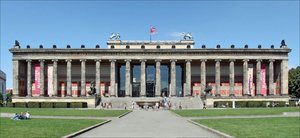 Altes Museum
 Faculty of English Language And Literature




