Introduction
Imagine walking into a grand, sun-drenched gallery where the air feels still, heavy with the dignity of ancient Rome and the quiet strength of Greece. There is a profound sense of order here, a feeling that every brushstroke has a purpose and every shadow tells a story of virtue, heroism, and timeless grace. This is the world of Neoclassicism —an era where art sought to move away from the dizzying, ornate flourishes of the Rococo and return to the clarity, logic, and emotional restraint of the classical past.
Emerging in the mid-18th century, Neoclassicism was more than just a change in aesthetic; it was a cultural awakening. As archaeological discoveries at Pompeii and Herculaneum ignited a global passion for antiquity, artists began to look backward to move forward. They traded whimsical pastel whimsy for structured compositions, dramatic lighting, and subjects that celebrated civic duty and moral integrity. It was an age of enlightenment, where the canvas became a stage for exploring the very foundations of human character and societal ideals.
But why do these centuries-old masterpieces still resonate in our modern homes and hearts? In an era that often feels chaotic and fleeting, there is something deeply comforting about the permanence of Neoclassical art. The balanced proportions and serene compositions offer a visual sanctuary, bringing a sense of sophisticated calm to any space. These works remind us that beauty can be found in discipline, and that greatness is often achieved through clarity and focus.
As we begin our journey through this curated selection, prepare to encounter works that do more than just decorate a wall—they command the room. From sweeping historical dramas to intimate, light-drenched portraits, we have gathered ten essential masterpieces that capture the soul of the Neoclassical movement. Each piece serves as a window into an era of unparalleled elegance, inviting you to discover the enduring power of classical perfection.
The Coronation of the Emperor and Empress - Jacques-Louis David
 The Coronation of the Emperor and Empress - Jacques-Louis David
Step into the hallowed, gilded atmosphere of Notre-Dame, where Jacques-Louis David’s The Coronation of the Emperor and Empress transforms a historical moment into a breathtaking visual symphony. In this monumental Neoclassical masterpiece, light is not merely illumination; it is a language used to compose a drama of imperial glory. As you gaze upon the canvas, you can almost feel the heavy weight of crimson velvet robes and the shimmering texture of gold embroidery under the cathedral's soft, divine glow.
David orchestrates a sea of dignitaries and senators around Napoleon and Josephine, using a precise pyramidal composition to anchor the viewer’s gaze. The palette—rich with Venetian reds and deep, royal blues—invents a sense of opulence that feels both physically overwhelming and deeply prestigious. This painting is a triumph of the Neoclassical style, blending Roman imperial iconography with a palpable sense of movement. It doesn't just reflect history; it breathes life into it, inviting you to bring this portal of inspiration into your own space, turning a simple wall into a window of timeless majesty.
Mars and Venus - Nicolas Poussin
 Mars and Venus - Nicolas Poussin
In Mars and Venus , Nicolas Poussin achieves a breathtaking equilibrium that serves as a blueprint for the Neoclassical movement. The composition is anchored by a masterful use of geometric stability; the seated figures of Mars and Venus create a balanced, triangular arrangement that guides the eye through a landscape of profound serenity. There is no chaotic movement here—only a deliberate, rhythmic harmony where the weight of the god of war is perfectly offset by the luminous grace of the goddess of love.
This structural clarity offers much more than historical interest; it provides a timeless sense of order that resonates deeply with modern sensibilities. Much like the principles of modern minimalist design , Pouslin’s restraint and focus on essential forms allow the painting to ground a contemporary room with a sense of calm authority. The soft, diffused light filtering through the trees and the subtle interplay of textures—from polished armor to flowing red drapery—create an atmosphere of quiet sophistication. It is this perfect marriage of classical myth and architectural balance that secures its place among the greatest masterpieces of art history.
Andromache Mourning Hector - Jacques-Louis David
 Andromache Mourning Hector - Jacques-Louis David
In the heavy, breathless silence of Jacques-Louis David’s 1783 masterpiece, Andromache Mourning Hector , time itself seems to pause in a state of eternal grief. This painting stands as a cornerstone of the Neoclassical style, immortalized for its ability to transform a legendary moment from the Trojan War into a deeply intimate study of human loss. David moves away from the airy flourishes of previous eras, instead using sculptural clarity and a somber, muted palette to anchor the viewer in the raw emotion of Andromache cradling her fallen husband.
The light in this work does not merely illuminate; it shapes thought, casting soft shadows that emphasize the marble-like skin of the fallen hero and the profound sorrow etched into the faces around him. For the modern decorator, bringing a reproduction of such a piece into a home introduces a sense of timeless sophistication and emotional depth. It is more than just decor; it is an anchor of calm and classical dignity, perfect for creating a room that feels both curated and deeply soulful.
Jacobus Blauw - Jacques-Louis David
 Jacobus Blauw - Jacques-Louis David
What story does the quiet, scholarly atmosphere within Jacobus Blauw by Jacques-Louis David tell us about an era seeking order amidst chaos? Painted in 1795, this masterpiece emerged from the turbulent wake of the French Revolution, serving as a profound anchor of Neoclassical stability. As David moves away from the flamboyant excesses of the Rococo, he presents Blauw not just as a man, but as an emblem of Enlightenment intellect. The composition is a masterclass in restraint; the cool, serene blues of his uniform contrast beautifully with the warm, scholarly presence of books that symbolize the era's thirst for knowledge.
For the modern decorator, this painting offers more than just historical significance—it provides a curated escape into a world of dignified contemplation. Bringing such a piece into your home allows you to evoke a sense of timelessness and intellectual depth. The subtle play of light on the canvas and the subject's thoughtful gaze create a focal point that transforms a room into a sanctuary of calm, making it a quintessential selection for those looking to define their space with the strength of the Neoclassical movement.
Portrait of Gaspar Mayer - Jacques-Louis David
 Portrait of Gaspar Mayer - Jacques-Louis David
In the Portrait of Gaspar Mayer , Jacques-Louis David captures more than just the likeness of a Bavarian instrument maker; he encapsulates the very soul of the Enlightenment. This masterpiece stands as a pillar of the Neoclassical style, where every brushstroke serves the pursuit of order, reason, and dignified restraint. As you gaze upon Mayer, the cool blues and crisp whites of the composition create an atmosphere of intellectual clarity, punctuated only by the warm, commanding red of his jacket.
David utilizes a masterful, symmetrical arrangement to evoke stability, using scattered books to symbolize a life dedicated to scholarship and the pursuit of knowledge. The subtle play of light across the textures of fabric and skin invites a sensory connection to the past, making the painting feel remarkably present. In today’s modern interiors, this work serves as a sophisticated focal point, offering a sense of timeless calm and academic elegance. It remains a profound cultural talking point, reminding us that even amidst revolutionary change, there is beauty in structure and strength in quiet contemplation.
Self-Portrait - Jacques-Louis David
 Self-Portrait - Jacques-Louis David
To stand before a masterpiece is to encounter the soul of an era, and few works offer such an intimate glimpse into the heart of the French Revolution as Self-Portrait by Jacques-Louis David. Created in 1791, this painting is far more than a simple likeness; it is a profound meditation on identity and resilience during a time of immense political upheaval. As you gaze into the artist's steady eyes, you feel the weight of Enlightenment thought meeting the raw, human vulnerability of a man navigating a changing world.
David utilizes the hallmarks of the Neoclassical style to command attention, employing precise, sculpted lines and a restrained palette of earthy browns and creams that reject Rococo excess in favor of clarity. The light falls with a dramatic, focused intensity, highlighting his dignified features while subtly acknowledging his physical struggles. This balance of heroic composure and quiet introspection makes it a definitive pillar of the movement. Today, such a piece does more than decorate a room; it brings a sense of historical gravity and timeless elegance to any modern space, reminding us that even in moments of chaos, there is beauty in strength.
Marat Assassinated - Jacques-Louis David
 Marat Assassinated - Jacques-Louis David
Step into the quiet, heavy atmosphere of 1793. In Jacques-Louis David’s Marat Assassinated , light does not merely illuminate a scene; it acts as a somber narrator, casting a stark, dramatic glow over the tragic aftermath of the French Revolution. As you gaze upon the canvas, you can almost feel the chilling stillness of the room. David uses light to compose a visual sonata of grief and heroism, pulling your eyes toward the wounded leader slumped in his medicinal bath.
The painting is a masterclass in Neoclassical restraint. There are no distracting flourishes here—only the profound weight of history. The muted palette of deep browns and stark whites directs your focus to the visceral details: the single, tragic wound and the papers clutched in Marat's hand, symbolizing his undying devotion to revolutionary ideals. It is a breathtaking moment of stillness captured amidst political chaos. Bringing a piece with such intense emotional depth into your home transforms a simple wall into a portal of historical inspiration, inviting a sense of quiet prestige and profound contemplation into your everyday living space.
Christ on the Cross - Jacques-Louis David
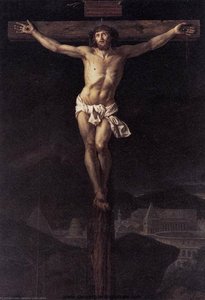 Christ on the Cross - Jacques-Louis David
Imagine standing before a canvas where the air feels heavy with both divine grace and profound human sorrow. In Christ on the Cross , Jacques-Louis David moves beyond mere religious iconography to capture a cinematic moment of spiritual tension. As you gaze upon the luminous, meticulously rendered skin tones and the powerful pyramidal composition, you feel the weight of the Neoclassical movement—a style defined by clarity, anatomical precision, and an escape from Rococo excess.
David uses light and shadow to sculpt Christ’s form, drawing inspiration from Roman sculpture to evoke a sense of monumental stability amidst intense emotional anguish. The subtle textures of the oil glazes and the somber, dramatic atmosphere create a focal point of deep reflection. Bringing a piece of this magnitude into a modern home does more than decorate a wall; it introduces a soulful anchor. Whether placed in a quiet study or a grand living area, the painting’s austere beauty and historical gravity inspire a sense of calm, permanence, and intellectual depth, making it a timeless cornerstone for any curated collection.
Farewell to Socrates by his wife Xanthippe - Jacques-Louis David
 Farewell to Socrates by his wife Xanthippe - Jacques-Louis David
Before he became the definitive painter of the French Revolution, Jacques-Louis David spent his formative years in Rome, absorbing the quiet, intellectual shadows of antiquity. It was here that he composed Farewell to Socrates by his wife Xanthippe , a work that transcends mere historical illustration to become a profound meditation on Stoicism. Rather than focusing on the violence of execution, David captures a tender, heavy moment: the philosopher, released from his chains, shares a final, dignified breath with his family.
The technical brilliance of this masterpiece lies in its controlled use of light and shadow, creating a solemn serenity that avoids the chaotic drama of the preceding Baroque era. Through smooth, meticulous brushstrokes and a balanced composition, David elevates Xanthippe’s maternal devotion and Socrates' unwavering resolve into a universal symbol of moral fortitude. This sense of structured grace and intellectual depth makes such a piece an extraordinary choice for a modern study or home office, where its atmosphere of quiet strength can inspire deep focus and a sophisticated, contemplative mindset.
The Lictors Returning to Brutus the Bodies of his Sons - Jacques-Louis David
 The Lictors Returning to Brutus the Bodies of his Sons - Jacques-Louis David
In the heavy, somber atmosphere of Jacques-Louis David’s The Lictors Returning to Brutus the Bodies of his Sons , we encounter more than just a historical tragedy; we witness the very heartbeat of Neoclassicism. This masterpiece is a profound exploration of civic duty and stoic resolve, capturing the moment Roman legend Brutus must face the grim consequence of his commitment to republican virtue. David utilizes a dramatic interplay of light and shadow—a technique known as tenebrism—to pull the viewer into this emotionally charged scene, where the stark, monochromatic palette of greys and deep browns heightens the sense of mourning.
Every brushstroke serves a higher purpose, emphasizing geometric clarity and the rigid, sculptural forms that define the movement. As you gaze upon the tension in Brutus’s posture against the weight of the lictors' arrival, your space is transformed from a mere room into a gallery of the soul. This painting does not simply decorate a wall; it invites a dialogue with history, making it an essential cornerstone for any collection seeking to embody heroism and classical grandeur.
Conclusion
As we draw the curtain on this journey through the Neoclassical era, we are reminded that these masterpieces are far more than mere relics of a bygone age or static figures in a history book. They are living, breathing presences that continue to pulse with the same passion and precision that moved their creators centuries ago. When you stand before a work defined by such clarity, order, and heroic grace, you aren't just observing paint on canvas; you are participating in a timeless conversation between the artist’s hand and your own soul.
Every deliberate brushstroke, every balanced composition, and every dramatic play of light serves as a bridge across the ages, connecting our modern lives to the profound human values of dignity and strength. These works possess a unique magic—the ability to transform a house into a home, turning a simple wall into a window onto greatness. Whether they anchor a quiet reading nook or serve as the sophisticated centerpiece of a grand living space, these paintings bring a sense of permanence and poetic calm to our ever-changing world.
We invite you to continue your own discovery and find the piece that speaks directly to your heart. Explore our full collection and let the enduring elegance of Neoclassicism inspire your next beautiful chapter in interior storytelling.