 Ulje na platnu
 Sve o delu St Augustine







































 Za umetnička dela ili reprodukcije čija je bilo koja strana veća od 105 cm (približno 41 inč), okvir će biti isporučen u obliku rastavljenog seta za sklapanje. Ovaj metod osigurava bezbednu dostavu i sprečava oštećenja tokom transporta.


Identification of the Portrait of St Augustine
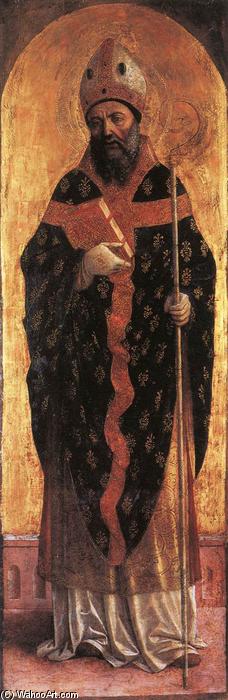
In this quiet depiction, we encounter St Augustine, a work attributed to the hand of Vincenzo Foppa. Created around 1465, the painting captures the influential theologian in a moment of profound contemplation. The figure is rendered with a gravity that reflects his historical importance, presented through the lens of the early Lombard school. It is a piece that invites a closer, more personal inspection of the subject's character.
The work is currently held within the Pinacoteca del Castello Sforzesco in Milan, Italy. This placement allows the portrait to remain connected to the artistic traditions of the region where Foppa established his reputation. The presence of the figure in such a significant collection speaks to the enduring nature of his contribution to Renaissance art. One can sense the deliberate intent behind the composition, focusing entirely on the presence of the saint.
Visual Composition and Subject Details
The figure is presented with a quiet, contemplative expression, his gaze directed slightly to his right as if lost in thought. He possesses a full beard and mustache, with hair that has begun to gray at the temples, suggesting the wisdom of age. A golden halo encircles his head, marking his sanctity and providing a luminous focus against the darker tones of his attire.
He is dressed in a black robe accented by red trim, a garment detailed with intricate patterns and gold embroidery that hints at his high ecclesiastical standing. Over this robe, he wears a pallium, the traditional vestment of a high-ranking prelate. In his left hand, he holds a book, a nod to his life as a theologian and philosopher, while his right hand rests upon a staff, a symbol of his authority.
Artistic Style and Visual Characteristics
The work is executed in a Renaissance style, demonstrating a sophisticated command of perspective and a precise understanding of human anatomy. There is a quiet strength in the way the figure is rendered, achieved through a careful application of light and shadow. This technical skill allows the physical presence of the subject to feel grounded and substantial. The composition is framed within an ornate arch, which lends a sense of architectural grandeur to the presentation.
The color palette is dominated by warm tones that contribute to a solemn and reverent atmosphere. Gold and red are particularly prominent, appearing in the halo and the intricate embroidery of the robes. These colors work in harmony with the darker elements of the vestments to create a sense of depth. The interplay of light across the textures of the fabric and the skin suggests a high level of craftsmanship, drawing the eye to the subtle details of the sitter's expression and the objects he holds.
Related Works by Vincenzo Foppa
To understand the breadth of Foppa's output, one might look toward his later religious commissions. In 1510, he produced St Luke, a work that now resides within San Maurizio al Monastero Maggiore in Milan. This piece reflects the artist's continued engagement with sacred subjects well into his career.
His earlier explorations of maternal themes are also well documented. He painted the Madonna and Child with an Angel in 1479. This specific composition is held in the Galleria degli Uffizi in Florence. Examining these various works allows for a deeper appreciation of the stylistic evolution present in his hand.
Pitanja i odgovori
Da li je St Augustine ručno oslikano ili odštampano?
Ručno oslikano: profesionalni umetnik kopira St Augustine uljanim bojama na platnu od lana.
Koju veličinu treba da odaberem za St Augustine?
Dimenzije se kreću od 55.4 x 18.0 cm (дин20932) do 239.8 x 78.1 cm (дин83101); tabela na ovoj stranici navodi glavne korake i njihove cene.
Koliko dugo traje dostava?
Isporuka traje od 4 do 5 nedelja, uz besplatnu ekspresnu dostavu širom sveta; na ovoj stranici je ponuđena opcija hitne proizvodnje. Možete ga vratiti u roku od 100 dana uz pun povraćaj sredstava, bez ikakvih uslova.
Gde se nalazi originalno delo St Augustine?
Original se nalazi u kolekciji Castello Sforzesco, Milan.
Koji je medij koristio/la Vincenzo Foppa za delo St Augustine?
Oil
 Pregledaj u prostoru

 Pošalji
 Podeli
 Detalji o delu
 Informativni list


 Preuzmi
 Slični predmeti
 Rendgenski snimak
 Automatska prezentacija
 Pitanja i odgovori

 Statistika


