Neo-Romantic Landscape · 1944
Ardrossan (Stiven Bon, 1944)
Stiven Bon (1904–1958) je napravio Ardrossan. Datirano je iz 1944. Pripada pokretu Neo-Romantic Landscape. Izrađeno je u Oil On Canvas. Čuva se u muzeju Walker Art Gallery u mestu Liverpud, Ujedinjeno Kraljevstvo. Dimenzije su 51 × 61 cm.
- 1944
- Oil On Canvas
- 51 × 61 cm
- Walker Art Gallery, Liverpud

 Pregledaj u prostoru

 Ručno oslikano uljanim bojama
 Pošalji
 Podeli
 Informativni list


 Preuzmi
 Slični predmeti
 Rendgenski snimak
 Automatska prezentacija
 Pitanja i odgovori

 Statistika
Ardrossan, ukratko
- Naslov
- Ardrossan
- Umetnik
- Stiven Bon (1904–1958)
- Rođen/a u
- Čizvik, Уједињено Краљевство
- Datum
- 1944
- Tehnika
- Oil On Canvas
- Dimenzije
- 51 × 61 cm
- Gde se može videti
- Walker Art Gallery, Liverpud, Ujedinjeno Kraljevstvo
- Pokret
- Neo-Romantic Landscape
- Tema
- coastal townscape, monochrome, harbor, shipbuilding, nostalgia, 1940s
Šta prikazuje Ardrossan?
A Moment Frozen in Time: The Essence of Ardrossan
Stephen Bone’s Ardrossan isn't merely a depiction of a coastal town; it’s a carefully constructed evocation of memory, atmosphere, and the quiet dignity of a bygone era. Painted in 1944, during the tumultuous years of World War II, the canvas captures a specific moment – a fleeting glimpse of a bustling harbor scene rendered with a deliberate restraint that speaks volumes about the artist's sensibility. The painting immediately draws the viewer into its monochrome world, a carefully calibrated palette of grays and blacks that feels both familiar and profoundly melancholic. It’s a visual poem to the resilience of place and the enduring power of observation.
- Historical Context: Bone's work during this period is deeply intertwined with his role as an Admiralty war artist, documenting naval activities and coastal defenses. This experience undoubtedly informed his approach to capturing the essence of Ardrossan – a town vital to maritime trade and strategically positioned along the Firth of Clyde.
- The Artist’s Vision: Bone was known for his ability to distill complex landscapes into their most essential elements, prioritizing mood and atmosphere over photographic realism. He sought not just to represent Ardrossan, but to convey a feeling – a sense of timelessness and quiet contemplation.
The Language of Line and Tone
Bone’s masterful use of line is immediately striking. Strong, confident strokes delineate the buildings lining the waterfront, creating a sense of solidity and permanence despite the cloudy sky above. These lines aren't rigid or geometric; they possess a subtle fluidity, suggesting movement and life within the town. The boats in the harbor are rendered with varying degrees of detail, their forms subtly suggested through carefully placed lines, contributing to the overall depth and spatial awareness of the composition. Crucially, the artist employs a sophisticated understanding of tonal variation – light and shadow are used not just for visual interest but also to create a palpable sense of atmosphere. The darker tones in the foreground anchor the scene, while the lighter shades receding into the distance evoke a feeling of atmospheric perspective, drawing the eye deeper into the image.
The painting’s monochromatic palette is particularly effective in conveying a mood of nostalgia and understated drama. It's reminiscent of vintage photographs, lending the work an almost documentary quality while simultaneously elevating it to the realm of art.Symbolism and Emotional Resonance
Beyond its technical merits, Ardrossan is rich in symbolic resonance. The cloudy sky, a dominant feature of the composition, can be interpreted as a metaphor for uncertainty and hardship – reflecting the anxieties of wartime Britain. The harbor itself, with its bustling activity, represents both connection and isolation, highlighting the town’s role as a vital link between land and sea. The presence of the boats suggests trade, industry, and perhaps even a longing for distant horizons. There's an underlying sense of quiet dignity in the scene, a suggestion that life continues despite the challenges of the time.
The painting’s emotional impact is profoundly subtle yet undeniably powerful – it invites contemplation and evokes a feeling of wistful remembrance.A Window into the Past: Technical Details
Painted in oil on canvas, Ardrossan demonstrates Bone's mastery of layering and blending techniques. The visible brushstrokes add texture and depth to the scene, creating a sense of immediacy and authenticity. The careful attention to detail – from the reflections shimmering on the water to the subtle variations in tone – speaks to the artist’s meticulous approach. The dimensions of 51 x 61 cm suggest a scale that is intimate yet expansive, allowing for both detailed observation and a broader appreciation of the scene.
U kom muzeju se nalazi Ardrossan?
Walker Art Gallery
Liverpud, Ujedinjeno Kraljevstvo
Istorija Walker Art Gallery Koreni ove kolekcije sežu još u 1819. godinu, kada je Kraljevska institucija u Liverpulu nabavila prvih 37 slika. To početno edinifikaciono dostizanje postavilo je temelje za kolekciju koja se neprestano i steadily razvijala tokom narednih decenija.


Slike visoke rezolucije za Ardrossan

Protected by copyright: these files are for personal reference, not a licence to republish.
Stiven Bon, Ardrossan (1944), Walker Art Gallery.
Odgovori na pitanja o Ardrossan
Gde se danas može videti delo „Ardrossan”, autor Stiven Bon?
Originalno delo „Ardrossan”, autor Stiven Bon čuva se u muzeju Walker Art Gallery, Liverpud, Ujedinjeno Kraljevstvo. Reprodukcija omogućava da se ovo umetničko delo izloži u vašem domu.
U kojoj godini je nastalo delo „Ardrossan”, autor Stiven Bon?
Delo „Ardrossan”, autor Stiven Bon datira iz 1944. godine.
Kojom tehnikom je izrađeno "Ardrossan"?
Stiven Bon je koristio/la tehniku Oil On Canvas za delo "Ardrossan". Ova tehnika definiše materijalnu prirodu originalnog dela.
Koje su stvarne dimenzije dela „Ardrossan”, autor Stiven Bon?
„Ardrossan“ u svom izvornom obliku ima dimenzije 51 x 61 cm. Originalne dimenzije su koristan pokazatelj pri odabiru veličine reprodukcije.
Šta predstavlja delo "Ardrossan"?
Teme prisutne u delu „Ardrossan”, autor Stiven Bon obuhvataju coastal townscape, monochrome, harbor, shipbuilding, nostalgia, 1940s, british landscape, što zajedno sažima suštinu ovog umetničkog dela.
Da li je "Ardrossan" slobodan od autorskih prava?
Status autorskih prava za „Ardrossan”, autor Stiven Bon: delo je i dalje je zaštićeno autorskim pravima. Ovo određuje da li se reprodukcije slike mogu slobodno izrađivati.
Ko je umetnik koji stoji iza dela "Ardrossan"?
Delo "Ardrossan" je kreirao/la Stiven Bon. Informacije na ovoj stranici opisuju originalno delo umetnika Stiven Bon.
Koji umetnički pravac pripada delu "Ardrossan"?
„Ardrossan”, autor Stiven Bon pripada pravcu Neo-Romantic Landscape. Ovaj pravac pruža stilski kontekst dela.
U kojoj periodi karijere umetnika Stiven Bon pripada delo "Ardrossan"?
"Ardrossan" predstavlja Mid-Career Period umetnika Stiven Bon.
O umetniku, Stiven Bon

1904–1958, Уједињено Краљевство
Stiven Bon
Stiven Bon: Život i umetnost Rani život i obrazovanje Rođen: Čizvik, Ujedinjeno Kraljevstvo (1904) Preminuo: 1958. Stiven Bon je bio sin čuvenog umetnika ser Muirhed Bone i spisateljice Gertrud Helene Dod. Ovakva porodična umetnička pozadina duboko je uticala na njegov rani razvoj. Obrazovanje je stekao u školi Bedales pre nego što se 1922.
Takođe i Stiven Bon
 Bow Gun, HMS 'Southern Star'1943
 Stormy Evening1926
 Arisaig1940
 Royal Air Force Air Sea Rescue Launches, Stornoway The Fish Quay Beyond1943
Eseji o delu Ardrossan
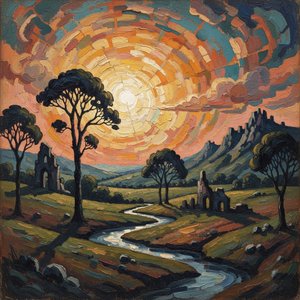 Stephen Bone: A Reassessment of Colour, Form & the British Neo-Romantic Landscape TraditionExplore the vibrant world of Stephen Bone (1904-1958), a key figure in British Neo-Romanticism. Discover his captivating landscapes, impact…
 The Language of Light and Form: Emotional Resonance in Abstract LandscapesExplore the emotional depth of abstract landscapes through Kandinsky and Gauguin. Discover the power of color and form today.
 Spontaneity and Matter: Distinguishing CoBrA from Art InformelMaster the differences between CoBrA and Art Informel with our expert guide. Learn to identify these post-war movements today.