Expressionism
Self-portrait (Паула Модерсон-Бекер)
Паула Модерсон-Бекер (1876–1907) je napravio Self-portrait. Pripada pokretu Expressionism. Izrađeno je u Oil On Canvas. Čuva se u muzeju Paula Modersohn-Becker Museum u mestu Bremen, Germany.
- Oil On Canvas
- Paula Modersohn-Becker Museum, Bremen

 Pregledaj u prostoru

 Ručno oslikano uljanim bojama
 Pošalji
 Podeli
 Informativni list


 Preuzmi
 Slični predmeti
 Rendgenski snimak
 Automatska prezentacija
 Pitanja i odgovori

 Statistika
Self-portrait, ukratko
- Naslov
- Self-portrait
- Umetnik
- Паула Модерсон-Бекер (1876–1907)
- Rođen/a u
- Дрезден, Немачка
- Tehnika
- Oil On Canvas
- Gde se može videti
- Paula Modersohn-Becker Museum, Bremen, Germany
- Pokret
- Expressionism
- Period
- Modern
- Tema
- woman, face, eyes, hair, skin, brown
Šta prikazuje Self-portrait?
Identification of the Self-portrait
The work titled Self-portrait is a creation by the German Expressionist painter and draftswoman Paula Modersohn-Becker. It captures a moment of quiet intensity through the artist's own likeness. This specific piece belongs to a vast body of work produced during her active life, a period that saw the creation of more than 700 paintings and over 1000 drawings.
Born on 8 February 1876 in Dresden, Germany, the artist developed a singular visual language. Her life was brief, ending in Worpswede on 30 November 1907. In this self-representation, she turns her gaze toward the viewer, using her own features to explore the essence of her identity. The image remains a direct encounter with the artist's presence.
Composition and Visual Elements
The composition is a tight enclosure. It focuses on the face and the upper torso, cropping the view just below the collarbone. This close-up framing pushes the subject forward, leaving little room for the background to breathe. Because of this narrow focus and the lack of detail behind her, the painting feels largely flat. The woman meets the viewer with a direct and intense gaze that anchors the entire arrangement.
Color arrives in muted, earthy tones. Browns, creams, and whites settle alongside quiet greens. These hues do not compete; they exist in a state of restraint. Lines define the contours of the face and the hair, yet they refuse to remain sharp. Instead, they soften into the surrounding colors. The shapes are organic and flowing, following the natural curves of the human form without the interruption of hard edges.
Light falls across the skin in a diffused, even manner. There are no heavy shadows or bright highlights to disrupt the surface. This evenness contributes to the sense of quietude. The subject remains still within her muted, tonal world. A steady, searching eye looks out from the center.
Technique and Artistic Style
The paint clings to the canvas in a rough, impasto-like texture. It is an oil work where colors are blended directly upon the surface, leaving behind the evidence of the hand. Visible brushstrokes mark the skin and hair, suggesting a spontaneous and expressive approach. This tactile application gives the surface a raw, immediate quality.
The style leans toward Expressionism, favoring the weight of feeling over the precision of academic tradition. A deliberate flattening of perspective removes the illusion of deep space, pushing the subject forward. The forms are simplified and almost primal, stripped of unnecessary detail to reach a core essence. The composition relies on these organic shapes to define the contours of the face and torso.
The artist rejects the polished finish of the past. Instead, she uses a heavy, direct method to build the presence of the figure. The light remains even and diffused, avoiding sharp shadows to maintain a sense of quiet intensity. The work exists as a direct encounter between the artist and the medium.
Related Works by the Artist
The artist’s gaze often turned toward her own reflection, seeking a quiet truth in the glass. In 1906, she painted Self-Portrait Looking Slightly Left, a work that shares the same searching quality found in her other studies of identity. During that same year, she produced Self-Portrait at 6th Wedding Anniversary and Self-Portrait on the 6th Wedding Anniversary, capturing a specific moment of transition. These works exist alongside her 1906 Self-Portrait nude with amber necklace, where the jewelry rests against her skin. She also created Self-Portrait with Red Flower Wreath and Necklace, a somber composition that explores the weight of her own presence.
Flowers often appear as silent companions in her compositions. Between 1906 and 1907, she worked on Self Portrait with Camellia Branch, a piece that emphasizes the intersection of the female form and the natural world. This connects to Self Portrait with Two Flowers, where she cradles blossoms with a deliberate, steady intention. Earlier, around 1904, she produced Self-Portrait with a bowl and a glass, a work from a period of intense exploration. Each image remains a fragment of a life lived through the brush. The paint dries on the canvas, holding a steady, unblinking stare.
U kom muzeju se nalazi Self-portrait?
Paula Modersohn-Becker Museum
Bremen, Germany
The History of Paula Modersohn-Becker Museum Located in Bremen, Germany, the Paula Modersohn-Becker Museum holds a specific place in institutional history. It was established as a museum in 1927. This institution is the first in the world dedicated to the work of a female painter.
Slike visoke rezolucije za Self-portrait
Паула Модерсон-Бекер, Self-portrait, Paula Modersohn-Becker Museum. Javno dobro.
Odgovori na pitanja o Self-portrait
Gde mogu videti originalno delo „Self-portrait”, autor Паула Модерсон-Бекер?
Originalno delo "Self-portrait" možete videti u muzeju Paula Modersohn-Becker Museum, Bremen, Germany.
U kojoj je tehnici izvedeno delo „Self-portrait”, autor Паула Модерсон-Бекер?
Tehnika dela „Self-portrait”, autor Паула Модерсон-Бекер je Oil On Canvas. Reprodukcije imaju za cilj da dočaraju izgled ove tehnike.
Koje su teme prikazane u delu „Self-portrait”, autor Паула Модерсон-Бекер?
„Self-portrait”, autor Паула Модерсон-Бекер prikazuje: woman, face, eyes, hair, skin, brown, cream, white.
Da li se prikaz „Self-portrait”, autor Паула Модерсон-Бекер može slobodno reprodukovati?
Status autorskih prava za „Self-portrait”, autor Паула Модерсон-Бекер: delo je u javnom vlasništvu – autorska prava su istekla. Ovo određuje da li se reprodukcije slike mogu slobodno izrađivati.
Kome se pripisuje delo "Self-portrait"?
Delo "Self-portrait" pripisuje se umetniku Паула Модерсон-Бекер.
Koji umetnički pravac pripada delu "Self-portrait"?
Umetnički pravac koji se povezuje sa delom „Self-portrait”, autor Паула Модерсон-Бекер je Expressionism. Ova klasifikacija smešta rad među srodne umetnike i umetnička dela.
U kom periodu karijere Паула Модерсон-Бекер pripada delo "Self-portrait"?
„Self-portrait“ pripada Mature Period u karijeri umetnika Паула Модерсон-Бекер. Ova klasifikacija povezuje delo sa razvojem samog umetnika.
Zašto je status autorskih prava za "Self-portrait" takav kakav jeste?
"Self-portrait" autora Паула Модерсон-Бекер je u u javnom vlasništvu – autorska prava su istekla. Autorska prava se računaju od godine smrti umetnika, a Паула Модерсон-Бекер je preminuo/la 1907.
Da li je "Self-portrait" ostalo u domovini svog umetnika?
Ne – umetničko delo se nalazi u inostranstvu. Паула Модерсон-Бекер je rođen/a u Немачка, dok se originalno delo "Self-portrait" čuva u muzeju u Germany.
O umetniku, Паула Модерсон-Бекер

1876–1907, Немачка
Паула Модерсон-Бекер
Pioniрка unutarnje vizije: Život i umetnost Paule Modersohn-Bekker Paula Modersohn-Bekker, ime koje odjekuje tihom snagom u analima rane moderne umetnosti, bila je umetnica koja se usudila da gleda unutar sebe. Rođena kao Mina Hermina Paula Becker 8. februara 1876. godine u Dresdenu, Nemačka, njen život je bio tragično kratak – preminula je 30.
O Паула Модерсон-Бекер Značajna dela umetnika Паула Модерсон-Бекер
Takođe i Паула Модерсон-Бекер
 Portrait of a young woman with red hat1900
 Half-length portrait of an old farmer1903
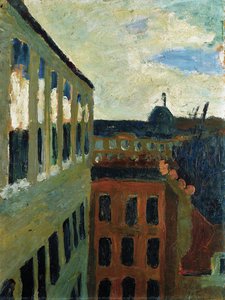 View from the studio window of the artist in Paris1900
 Still life with plant, lemon and orange1906
Eseji o delu Self-portrait
 Egon Schiele: 25 Remek-dela Ekspresionizma za Vaš Dom | OriginalUniqueArtIstražite 25 remek-dela Egona Schielea – ekspresionističkih portreta i slika koje odražavaju duboke emocije. Kupite reprodukcije vrhunskog …
 Džems Abbot MekNil Whistler: 25 Remek-dela Majstora Tonalizma | OriginalUniqueArtIstražite 25 remek-dela Džemsa Abota MekNila Whistler-a! Uronite u svet Tonalizma, portreta i prelepog pejzaža. Kupite vrhunske reprodukcij…
 Polish artworks of the 1900sPolish Symbolism in the 1900s features masterpieces by Jacek Malczewski, Olga Boznańska, and Józef Mehoffer. View the full collection at Or…