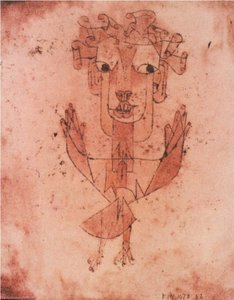
Ulje na platnu
 Sve o delu Reconstructing







































 Za umetnička dela ili reprodukcije čija je bilo koja strana veća od 105 cm (približno 41 inč), okvir će biti isporučen u obliku rastavljenog seta za sklapanje. Ovaj metod osigurava bezbednu dostavu i sprečava oštećenja tokom transporta.


Reconstructing: A Journey into Paul Klee’s Figurative Expressionism
- Subject and Composition: Paul Klee's “Reconstructing” (1926) presents an intriguing, abstracted landscape or architectural scene. The composition eschews a traditional focal point, inviting the viewer to explore a network of geometric shapes and linear elements arranged across a warm-toned background. These forms suggest fragmented buildings, stairs, or windows, creating a sense of rebuilding or recalling memories.
- Style and Technique: This artwork is a prime example of Figurative Expressionism, a movement that emerged as a reaction against the more conceptual art trends of the time. Klee masterfully employs watercolor or a similar translucent medium, layering colors to create depth and texture. The rough handling of materials adds an emotional intensity characteristic of the style. His unique blend of expressionism, cubism, and surrealism is evident in the painting’s dreamlike quality.
The Rise of Figurative Expressionism
- Historical Context: Figurative Expressionism arose in the late 1970s, drawing inspiration from earlier German Expressionists like Emil Nolde and Ernst Ludwig Kirchner. It marked a return to recognizable objects – particularly the human form – portrayed with intense emotion. This movement was seen as a revival of self-expression in European art after periods dominated by American artistic trends.
- Neo-Expressionism & Beyond: The style evolved into various regional manifestations, including Transavanguardia in Italy and Neue Wilden in Germany. While initially celebrated for its return to figuration and emotional depth, Neo-Expressionism also faced criticism regarding its relationship with the art market and perceived lack of radical innovation.
- Klee’s Place within the Movement: Paul Klee's work stands out due to his intellectual approach and unique color theory. He wasn’t simply expressing raw emotion; he was exploring the underlying structures of form and design, as evidenced in his influential “Writings on Form and Design Theory.”
Symbolism and Emotional Impact
- Decoding the Forms: The shapes within "Reconstructing" are not merely abstract; they carry symbolic weight. The architectural fragments suggest a process of rebuilding, perhaps representing personal or collective memory. The circular forms may symbolize wholeness or cycles of renewal.
- Color and Mood: Klee’s use of warm colors – yellows, oranges, and reds – evokes feelings of warmth and nostalgia, while the muted tones create a sense of tranquility. The overall effect is one of gentle contemplation rather than dramatic upheaval.
- Experiencing the Artwork: “Reconstructing” invites viewers to engage with their own interpretations and emotions. It’s a work that rewards close observation and encourages reflection on themes of memory, loss, and renewal.
Pitanja i odgovori
Da li je Reconstructing ručno oslikano ili odštampano?
Ručno oslikano: profesionalni umetnik kopira Reconstructing uljanim bojama na platnu od lana.
Koju veličinu treba da odaberem za Reconstructing?
Dimenzije originala su 36 x 39 cm. Dimenzije se kreću od 30.8 x 32.4 cm (дин23464) do 233.7 x 245.7 cm (дин249001); tabela na ovoj stranici navodi glavne korake i njihove cene.
Koliko se dugo čeka na isporuku?
Isporuka traje od 4 do 5 nedelja uz besplatnu ekspresnu dostavu širom sveta; na ovoj stranici je dostupna opcija hitne proizvodnje. Možete ga vratiti u roku od 100 dana uz pun povraćaj sredstava, bez ikakvih uslova.
Koji je medij koristio/la Паул Кле za delo Reconstructing?
Ulje na platnu
 Pregledaj u prostoru

 Pošalji
 Podeli
 Detalji o delu
 Informativni list za štampu


 Preuzmi
 Slični predmeti
 Rendgenski snimak
 Automatska prezentacija
 Pitanja i odgovori

 Statistika