Abstract Expressionism
Head (Џексон Полок)
Џексон Полок (1912–1956) je napravio Head. Pripada pokretu Abstract Expressionism. Izrađeno je u Acrylic On Canvas.
- Acrylic On Canvas

 Pregledaj u prostoru

 Ručno oslikano uljanim bojama
 Pošalji
 Podeli
 Informativni list


 Preuzmi
 Slični predmeti
 Rendgenski snimak
 Automatska prezentacija
 Pitanja i odgovori

 Statistika
Head, ukratko
- Naslov
- Head
- Umetnik
- Џексон Полок (1912–1956)
- Rođen/a u
- Коди, Сједињене Америчке Државе
- Tehnika
- Acrylic On Canvas
- Pokret
- Abstract Expressionism
- Period
- Modern
- Tema
- psychological, distortion, multiple eyes, chaos, surrealism, archetypal imagery
Šta prikazuje Head?
A Visceral Exploration of the Human Condition
Jackson Pollock’s *Head*, a work shrouded in some mystery due to its lack of definitive dating and detailed documentation, presents a profoundly unsettling yet captivating vision. It is not a portrait in any traditional sense; rather, it's a fragmented, distorted exploration of the human form pushed to the very edge of recognition. The image assaults the viewer with a multiplicity of eyes and mouths, scattered across a seemingly chaotic surface. This isn’t an attempt at realistic representation but a raw, visceral expression of inner turmoil, anxiety, and perhaps even existential dread. The painting feels less like looking *at* a head and more like being immersed *within* a fractured psyche.Echoes of Surrealism and the Primal Self
To understand *Head*, one must consider Pollock’s artistic journey during its creation – likely in the late 1930s or early 1940s. He was deeply influenced by the Surrealist movement, which sought to unlock the power of the unconscious mind. However, Pollock wasn't simply mimicking Surrealism; he was forging his own path. The multiple eyes and mouths suggest a breakdown of boundaries – a loss of control over perception and expression. This resonates with Jungian psychology, an area Pollock actively explored through therapy during this period. His psychoanalyst encouraged him to express himself through art, leading to drawings that delved into archetypal imagery and the darker recesses of the human psyche. The work also reveals echoes of Picasso’s explorations of distorted figures, particularly his interpretations of mythological creatures like the Minotaur – a symbol of primal instincts and inner conflict. Pollock wasn't merely copying these influences; he was internalizing them and transforming them into something uniquely his own.The Genesis of a Revolutionary Technique
While *Head* doesn’t yet exhibit Pollock’s signature “drip” technique in its fully developed form, it foreshadows the radical innovations that would soon define his career. The layering of forms, the sense of movement and energy within the composition, hint at the all-over painting style he would later perfect. He was beginning to move away from traditional easel painting and explore more direct, physical ways of applying paint to canvas. This experimentation stemmed from a desire to bypass conscious control and tap into a more authentic, spontaneous form of expression. The very act of creating *Head* – the building up of layers, the distortion of form – can be seen as a precursor to his later action paintings, where the process itself became as important as the final product. It’s a crucial stepping stone in understanding how Pollock moved from representational work towards complete abstraction.A Powerful Statement for Modern Interiors
For those considering a reproduction of *Head*, it's essential to understand its emotional weight and visual impact. This is not a painting that will blend seamlessly into the background; it demands attention, provokes thought, and sparks conversation. Its dark, unsettling energy can be surprisingly effective in modern interiors, particularly those with minimalist or industrial aesthetics. The fragmented forms and bold composition create a striking focal point, adding depth and complexity to any space. *Head* is more than just an artwork; it’s a statement – a testament to the power of art to confront us with uncomfortable truths about ourselves and the world around us. It's a piece that will resonate with those who appreciate challenging, thought-provoking art and are unafraid to embrace the darker side of human experience.Slike visoke rezolucije za Head
Џексон Полок, Head. Javno dobro.
Odgovori na pitanja o Head
Kojom tehnikom je izrađeno "Head"?
Tehnika dela „Head”, autor Џексон Полок je Acrylic On Canvas. Reprodukcije imaju za cilj da dočaraju izgled ove tehnike.
Šta prikazuje „Head”, autor Џексон Полок?
„Head”, autor Џексон Полок prikazuje: psychological, distortion, multiple eyes, chaos, surrealism, archetypal imagery, emotional intensity.
Da li se prikaz „Head”, autor Џексон Полок može slobodno reprodukovati?
Što se tiče autorskih prava, delo "Head" je u javnom vlasništvu – autorska prava su istekla.
Ko je umetnik koji stoji iza dela "Head"?
Autor dela "Head" je Џексон Полок. Delo je katalogizovano pod imenom Џексон Полок.
Koji umetnički pravac obuhvata „Head”, autor Џексон Полок?
Umetnički pravac koji se povezuje sa delom „Head”, autor Џексон Полок je Abstract Expressionism. Ova klasifikacija smešta rad među srodne umetnike i umetnička dela.
U kom periodu karijere Џексон Полок pripada delo "Head"?
„Head“ pripada Mature Period u karijeri umetnika Џексон Полок. Ova klasifikacija povezuje delo sa razvojem samog umetnika.
Da li je delo "Head" autora Џексон Полок u javnom vlasništvu i zašto?
"Head" autora Џексон Полок je u u javnom vlasništvu – autorska prava su istekla. Autorska prava se računaju od godine smrti umetnika, a Џексон Полок je preminuo/la 1956.
Na koji način se "Head" uklapa u teme i stil umetnika Џексон Полок?
„Head“ deli sa ostalim delima umetnika Џексон Полок svoj Abstract Expressionism stil i prepoznatljive teme: surrealist echoes, psychological depth, picasso’s distortion, jungian exploration, early technique foreshadowing.
Gde se "Head" nalazi među uobičajenim motivima umetnika Џексон Полок?
"Head" prikazuje psychological, distortion, multiple eyes, chaos, surrealism, archetypal imagery, emotional intensity, dok su dokumentovane teme umetnika Џексон Полок zapravo surrealist echoes, psychological depth, picasso’s distortion, jungian exploration, early technique foreshadowing. Poređenje ova dva elementa pokazuje kako se ovo delo povezuje sa uobičajenim motivima ovog umetnika.
O umetniku, Џексон Полок

1912–1956, Сједињене Америчке Државе
Џексон Полок
Rano mladost i seme inovacijePol Pok (Paul Jackson Pollock), rođen u Kodiju, Vajoming, 1912. godine, od samog početka bio je nemirna duša. Njegovo rano detinjstvo obeležilo je često preseljenje, dok je njegov otac radio kao geodetski inženjer širom prostranstava američkog Zapada. Ovakvo nomadsko postojanje u mladom Poloku je usadilo duboku povezanost sa prirodnim svetom i izložilo ga različitim kulturama, naročito kroz susrete sa umetnošću starosedelaca Amerikance tokom tih istraživačkih putovanja – utisci koji će suptilno prožeti njegovu umetničku viziju kasnije u životu.
Takođe i Џексон Полок
 Јесења ритмика. Број 30, 1950
 Број 1, 19491950
 Синтеза
 Број 1А
Eseji o delu Head
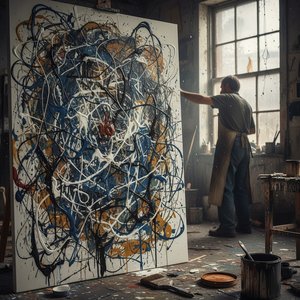 Paul Jackson Pollock: A Radical Departure – Exploring Abstract Expressionism's Pioneering Figure and His Enduring LegacyExplore the revolutionary art of Jackson Pollock & Abstract Expressionism. Discover his iconic drip paintings, lasting impact, and consider…
 Lucian Freud: A Psychological Portraiture of Post-War ExistenceExplore the profound psychological depth of Lucian Freud's portraits. Discover his unique realism, artistic evolution, and lasting influenc…
 Trijađa umetničkog izbora: Istraživanje emocionalnog odziva na višestruke interpretacije jedinstvenog konceptaIstražite dubinu umetničkog izbora i emocionalnog odziva na dela. Saveti stručnjaka, analiza simbola & psihološke perspektive. Pronađite sa…