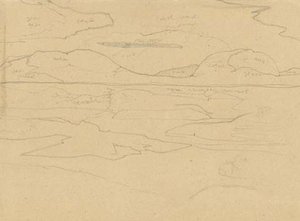
Ulje na platnu
 Sve o delu Три фигури







































 Za umetnička dela ili reprodukcije čija je bilo koja strana veća od 105 cm (približno 41 inč), okvir će biti isporučen u obliku rastavljenog seta za sklapanje. Ovaj metod osigurava bezbednu dostavu i sprečava oštećenja tokom transporta.


Three Personages – A Window Into Russian Folk Art’s Spirit
“Three personages,” created in 1913 by Nicholas Roerich, isn't merely a painting; it’s an embodiment of the burgeoning Art Nouveau movement and a profound reflection on cultural traditions. This striking artwork immediately draws the eye with its masterful use of color – predominantly whites, reds, golds, and browns – skillfully blending to evoke a sense of solemn grandeur and understated beauty.
- Composition & Perspective: The piece’s simplicity is deceptive. Three figures stand rigidly aligned within the frame, minimizing depth perception and emphasizing their presence as central subjects. This deliberate choice underscores the importance of form over illusion, characteristic of Roerich's artistic vision.
- Color Palette & Texture: The dominant hues—white for robes, red accents in attire—speak volumes about symbolism. Gold highlights add richness and luminosity, hinting at spiritual significance and mirroring the opulent decorations found in Russian Orthodox churches. Subtle shading techniques imbue the paper surface with an implied texture, suggesting the tactile quality of woven fabrics and ceremonial garments.
- Style & Technique: Roerich’s approach aligns perfectly with Art Nouveau's fascination for organic shapes and flowing lines. Employing gouache or watercolor paints on paper, he achieves a stylized aesthetic that prioritizes decorative patterns over realistic representation. The bold linear designs within the clothing are particularly noteworthy – they serve as visual anchors and convey a deliberate connection to folkloric motifs.
- Historical Context: Painted during Roerich’s formative years, “Three personages” reflects his deep engagement with ethnographic studies and his belief in capturing cultural identity through artistic expression. It anticipates Roerich's later explorations of Himalayan landscapes and mystical symbolism, establishing him as a pioneer of spiritual art.
The artwork’s emotional impact is palpable – it radiates an aura of formality and reverence for tradition. More than just depicting individuals; Roerich seeks to communicate the essence of cultural heritage, inviting viewers to contemplate its enduring beauty and significance. It's a testament to Roerich’s ability to distill complex ideas into visually arresting forms.
This artwork is available as a high-quality reproduction on OriginalUniqueArt.com – bringing the spirit of Russian folk art directly into your home or studio.
Pitanja i odgovori
Da li je Три фигури ručno oslikano ili odštampano?
Ručno oslikano: profesionalni umetnik kopira Три фигури uljanim bojama na platnu od lana.
Koju veličinu treba da odaberem za Три фигури?
Dimenzije se kreću od 33.0 x 30.3 cm (дин26165) do 249.8 x 229.9 cm (дин221986); tabela na ovoj stranici navodi glavne korake i njihove cene.
Koliko dugo traje dostava?
Isporuka traje od 4 do 5 nedelja, uz besplatnu ekspresnu dostavu širom sveta; na ovoj stranici je ponuđena opcija hitne proizvodnje. Možete ga vratiti u roku od 100 dana uz pun povraćaj sredstava, bez ikakvih uslova.
Koji je medij koristio/la Николај Рерих za delo Три фигури?
Gvaš
 Pregledaj u prostoru

 Pošalji
 Podeli
 Detalji o delu
 Informativni list


 Preuzmi
 Slični predmeti
 Rendgenski snimak
 Automatska prezentacija
 Pitanja i odgovori

 Statistika