Symbolism · 1903
Art (Јачек Малчевски, 1903)
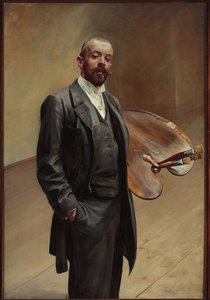
Јачек Малчевски (1854–1929) je napravio Art. Datirano je iz 1903. Pripada pokretu Symbolism. Izrađeno je u Oil On Canvas. Čuva se u muzeju National Museum in Wrocław u mestu Wrocław, Poland. Dimenzije su 70 × 98 cm.
- 1903
- Oil On Canvas
- 70 × 98 cm
- National Museum in Wrocław

 Pregledaj u prostoru

 Ručno oslikano uljanim bojama
 Pošalji
 Podeli
 Informativni list


 Preuzmi
 Slični predmeti
 Rendgenski snimak
 Automatska prezentacija
 Pitanja i odgovori

 Statistika
Art, ukratko
- Naslov
- Art
- Umetnik
- Јачек Малчевски (1854–1929)
- Rođen/a u
- Радом, Пољска
- Datum
- 1903
- Tehnika
- Oil On Canvas
- Dimenzije
- 70 × 98 cm
- Gde se može videti
- National Museum in Wrocław, Wrocław, Poland
- Pokret
- Symbolism
- Period
- 19th Century
- Tema
- symbolism, polish art, mythology, portraiture, national identity, allegory
Šta prikazuje Art?
Identification of the Artwork and Artist
Art is an oil on canvas painting executed by Jacek Malczewski in 1903. The work belongs to the Symbolist movement, a style in which Malczewski established himself as a central figure. His practice often integrated themes of national identity and folklore into complex allegorical compositions.
Malczewski was a Polish symbolist painter. His approach frequently utilized mythological and religious motifs to explore psychological and existential states. This specific work, created at the turn of the twentieth century, reflects the artist's characteristic use of symbolic imagery to communicate ideas beyond literal representation.
Composition and Visual Elements
The composition is tightly framed, focusing the viewer's attention on the faces and upper bodies of the clustered figures. This arrangement creates a sense of intimacy and shared experience among the subjects, though the overall placement feels somewhat chaotic yet deliberate. A large, golden horse dominates the background, its head acting as a visual anchor that stabilizes the grouping of humans in the foreground.
The color palette is dominated by earthy tones, including browns, beiges, and muted greens. These base colors are contrasted by the vibrant golden hue of the horse and subtle touches of red in the hair and clothing of the figures. Lighting is diffused and soft, appearing to emanate from multiple sources without creating harsh shadows or strong contrasts. This gentle illumination contributes to the dreamlike quality of the scene.
The perspective is somewhat flattened due to the close-up framing, which limits the sense of spatial recession. Depth is achieved primarily through the layering of figures and the placement of the equine subject in the background. Organic and rounded shapes define the human forms and the natural contours of the horse, avoiding sharp angles or geometric structures.
Technique and Material Composition
Executed in oil on canvas, the work utilizes a method of blended brushstrokes to achieve its specific visual effects. The application of paint involves a visible layering process, which contributes to the depth and richness of the composition. This layering allows for a subtle transition between the earthy tones of the background and the more luminous highlights found on the figures and the equine subject.
The surface texture appears relatively smooth, a result of the extensive blending of the oil paints. This technique softens the edges of the forms, particularly in the rendering of hair and the drape of clothing. Consequently, the lines defining the facial features remain somewhat indistinct, contributing to a dreamlike quality. The interplay of light and shadow is achieved through these soft transitions rather than through harsh, high-contrast edges.
Related Works by Jacek Malczewski
The artist's exploration of symbolic and allegorical themes is evident in several other compositions. His 1901 work, Self-portrait with the Vistula in the Background, offers a different perspective on his relationship with the Polish landscape. Other significant pieces include Chimera 1 and the Thanatos series, which further investigate the psychological and spiritual dimensions central to his practice.
Malczewski also drew heavily from folklore and mythology to construct his visual language. This is particularly evident in his collection titled Bajki (Fables). These works, alongside his various symbolic studies, demonstrate the breadth of his engagement with national and universal motifs.
U kom muzeju se nalazi Art?
National Museum in Wrocław
Wrocław, Poland
The Architecture of the National Museum in Wrocław The National Museum in Wrocław occupies a former Silesian regency building situated on the banks of the Odra river. Constructed between 1883 and 1886, the structure reflects the architectural language of the late 19th century. Its Neo-Renaissance design provides a formal setting for the collections housed within its three floors.


Slike visoke rezolucije za Art

Јачек Малчевски, Art (1903), National Museum in Wrocław. Javno dobro.
Odgovori na pitanja o Art
U kom muzeju se čuva originalni "Art"?
Delo „Art”, autor Јачек Малчевски je izloženo u muzeju National Museum in Wrocław, Wrocław, Poland. Navod o muzeju odnosi se na originalno delo, a ne na reprodukcije.
U kojoj godini je nastalo "Art"?
Delo „Art”, autor Јачек Малчевски datira iz 1903. godine.
Kojom tehnikom je urađeno „Art”, autor Јачек Малчевски?
Tehnika dela „Art”, autor Јачек Малчевски je Oil On Canvas. Reprodukcije imaju za cilj da dočaraju izgled ove tehnike.
Kolikih je dimenzija originalnog dela "Art"?
Dimenzije originalnog dela „Art”, autor Јачек Малчевски su 70 x 98 cm.
Šta prikazuje „Art”, autor Јачек Малчевски?
Teme prisutne u delu „Art”, autor Јачек Малчевски obuhvataju symbolism, polish art, mythology, portraiture, national identity, allegory, artistic inspiration, što zajedno sažima suštinu ovog umetničkog dela.
Da li je delo „Art”, autor Јачек Малчевски u javnom vlasništvu?
Status autorskih prava za „Art”, autor Јачек Малчевски: delo je u javnom vlasništvu – autorska prava su istekla. Ovo određuje da li se reprodukcije slike mogu slobodno izrađivati.
Kome se pripisuje delo "Art"?
Delo "Art" pripisuje se umetniku Јачек Малчевски.
Koji umetnički pravac pripada delu "Art"?
„Art“ je delo Symbolism pokreta. Ovaj pokret označava umetničku tradiciju kojoj je delo pripada.
U kom periodu karijere Јачек Малчевски pripada delo "Art"?
„Art“ pripada Mature Period u karijeri umetnika Јачек Малчевски. Ova klasifikacija povezuje delo sa razvojem samog umetnika.
O umetniku, Јачек Малчевски
1854–1929, Пољска
Јачек Малчевски
Život prožet poljskom čežnjom Jacek Malczewski, rođen 1854. godine u Radomu, gradu koji je tada bio smešten unutar Kongresne Poljske pod ruskom kontrolom, bio je mnogo više od običnog slikara; bio je vizuelno utemeljenje polskog nacionalnog identiteta i duboki glas nacije koja je žudela za samodeterminacijom. Put njegove životne trajektorije i umetničke vizije bio je neraskidivo povezan sa romantičarskim idealima nezavisnosti, koje mu je duboko usadio otac, Julian Malczewski — posvećeni patriota koji je u mladom Jaceku negovao nepokolebljivu ljubav prema polskoj kulturi, književnosti i istoriji. Ovaj rani uticaj postao je temelj njegovog kreativnog izražavanja, oblikujući ga u vodeću figuru polskog simbolizma i donoseći mu prestižnu titulu „oca polskog simbolizma“.
Takođe i Јачек Малчевски
 Self-portrait in armor with violin.1908
 Madonna and Children1897
 Portrait of artist's sister Helene with lute1906
 The Artist's death1909
Eseji o delu Art
 19th century Polish painters19th-century Polish art comes alive through the masterpieces of Jan Matejko and Jacek Malczewski. View the full collection online at Origin…
 Masterpieces of the Soil: The Top 25 Jean-François Millet ArtworksImmerse yourself in the soul of French Realism with our curated list of the top 25 Jean-François Millet artworks. From iconic peasant scene…
 20th century Polish painters20th-century Polish painters like Tamara de Lempicka, Sigmar Polke, and Aleksandra Ekster define an era. Find museum-quality reproductions …