Cubism · 1913
Guitar ''Program statue d'epouvante'' (Жорж Брак, 1913)
Жорж Брак (1882–1963) je napravio Guitar ''Program statue d'epouvante''. Datirano je iz 1913. Pripada pokretu Cubism. Izrađeno je u Acrylic On Canvas. Dimenzije su 73 × 100 cm.
- 1913
- Acrylic On Canvas
- 73 × 100 cm

 Pregledaj u prostoru

 Ručno oslikano uljanim bojama
 Pošalji
 Podeli
 Informativni list


 Preuzmi
 Slični predmeti
 Rendgenski snimak
 Automatska prezentacija
 Pitanja i odgovori

 Statistika
Guitar ''Program statue d'epouvante'', ukratko
- Naslov
- Guitar ''Program statue d'epouvante''
- Umetnik
- Жорж Брак (1882–1963)
- Rođen/a u
- Аржантеј, Француска
- Datum
- 1913
- Tehnika
- Acrylic On Canvas
- Dimenzije
- 73 × 100 cm
- Pokret
- Cubism
- Period
- Modern
- Tema
- cubist still life, geometric forms, musical instruments, art & intellectuals, fragmented composition, muted color palette
Šta prikazuje Guitar ''Program statue d'epouvante''?
A Cubist Still Life: Deconstructing Form in Braque’s ‘Guitar ''Program statue d'epouvante''’
Georges Braque’s *Guitar ''Program statue d'epouvante''* (1913) is a pivotal example of Analytical Cubism, showcasing the artist’s revolutionary approach to representation. Measuring 73 x 100 cm, this work isn’t merely a depiction of objects; it’s an intellectual exploration of form and perception, inviting viewers into a fragmented world where reality is dissected and reassembled.Subject & Composition: A Dialogue Between Art Forms
The artwork presents a still life featuring an acoustic guitar alongside a stack of books. However, Braque doesn't offer a traditional rendering. Instead, both objects are broken down into geometric shapes – rectangles, triangles, and overlapping planes – creating a dynamic composition within a circular frame. The arrangement isn’t accidental; it suggests a deliberate interplay between musicality (the guitar) and intellectual pursuit (the books), hinting at the interconnectedness of artistic disciplines. The title itself, translating to “Program statue of fright,” adds an intriguing layer, suggesting a conceptual framework or perhaps even a playful subversion of traditional still life conventions.Style & Technique: The Essence of Analytical Cubism
*Guitar ''Program statue d'epouvante''* exemplifies the core tenets of Analytical Cubism. Braque, alongside Pablo Picasso, pioneered this style by rejecting traditional perspective and embracing multiple viewpoints simultaneously. The color palette is deliberately restrained – muted browns, grays, and off-whites dominate – emphasizing form over coloristic expression. The technique relies heavily on layering pencil or charcoal strokes to build up tones and textures, creating a sense of solidity despite the fragmented forms. Lines are sharply defined, further contributing to the geometric abstraction. This isn’t about replicating what the eye sees but rather conveying an object's essential structure through intellectual analysis.Historical Context: A Revolution in Visual Language
Created during a period of intense artistic experimentation, this work reflects the radical shifts occurring in early 20th-century art. Braque and Picasso were challenging centuries-old conventions of representation, influenced by Paul Cézanne’s emphasis on geometric forms and their own shared explorations. The emergence of Cubism marked a turning point in art history, paving the way for abstract art movements that would follow. 1913 was a crucial year; it saw the full development of Analytical Cubism before Braque began to incorporate collage elements into his work.Symbolism & Emotional Impact: Beyond Representation
While seemingly abstract, *Guitar ''Program statue d'epouvante''* carries symbolic weight. The guitar, a symbol of artistic expression and harmony, is deconstructed alongside the books, representing knowledge and intellect. This juxtaposition suggests a contemplation on the nature of creativity itself – how ideas are formed, broken down, and reassembled. The overall effect isn’t necessarily emotional in a traditional sense; rather, it evokes a feeling of intellectual curiosity and invites viewers to actively participate in deciphering the artwork's meaning. The flattened perspective and lack of strong shadows contribute to a sense of ambiguity and spatial disorientation, challenging our perceptions of reality.For Collectors & Designers
This piece, or a high-quality reproduction, would be a striking addition to any collection focused on modern art. Its muted palette and geometric forms lend themselves well to contemporary interiors, adding a sophisticated touch without overwhelming the space.- Ideal for: Modern living rooms, studies, or galleries.
- Complements: Minimalist furniture, neutral color schemes, and other abstract artworks.
- Considerations: The artwork’s intellectual nature makes it a conversation starter and a focal point for contemplation.
Slike visoke rezolucije za Guitar ''Program statue d'epouvante''
Protected by copyright: these files are for personal reference, not a licence to republish.
Жорж Брак, Guitar ''Program statue d'epouvante'' (1913).
Odgovori na pitanja o Guitar ''Program statue d'epouvante''
U kojoj godini je nastalo "Guitar ''Program statue d'epouvante''"?
Delo „Guitar ''Program statue d'epouvante''”, autor Жорж Брак datira iz 1913. godine.
Kojom tehnikom je urađeno „Guitar ''Program statue d'epouvante''”, autor Жорж Брак?
Жорж Брак je koristio/la tehniku Acrylic On Canvas za delo "Guitar ''Program statue d'epouvante''". Ova tehnika definiše materijalnu prirodu originalnog dela.
Koje su stvarne dimenzije dela „Guitar ''Program statue d'epouvante''”, autor Жорж Брак?
„Guitar ''Program statue d'epouvante''“ u svom izvornom obliku ima dimenzije 73 x 100 cm. Originalne dimenzije su koristan pokazatelj pri odabiru veličine reprodukcije.
Šta predstavlja delo "Guitar ''Program statue d'epouvante''"?
„Guitar ''Program statue d'epouvante''”, autor Жорж Брак prikazuje: cubist still life, geometric forms, musical instruments, art & intellectuals, fragmented composition, muted color palette, spatial ambiguity.
Da li je "Guitar ''Program statue d'epouvante''" slobodan od autorskih prava?
Status autorskih prava za „Guitar ''Program statue d'epouvante''”, autor Жорж Брак: delo je i dalje je zaštićeno autorskim pravima. Ovo određuje da li se reprodukcije slike mogu slobodno izrađivati.
Ko je umetnik koji stoji iza dela "Guitar ''Program statue d'epouvante''"?
Delo "Guitar ''Program statue d'epouvante''" pripisuje se umetniku Жорж Брак.
Koji umetnički pravac obuhvata „Guitar ''Program statue d'epouvante''”, autor Жорж Брак?
„Guitar ''Program statue d'epouvante''”, autor Жорж Брак pripada pravcu Cubism. Ovaj pravac pruža stilski kontekst dela.
U kojoj fazi stvaralaštva umetnika Жорж Брак se nalazi delo "Guitar ''Program statue d'epouvante''"?
„Guitar ''Program statue d'epouvante''“ pripada Early Cubism u karijeri umetnika Жорж Брак. Ova klasifikacija povezuje delo sa razvojem samog umetnika.
Koliko je godina imao/la Жорж Брак kada je stvorio/la "Guitar ''Program statue d'epouvante''"?
Жорж Брак je kreirao/la "Guitar ''Program statue d'epouvante''" u uzrastu od 31 godina. Umetnik je rođen/a 1882, a delo je datirano na 1913. godinu.
O umetniku, Жорж Брак
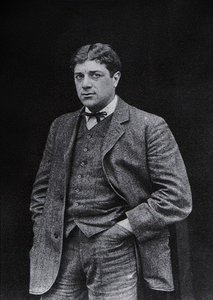
1882–1963, Француска
Жорж Брак
Early Life and Artistic Foundations Georges Braque, geboren in Argenteuil, Frankreich, im Jahr 1882, begann eine Lebensbahn tief verwurzelt in der sich entwickelnden Landschaft der modernen Kunst. Seine Kindheit innerhalb einer Familie von Hausmalern und Dekorateuren vermittelte ihm nicht nur technische Meisterschaft über Materialien, sondern auch eine frühe Wertschätzung für Form und Struktur. Obwohl er zunächst seinem Vater folgte und dessen Beruf ausübte, führten seine natürlichen künstlerischen Neigungen ihn bald zu einer Ausbildung am École des Beaux-Arts in Le Havre hinweg, wodurch sein Weg zum Erreichen eines der einflussreichsten Maler des 20. Jahrhunderts begann.
Takođe i Жорж Брак
 Мандола1910
 Čovek sa Gitarom1914
 Куће у Л'Естаку
 Залив Нормандија1909
Eseji o delu Guitar ''Program statue d'epouvante''
 Mastering Cubism: The Top 25 Essential Georges Braque ArtworksJourney through the revolutionary world of Georges Braque. Explore 25 iconic Cubist masterpieces, from geometric abstractions to Fauvist co…
 Georges Braque: The Architect of Form and the Soul of Cubist RevolutionExplore the profound legacy of Georges Braque, a master of Cubism. Discover how his technical craftsmanship and collaboration with Picasso …
 Beyond Representation: Decoding Emotion and Meaning in Modern Abstract ArtExplore the profound world of Abstract Expressionism with OriginalUniqueArt. Discover its history, emotional power & key artists like Pollo…