German Expressionism
Tiger (Франц Марк)
Франц Марк (1880–1916) je napravio Tiger. Pripada pokretu German Expressionism. Izrađeno je u Woodblock Print. Čuva se u muzeju Muzej Franca Marka u mestu Kohel am See, Nemačka. Dimenzije su 30 × 33 cm.
- Woodblock Print
- 30 × 33 cm
- Muzej Franca Marka, Kohel am See

 Pregledaj u prostoru

 Ručno oslikano uljanim bojama
 Pošalji
 Podeli
 Informativni list za štampu


 Preuzmi
 Slični predmeti
 Rendgenski snimak
 Automatska prezentacija
 Pitanja i odgovori

 Statistika
Tiger, ukratko
- Naslov
- Tiger
- Umetnik
- Франц Марк (1880–1916)
- Mesto rođenja umetnika
- Минхен, Немачка
- Tehnika
- Woodblock Print
- Dimenzije
- 30 × 33 cm
- Gde se može videti
- Muzej Franca Marka, Kohel am See, Nemačka
- Pokret
- German Expressionism
- Tema
- tiger, wildlife, woodcut, expressionism, animal, abstraction
Šta prikazuje Tiger?
A Vision of the Wild: Unpacking Franz Marc's "Tiger"
Franz Marc’s “Tiger,” a striking woodcut print from 1912, isn’t merely a depiction of an animal; it’s a profound meditation on the interconnectedness of nature and the spiritual realm. Created during a period of intense personal and artistic exploration for the German Expressionist painter, this work embodies Marc's lifelong fascination with animals as symbols of primal instinct, intuition, and ultimately, a connection to something larger than the human ego. The image immediately commands attention – a powerful, almost overwhelming presence of the tiger rendered in stark black ink against a subtly textured cream-colored background. It’s a visual statement that transcends simple representation, inviting viewers into a world where form and feeling are inextricably linked.
The Language of Line: Technique and Craftsmanship
Marc's mastery lies in his deliberate manipulation of line – a defining characteristic of woodcut printing. The bold, graphic lines delineate the tiger’s muscular form with an almost brutal honesty, yet they are simultaneously softened by the artist’s expressive hand. Notice how he employs hatching and cross-hatching to suggest texture and volume, creating a sense of depth without relying on traditional shading techniques. This technique isn't about replicating reality; it’s about conveying the *essence* of the tiger – its power, its wildness, its vital energy – through the controlled application of line. The deliberate flatness of the image, a consequence of the woodcut process, contributes to a feeling of immediacy and raw emotion, pulling the viewer directly into the heart of the scene.
Symbolism in Monochrome: Nature, Spirit, and the Animal Kingdom
“Tiger” is deeply rooted in Marc’s spiritual beliefs. He viewed animals as embodiments of divine qualities – courage, strength, instinct, and a connection to the earth. The tiger itself represents primal energy, untamed spirit, and the forces of nature. The surrounding elements—birds circling overhead, a snake slithering through the undergrowth—further amplify this symbolism, creating a microcosm of the natural world teeming with life and interconnectedness. Marc’s choice of monochrome – black ink on cream paper – is crucial to understanding the work's emotional impact. It strips away any distractions, focusing solely on form, line, and the inherent drama of the subject matter. The limited palette evokes a sense of timelessness and universality, suggesting that this primal scene transcends specific time or place.
A Window into the Soul: Marc’s Expressionist Vision
“Tiger” is a quintessential example of German Expressionism, a movement characterized by its subjective interpretation of reality and its emphasis on emotional expression. Unlike academic art that sought to represent the world accurately, Expressionists aimed to convey their inner feelings and perceptions through distorted forms, jarring colors (though Marc’s work avoids color), and emotionally charged imagery. Marc's exploration of spirituality within his art is a hallmark of this movement. He wasn’t interested in simply depicting a tiger; he was trying to capture its *spirit*, its essence – the feeling it evokes within him. The image resonates with a sense of both power and vulnerability, reflecting Marc’s own complex relationship with nature and the human condition. It's a work that invites contemplation, prompting viewers to consider their own connection to the natural world and the deeper mysteries of existence.
U kom muzeju se nalazi Tiger?
Muzej Franca Marka
Kohel am See, Nemačka
Svadilište boja: Istraživanje nasleđa Franca Marka Smešten u zadivljujućem bavarskom pejzažu, gde se tirkizne vode Kochelsee jezera presijavaju ispod visinikih vrhova, nalazi se pravo umetničko blago posvećeno jednom od najvizionarskih nemačkih umetnika – Muzej Franca Marka. Više od običnog skladišta slika i crteža, ovaj muzej predstavlja imerzivno iskustvo, putovanje u samo srce ekspresionizma i duboku vezu između umetnosti i prirode koja je definisala izuzetan život i rad Franca Marka. Osnovan 1986.


Slike visoke rezolucije za Tiger

Франц Марк, Tiger, Muzej Franca Marka. Javno dobro.
Odgovori na pitanja o Tiger
Gde se danas može videti delo „Tiger”, autor Франц Марк?
Originalno delo „Tiger”, autor Франц Марк čuva se u muzeju Muzej Franca Marka, Kohel am See, Nemačka. Reprodukcija omogućava da se ovo umetničko delo izloži u vašem domu.
U kojoj je tehnici izvedeno delo „Tiger”, autor Франц Марк?
Франц Марк je koristio/la tehniku Woodblock Print za delo "Tiger". Ova tehnika definiše materijalnu prirodu originalnog dela.
Koje su stvarne dimenzije dela „Tiger”, autor Франц Марк?
Dimenzije originalnog dela „Tiger”, autor Франц Марк su 33 x 30 cm.
Šta predstavlja delo "Tiger"?
„Tiger”, autor Франц Марк prikazuje: tiger, wildlife, woodcut, expressionism, animal, abstraction, harmony.
Da li je "Tiger" slobodan od autorskih prava?
Što se tiče autorskih prava, delo "Tiger" je u javnom vlasništvu – autorska prava su istekla.
Kome se pripisuje delo "Tiger"?
Delo "Tiger" je kreirao/la Франц Марк. Informacije na ovoj stranici opisuju originalno delo umetnika Франц Марк.
Koji umetnički pravac pripada delu "Tiger"?
„Tiger“ je delo German Expressionism pokreta. Ovaj pokret označava umetničku tradiciju kojoj je delo pripada.
U kojoj fazi stvaralaštva umetnika Франц Марк se nalazi delo "Tiger"?
U okviru karijere umetnika Франц Марк, delo "Tiger" pripada periodu Mature Period, što omogućava poređenje sa drugim radovima ovog autora.
Da li je delo "Tiger" autora Франц Марк u javnom vlasništvu i zašto?
„Tiger”, autor Франц Марк je u u javnom vlasništvu – autorska prava su istekla. Autorska prava traju od smrti umetnika, koja se dogodila 1916.
O umetniku, Франц Марк

1880–1916, Немачка
Франц Марк
Rani život, porodica i obrazovanje Франц Марк je rođen u Minhenu, u Nemačkoj, u domaćinstvu gde je vizuelni jezik pejzaža već bio duboko ukorenjen. Njegov otac, Vilhelm Marc, radio je kao profesionalni pejzažista, pružajući mu direktan, mada ne uvek izvestan, uvod u mehanizme umetnosti. Ova porodična povezanost značila je da su alati zanata bili prisutni od samog početka, ali put kojim je išao Франц Марк nije bio jednostavna linija od nasleđa do platna. Pre nego što se posvetio životu slikara, proveo je vreme baveći se teologijom, u periodu duhovnog istraživanja koji će kasnije odrediti intenzitet njegovog vizuelnog stvaralaštva.
Takođe i Франц Марк
 Plavi konj I1911
 naslovljeno (4325)
 Велике плаве коње1911
 Тирол1914

Eseji o delu Tiger
 The Silent Language of Line: Mastering Hatching and Cross-Hatching for Depth and TextureMaster the art of hatching and cross-hatching with our expert guide. Explore the historical evolution from Renaissance masters like Dürer t…
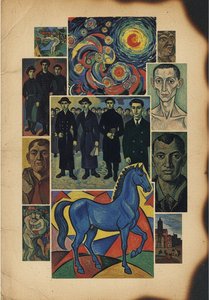 German Expressionism's 10 Defining Masterpieces | Art for Your HomeExplore 10 defining German Expressionism masterpieces – from Munch's 'The Scream' to Kandinsky’s abstracts. Discover the artists, stories &…
 Spirit of the Wild: The Top 25 Masterpieces by Franz MarcImmerse yourself in the vibrant world of German Expressionism with our curated guide to the top 25 Franz Marc masterpieces. Explore the spi…