 Ulje na platnu
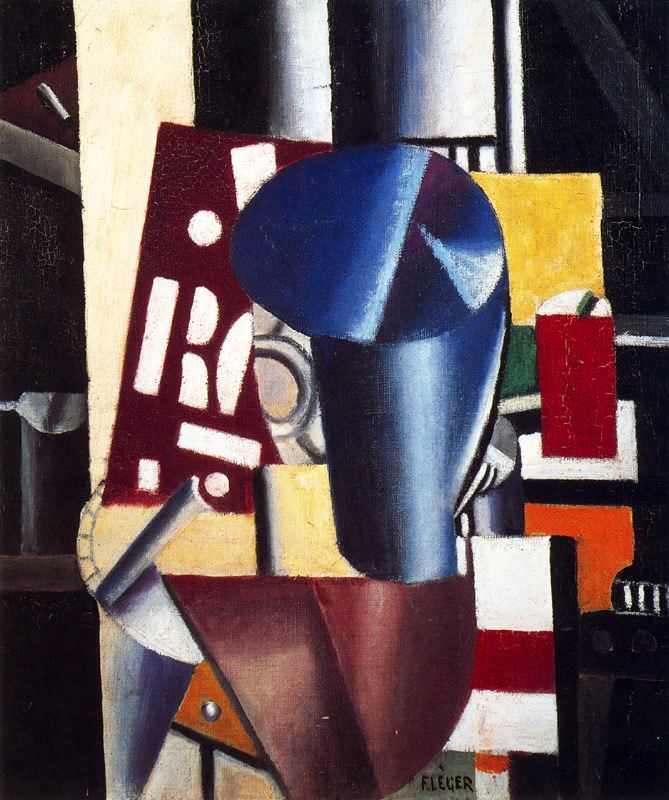
 Sve o delu The Typographer







































 Za umetnička dela ili reprodukcije čija je bilo koja strana veća od 105 cm (približno 41 inč), okvir će biti isporučen u obliku rastavljenog seta za sklapanje. Ovaj metod osigurava bezbednu dostavu i sprečava oštećenja tokom transporta.


A Pioneer of Concrete Aesthetics: Exploring Fernand Léger’s “The Typographer”
Fernand Léger's "The Typographer," painted sometime between 1918 and 1920, isn’t merely a depiction of an office scene; it’s a declaration of artistic intent—a bold assertion that abstraction could simultaneously honor the tangible realities of industrial progress. Born Joseph Fernand Henri Léger in Argentan, Normandy, in 1881, Léger's formative years instilled within him a profound appreciation for materiality and form, experiences that would profoundly influence his groundbreaking approach to painting. Unlike many artists of his era who sought refuge from representational art in pure abstraction, Léger actively embraced the geometric language of Cubism while simultaneously grounding it in observations of the burgeoning machine age. This dual commitment resulted in a style characterized by simplified forms—often rendered in bold hues—that nevertheless retained a palpable sense of presence and physicality.- Style: Léger’s distinctive style aligns squarely with Constructivism, reflecting the broader artistic currents of the period following World War I. He eschewed illusionistic painting altogether, prioritizing geometric shapes – cubes, cylinders, spheres – to convey spatial relationships and create a dynamic visual experience.
- Technique: Léger employed a technique that combined oil paint with collage elements—primarily newspaper fragments—to achieve textural richness and imbue his canvases with an immediacy that captured the spirit of the time. The incorporation of collage wasn’t simply decorative; it served as a deliberate commentary on the fragmentation of modern life and the pervasive influence of mass media.
Historical Context: Embracing the Machine Age
“The Typographer” emerged during a period marked by significant societal transformations—the aftermath of the Great War, rapid industrialization, and the rise of urban centers. Léger’s artistic vision responded directly to these developments, mirroring the anxieties and aspirations of an era grappling with technological advancement and its impact on human existence. The painting captures a snapshot of daily life in the industrialized landscape, portraying a man engaged in work—perhaps typing—amidst familiar objects like a cup, book, clock, and scissors. These elements aren’t presented as idealized symbols; rather, they are rendered in simplified geometric forms, reflecting Léger's belief that art should confront reality without sentimentality.Symbolism Beyond Geometry: A Reflection of Societal Shifts
While Léger’s use of geometric abstraction is undeniable, “The Typographer” possesses a subtle symbolic depth. The repetition of cubes and cylinders—a hallmark of Constructivism—represents the standardization and mechanization inherent in industrial society. However, Léger doesn't portray this process as purely destructive; instead, he suggests that it can also generate order and harmony. The inclusion of newspaper fragments within the collage underscores the pervasive influence of mass communication and its role in shaping perceptions of the world. Furthermore, the positioning of figures—a man and a woman—within the composition speaks to the evolving roles of men and women in the modern era.Emotional Impact: Quiet Optimism Amidst Uncertainty
Despite the anxieties surrounding technological change, Léger’s “The Typographer” exudes an understated sense of optimism. The bold colors—primarily blues and reds—create a vibrant visual counterpoint to the geometric forms, conveying a feeling of energy and vitality. More importantly, the painting invites contemplation about the human condition within this new context. It's not a triumphant celebration of progress but rather a thoughtful observation of everyday life—a reminder that even amidst complexity and fragmentation, beauty and meaning can still be found. Léger’s masterpiece continues to resonate with viewers today as an emblem of artistic innovation and a testament to the enduring power of abstraction to express profound emotional truths.Pitanja i odgovori
Da li je The Typographer ručno oslikano ili odštampano?
Ručno oslikano: profesionalni umetnik kopira The Typographer uljanim bojama na platnu od lana.
Koju veličinu treba da odaberem za The Typographer?
Dimenzije se kreću od 34.6 x 28.9 cm (дин20925) do 240.4 x 201.0 cm (дин185393); tabela na ovoj stranici navodi glavne korake i njihove cene.
Koliko dugo traje dostava?
Isporuka traje od 4 do 5 nedelja, uz besplatnu ekspresnu dostavu širom sveta; na ovoj stranici je ponuđena opcija hitne proizvodnje. Možete ga vratiti u roku od 100 dana uz pun povraćaj sredstava, bez ikakvih uslova.
Gde se nalazi originalno delo The Typographer?
Original se nalazi u kolekciji Kröller-Müller Museum, Otterlo.
Koji je medij koristio/la Fernan Leže za delo The Typographer?
Acrylic
 Pregledaj u prostoru

 Pošalji
 Podeli
 Detalji o delu
 Informativni list


 Preuzmi
 Slični predmeti
 Rendgenski snimak
 Automatska prezentacija
 Pitanja i odgovori

 Statistika