American Realism
sun empty room (Edvard Hoper)
Edvard Hoper (1882–1967) je napravio sun empty room. Pripada pokretu American Realism. Izrađeno je u Acrylic On Canvas.
- Acrylic On Canvas

 Pregledaj u prostoru

 Ručno oslikano uljanim bojama
 Pošalji
 Podeli
 Informativni list


 Preuzmi
 Slični predmeti
 Rendgenski snimak
 Automatska prezentacija
 Pitanja i odgovori

 Statistika
sun empty room, ukratko
- Naslov
- sun empty room
- Umetnik
- Edvard Hoper (1882–1967)
- Rođen/a u
- Njaki, SAD
- Tehnika
- Acrylic On Canvas
- Pokret
- American Realism
- Tema
- empty room, sunlight, isolation, quietude, modernity, shadow
Šta prikazuje sun empty room?
Edward Hopper’s Solitary Light: Unpacking “Sun in an Empty Room”
Edward Hopper's "Sun in an Empty Room," painted in 1963, isn’t merely a depiction of a vacant room; it’s a distilled essence of modern American isolation and the quiet contemplation that often underlies our daily lives. Created during his late period at his Cape Cod studio, this painting—a deceptively simple composition—holds within it layers of psychological depth and masterful use of light, solidifying its place as one of Hopper's most enduringly poignant works. It’s a scene stripped bare, yet brimming with unspoken narratives, inviting the viewer to project their own experiences onto its stark geometry.
Hopper, famously reticent about interpreting his art, often suggested that his paintings simultaneously held unintended, unconscious ideas alongside deliberate expressions of his personal vision. Critics and scholars have long debated the painting’s meaning, with interpretations ranging from a meditation on loneliness to a reflection on the transient nature of domesticity. However, at its core, “Sun in an Empty Room” speaks powerfully to the human condition—the feeling of being present yet detached, observing life without fully participating.
The Language of Light and Shadow
Hopper’s genius lay not just in his ability to capture a scene but in his manipulation of light. In “Sun in an Empty Room,” sunlight streams through a window on the right side of the room, casting long, dramatic shadows across the walls and floor. This isn't a warm, inviting illumination; it’s a cool, almost clinical light that emphasizes the emptiness and stillness of the space. The trapezoidal shape of the light itself is particularly striking—a geometric element within an otherwise realistic scene, subtly disrupting our perception and drawing attention to the painting’s formal structure.
Notice how Hopper uses shadow to define form. The shadows aren't simply dark patches; they are carefully rendered, creating a sense of volume and depth. This technique, combined with his precise observation of light and its effects, is characteristic of Hopper’s mature style—a deliberate rejection of Impressionistic brushwork in favor of a more controlled, almost photographic realism. The leaves visible through the window further contribute to this interplay of light and shadow, grounding the scene in a tangible reality while simultaneously hinting at an outside world beyond the room's confines.
A Room Full of Unspoken Stories
Despite its apparent simplicity, “Sun in an Empty Room” is rich with symbolic potential. The two doors—one visible, one implied—suggest possibilities and transitions, yet also reinforce the sense of isolation. The room itself feels like a stage set for a play that will never begin. There’s no furniture, no personal belongings, nothing to suggest the identity or history of its occupant. This deliberate lack of detail forces us to confront our own assumptions about what constitutes a “home” and what it means to be alone.
The painting's creation coincided with Hopper’s late period, a time when he was increasingly interested in exploring themes of solitude and the human condition. He had previously considered representing a scene with no observer—a radical concept at the time—and this idea clearly informed his approach to “Sun in an Empty Room.” The absence of a figure isn't simply a technical choice; it’s a profound statement about the nature of perception and the experience of being alone.
Reproductions & Interior Design Inspiration
OriginalUniqueArt offers meticulously crafted, hand-painted reproductions of “Sun in an Empty Room” that capture the essence of Hopper's masterpiece. Whether you’re an art collector seeking a piece of American history or an interior designer looking for a statement artwork to evoke a sense of quiet contemplation, our reproductions provide a stunning and authentic representation of this iconic painting.
The subtle gradations of light and shadow, the precise rendering of form, and the evocative atmosphere of “Sun in an Empty Room” are all faithfully reproduced in our high-quality prints. Consider how this piece could complement a minimalist interior space, or add a touch of melancholic beauty to a more traditional setting. Explore our range of sizes and framing options to find the perfect reproduction for your home or office – a timeless reminder of Hopper’s profound insights into the human experience.
Slike visoke rezolucije za sun empty room

Protected by copyright: these files are for personal reference, not a licence to republish.
Edvard Hoper, sun empty room.
Odgovori na pitanja o sun empty room
Kojom tehnikom je urađeno „sun empty room”, autor Edvard Hoper?
Edvard Hoper je koristio/la tehniku Acrylic On Canvas za delo "sun empty room". Ova tehnika definiše materijalnu prirodu originalnog dela.
Šta predstavlja delo "sun empty room"?
Motivi dela "sun empty room" su empty room, sunlight, isolation, quietude, modernity, shadow, window, americana.
Da li je delo „sun empty room”, autor Edvard Hoper u javnom vlasništvu?
Status autorskih prava za „sun empty room”, autor Edvard Hoper: delo je i dalje je zaštićeno autorskim pravima. Ovo određuje da li se reprodukcije slike mogu slobodno izrađivati.
Kome se pripisuje delo "sun empty room"?
Delo "sun empty room" je kreirao/la Edvard Hoper. Informacije na ovoj stranici opisuju originalno delo umetnika Edvard Hoper.
Koji umetnički pravac pripada delu "sun empty room"?
„sun empty room“ je delo American Realism pokreta. Ovaj pokret označava umetničku tradiciju kojoj je delo pripada.
U kojoj fazi stvaralaštva umetnika Edvard Hoper se nalazi delo "sun empty room"?
U okviru karijere umetnika Edvard Hoper, delo "sun empty room" pripada periodu Late Period, što omogućava poređenje sa drugim radovima ovog autora.
Šta objašnjava status autorskih prava za „sun empty room”, autor Edvard Hoper?
Status autorskih prava za delo "sun empty room" - i dalje je zaštićeno autorskim pravima - proizilazi iz godine smrti umetnika, 1967.
Gde se "sun empty room" nalazi u okviru opusa umetnika Edvard Hoper?
„sun empty room“ deli sa ostalim delima umetnika Edvard Hoper svoj American Realism stil i prepoznatljive teme: hopper’s realism, solitude, urban life, american isolation, modern existence, subtle light, psychological themes, late period introspection.
Da li je "sun empty room" tipično za ono što je Edvard Hoper obično stvarao?
Među upečatljivim temama umetnika Edvard Hoper – hopper’s realism, solitude, urban life, american isolation, modern existence, subtle light, psychological themes, late period introspection – delo "sun empty room" donosi sopstveni fokus na empty room, sunlight, isolation, quietude, modernity, shadow, window, americana.
O umetniku, Edvard Hoper

1882–1967, SAD
Edvard Hoper
Tišina američke scene Edvard Hoper je rođen u Njaku, Sjedinjene Američke Države. Svoje rane godine proveo je posmatrajući svet istodobnim i nepokolebljivim pogledom, navikom koja je počela još u detinjstvu kroz pedantno datirane i potpisane skice. Iako su njegovi roditelji sugerisali praktičniji put kroz komercijalnu ilustraciju, njegova pažnja ostala je usmerena ka visokoj umetnosti. Studirao je u Školi umetnosti u Njujorku kod Vilijama Merita Čejsa i Roberta Henrija.
Takođe i Edvard Hoper
 Nighthawks, Ноћњаци1942
 Automat (mali)
 Kuća pored železnice1925
 Њујоршки филм1939
Eseji o delu sun empty room
 Masterpieces of Solitude: The Top 25 Edward Hopper ArtworksImmerse yourself in the quiet mastery of American Realism. Explore our curated list of the top 25 Edward Hopper artworks, from Nighthawks t…
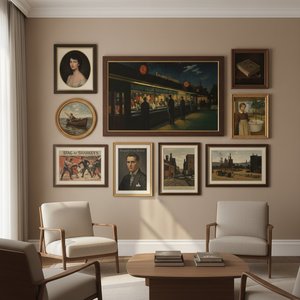 American Realism's Defining Works: 10 Masterpieces for Your HomeExplore 10 defining American Realism masterpieces – Hopper, Homer & more. Discover the stories behind these iconic paintings and bring time…
 Solitude in Color: 10 Masterpieces That Capture the Essence of LonelinessExplore iconic works by Hopper and Dalí that capture profound solitude. Discover all masterpieces on OriginalUniqueArt.com.