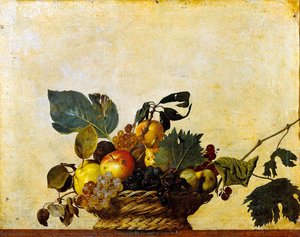
Ulje na platnu
 Sve o delu sick bacchus







































 Za umetnička dela ili reprodukcije čija je bilo koja strana veća od 105 cm (približno 41 inč), okvir će biti isporučen u obliku rastavljenog seta za sklapanje. Ovaj metod osigurava bezbednu dostavu i sprečava oštećenja tokom transporta.


Identification of the Sick Bacchus
The artwork titled sick bacchus is a painting by the Italian Baroque artist Caravaggio. Created in 1593, the work depicts Bacchus, the Roman god of wine and fertility. This specific piece is also recognized as the Self-Portrait as Bacchus. The title sick bacchus is attributed to Roberto Longhi.
This painting functions as an early self-portrait by Caravaggio. It captures the artist's likeness through the figure of the deity. The subject is shown reclining, presenting a specific physical state. The work is an oil on canvas.
Composition and Visual Elements
The composition centers on a young man reclining upon a bedsheet. He is positioned at a three-quarters angle, allowing the viewer to observe the tilt of his head and the specific contours of his face. A wreath rests upon his head, and his expression includes a smile. Despite this smile, his posture conveys a sense of vulnerability and illness. His gaze is directed toward the viewer, maintaining a look that is almost melancholic.
In his left hand, the man clutches several bunches of grapes. An apple rests on the surface beside him. The arrangement of these objects creates a specific spatial relationship between the figure and the still-life elements. The physical state of the man and the presence of the fruit establish the primary visual focus of the work.
Technique and Artistic Style
This oil on canvas work utilizes tenebrism to define its composition. The artist employs a dramatic chiaroscuro effect, creating stark contrasts between light and dark. These heavy shadows swallow the periphery of the scene, while a focused light source illuminates the central figure and the fruit. This method of lighting carves the subject out of an impenetrable black void, emphasizing the physical presence of the man and the textures of the grapes.
The depiction of tensed musculature shows the influence of Simone Peterzano. This anatomical detail is paired with the austere Lombard school style, which is evident in the artist's attention to realistic details. The work is a cabinet piece that was painted using a mirror. This approach allowed for the direct observation of the subject's form and the specific nuances of the skin tones.
History and Provenance of the Work
The provenance of this work is linked to the early collections of Giuseppe Cesari. It was held among the many works that comprised his collection. During this period, the painting was likely commissioned for Cardinal Scipione Borghese. This connection places the work within the sphere of high-level ecclesiastical patronage in Rome.
In 1607, the painting was seized by Cardinal-Nephew Scipione Borghese. This acquisition moved the work from the Cesari collection into the hands of the Borghese family. The piece remains associated with the Galleria Borghese in Rome, where it is currently housed.
Pitanja i odgovori
Da li je sick bacchus ručno oslikano ili odštampano?
Ručno oslikano: profesionalni umetnik kopira sick bacchus uljanim bojama na platnu od lana.
Koju veličinu treba da odaberem za sick bacchus?
Dimenzije se kreću od 38.5 x 26.0 cm (дин20996) do 245.3 x 165.8 cm (дин159572); tabela na ovoj stranici navodi glavne korake i njihove cene.
Koliko dugo traje dostava?
Isporuka traje od 4 do 5 nedelja, uz besplatnu ekspresnu dostavu širom sveta; na ovoj stranici je ponuđena opcija hitne proizvodnje. Možete ga vratiti u roku od 100 dana uz pun povraćaj sredstava, bez ikakvih uslova.
Koji je medij koristio/la Каравађо za delo sick bacchus?
Oil On Canvas
 Pregledaj u prostoru

 Pošalji
 Podeli
 Detalji o delu
 Informativni list


 Preuzmi
 Slični predmeti
 Rendgenski snimak
 Automatska prezentacija
 Pitanja i odgovori

 Statistika