Portret Сидни Ричард Перси

50 najpoznatijih slika umetnika Сидни Ричард Перси, svaka potpuno jedinstvena

Ažurirano: октобар 2026 · rangirano prema našem koeficijentu popularnosti (pretrage, posete i porudžbine za svako delo) · 50 dela Сидни Ричард Перси u našem katalogu

Ukratko

Loch Coruisk, Isle of Skye (1874) je slika autora Сидни Ричард Перси koja privlači najviše pogleda. Nakon toga, pogled se seli na A Rest On The Roadside i Path to the Bay, Fairlight Cove (1860). Među 50 dela umetnika Сидни Ричард Перси u našem katalogu, ovih 50 su najpoznatija, od kojih je svako jedinstveni original predstavljen sa godinom nastanka, muzejom i razlogom zbog kojeg je i danas neprocenjivo.

1821 – 1886, Лондон Romanticism Najviše dela: Royal Collection

Top 10 slika umetnika Сидни Ричард Перси, iz ugla galerije

1
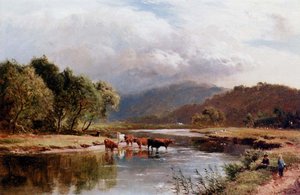
Loch Coruisk, Isle of Skye (1874) čiji je Сидни Ричард Перси

Loch Coruisk, Isle of Skye

1874 · Oil On Canvas

A Masterpiece of Landscape Painting 'CITE>Sidney Richard Percy's Loch Coruisk, Isle of Skye, created in 1874, is a breathtaking oil on canvas painting that captures the essence of nature's grandeur. Measuring 116 x 182 cm, this artwork is a testament to Percy's skill in depicting serene landscapes. The Scene Unfolds The painting presents a majestic scene with a lake in the foreground, surrounded by towering mountains. A herd of cows…

Čuvena dela umetnika Сидни Ричард Перси, od 11 do 50

Motivi koji su privlačili pažnju Сидни Ричард Перси

Četiri teme koje se najčešće ponavljaju u ovim originalima, svaka sa svojim vrhunskim primerom.

Muzeji u kojima se čuvaju originalna dela umetnika Сидни Ричард Перси

2 muzeja u kojima se nalazi najviše slika sa ove stranice.

Muzej Grad Radovi umetnika Сидни Ричард Перси Slike iz ovog spiska
Royal Collection, LondonRoyal Collection London 1 A view of Llyn Dulyn
Dordrechts Museum, DordrechtDordrechts Museum Dordrecht 1 River Landscape Pair Part 2

Сидни Ричард Перси kroz decenije: jedan jedinstveni original za svaku

Radovi po decenijama

Izaberite deceniju da biste videli original koji je definiše.

Slike umetnika Сидни Ричард Перси: pitanja za galeriju

Koje je najpoznatije delo umetnika Сидни Ричард Перси?Otkrij odgovor

Loch Coruisk, Isle of Skye (1874). Slede A Rest On The Roadside i Path to the Bay, Fairlight Cove (1860).

U kojoj je godini Сидни Ричард Перси stvorio/la Loch Coruisk, Isle of Skye?Otkrij odgovor

53 godina: Loch Coruisk, Isle of Skye datira iz 1874, a Сидни Ричард Перси je rođen/a 1821.

Koji je deset najpoznatijih slika autora Сидни Ричард Перси?Otkrij odgovor

Loch Coruisk, Isle of Skye, A Rest On The Roadside, Path to the Bay, Fairlight Cove, Kilchum Castle Loch Awe, Lock Coruisk, In Snowdonia, A view of Llyn Dulyn, The Angler's Corner, Homeward Bound i Snowdon. Gornji rang pokazuje godinu i muzej za svako od njih.

Koliko je poznatih dela umetnika Сидни Ричард Перси?Otkrij odgovor

Naš katalog sadrži 50 dela umetnika Сидни Ричард Перси, datiranih od 1851 do 1883.

Gde se mogu videti najpoznatiji originali umetnika Сидни Ричард Перси?Otkrij odgovor

Većinom u Royal Collection (London) i Dordrechts Museum (Dordrecht). Tabela muzeja iznad sadrži njih sve.

U kom periodu je Сидни Ричард Перси stvorio/la svoje najpoznatije slike?Otkrij odgovor

U 1850s: 5 od 50 dela na ovoj stranici nastalo je tada, od čega je In Snowdonia.

Ko je najraniji, a koje je najkasnije čuveno delo umetnika Сидни Ричард Перси?Otkrij odgovor

Na ovoj stranici, najstarije delo je iz The Angler's Corner (1851), a najnovije iz Grizedale, Westmorland (1883).

Koje su teme Сидни Ричард Перси preferirao/la?Otkrij odgovor

Landscape (5), Roads (5) i Lakes (4), kroz svih 50 dela na ovoj stranici.

Kojem umetničkom pravcu pripada delo umetnika Сидни Ричард Перси?Otkrij odgovor

Romanticism, sudeći po originalima na ovoj stranici.

Сидни Ричард Перси: portret umetnika

The Legacy of Sidney Richard Percy: Master of the Barnes School

Sidney Richard Percy (1821–1886) stands as a cornerstone of the Barnes School, an artistic movement that flourished in London’s southwest during the Victorian era. Born into a family steeped in artistic tradition—his father, Edward Williams, was himself a celebrated painter—Percy inherited not only talent but also a profound connection to the rural landscapes of Britain. This familial lineage shaped his oeuvre with meticulous observation and a distinctive aesthetic that would eventually define much of the 19th-century English landscape tradition.

His upbringing within the Williams family fostered an environment where artistic pursuits were deeply valued. The siblings—including Henry John Boddington and Arthur Gilbert—all pursued careers as artists, establishing a remarkable familial tradition. While Percy’s development was largely self-directed, his apprenticeship under Thomas Hilliard, a respected gilder and engraver in Carnaby Street, provided him with invaluable technical insights. This early exposure to the precision of engraving profoundly influenced his approach to composition, allowing him to master the delicate interplay of light and shadow that characterizes his most celebrated works.

Atmospheric Landscapes and the Romantic Spirit

The relocation to Barnes, a tranquil village bordering the Thames River, marked a pivotal moment in Percy’s artistic life. Surrounded by marshes, farms, and rolling hills, this landscape provided an unparalleled source of inspiration. Embracing the Romantic tradition championed by masters such as James Ward and George Moront, Percy prioritized atmospheric perspective to capture the sublime beauty of the British countryside. His work often transcends mere documentation, instead evoking a sense of nostalgia and peace through the use of soft, luminous light and earthy tones.

Percy’s technical mastery is most evident in his ability to render diverse terrains with emotional depth:

Historical Significance and Artistic Achievement

Throughout his career, Percy achieved significant recognition within the British art establishment. Debuting at the Royal Academy in 1842, he quickly established himself as a professional force, launching his career with vigor during the 1840s. His ability to blend the realism of the landscape with the emotional resonance of Luminism allowed his work to resonate with both contemporary Victorian audiences and modern collectors alike.

The historical significance of Sidney Richard Percy lies in his role as a chronicler of a vanishing era. As the Industrial Revolution began to reshape the British landscape, Percy’s paintings preserved the memory of an untouched, pastoral England. Through his detailed depictions of grazing cattle, winding paths, and misty valleys, he created a timeless visual record of the sublime. Today, his work remains a testament to the enduring beauty of the natural world and a definitive contribution to the legacy of English landscape painting.