Portret Надежда Петровић

10 najpoznatijih slika umetnika Надежда Петровић, svaka potpuno jedinstvena

Ažurirano: октобар 2026 · rangirano prema našem koeficijentu popularnosti (pretrage, posete i porudžbine za svako delo) · 10 dela Надежда Петровић u našem katalogu

Ukratko

Old Fountain in Prizren (1913) je slika autora Надежда Петровић koja privlači najviše pažnje; original se nalazi u muzeju Museums of Serbia, Belgrade. Nakon toga, pogled se seli na Gračanica Monastery (1913) i Lady with a White Parasol (1910). Među 10 dela umetnika Надежда Петровић u našem katalogu, ovih 10 su najpoznatija, od kojih je svako jedinstveni original predstavljen sa godinom nastanka, muzejom i razlogom zbog kojeg je i danas neprocenjivo.

1873 – 1915, Чачак Expressionism Najviše dela: Museums of Serbia

Top 10 slika umetnika Надежда Петровић, iz ugla galerije

2
Gračanica Monastery (1913) čiji je Надежда Петровић

Gračanica Monastery

1913 · Oil · Museums of Serbia, Belgrade

The monastery rises from the earth like a prayer carved in pigment. Its walls carry a warm, pinkish hue that catches the light, softening the heavy stone into something almost organic. Two towers stand on the left, one reaching slightly higher than its companion, while three domes crown the structure against a sky of blue and drifting clouds. The architecture is a heavy, rhythmic presence of windows and domes, anchored…

4
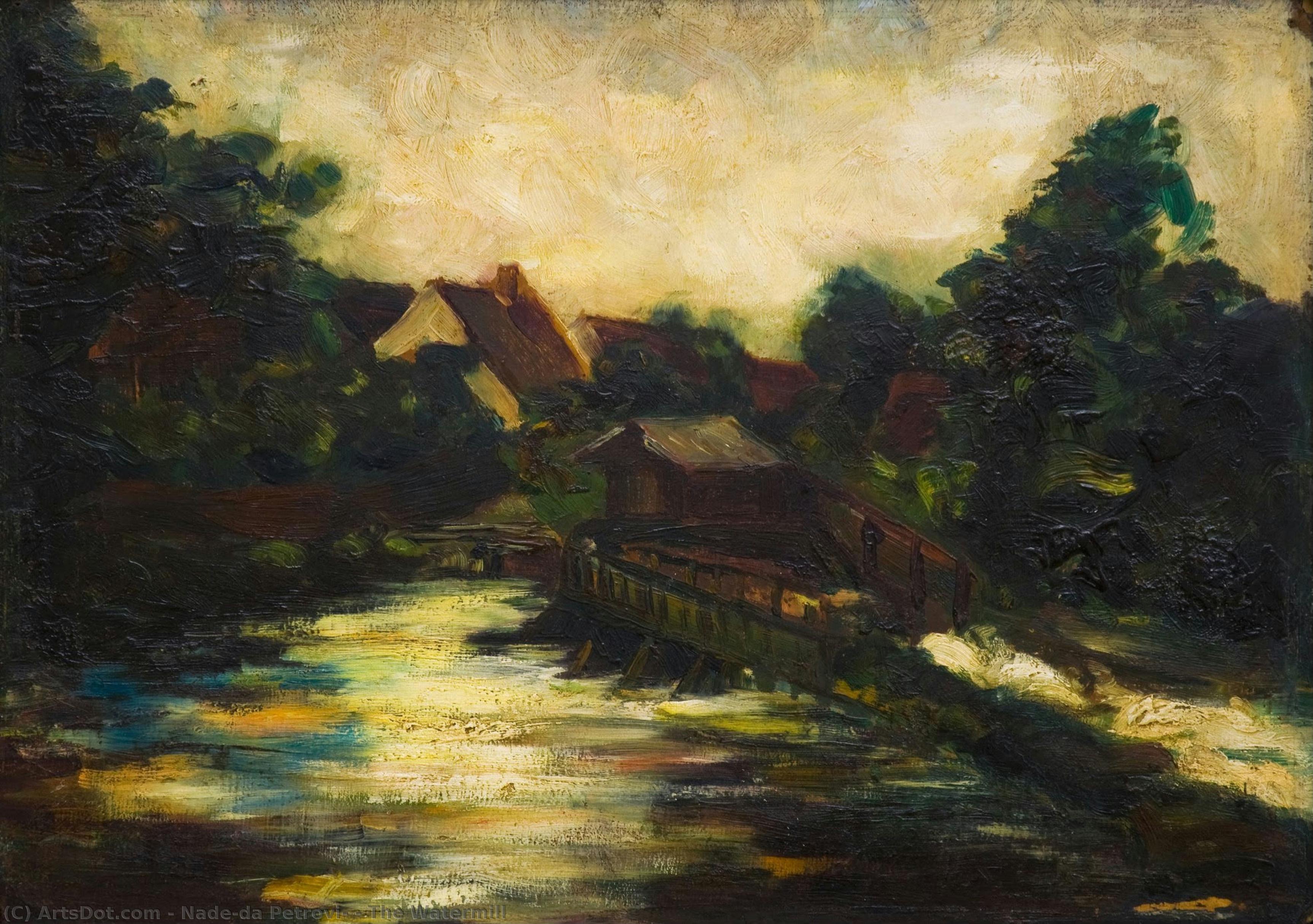
The Watermill (1901) čiji je Надежда Петровић

The Watermill

1901 · Painting · Museums of Serbia, Belgrade

In this 1901 work, we find ourselves in the midst of the artist's Munich period. The scene is a quiet, monochromatic study of a Bavarian landscape, centered upon a watermill. A large building, likely a house, sits adjacent to the mill, anchoring the composition. In the background, a bridge spans the distance, while trees frame the edges of the view. The presence of two figures—one standing near the center and…

8
Ksenija Atanasijević (1912) čiji je Надежда Петровић

Ksenija Atanasijević

Nadežda’s most famous painting in the collection was painted in winter 1912, upon her return from Paris. Ksenija Atanasijević came to the Petrović house in Ratarska Street (Belgrade) to visit Nadežda and there she posed for the artist in the snow wearing a large black hat that Nadežda had just brought from Paris for her sister, Mica. Ksenija Atanasijević (1894–1981), a professor at the Belgrade Faculty of Philosophy, studied classical…

9
Sea, GNP (1910) čiji je Надежда Петровић

Sea, GNP

1910 · Oil On Canvas · Museums of Serbia, Belgrade

In the turbulent dance of Sea, GNP, we encounter the visceral energy of the natural world as captured by the legendary Serbian visionary, Nadežda Petrović. Painted in 1910, this work serves as a breathtaking window into a moment where the ocean’s untamed force meets the stability of the shore. The canvas vibrates with the movement of crashing waves, rendered with a sense of urgency that suggests the artist was not…

Motivi koji su privlačili pažnju Надежда Петровић

Četiri teme koje se najčešće ponavljaju u ovim originalima, svaka sa svojim vrhunskim primerom.

Muzeji u kojima se čuvaju originalna dela umetnika Надежда Петровић

3 muzeja u kojima se nalazi najviše slika sa ove stranice.

Muzej Grad Radovi umetnika Надежда Петровић Slike iz ovog spiska
Museums of Serbia, BelgradeMuseums of Serbia Belgrade 6 Old Fountain in Prizren, Gračanica Monastery, The Watermill
The Pavle Beljanski Memorial Collection, Novi SadThe Pavle Beljanski Memorial Collection Novi Sad 2 Belgrade Suburb, Ksenija Atanasijević
Museum For Modern Art, BelgradeMuseum For Modern Art Belgrade 1 Bois de Boulogne

Надежда Петровић kroz godine: jedinstveni originali svakog dela

14 godina razmaka između prvog i poslednjeg datiranog originala umetnika Надежда Петровић prikazanog ovde, 1900 i 1913: svaka godina ima svoje mesto u nastavku.

Radovi po godinama

Izaberite godinu da biste videli originalna dela.

Slike umetnika Надежда Петровић: pitanja za galeriju

Koje je najpoznatije delo umetnika Надежда Петровић?Otkrij odgovor

Old Fountain in Prizren (1913), Museums of Serbia, Belgrade. Slede Gračanica Monastery (1913) i Lady with a White Parasol (1910).

U kojoj je godini Надежда Петровић stvorio/la Old Fountain in Prizren?Otkrij odgovor

40 godina: Old Fountain in Prizren datira iz 1913, a Надежда Петровић je rođen/a 1873.

Koji je deset najpoznatijih slika autora Надежда Петровић?Otkrij odgovor

Old Fountain in Prizren, Gračanica Monastery, Lady with a White Parasol, The Watermill, Bavarian with a Hat, Belgrade Suburb, Bois de Boulogne, Ksenija Atanasijević, Sea, GNP i Bird, GNP. Gornji rang pokazuje godinu i muzej za svako od njih.

Koliko je poznatih dela umetnika Надежда Петровић?Otkrij odgovor

Naš katalog sadrži 10 dela umetnika Надежда Петровић, datiranih od 1900 do 1913.

Gde se mogu videti najpoznatiji originali umetnika Надежда Петровић?Otkrij odgovor

Većinom u Museums of Serbia (Belgrade), The Pavle Beljanski Memorial Collection (Novi Sad) i Museum For Modern Art (Belgrade). Tabela muzeja iznad sadrži njih sve.

U kom periodu je Надежда Петровић stvorio/la svoje najpoznatije slike?Otkrij odgovor

U 1910: 2 od 10 dela na ovoj stranici nastalo je tada, od čega je Lady with a White Parasol.

Ko je najraniji, a koje je najkasnije čuveno delo umetnika Надежда Петровић?Otkrij odgovor

Na ovoj stranici, najstarije delo je iz Bavarian with a Hat (1900), a najnovije iz Old Fountain in Prizren (1913).

Koje su teme Надежда Петровић preferirao/la?Otkrij odgovor

People (2) i Portrait (2), kroz svih 10 dela na ovoj stranici.

Sa kojim materijalima je Надежда Петровић najčešće slikao?Otkrij odgovor

Oil On Canvas, za 2 od 10 dela na ovoj stranici.

Kojem umetničkom pravcu pripada delo umetnika Надежда Петровић?Otkrij odgovor

Expressionism, sudeći po originalima na ovoj stranici.

Koja originalna dela Надежда Петровић mogu videti u Museums of Serbia?Otkrij odgovor

Old Fountain in Prizren, Gračanica Monastery i The Watermill: Museums of Serbia, Belgrade čuva 6 dela sa ove stranice.

Надежда Петровић: portret umetnika

Nadežda Petrović (1873–1915): Serbia’s Expressionist Visionary

Nadežda Petrović (Serbian Cyrillic: Надежда Петровић; 11/12 October 1873 – 3 April 1915) was a Serbian painter and one of the women war photography pioneers in the region. Considered Serbia’s most famous expressionist and fauvist, she was the most important Serbian female painter of the period. Born in Čačak, Serbia, Petrović moved to Belgrade in her youth and attended the women's school of higher education there. Graduating in 1891, she taught there for a period beginning in 1893 before moving to Munich to study with Slovenian artist Anton Ažbe. Between 1901 and 1912, she exhibited her work in many cities throughout Europe. Her artistic journey culminated in a tragically premature death during World War I, leaving behind an indelible mark on Serbian art history.

Early Life and Education

Nadežda Petrović was born into a family of intellectuals—her father Dimitrije Petrović was a professor of mathematics and her mother Mileva Petrović was a teacher—providing her with a privileged upbringing steeped in culture and artistic appreciation. Growing up in Čačak, she experienced the hardships of Serbian life under Austro-Hungarian rule, fostering resilience and shaping her worldview. Recognizing her talent for art early on, her parents encouraged her pursuit of education beyond the conventional roles expected of women at the time. She excelled academically, earning a degree from Belgrade’s Women's School of Higher Education in 1891, marking a pivotal moment in her life and establishing her foundation for artistic endeavors. Her subsequent teaching position allowed her to nurture young minds and disseminate knowledge—a testament to her dedication and commitment to education.

Munich and Artistic Influences

Petrović’s relocation to Munich in 1901 proved transformative, exposing her to the burgeoning avant-garde movements of Expressionism and Fauvism. Studying under Anton Ažbe, a Slovenian artist who championed innovative techniques and stylistic experimentation, she absorbed influences from artists like Edvard Munch and Henri Matisse. These encounters ignited her creative spirit and propelled her artistic style toward bold color palettes, distorted forms, and emotionally charged compositions—characteristics that would define her oeuvre. The Munich environment fostered intellectual discourse and challenged established artistic conventions, encouraging Petrović to forge her own distinctive path as an artist.

Artistic Style and Notable Works

Petrović’s artistic style is characterized by Expressionism and Fauvism, movements that prioritized emotional intensity over realistic representation. Her paintings frequently employed vibrant hues—particularly crimson—and exaggerated brushstrokes to convey profound feelings and capture the essence of her subjects. Among her most celebrated works are “Ksenija Atanasijević,” a portrait imbued with melancholic beauty and psychological depth, and “Gračanica Monastery,” which exemplifies her masterful use of color and texture to depict Serbian Orthodox spirituality. These paintings stand as enduring symbols of Serbian artistic heritage and continue to inspire admiration for Petrović’s visionary approach to art. Furthermore, she contributed significantly to the preservation of Serbian cultural identity through her depictions of sacred sites and historical narratives.

War Photography and Humanitarian Service

Beyond her painting achievements, Nadežda Petrović demonstrated remarkable courage and compassion by volunteering as a nurse during the Balkan Wars (1912–1913) and subsequently during World War I. Driven by an unwavering commitment to humanitarian service, she tirelessly cared for wounded soldiers—often under perilous conditions—risking her own safety for the benefit of others. Her dedication earned her recognition from Serbian authorities and cemented her reputation as a selfless advocate for human dignity. Petrović’s bravery was honored with a Medal for Bravery and an Order of the Red Cross, acknowledging her extraordinary contribution to alleviating suffering during wartime.

Legacy and Recognition

Nadežda Petrović's legacy extends beyond her artistic output; she remains a symbol of Serbian resilience, creativity, and humanitarian spirit. Her paintings are housed in prominent museums across Serbia, including the National Museum of Serbia and the Pavle Beljanski Memorial Collection, ensuring that her artistic vision continues to resonate with audiences today. Moreover, her work is available for purchase as prints or hand-painted replicas on OriginalUniqueArt.com, allowing enthusiasts worldwide to experience the beauty and emotional power of her masterpieces. Petrović’s pioneering role as a woman artist in Serbia—and as a war photographer—serves as an inspiration for future generations striving to honor artistic excellence alongside social responsibility.