Portret Žan-Batist Pilmen

Slike umetnika Žan-Batist Pilmen: Najpoznatijih 53 kroz oči galerije

Ažurirano: новембар 2026 · rangirano prema našem koeficijentu popularnosti (pretrage, posete i porudžbine za svako delo) · 54 dela Žan-Batist Pilmen u našem katalogu

Ukratko

Iz perspektive galerije, najpoznatije delo umetnika Žan-Batist Pilmen je Les lavandières. Landscape with Travelers and a Ruin (1750) i Chinoiserie (1767) čine triju koju svako oko prepoznaje. Od 54 dela umetnika Žan-Batist Pilmen u našem katalogu, galerija u nastavku predstavlja 53 najpoznatijih dela, od kojih je svako originalno, sa navedenom godinom nastanka, muzejom i onim što ga čini jedinstvenim.

1728 – 1808, Лион Rococo Najviše dela: Petit Palais

Top 10 slika umetnika Žan-Batist Pilmen u galeriji

1
Les lavandières čiji je Žan-Batist Pilmen

Les lavandières

Oil On Canvas

Les lavandières, also known as Landscape with Washerwomen, is a landscape painting by Jean-Baptiste Pillement. This oil on canvas work dates to 1792. It belongs to the genre of landscape painting, focusing on a natural setting involving rural labor.

2
Landscape with Travelers and a Ruin (1750) čiji je Žan-Batist Pilmen

Landscape with Travelers and a Ruin

1750 · Oil · Fine Arts Museums of San Francisco, San Francisco

The scene unfolds within Landscape with Travelers and a Ruin, a work that captures a quiet moment of passage through a rugged terrain. Jean-Baptiste Pillement invites the viewer into this pastoral setting, where the scale of nature begins to dwarf the small figures navigating the rocky path. The composition centers on the interaction between these travelers and the weathered stone remains of an ancient structure, creating a sense of stillness…

3
Chinoiserie (1767) čiji je Žan-Batist Pilmen

Chinoiserie

1767 · Painting · Petit Palais, Pariz

In this large-scale work titled Chinoiserie, Jean-Baptiste Pillement presents a highly decorative vision that functions as a wall painting or wallpaper design. Created about 1767, the piece captures a specific moment in the eighteenth century when the French aristocracy sought an escape into idealized, exotic landscapes. The composition invites the viewer into a curated garden space, where the boundaries between the interior and the natural world feel intentionally blurred.

4
Chinoiserie (1767) čiji je Žan-Batist Pilmen

Chinoiserie

1767 · Oil On Canvas · Petit Palais, Pariz

A curtain of flowering vines and slender trees frames a secret garden. The scene is a theatrical vignette, a stage set for a quiet afternoon of leisure. Figures dressed in the high fashion of the 18th century gather upon a raised, rocky platform. They move through a landscape of pale blues and muted greens, their clothing providing small sparks of red and yellow against the soft foliage. The air feels…

5
Fisherman pulling networks (Return from the catch). (1769) čiji je Žan-Batist Pilmen

Fisherman pulling networks (Return from the catch).

1769 · Oil On Canvas · Nacionalni muzej u Varšavi, Varšava

In this 1769 oil painting, we find ourselves at the edge of a rugged coast during the soft, diffused light of dawn or dusk. The scene focuses on the rhythmic, physical labor of fishermen as they pull their heavy nets from the water. A massive, towering rock formation dominates the right side of the composition, its textured surface rendered in earthy ochres and tans. This geological giant provides a sense…

6
A Shipwreck in a Storm (1782) čiji je Žan-Batist Pilmen

A Shipwreck in a Storm

1782 · Watercolor · Metropoliten музеј у Њујорку, Њујорк

A Shipwreck in a Storm by Jean-Baptiste Pillement captures a violent maritime disaster. The scene centers on a large vessel in the process of breaking apart, its structure yielding to the overwhelming power of a tempest. Amidst the churning chaos, several figures cling to the jagged rocks of a rugged coastline. Their presence emphasizes the human struggle against the relentless forces of nature. This work, created about 1782, focuses on…

7
Landscape with Washerwomen and Peasants (1790) čiji je Žan-Batist Pilmen

Landscape with Washerwomen and Peasants

1790 · Oil On Canvas · National Gallery of Ireland, Dublin

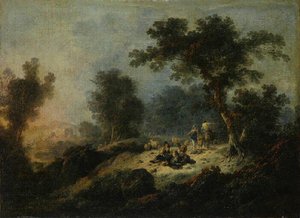
In this 1790 oil on canvas, we find ourselves drawn into a rugged, mountainous scene where the rhythms of daily life unfold near a cascading river. The composition is framed by dark, craggy cliffs that act as a natural vignette, guiding the eye toward a central, atmospheric vista. An arched wooden footbridge spans the upper reaches of the frame, connecting the rocky heights, while a tall tower watches over a…
8
Rustic Landscape with Aqueduct and Figures (1794) čiji je Žan-Batist Pilmen

Rustic Landscape with Aqueduct and Figures

1794 · Oil On Panel · Cooper Hewitt, Smithsonian Design Museum, New York City

The scene unfolds within Rustic Landscape with Aqueduct and Figures, a work that invites the eye into a quiet, pastoral moment. Jean-Baptiste Pillement, an artist born in Lyon, France, in 1728, captures a world where nature and human presence exist in a delicate, rhythmic balance. The painting, dated about 1794, presents a vision of the countryside that feels both lived-in and dreamlike, as if the viewer has stumbled upon a…

9
Landscape with Washerwomen (detail) (1792) čiji je Žan-Batist Pilmen

Landscape with Washerwomen (detail)

1792 · Oil On Canvas

Landscape with Washerwomen (detail) is an oil on canvas painting by Jean-Baptiste Pillement. Created in 1792, this work belongs to the genre of landscape painting. It captures a specific moment of domestic activity within a natural setting. The scene focuses on rural labor, where human presence meets the movement of the earth.

Slike umetnika Žan-Batist Pilmen, rangirane od 11 do 53

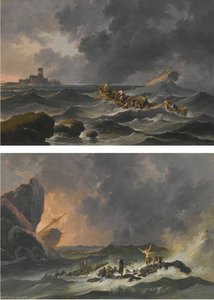
11PAYSAGE AVEC TROUPEAU čiji je Žan-Batist PilmenPAYSAGE AVEC TROUPEAULuvr 12Landscape. (1750) čiji je Žan-Batist PilmenLandscape.1750 · Nacionalni muzej likovnih umetnosti Kube 13A Wreck at the Rocky Seaside (1750) čiji je Žan-Batist PilmenA Wreck at the Rocky Seaside1750 · Tokyo Fuji Art Museum 14River landscape with a mill and shepherds (1748) čiji je Žan-Batist PilmenRiver landscape with a mill and shepherds1748 15Voyages du Roy au Chateau de Choisy (1751) čiji je Žan-Batist PilmenVoyages du Roy au Chateau de Choisy1751 · Château de Versailles 16Landscape with Aqua Julia in Rome. (1765) čiji je Žan-Batist PilmenLandscape with Aqua Julia in Rome.1765 · Nacionalni muzej u Varšavi 17Market Scene in an Imaginary Oriental Port (1764) čiji je Žan-Batist PilmenMarket Scene in an Imaginary Oriental Port1764 · J. Paul Getty Museum 18Temple of Minerva Medica in Rome (1765) čiji je Žan-Batist PilmenTemple of Minerva Medica in Rome1765 · Nacionalni muzej u Varšavi 19Decorative Panel with Animal Subjects (1767) čiji je Žan-Batist PilmenDecorative Panel with Animal Subjects1767 · Petit Palais 20Decorative Panel with Animal Subjects (1767) čiji je Žan-Batist PilmenDecorative Panel with Animal Subjects1767 · Petit Palais 21View of the coast with fishing boats (Trip to catch) (1769) čiji je Žan-Batist PilmenView of the coast with fishing boats (Trip to catch)1769 · Nacionalni muzej u Varšavi 22Title page, Plate 1 from (1775) čiji je Žan-Batist PilmenTitle page, Plate 1 from1775 23Title page, Plate 1, from (1775) čiji je Žan-Batist PilmenTitle page, Plate 1, from1775 24Animated Landscape (1785) čiji je Žan-Batist PilmenAnimated Landscape1785 · Muzej Carnavalet 25Vue des jardins de Benfica (1785) čiji je Žan-Batist PilmenVue des jardins de Benfica1785 26Landscape with Muleteers and Peasants (1790) čiji je Žan-Batist PilmenLandscape with Muleteers and Peasants1790 · National Gallery of Ireland 27Landscape with Rustic Figures (1794) čiji je Žan-Batist PilmenLandscape with Rustic Figures1794 · Cooper Hewitt, Smithsonian Design Museum 28Winter (1792) čiji je Žan-Batist PilmenWinter1792 29Autumn (1792) čiji je Žan-Batist PilmenAutumn1792 30Landscape with Washerwomen (1792) čiji je Žan-Batist PilmenLandscape with Washerwomen1792 · Musée des Beaux-Arts de Bordeaux 31Mountainous Landscape (1780) čiji je Žan-Batist PilmenMountainous Landscape1780 · Wallraf-Richartz-Museum 32Print, jean pillement (1755) čiji je Žan-Batist PilmenPrint, jean pillement (1755) 33Naufrage čiji je Žan-Batist PilmenNaufrage 34Paysage čiji je Žan-Batist PilmenPaysage 35PAYSAGE AU PONT, PECHEUR ET BERGER čiji je Žan-Batist PilmenPAYSAGE AU PONT, PECHEUR ET BERGER 36PAYSAGE A LA CASCADE, BERGER čiji je Žan-Batist PilmenPAYSAGE A LA CASCADE, BERGER 37Paysage au pont, pêcheur et lavandière čiji je Žan-Batist PilmenPaysage au pont, pêcheur et lavandière 38Muletiers italiens čiji je Žan-Batist PilmenMuletiers italiensMuseum Voor Moderne Kunst 39PAYSAGE A LA CASCADE, PECHEURS čiji je Žan-Batist PilmenPAYSAGE A LA CASCADE, PECHEURS 40Chinois pêchant à la ligne čiji je Žan-Batist PilmenChinois pêchant à la ligneMusée National Magnin 41Untitled (AQQNCU) (1794) čiji je Žan-Batist PilmenUntitled (AQQNCU)1794 42Exotic market-place čiji je Žan-Batist PilmenExotic market-place 43Paysageavec troupeau čiji je Žan-Batist PilmenPaysageavec troupeau 44A decorative plate, french rococo art čiji je Žan-Batist PilmenA decorative plate, french rococo art 45Untitled (AQQNCN) čiji je Žan-Batist PilmenUntitled (AQQNCN) 46Les chèvres čiji je Žan-Batist PilmenLes chèvres 47Two shipwreck scenes čiji je Žan-Batist PilmenTwo shipwreck scenes 48River Landscape čiji je Žan-Batist PilmenRiver Landscape 49Pastoral Landscape with Shepherds čiji je Žan-Batist PilmenPastoral Landscape with Shepherds 50Landscape čiji je Žan-Batist PilmenLandscape 51Shipwrecked Sailors Coming Ashore čiji je Žan-Batist PilmenShipwrecked Sailors Coming AshoreМузеј Прадо 52A River landscape with a ruined tower and fishermen with their nets in the foreground čiji je Žan-Batist PilmenA River landscape with a ruined tower and fishermen with their nets in the foreground 53Landscape čiji je Žan-Batist PilmenLandscapeМузеј Прадо

Čuvena dela Žan-Batist Pilmen po periodima

Motivi koji su privlačili pažnju Žan-Batist Pilmen

Četiri teme koje se najčešće ponavljaju u ovim originalima, svaka sa svojim vrhunskim primerom.

Muzeji u kojima se čuvaju originalna dela umetnika Žan-Batist Pilmen

8 muzeja u kojima se nalazi najviše slika sa ove stranice.

Muzej Grad Radovi umetnika Žan-Batist Pilmen Slike iz ovog spiska
Petit Palais, ParizPetit Palais Pariz 4 Chinoiserie, Chinoiserie, Decorative Panel with Animal Subjects
Nacionalni muzej u Varšavi, VaršavaNacionalni muzej u Varšavi Varšava 4 Fisherman pulling networks (Return from the catch)., Landscape with Aqua Julia in Rome., Temple of Minerva Medica in Rome
National Gallery of Ireland, DublinNational Gallery of Ireland Dublin 2 Landscape with Washerwomen and Peasants, Landscape with Muleteers and Peasants
Cooper Hewitt, Smithsonian Design Museum, New York CityCooper Hewitt, Smithsonian Design Museum New York City 2 Rustic Landscape with Aqueduct and Figures, Landscape with Rustic Figures
Музеј Прадо, МадридМузеј Прадо Мадрид 2 Shipwrecked Sailors Coming Ashore, Landscape
Fine Arts Museums of San Francisco, San FranciscoFine Arts Museums of San Francisco San Francisco 1 Landscape with Travelers and a Ruin
Metropoliten музеј у Њујорку, ЊујоркMetropoliten музеј у Њујорку Њујорк 1 A Shipwreck in a Storm
Luvr, ParizLuvr Pariz 1 PAYSAGE AVEC TROUPEAU

Žan-Batist Pilmen, jedno autentično delo po deceniji

Radovi po decenijama

Izaberite deceniju da biste videli original koji je definiše.

Slike umetnika Žan-Batist Pilmen: odgovori galerije

Koja je najpoznatija slika umetnika Žan-Batist Pilmen?Otkrij odgovor

Les lavandières. Slede Landscape with Travelers and a Ruin (1750) i Chinoiserie (1767).

Koja su najbolja 10 dela umetnika Žan-Batist Pilmen?Otkrij odgovor

Les lavandières, Landscape with Travelers and a Ruin, Chinoiserie, Chinoiserie, Fisherman pulling networks (Return from the catch)., A Shipwreck in a Storm, Landscape with Washerwomen and Peasants, Rustic Landscape with Aqueduct and Figures, Landscape with Washerwomen (detail) i Waterfall Landscape in Portugal. Gornji rang pokazuje godinu i muzej za svako od njih.

Koliko je dela stvorio/la Žan-Batist Pilmen?Otkrij odgovor

Naš katalog sadrži 54 dela umetnika Žan-Batist Pilmen, datiranih od 1748 do 1794.

Gde se nalaze najpoznatiji originali umetnika Žan-Batist Pilmen?Otkrij odgovor

Većinom u Petit Palais (Pariz), Nacionalni muzej u Varšavi (Varšava) i National Gallery of Ireland (Dublin). Tabela muzeja iznad sadrži njih sve.

Kada je Žan-Batist Pilmen stvorio svoje najpoznatije slike?Otkrij odgovor

U 1760s: 9 od 53 dela na ovoj stranici nastalo je tada, od čega je Chinoiserie.

Koja su najranija i najkasnija poznata dela umetnika Žan-Batist Pilmen?Otkrij odgovor

Na ovoj stranici, najstarije delo je iz River landscape with a mill and shepherds (1748), a najnovije iz Rustic Landscape with Aqueduct and Figures (1794).

Kojim se motivima Žan-Batist Pilmen najčešće bavio?Otkrij odgovor

Landscape (11), Figures (6) i Trees (4), kroz svih 53 dela na ovoj stranici.

U kojoj je tehnici najviše radio/la Žan-Batist Pilmen?Otkrij odgovor

Oil On Canvas, za 7 od 53 dela na ovoj stranici.

Sa kojim umetničkim pravcem je Žan-Batist Pilmen povezan/a?Otkrij odgovor

Rococo, sudeći po originalima na ovoj stranici.

Koje originale umetnika Žan-Batist Pilmen poseduje Petit Palais?Otkrij odgovor

Chinoiserie, Chinoiserie i Decorative Panel with Animal Subjects: Petit Palais, Pariz čuva 4 dela sa ove stranice.

Žan-Batist Pilmen: umetnik

Očarana carstva Žan-Bapstena Pilmena

U zlatnim sumrakom 18. veka, malo je umetnika posedovalo sposobnost da izvede posmatrača u svet jednako sanjiv i egzotičan kao što je svet Žan-Bapstena Pilmena. Rođen u Nimu 1728. godine, Pilmen se nije pojavio samo kao slikar, već kao majstor atmosfere, prepletajući delikatnu eleganciju rokokoskog stila sa dubokim fascinacijom onog što je udaljeno i nepoznato. Iako su njegove rane godine delimično skrivene maglom istorije, njegov uspon unutar francuske umetničke hijerarhije bio je ništa manje od meteorski. Kroz pedantnu obuku kod cenjenog Žan-Bapstena Jua, savladao je suptilne nijanse akvarela, medija koji mu je omogućio da uhvati efemernu svetlost i vibrantne pigmente neophodne za oživljavanje njegovih fantastičnih vizija.

Pilmenovo delo služi kao prozor u pokrete šinoazije (Chinoiserie) i egzotizma koji su očarali francusku aristokratiju. Za razliku od tradicionalista svog vremena koji su tražili utehu u klasičnim rimskim ruševinama ili sumornim istorijskim portretima, Pilmen je gledao ka horizontu. Njegova putovanja kroz Italiju i duboka posvećenost persijskim motivima omogućili su mu da konstruiše pejzaže koji deluju istovremeno bujno i vanzemaljski. U njegovim rukama, prirodni svet je bio redefinisan; visoke palme, zmijski putevi reka i ptice sa briljantnim perjem postali su protagonisti tihe, prelepe drame. Ovo majstorstvo egzotičnog učinilo ga je neizostavnom figurom na dvorovima Luj XV i Mari Antoanet, jer je njegova umetnost pružala neophodno utočište u carstvo čiste, neopredeljene mašte.

Tehnika, uticaj i duh rokokoa

Genijalnost Pilmenove tehnike leži u njegovoj sposobnosti da uravnoteži preciznost sa mekim, eteričnim sjajem. Koristio je delikatnu sfumato tehniku — majstorstvo mešanja tonova kroz pedantno slojevitost — koja je njegovim pejzažima dala gotovo translucentnu kvalitet. Ovaj pristup mu je omogućio da prizove atmosfersku dubinu majstora poput Kloda Lorena, ali je te klasične osnove prožimao jedinstvenom, razigranom energijom. Njegove kompozicije nikada nisu bile statične; pulsirale su ritmičkim vitalitetom, često se prepoznajući po:

  • Složeni botanički detalji: Duboki fokus na floru koji je delovao istovremeno naučno inspirisano i mitski uzvišeno.
  • Hromatska živopisnost: Upotreba hrabrih, zasićenih boja za predstavljanje bujnosti tropskih i orijentalnih okruženja.
  • Dekorativna fluidnost: Sposobnost da premosti jaz između umetničkog slikarstva i dekorativnog dizajna, čineći njegovo delo podjednako prirodnim na platnu kao i u okviru raskošnih unutrašnjih zidnih slika.

Njegova stilska evolucija bila je duboko oblikovana istraživanjima umetnika kao što su Nikolas Pokok i Gaspar Peregrin Riga. Upisujući njihove pristupe pejzažu i svetlosti, Pilmen je uspeo da izrefineduje prepoznatljivu estetiku koja je delovala utemeljeno u evropskoj tradiciji, a istovremeno divlje avantgardno. Njegov uticaj se protezao daleko izvan platna, jer su njegovi dizajni prožimali samu tkaninu francuskih dekorativnih umetnosti, oblikujući sve — od uzoraka tapeta do motiva na porcelanu.

Trajno nasleđe u istoriji umetnosti

Istorijski značaj Žan-Bapstena Pilmena ne može se preuveličati, posebno u pogledu njegove uloge u definisanju vizuelnog jezika luksuza kasnog 18. veka. Njegovi prestižni radovi na porudžbinu, najpre svega zadivljujući zidni fresci koji krase Dvorac Fontembl i Petit Trianon, stoje kao svedočanstvo njegovog statusa miljenika francuskog kraljevskog roda. Ova dela nisu bila samo dekoracija; ona su bila imerzivna okruženja koja su pomogla u definisanju estetskog identiteta jedne ere.

Dok je umetnički svet prelazio iz razigranog obilja rokokoa ka strukturiranoj disciplini neoklasicizma, Pilmenovo delo je ostalo dragoceni most između ova dva sveta. Za sobom je ostavio nasleđe čuda, podsećajući buduće generacije da umetnost poseduje jedinstvenu moć da prevaziđe geografske granice i prenese ljudskog duha u zemlje beskrajne lepote i misterije. Danas njegovo ime ostaje sinonim za izvrsnost, egzotiku i večni šarm francuskog rokokoa.