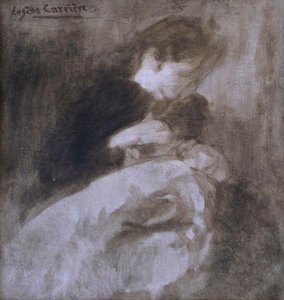
Portret Ежен Каријер

100 najpoznatijih slika umetnika Ежен Каријер, svaka potpuno jedinstvena

Ažurirano: октобар 2026 · rangirano prema našem koeficijentu popularnosti (pretrage, posete i porudžbine za svako delo) · 249 dela Ежен Каријер u našem katalogu

Ukratko

Portrait of Pablo Casals (1903) je slika autora Ежен Каријер koja privlači najviše pažnje; original se nalazi u muzeju Vil·la Casals-Museu Pau Casals, Vellbell. Nakon toga, pogled se seli na Nelly Carrière (1903) i Le Docteur Léon Gorodiche et sa famille Portrait de famille (titre ancien). Među 249 dela umetnika Ежен Каријер u našem katalogu, ovih 100 su najpoznatija, od kojih je svako jedinstveni original predstavljen sa godinom nastanka, muzejom i razlogom zbog kojeg je i danas neprocenjivo.

1849 – 1906, Гурне-сур-Марн Symbolism Najviše dela: Petit Palais

Top 10 slika umetnika Ежен Каријер, iz ugla galerije

1
Portrait of Pablo Casals (1903) čiji je Ежен Каријер

Portrait of Pablo Casals

1903 · Oil On Canvas · Vil·la Casals-Museu Pau Casals, Vellbell

Eugène Anatole Carrière’s “Portrait of Pablo Casals,” painted in 1903, is more than just a likeness; it's an intensely felt meditation on contemplation and the weight of artistic experience. This oil on canvas work, currently residing within the Vil·la Casals-Museu Pau Casals in El Vendrell, Spain, offers a rare glimpse into the mind of a man lost in thought – Pablo Casals himself, the renowned cellist – through Carrière’s masterful…

2
Nelly Carrière (1903) čiji je Ежен Каријер

Nelly Carrière

1903 · Oil On Canvas

The air in the room feels heavy and still, thick with the scent of oil paint and the soft, diffused light of a late afternoon. Nelly Carrière sits before us, her presence a gentle weight in the center of the frame. She does not demand attention through movement or bright color; instead, she draws the eye inward through a profound, quiet stillness. Her head tilts slightly, a subtle asymmetry that…

3
Le Docteur Léon Gorodiche et sa famille Portrait de famille (titre ancien) čiji je Ежен Каријер

Le Docteur Léon Gorodiche et sa famille Portrait de famille (titre ancien)

Oil

The canvas presents Le Docteur Léon Gorodiche et sa famille Portrait de famille (titre ancien), a work that brings the presence of Léon Gorodiche into the immediate view. This portrait captures a family moment, pulling the viewer into a quiet, domestic scene. The artist, Eugène Carrière, breathes life into the subjects, rendering them with a sense of profound intimacy. One can almost feel the stillness of the room as the…

4
Portrait of Madame Aline Ménard-Dorian (1905) čiji je Ежен Каријер

Portrait of Madame Aline Ménard-Dorian

1905 · Oil On Canvas · Petit Palais, Pariz

The Portrait of Madame Aline Ménard-Dorian is a somber and ethereal portrait of a woman, characterized by a dreamlike, atmospheric quality and a monochromatic, low-key tonal range. The composition features a single female figure, positioned slightly off-center, appearing to emerge from a dark, nebulous background. The color palette is highly restricted, consisting almost entirely of sepia, umber, cream, and deep browns, creating a sense of antiquity and melancholy.

5
Arsène Carriere (1900) čiji je Ежен Каријер

Arsène Carriere

1900 · Oil On Canvas · National Gallery of Art, Washington

Every brushstroke seeks to reach past the skin and into the essence of human experience. The way the light catches the white fabric of the dress against the darker, murky background creates a focal point that is both intimate and profound. This is not a mere depiction of a child, but an exploration of the raw, unvarnished emotions that exist in the earliest stages of life. The work carries a…

6
Femme nue couchée čiji je Ежен Каријер

Femme nue couchée

Oil On Canvas

The composition is centered around the woman's body, which lies diagonally across the canvas in a horizontal format. Her pose is relaxed; one arm is raised above her head while the other rests near her side. A draped fabric partially covers her lower body, creating organic, flowing shapes that follow the curves of her form. To the right of the figure, a small table holds a glass of wine and…

7
Portrait du Dr. Léon Gorodiche Portrait du Dr. X čiji je Ежен Каријер

Portrait du Dr. Léon Gorodiche Portrait du Dr. X

Oil On Canvas

Portrait du Dr. Léon Gorodiche Portrait du Dr. X is a work by the French artist Eugène Carrière. The subject is a man, identified as either Dr. Léon Gorodiche or an individual referred to as Dr. X. Carrière focuses on capturing the sitter's likeness and his psychological state through a muted and somewhat melancholic style.

8
Portrait of a Lady with a Dog (1885) čiji je Ежен Каријер

Portrait of a Lady with a Dog

1885 · Oil On Canvas · Art Institute of Chicago, Čikago

A Study in Shadow and Stillness Portrait of a Lady with a Dog emerges from a dark, indistinct background like a memory surfacing through fog. The composition holds a seated woman, positioned slightly off-center, her form anchored by the small weight of a dog resting in her lap. A soft light source strikes her face, neck, and shoulder, pulling these features from the surrounding gloom. The palette is strictly grayscale,…

10
Self-Portrait (1893) čiji je Ежен Каријер

Self-Portrait

1893 · Oil On Canvas

A man stares directly from the canvas, his gaze fixed and unyielding. Through a veil of hazy brushwork, his features emerge from a dense, monochromatic atmosphere of umber and grey. This 1893 oil on canvas presents a face defined by more than mere anatomy; it is a study of presence through absence. The subject, wearing glasses that catch a faint, spectral light, possesses a mustache and a beard that seem…

Čuvena dela umetnika Ежен Каријер, od 11 do 100

11The Sleep (1890) čiji je Ежен КаријерThe Sleep1890 · Städel Museum 12Self-Portrait (1893) čiji je Ежен КаријерSelf-Portrait1893 · Metropoliten музеј у Њујорку 13Tête de bébé (1878) čiji je Ежен КаријерTête de bébé1878 · The Hunterian Museum and Art Gallery 14Portrait of Edmond de Goncourt (1822-1896), writer (1880) čiji je Ежен КаријерPortrait of Edmond de Goncourt (1822-1896), writer1880 · Muzej Carnavalet 15Portrait of Auguste Blanqui (1805-1881), Politician (1880) čiji je Ежен КаријерPortrait of Auguste Blanqui (1805-1881), Politician1880 · Muzej Carnavalet 16Portrait of a Man (1879) čiji je Ежен КаријерPortrait of a Man1879 · Muzej finih umetnosti u Bostonu 17Little d'Artagnan (1882) čiji je Ежен КаријерLittle d'Artagnan1882 18Sketch for the Salon of Sciences of the Hôtel de Ville de Paris: Physics - Chemistry (1890) čiji je Ежен КаријерSketch for the Salon of Sciences of the Hôtel de Ville de Paris: Physics - Chemistry1890 · Petit Palais 19Sketch for the Salon of Sciences of the Hôtel de Ville de Paris: Magnetism - Mechanics (1890) čiji je Ежен КаријерSketch for the Salon of Sciences of the Hôtel de Ville de Paris: Magnetism - Mechanics1890 · Petit Palais 20Sketch for the Salon of Sciences of the Hôtel de Ville de Paris: Mathematics - Mineralogy (1890) čiji je Ежен КаријерSketch for the Salon of Sciences of the Hôtel de Ville de Paris: Mathematics - Mineralogy1890 · Petit Palais 21Woman Sewing (1892) čiji je Ежен КаријерWoman Sewing1892 · Rhode Island School of Design Museum of Art 22Armand Berton (1891) čiji je Ежен КаријерArmand Berton1891 · Cleveland Museum of Art 23Portrait of Paul Gauguin (1891) čiji je Ежен КаријерPortrait of Paul Gauguin1891 · Yale University Art Gallery 24Self-portrait, Eugène Carrière (1887) čiji je Ежен КаријерSelf-portrait, Eugène Carrière1887 · Museum of Fine Arts Ghent (MSK) 25Paul Verlaine (1891) čiji je Ежен КаријерPaul Verlaine1891 · Muzej finih umetnosti u Bostonu 26Maternity (1892) čiji je Ежен КаријерMaternity1892 27Portrait of Gustave Geffroy (1891) čiji je Ежен КаријерPortrait of Gustave Geffroy1891 · Musée Toulouse-Lautrec 28Maternity (1888) čiji je Ежен КаријерMaternity1888 · National Museum Cardiff 29The Tin Mug (1888) čiji je Ежен КаријерThe Tin Mug1888 · National Museum Cardiff 30Meditation (1893) čiji je Ежен КаријерMeditation1893 · Ohara Museum of Art 31The Ages of Life: Young Mothers (1898) čiji je Ежен КаријерThe Ages of Life: Young Mothers1898 · Petit Palais 32Sketch for the Mairie du 12ème: Youth (1897) čiji je Ежен КаријерSketch for the Mairie du 12ème: Youth1897 · Petit Palais 33Sketch for the Mairie du 12ème: The Old Men (1897) čiji je Ежен КаријерSketch for the Mairie du 12ème: The Old Men1897 · Petit Palais 34Reading. (1894) čiji je Ежен КаријерReading.1894 · The National Museum in Poznań 35Portrait of a Lady (1894) čiji je Ежен КаријерPortrait of a Lady1894 · Nacionalni muzej likovnih umetnosti Kube 36A Family (1893) čiji je Ежен КаријерA Family1893 · National Museum of Art, Architecture and Design 37Two Women (1895) čiji je Ежен КаријерTwo Women1895 · Minneapolis Institute of Art 38Portrait of a Woman (Madame Keyser (?)) (1897) čiji je Ежен КаријерPortrait of a Woman (Madame Keyser (?))1897 · Los Angeles County Museum of Art 39Gabriel Séailles et sa fille (1893) čiji je Ежен КаријерGabriel Séailles et sa fille1893 · Musée d'Art Moderne et Contemporain de Strasbourg 40Maternity (Suffering) (1897) čiji je Ежен КаријерMaternity (Suffering)1897 · National Museum Cardiff 41Abandoned Fantine (1903) čiji je Ежен КаријерAbandoned Fantine1903 · Musée Victor Hugo 42Portrait of Anatole France (1844-1924), writer (1900) čiji je Ежен КаријерPortrait of Anatole France (1844-1924), writer1900 · Muzej Carnavalet 43The Contemplator (1901) čiji je Ежен КаријерThe Contemplator1901 · Cleveland Museum of Art 44Madame Case (1900) čiji je Ежен КаријерMadame Case1900 · Cleveland Museum of Art 45Portrait of Elsa Koeberlé (1903) čiji je Ежен КаријерPortrait of Elsa Koeberlé1903 · Musée d'Art Moderne et Contemporain de Strasbourg 46Bust of a Young Girl (1903) čiji je Ежен КаријерBust of a Young Girl1903 · Harvard Art Museums 47Méditation (1900) čiji je Ежен КаријерMéditation1900 · Musée d'Art Moderne et Contemporain de Strasbourg 48Woman Leaning on a Table (1890) čiji je Ежен КаријерWoman Leaning on a Table1890 · Ermitaž 49L'enfant à la soupière čiji je Ежен КаријерL'enfant à la soupière 50Maternity (1880) čiji je Ежен КаријерMaternity1880 · Hill-Stead Museum 51The Pianist (1900) čiji je Ежен КаријерThe Pianist1900 · Bristol Museum - Art Gallery 52Portrait of Pauline Ménard-Dorian (1890) čiji je Ежен КаријерPortrait of Pauline Ménard-Dorian1890 · Petit Palais 53Roger Marx čiji je Ежен КаријерRoger Marx 54The First Communion (1896) čiji je Ежен КаријерThe First Communion1896 · Metropoliten музеј у Њујорку 55Still Life (1875) čiji je Ежен КаријерStill Life1875 · Art Institute of Chicago 56Sketch for the Salon des Sciences of the Hôtel de Ville de Paris: Nude Woman from Behind, Spandrel Figure (1890) čiji je Ежен КаријерSketch for the Salon des Sciences of the Hôtel de Ville de Paris: Nude Woman from Behind, Spandrel Figure1890 · Petit Palais 57Sketch for the Salon of Sciences of the Hôtel de Ville de Paris: Geography - Geology (1890) čiji je Ежен КаријерSketch for the Salon of Sciences of the Hôtel de Ville de Paris: Geography - Geology1890 · Petit Palais 58Sketch for the Salon of Sciences of the Hôtel de Ville de Paris: Mathematics and Mineralogy (1890) čiji je Ежен КаријерSketch for the Salon of Sciences of the Hôtel de Ville de Paris: Mathematics and Mineralogy1890 · Petit Palais 59Sketch for the Salon of Sciences of the Hôtel de Ville de Paris: Botany - Medicine (1889) čiji je Ежен КаријерSketch for the Salon of Sciences of the Hôtel de Ville de Paris: Botany - Medicine1889 · Petit Palais 60Head of a Child (1891) čiji je Ежен КаријерHead of a Child1891 · National Gallery 61Winding Wool (Les Dévideuses) (1887) čiji je Ежен КаријерWinding Wool (Les Dévideuses)1887 · National Gallery 62Female figure (1901) čiji je Ежен КаријерFemale figure1901 · Vil·la Casals-Museu Pau Casals 63The Footbath (1890) čiji je Ежен КаријерThe Footbath1890 · National Museum Cardiff 64Mother and Child (1890) čiji je Ежен КаријерMother and Child1890 · National Museum Cardiff 65Landscape in the Orne (1901) čiji je Ежен КаријерLandscape in the Orne1901 · Rhode Island School of Design Museum of Art 66Head of a Woman (1900) čiji je Ежен КаријерHead of a Woman1900 · York Art Gallery 67Interior with a Vase (1896) čiji je Ежен КаријерInterior with a Vase1896 · Städel Museum 68Woman looking čiji je Ежен КаријерWoman lookingNacionalni muzej lepih umetnosti 69Artist at His Easel (L'Artiste à son Chevalet) čiji je Ежен КаријерArtist at His Easel (L'Artiste à son Chevalet)Indianapolis Museum of Art 70Portrait of a Lady. Study čiji je Ежен КаријерPortrait of a Lady. StudyNationalmuseum 71Porträt der Mme Arthur Fontaine čiji je Ежен КаријерPorträt der Mme Arthur FontaineMusée Toulouse-Lautrec 72violin-player čiji je Ежен Каријерviolin-player 73Head of a Young Girl čiji je Ежен КаријерHead of a Young Girl 74Portrait d'Henri Rochefort čiji je Ежен КаријерPortrait d'Henri Rochefort 75Portrait of a Man čiji je Ежен КаријерPortrait of a Man 76Portrait de femme (Lisbeth) (titre factice) čiji je Ежен КаријерPortrait de femme (Lisbeth) (titre factice) 77Marguerite Carrière čiji je Ежен КаријерMarguerite Carrière 78Maternité čiji je Ежен КаријерMaternité 79Child With A Doll čiji je Ежен КаријерChild With A Doll 80Femme coupant un tissu čiji je Ежен КаријерFemme coupant un tissu 81Sealmaiden čiji je Ежен КаријерSealmaiden 82Le Reveil, Le Baiser A La Mere čiji je Ежен КаријерLe Reveil, Le Baiser A La Mere 83Maternité (femme et enfant) čiji je Ежен КаријерMaternité (femme et enfant) 84Souvenir de Lourdes čiji je Ежен КаријерSouvenir de LourdesAshmolean Museum 85Portrait d'enfant čiji je Ежен КаријерPortrait d'enfant 86Portrait de Melle Lucienne Bréval čiji je Ежен КаријерPortrait de Melle Lucienne Bréval 87L'homme et sa destinée čiji je Ежен КаријерL'homme et sa destinée 88La chemise enlevée čiji je Ежен КаријерLa chemise enlevée 89Le baiser du soir čiji je Ежен КаријерLe baiser du soir 90Le fondeur čiji je Ежен КаријерLe fondeurMuzej lepih umetnosti u Nansiju 91Famille Chausson en grisaille čiji je Ежен КаријерFamille Chausson en grisaille 92Intimité La grande soeur (autre titre) čiji je Ежен КаријерIntimité La grande soeur (autre titre)Bavarske državne slikopisne kolekcije 93Scène d'enterrement médiéval čiji je Ежен КаријерScène d'enterrement médiéval 94Madame Eugène Carrière en méditation čiji je Ежен КаријерMadame Eugène Carrière en méditation 95Portrait de René Carrière dessinant čiji je Ежен КаријерPortrait de René Carrière dessinant 96La famille du peintre čiji je Ежен КаријерLa famille du peintre 97Sortie d'Eglise čiji je Ежен КаријерSortie d'Eglise 98Pas pressé de faire connaissance čiji je Ежен КаријерPas pressé de faire connaissance 99Femme dans un intérieur čiji je Ежен КаријерFemme dans un intérieur 100Femme assise en buste, les mains croisées čiji je Ежен КаријерFemme assise en buste, les mains croisées

Čuvena dela Ежен Каријер po periodima

Motivi koji su privlačili pažnju Ежен Каријер

Četiri teme koje se najčešće ponavljaju u ovim originalima, svaka sa svojim vrhunskim primerom.

Muzeji u kojima se čuvaju originalna dela umetnika Ежен Каријер

8 muzeja u kojima se nalazi najviše slika sa ove stranice.

Muzej Grad Radovi umetnika Ежен Каријер Slike iz ovog spiska
Petit Palais, ParizPetit Palais Pariz 12 Portrait of Madame Aline Ménard-Dorian, Sketch for the Salon of Sciences of the Hôtel de Ville de Paris: Physics - Chemistry, Sketch for the Salon of Sciences of the Hôtel de Ville de Paris: Magnetism - Mechanics
National Museum Cardiff, CardiffNational Museum Cardiff Cardiff 6 Maternity, The Tin Mug, Maternity (Suffering)
Musée d'Art Moderne et Contemporain de Strasbourg, StrasbourgMusée d'Art Moderne et Contemporain de Strasbourg Strasbourg 6 Gabriel Séailles et sa fille, Portrait of Elsa Koeberlé, Méditation
Muzej Carnavalet, ParizMuzej Carnavalet Pariz 3 Portrait of Edmond de Goncourt (1822-1896), writer, Portrait of Auguste Blanqui (1805-1881), Politician, Portrait of Anatole France (1844-1924), writer
Cleveland Museum of Art, KlivlendCleveland Museum of Art Klivlend 3 Armand Berton, The Contemplator, Madame Case
Art Institute of Chicago, ČikagoArt Institute of Chicago Čikago 3 Portrait of a Lady with a Dog, Still Life
Metropoliten музеј у Њујорку, ЊујоркMetropoliten музеј у Њујорку Њујорк 3 Self-Portrait, The First Communion
National Gallery, LondonNational Gallery London 3 Head of a Child, Winding Wool (Les Dévideuses)

Ежен Каријер kroz decenije: jedan jedinstveni original za svaku

Radovi po decenijama

Izaberite deceniju da biste videli original koji je definiše.

Slike umetnika Ежен Каријер: pitanja za galeriju

Koje je najpoznatije delo umetnika Ежен Каријер?Otkrij odgovor

Portrait of Pablo Casals (1903), Vil·la Casals-Museu Pau Casals, Vellbell. Slede Nelly Carrière (1903) i Le Docteur Léon Gorodiche et sa famille Portrait de famille (titre ancien).

U kojoj je godini Ежен Каријер stvorio/la Portrait of Pablo Casals?Otkrij odgovor

54 godina: Portrait of Pablo Casals datira iz 1903, a Ежен Каријер je rođen/a 1849.

Koji je deset najpoznatijih slika autora Ежен Каријер?Otkrij odgovor

Portrait of Pablo Casals, Nelly Carrière, Le Docteur Léon Gorodiche et sa famille Portrait de famille (titre ancien), Portrait of Madame Aline Ménard-Dorian, Arsène Carriere, Femme nue couchée, Portrait du Dr. Léon Gorodiche Portrait du Dr. X, Portrait of a Lady with a Dog, The Artist with his Wife and their Son Jean-René i Self-Portrait. Gornji rang pokazuje godinu i muzej za svako od njih.

Koliko je poznatih dela umetnika Ежен Каријер?Otkrij odgovor

Naš katalog sadrži 249 dela umetnika Ежен Каријер, datiranih od 1875 do 1905.

Gde se mogu videti najpoznatiji originali umetnika Ежен Каријер?Otkrij odgovor

Većinom u Petit Palais (Pariz), National Museum Cardiff (Cardiff) i Musée d'Art Moderne et Contemporain de Strasbourg (Strasbourg). Tabela muzeja iznad sadrži njih sve.

U kom periodu je Ежен Каријер stvorio/la svoje najpoznatije slike?Otkrij odgovor

U 1890s: 34 od 100 dela na ovoj stranici nastalo je tada, od čega je The Artist with his Wife and their Son Jean-René.

Ko je najraniji, a koje je najkasnije čuveno delo umetnika Ежен Каријер?Otkrij odgovor

Na ovoj stranici, najstarije delo je iz Still Life (1875), a najnovije iz Portrait of Madame Aline Ménard-Dorian (1905).

Koje su teme Ежен Каријер preferirao/la?Otkrij odgovor

Woman (10), Portrait (9) i Domestic scene (8), kroz svih 100 dela na ovoj stranici.

Sa kojim materijalima je Ежен Каријер najčešće slikao?Otkrij odgovor

Oil On Canvas, za 19 od 100 dela na ovoj stranici.

Kojem umetničkom pravcu pripada delo umetnika Ежен Каријер?Otkrij odgovor

Symbolism, sudeći po originalima na ovoj stranici.

Koja originalna dela Ежен Каријер mogu videti u Petit Palais?Otkrij odgovor

Portrait of Madame Aline Ménard-Dorian, Sketch for the Salon of Sciences of the Hôtel de Ville de Paris: Physics - Chemistry i Sketch for the Salon of Sciences of the Hôtel de Ville de Paris: Magnetism - Mechanics: Petit Palais, Pariz čuva 12 dela sa ove stranice.

Ежен Каријер: portret umetnika

Early Life, Family and Training

Eugène Anatole Carrière enters the world on January 16, 1849, in Gournay-sur-Marne, Seine-Saint-Denis. He is the eighth of nine children born to an insurance salesman. His early years are spent in Strasbourg, where the foundations of his technical skill are laid. He receives his initial training in art at the Ecole Municipale de Dessin, working through an apprenticeship in commercial lithography.

The trajectory shifts in 1868. While briefly employed as a lithographer, a visit to Paris changes everything. The city's atmosphere and its art demand a different path. He resolves to become an artist. This decision leads him to the École des Beaux-Arts in Paris. There, he refines his discipline under the guidance of Cabanel, moving away from the commercial precision of lithography toward the complexities of fine art.

Technique and Artistic Style

The canvas is often submerged in a dense, misty brown atmosphere. Carrière moves away from the fleeting light of his contemporaries, opting instead for a subdued palette that prioritizes psychological depth over visual sensation. His work operates through a clair-obscur monochrome, where shades of brown and grey dominate the composition. This approach seeks to strip away the external world, reaching for the spiritual resonances and internal states hidden beneath the surface of the subject.

His application of paint is tactile and deliberate. He employs a painterly technique, often utilizing the grattage method—scraping the pigment with the handle of a brush to create texture and light. This physical manipulation of the medium contributes to the ethereal, dreamlike quality of his imagery. The resulting surfaces do not merely depict a scene; they attempt to evoke the very essence of human experience through light and shadow.

Key Works and Notable Paintings

The focus shifts to the domestic and the spiritual through his most recognized subjects. In 1885, he produced The Sick Child in Paris, a work now held at the Musée d’Orsay. By 1890, his preoccupation with maternal themes reached a peak with Maternity, a piece that captures a woman cradling her infant in a soft, ethereal light. This period also saw the creation of his 1891 portrait of Paul Verlaine in Luxembourg, following an earlier version painted in Paris in 1890. These works emphasize the psychological depth of the subjects through a subdued, monochromatic atmosphere.

As his career progressed, his ability to capture contemplation through form became more pronounced. In 1896, he completed The First Communion, a work that exemplifies his ability to render quiet, spiritual moments. Later, in 1903, he turned his attention to the renowned cellist in his Portrait of Pablo Casals. This painting functions as a meditation on the weight of artistic experience, utilizing a profound monochrome palette of browns to create a sense of solemnity.

Circle, Associations and Pupils

Carrière moves through the intellectual currents of fin-de-siècle Paris, anchored by deep friendships with the era's most significant creators. He maintains a close bond with the sculptor Auguste Rodin. This connection places him at the heart of a shifting artistic landscape. His influence extends into the literary realm, where he maintains associations with prominent writers such as Paul Verlaine, Stéphane Mallarmé, and Charles Morice. These relationships bridge the gap between the visual and the written word, embedding his work within the broader Symbolist movement.

His institutional presence is equally commanding. He helps shape the structures of the French art world as a founding member of the Société Nationale des Beaux-Arts. He further cements this influence through his involvement with the Salon d’Automne, eventually serving as its honorary president. These roles place him at the center of major exhibitions and organizational shifts in French art. Beyond the salon, he shapes the next generation of painters through his teaching at the Académie de La Palette. His pedagogical influence reaches through his students, including Charles Edmond Kayser.

Legacy and Influence on Modern Art

The shadow of Carrière’s monochromatic aesthetic extends into the foundational shifts of twentieth-century art. His preference for a subdued, brown-toned palette and a misty, dreamlike atmosphere left a visible imprint on the evolution of modernism. Specifically, traces of his singular style appear in the work of Pablo Picasso, particularly during the artist's Blue Period. This connection suggests that Carrière’s exploration of psychological depth through color deprivation helped pave the way for the emotional intensity found in later movements.

The end of his life arrived with a quiet, personal intensity. He died from throat cancer on March 27, 1906. His final moments were marked by a brief, poignant command recorded by his children: "Aimez-vous avec frénésie." This parting sentiment, "Love each other wildly," remains the final note of a career dedicated to the "painting of the soul."