Portret Џејмс Тисо

Slike umetnika Џејмс Тисо: Najpoznatijih 100 kroz oči galerije

Ažurirano: новембар 2026 · rangirano prema našem koeficijentu popularnosti (pretrage, posete i porudžbine za svako delo) · 737 dela Џејмс Тисо u našem katalogu

Ukratko

Iz perspektive galerije, najpoznatije delo umetnika Џејмс Тисо je October (1878). Self Portrait i English Young Ladies Looking at Japanese Objects (1869) čine triju koju svako oko prepoznaje. Od 737 dela umetnika Џејмс Тисо u našem katalogu, galerija u nastavku predstavlja 100 najpoznatijih dela, od kojih je svako originalno, sa navedenom godinom nastanka, muzejom i onim što ga čini jedinstvenim.

1836 – 1902, Нант Realism Najviše dela: Musée d'Orsay

Top 10 slika umetnika Џејмс Тисо u galeriji

1
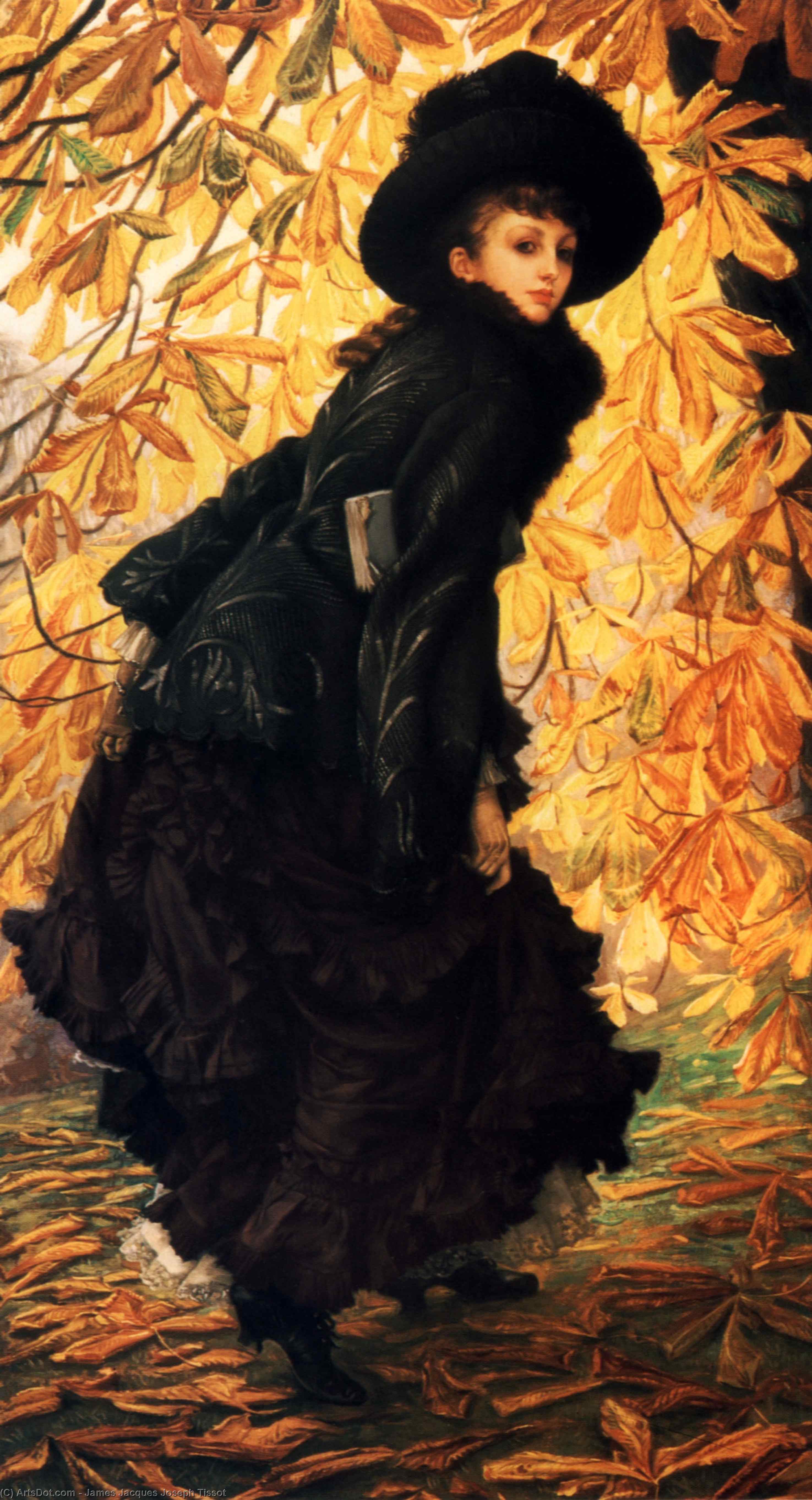
October (1878) čiji je Џејмс Тисо

October

1878 · Oil On Canvas

To gaze upon James Jacques Joseph Tissot’s October is to step directly into a sun-dappled moment of late Parisian life, a scene imbued with the gentle melancholy that only the turning season can evoke. This oil on canvas, painted in 1878, transcends a mere depiction of autumn; it captures an atmosphere—a palpable sense of transition. At its heart stands a captivating figure: a woman clad in the somber elegance of…

2
Self Portrait čiji je Џејмс Тисо

Self Portrait

Acrylic On Canvas · Fine Arts Museums of San Francisco, San Francisco

A Window into the Soul: James Tissot’s “Self Portrait” James Jacques Joseph Tissot's "Self Portrait," painted in 1865, isn’t merely a likeness; it’s a carefully constructed invitation into the artist’s world. Emerging from a period of intense artistic exploration and marked by influences ranging from Ingres to the burgeoning Impressionism of Paris, this work offers a poignant glimpse at Tissot's evolving style and his deep engagement with the social currents…

4
Portrait of Eugène Coppens de Fontenay (1867) čiji je Џејмс Тисо

Portrait of Eugène Coppens de Fontenay

1867 · Oil · Philadelphia Museum of Art, Filadelfija

A Study in Dignity The figure before us, Eugène Coppens de Fontenay, occupies the space with a quiet, commanding presence. He stands within a luxurious interior, his posture upright and direct, suggesting the confidence of a man well-acquainted with high social standing. The composition is vertical, drawing the eye from the heavy black fabric of his frock coat up to his steady gaze. There is a certain stillness here. A…

5
An Interesting Story (1872) čiji je Џејмс Тисо

An Interesting Story

1872 · Acrylic On Canvas · Nacionalna galerija Viktorije, Melburn

A Glimpse into Victorian Era Social Dynamics 'CITE>James Jacques Joseph Tissot's An Interesting Story, painted in 1872, is a masterpiece that offers a fascinating insight into the social dynamics of the Victorian era. This oil on panel painting, housed at the National Gallery of Victoria (Melbourne, Australia), captures a moment of leisure and conversation among three individuals. Composition and Setting The scene is set in what appears to be a…

6
The Japanese Bath čiji je Џејмс Тисо

The Japanese Bath

Oil On Canvas

is an oil painting by James Tissot, executed in 1864. Known in its original French as La Japonaise au bain, the work belongs to the genre of nude painting (nu). It reflects the mid-nineteenth-century fascination with Japonisme, a movement characterized by the integration of Japanese aesthetic elements into Western art.

7
Holiday (also known as The Picnic) (1876) čiji je Џејмс Тисо

Holiday (also known as The Picnic)

1876 · Oil On Canvas · Tate Gallery, London

Overview of "Holiday (also known as The Picnic)" "Holiday," also known as "The Picnic," is a captivating work by James Jacques Joseph Tissot, created in 1876. This beautiful oil on canvas piece resides at the Tate Gallery in London, United Kingdom. The scene depicts a group of people enjoying a picnic outdoors, surrounded by nature and filled with a sense of joy and relaxation. It exemplifies the Belle Époque era's…

8
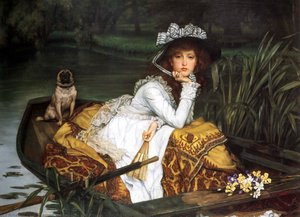
young lady in a boat čiji je Џејмс Тисо

young lady in a boat

Oil On Canvas

In the gentle embrace of 1870, James Jacques Joseph Tissot captured a fragment of time that feels as though it could breathe even today. Young Lady in a Boat is not merely a depiction of a leisurely afternoon; it is an invitation into the refined, tranquil world of the Victorian era. As the viewer’s eye meets the canvas, they are immediately drawn to the central figure—a young woman draped in…

9
Tea (1872) čiji je Џејмс Тисо

Tea

1872 · Oil On Canvas · Metropoliten музеј у Њујорку, Њујорк

In the quiet, sun-dappled atmosphere of James Jacques Joseph Tissot’s Tea, we are invited into a private sanctuary of nineteenth-century refinement. This exquisite oil painting, dating from 1872, serves as more than just a depiction of a domestic ritual; it is a window into the soul of the Victorian era. The scene centers on a woman poised with grace in a tea room, her presence commanding yet serene. Clad in…

Slike umetnika Џејмс Тисо, rangirane od 11 do 100

11Baron Aimé de la Seillière (1866) čiji je Џејмс ТисоBaron Aimé de la Seillière1866 · Staatliche Kunsthalle Karlsruhe 12The dreamer (1876) čiji je Џејмс ТисоThe dreamer1876 · Musée d'Orsay 13London Visitors (1874) čiji je Џејмс ТисоLondon Visitors1874 · Milwaukee Art Museum 14English The Dreamer (Summer Evening) (1871) čiji je Џејмс ТисоEnglish The Dreamer (Summer Evening)1871 15The Pharisee and the Publican (1894) čiji je Џејмс ТисоThe Pharisee and the Publican1894 16Tissot Twotimer (1992) čiji je Џејмс ТисоTissot Twotimer1992 · The Museum of Arts and Crafts 17Holyday (1876) čiji je Џејмс ТисоHolyday1876 18The Letter (1878) čiji je Џејмс ТисоThe Letter1878 19Portrait of Mademoiselle L. L. (also known as Young Woman in a Red Jacket) (1864) čiji je Џејмс ТисоPortrait of Mademoiselle L. L. (also known as Young Woman in a Red Jacket)1864 · Musée d'Orsay 20Jesus Goes Up Alone onto a Mountain to Pray (1894) čiji je Џејмс ТисоJesus Goes Up Alone onto a Mountain to Pray1894 21Judas Hangs Himself, illustration for 'The Life of Christ' (1896) čiji je Џејмс ТисоJudas Hangs Himself, illustration for 'The Life of Christ'1896 22Moses (1902) čiji je Џејмс ТисоMoses1902 23On the River (1871) čiji je Џејмс ТисоOn the River1871 · Government Art Collection 24Young Ladies Looking at Japanese Objects (1869) čiji je Џејмс ТисоYoung Ladies Looking at Japanese Objects1869 · Getty Center 25A Little Nimrod (1882) čiji je Џејмс ТисоA Little Nimrod1882 · Museum of Fine Arts and Archeology 26Joseph Interprets the Dreams While In Prison (1902) čiji je Џејмс ТисоJoseph Interprets the Dreams While In Prison1902 27The Departure of the Prodigal Son (1863) čiji je Џејмс ТисоThe Departure of the Prodigal Son1863 · Petit Palais 28The Dance of Death (1860) čiji je Џејмс ТисоThe Dance of Death1860 · Rhode Island School of Design Museum of Art 29Louise (1861) čiji je Џејмс ТисоLouise1861 30Marguerite in Church (1860) čiji je Џејмс ТисоMarguerite in Church1860 · National Gallery of Ireland 31Lady and Chambermaid (1870) čiji je Џејмс ТисоLady and Chambermaid1870 · National Museum of Art, Architecture and Design 32Portrait du marquis et de la marquise de Miramon et de leurs enfants (1865) čiji je Џејмс ТисоPortrait du marquis et de la marquise de Miramon et de leurs enfants1865 · Musée d'Orsay 33Victorian book illustration (1865) čiji je Џејмс ТисоVictorian book illustration1865 34Caricature of William Henry Gregory (1871) čiji je Џејмс ТисоCaricature of William Henry Gregory1871 35Dilke, Charles Wentworth (1871) čiji je Џејмс ТисоDilke, Charles Wentworth1871 36Caricature of Anthony John Mundella (1871) čiji je Џејмс ТисоCaricature of Anthony John Mundella1871 37Caricature of Matthew Arnold (1871) čiji je Џејмс ТисоCaricature of Matthew Arnold1871 38Untitled (AQQMKS) (1869) čiji je Џејмс ТисоUntitled (AQQMKS)1869 · Getty Center 39Colonel Frederick Gustavus Barnaby (1870) čiji je Џејмс ТисоColonel Frederick Gustavus Barnaby1870 40English On the Thames. A Heron (1871) čiji je Џејмс ТисоEnglish On the Thames. A Heron1871 41The Three Crows Inn, Gravesend (1873) čiji je Џејмс ТисоThe Three Crows Inn, Gravesend1873 · National Gallery of Ireland 42Empress Eugénie and the Prince Imperial at the park of Camden Place (1874) čiji je Џејмс ТисоEmpress Eugénie and the Prince Imperial at the park of Camden Place1874 · Musée National du Château de Compiègne 43Caricature of Thomas Egerton, 2nd Earl of Wilton (1873) čiji je Џејмс ТисоCaricature of Thomas Egerton, 2nd Earl of Wilton1873 44The Summer (1878) čiji je Џејмс ТисоThe Summer1878 45Remembrance Ball on Board (1876) čiji je Џејмс ТисоRemembrance Ball on Board1876 46Portrait of Miss L. (1876) čiji je Џејмс ТисоPortrait of Miss L.1876 47The portico of the National Gallery London (1878) čiji je Џејмс ТисоThe portico of the National Gallery London1878 48Spring Morning (1875) čiji je Џејмс ТисоSpring Morning1875 49Trafalgar Tavern (1878) čiji je Џејмс ТисоTrafalgar Tavern1878 50Portrait of M. B. (1876) čiji je Џејмс ТисоPortrait of M. B.1876 51The Inn of the Three Ravens (1877) čiji je Џејмс ТисоThe Inn of the Three Ravens1877 52Convalescence (1875) čiji je Џејмс ТисоConvalescence1875 53English A Winter’s Walk Français Promenade dans la neige (1878) čiji je Џејмс ТисоEnglish A Winter’s Walk Français Promenade dans la neige1878 54The Japanese Vase (1870) čiji je Џејмс ТисоThe Japanese Vase1870 55The Two Friends (1881) čiji je Џејмс ТисоThe Two Friends1881 · Rhode Island School of Design Museum of Art 56Study of Kathleen Newton (1880) čiji je Џејмс ТисоStudy of Kathleen Newton1880 · Fondation Custodia 57Caricature of Mr Lionel Lawson (1879) čiji je Џејмс ТисоCaricature of Mr Lionel Lawson1879 58Older Sister (1881) čiji je Џејмс ТисоOlder Sister1881 59The Hammock (1880) čiji je Џејмс ТисоThe Hammock1880 60In full sun (1881) čiji je Џејмс ТисоIn full sun1881 61Journal (1883) čiji je Џејмс ТисоJournal1883 62In Full Sunlight (En plein soleil) (1881) čiji je Џејмс ТисоIn Full Sunlight (En plein soleil)1881 · Metropoliten музеј у Њујорку 63The Sojourn in Egypt (1890) čiji je Џејмс ТисоThe Sojourn in Egypt1890 · National Gallery of Ireland 64Temptation in the Desert (1890) čiji je Џејмс ТисоTemptation in the Desert1890 65Type of Jew (1889) čiji je Џејмс ТисоType of Jew1889 66Type of Jew (1889) čiji je Џејмс ТисоType of Jew1889 67Type of Jew (1889) čiji je Џејмс ТисоType of Jew1889 68Armenians (1889) čiji je Џејмс ТисоArmenians1889 69Type of Jew (1889) čiji je Џејмс ТисоType of Jew1889 70An Armenian (1889) čiji je Џејмс ТисоAn Armenian1889 71Type of Jew (1889) čiji je Џејмс ТисоType of Jew1889 72Type of Jew (1889) čiji je Џејмс ТисоType of Jew1889 73Jew and Armenian (1889) čiji je Џејмс ТисоJew and Armenian1889 74Fountain of the Virgin at Ain Karim (1889) čiji je Џејмс ТисоFountain of the Virgin at Ain Karim1889 75Untitled (AQQMM4) (1890) čiji je Џејмс ТисоUntitled (AQQMM4)1890 76The Round Stone Seen from the Interior (1889) čiji je Џејмс ТисоThe Round Stone Seen from the Interior1889 77Supposed Site of the Temple (1889) čiji je Џејмс ТисоSupposed Site of the Temple1889 78Tea (1872) čiji je Џејмс ТисоTea1872 79The Meeting of Tamar and Judah (1896) čiji je Џејмс ТисоThe Meeting of Tamar and Judah1896 80The Caravan of Abram (1896) čiji je Џејмс ТисоThe Caravan of Abram1896 81The Ark Passes Over the Jordan (1896) čiji je Џејмс ТисоThe Ark Passes Over the Jordan1896 82Jacob's Dream (1896) čiji je Џејмс ТисоJacob's Dream1896 83The Seduction of Dinah, Daughter of Leah (1896) čiji je Џејмс ТисоThe Seduction of Dinah, Daughter of Leah1896 84Desolation of Tamar (1896) čiji je Џејмс ТисоDesolation of Tamar1896 85Absalom Causeth Amnon to be Slain (1896) čiji je Џејмс ТисоAbsalom Causeth Amnon to be Slain1896 86David Mourns His Son Amnon (1896) čiji je Џејмс ТисоDavid Mourns His Son Amnon1896 87Cain Leadeth Abel to Death (1896) čiji je Џејмс ТисоCain Leadeth Abel to Death1896 88Jesus Unrolls the Book in the Synagogue (1894) čiji je Џејмс ТисоJesus Unrolls the Book in the Synagogue1894 89Michal Despises David (1898) čiji je Џејмс ТисоMichal Despises David1898 90Clotilde Briatte, Comtesse Pillet-Will (1900) čiji je Џејмс ТисоClotilde Briatte, Comtesse Pillet-Will1900 91The Ark Passes Over the Jordan (1902) čiji je Џејмс ТисоThe Ark Passes Over the Jordan1902 92Balaam and the Ass, as in Numbers (1900) čiji je Џејмс ТисоBalaam and the Ass, as in Numbers1900 93The Fire of Atonement (1900) čiji je Џејмс ТисоThe Fire of Atonement1900 94Nadab and Abihu are killed in the Tabernacle, Leviticus (1900) čiji je Џејмс ТисоNadab and Abihu are killed in the Tabernacle, Leviticus1900 95Moses Smiteth the Rock in the Desert (1902) čiji je Џејмс ТисоMoses Smiteth the Rock in the Desert1902 96The Seven Trumpets of Jericho (1902) čiji je Џејмс ТисоThe Seven Trumpets of Jericho1902 97Abraham's Servant Meeteth Rebecca (1902) čiji je Џејмс ТисоAbraham's Servant Meeteth Rebecca1902 98The Death of Aaron (1902) čiji je Џејмс ТисоThe Death of Aaron1902 99The Meeting of Esau and Jacob (1902) čiji je Џејмс ТисоThe Meeting of Esau and Jacob1902 100The Plague of Locusts (1900) čiji je Џејмс ТисоThe Plague of Locusts1900

Čuvena dela Џејмс Тисо po periodima

Motivi koji su privlačili pažnju Џејмс Тисо

Četiri teme koje se najčešće ponavljaju u ovim originalima, svaka sa svojim vrhunskim primerom.

Muzeji u kojima se čuvaju originalna dela umetnika Џејмс Тисо

8 muzeja u kojima se nalazi najviše slika sa ove stranice.

Muzej Grad Radovi umetnika Џејмс Тисо Slike iz ovog spiska
Musée d'Orsay, ParizMusée d'Orsay Pariz 8 The dreamer, Portrait of Mademoiselle L. L. (also known as Young Woman in a Red Jacket), Portrait du marquis et de la marquise de Miramon et de leurs enfants
National Gallery of Ireland, DublinNational Gallery of Ireland Dublin 3 Marguerite in Church, The Three Crows Inn, Gravesend, The Sojourn in Egypt
Metropoliten музеј у Њујорку, ЊујоркMetropoliten музеј у Њујорку Њујорк 5 Tea, In Full Sunlight (En plein soleil)
Getty Center, Los AnđelesGetty Center Los Anđeles 2 Young Ladies Looking at Japanese Objects, Untitled (AQQMKS)
Rhode Island School of Design Museum of Art, ProvidensRhode Island School of Design Museum of Art Providens 2 The Dance of Death, The Two Friends
Tate Gallery, LondonTate Gallery London 4 Holiday (also known as The Picnic)
The Museum of Arts and Crafts, ZagrebThe Museum of Arts and Crafts Zagreb 3 Tissot Twotimer
Nacionalna galerija Viktorije, MelburnNacionalna galerija Viktorije Melburn 2 An Interesting Story

Џејмс Тисо, jedno autentično delo po deceniji

Radovi po decenijama

Izaberite deceniju da biste videli original koji je definiše.

Slike umetnika Џејмс Тисо: odgovori galerije

Koja je najpoznatija slika umetnika Џејмс Тисо?Otkrij odgovor

October (1878). Slede Self Portrait i English Young Ladies Looking at Japanese Objects (1869).

Koliko je godina imao/la Џејмс Тисо kada je dovršio/la October?Otkrij odgovor

42 godina: October datira iz 1878, a Џејмс Тисо je rođen/a 1836.

Koja su najbolja 10 dela umetnika Џејмс Тисо?Otkrij odgovor

October, Self Portrait, English Young Ladies Looking at Japanese Objects, Portrait of Eugène Coppens de Fontenay, An Interesting Story, The Japanese Bath, Holiday (also known as The Picnic), young lady in a boat, Tea i Two Figures at a Door (The Proposal?). Gornji rang pokazuje godinu i muzej za svako od njih.

Koliko je dela stvorio/la Џејмс Тисо?Otkrij odgovor

Naš katalog sadrži 737 dela umetnika Џејмс Тисо, datiranih od 1860 do 1902.

Gde se nalaze najpoznatiji originali umetnika Џејмс Тисо?Otkrij odgovor

Većinom u Musée d'Orsay (Pariz), National Gallery of Ireland (Dublin) i Metropoliten музеј у Њујорку (Њујорк). Tabela muzeja iznad sadrži njih sve.

Kada je Џејмс Тисо stvorio svoje najpoznatije slike?Otkrij odgovor

U 1870s: 34 od 100 dela na ovoj stranici nastalo je tada, od čega je October.

Koja su najranija i najkasnija poznata dela umetnika Џејмс Тисо?Otkrij odgovor

Na ovoj stranici, najstarije delo je iz The Dance of Death (1860), a najnovije iz Moses (1902).

Kojim se motivima Џејмс Тисо najčešće bavio?Otkrij odgovor

Woman (21), Victorian era (16) i Man (12), kroz svih 100 dela na ovoj stranici.

U kojoj je tehnici najviše radio/la Џејмс Тисо?Otkrij odgovor

Oil On Canvas, za 25 od 100 dela na ovoj stranici.

Sa kojim umetničkim pravcem je Џејмс Тисо povezan/a?Otkrij odgovor

Realism, sudeći po originalima na ovoj stranici.

Koje originale umetnika Џејмс Тисо poseduje Musée d'Orsay?Otkrij odgovor

The dreamer, Portrait of Mademoiselle L. L. (also known as Young Woman in a Red Jacket) i Portrait du marquis et de la marquise de Miramon et de leurs enfants: Musée d'Orsay, Pariz čuva 3 dela sa ove stranice.

Џејмс Тисо: umetnik

Early Life, Family and Artistic Training

Born in 1836 in the port city of Nantes, France, Jacques Joseph Tissot was the son of a family deeply connected to the textures and aesthetics of commerce. His father, Marcel Tissot, found success as a drapery merchant, a profession that likely introduced the young boy to the tactile world of fine fabrics. His mother, Marie Durand, worked as a milliner, and through her, the nuances of fashion and the delicate art of millinery entered his early perception. This domestic environment, filled with the materials of dress and the precision of trade, provided a foundation for the keen eye he would later bring to his canvases.

The pull toward a life of creation led him away from the family business and toward the heart of French art. Around 1854, he moved to Paris to begin his formal training at the École des Beaux-Arts. It was here that his raw talent met the discipline of the academy. He sought instruction from several masters, absorbing the classical traditions taught by Louis Lamothe and Hippolyte Flandrin. His education was further shaped by the rigorous methods of Jean-Auguste-Dominique Ingres and Alexandre Cabanel, whose influence helped him develop a command over form and detail that would define his early years in the capital.

The Parisian Years and Social Success

By the age of twenty, around 1856, the young man left his home to seek his fortune in Paris. It was here, amidst the bustling energy of the city, that he began to adopt the Anglicized name "James," a choice that hinted at his growing interest in the wider European culture. He sought out the finest instruction at the École des Beaux-Arts, studying under the guidance of Louis Lamothe and Hippolyte Flandrin. These years of disciplined study were not merely about technique; they were about learning to see the world through a lens of precision and elegance.

His arrival in the official art circles was marked by a significant debut at the Paris Salon in 1861. This unveiling of his work brought him immediate recognition, and he soon became a celebrated painter of the Belle Époque. He possessed a particular talent for documenting the glittering social life of the era. His canvases frequently captured the movement and fashion of theaters, opera houses, and the grand, fashionable gatherings that defined the period. He did not merely paint people; he painted the very atmosphere of Parisian high society.

  • The Meeting of Faust and Marguerite (1861)

Life and Work in London

The upheaval of the Franco-Prussian War forced a change in Tissot's life, leading him to relocate to London in 1871. He would remain in the English capital for over a decade, until 1882. This period of exile became a time of significant technical expansion. While in London, he was introduced to the drypoint etching technique by Seymour Hayden, a skill that allowed him to explore the nuances of line and shadow with newfound precision. He found a steady place within the social fabric of the city, painting highly finished scenes of London society that captured the manners and fashions of the era. These works were met with immediate success among the public, even if they did not always find favor with the more rigid critics of the day.

Beyond the crowded rooms of the social elite, Tissot found a different kind of inspiration in the landscape of the Thames. His paintings of the river possess a particular atmosphere, capturing the light and movement of the water in a way that feels deeply connected to the spirit of the place. He often returned to the motifs of his youth, incorporating ships and boats into his compositions, perhaps a lingering memory of his father's trade in Nantes. His time in London was marked by this duality: the meticulous observation of high-society manners and a more atmospheric engagement with the natural world.

The Influence of Kathleen Newton

In 1876, a woman named Kathleen Newton entered Tissot's life, bringing with her a history that challenged the rigid social codes of the era. An Irish divorcee, she became his mistress, and their connection grew so profound that she became the central figure in his private world. Her presence was not merely a personal matter but a visual one; she appeared in over 35 of his etchings and paintings, her likeness serving as a constant companion to his creative hand. Through her, the artist found a muse who would dominate both his domestic life and his artistic output.

The tragedy of her death in 1882 left Tissot devastated, a loss that seemed to fracture his very sense of reality. The void left by Kathleen was so immense that he sought to bridge the gap between the living and the dead. He turned frequently to spiritualism, hoping to find a way to communicate with her through séances. This period of mourning and searching for her spirit marked a profound shift in his temperament and his focus, as the man who once painted the glittering socialites of London began to look toward more spiritual and religious concerns.

Religious Works and Biblical Narratives

A profound shift occurred in Tissot's life after he experienced a religious vision while inside a church in Paris. This spiritual encounter redirected his focus away from the fashionable socialites of London and toward the sacred narratives of the New Testament. Driven by this new purpose, he embarked on an ambitious project to illustrate the life of Christ, seeking to bring the scriptures to life through his brush. He did not rely solely on imagination or tradition; instead, he sought a deeper truth through direct experience. He made expeditions to the Holy Land in 1886-87 and again in 1889 to observe the landscapes and customs of the region firsthand.

This commitment to archaeological exactitude defined his approach to the divine. Rather than dressing his biblical figures in the anachronistic finery of the nineteenth century, he painted them in costumes he believed to be historically authentic. He studied the architecture and the people of the Middle East to ensure his depictions carried a sense of reality. This disciplined method resulted in a massive undertaking: he completed 365 illustrations for the Life of Christ. These works, which were presented in Paris in 1894, moved many who saw them, as they replaced stylized religious tropes with a sense of tangible, historical presence.

Technique, Style and Japonisme

His hand moved with a precision that spoke of his upbringing among fine textiles, a skill that allowed him to render the textures of silk and lace with remarkable clarity. He achieved a luminous quality in his oils by layering thin glazes, a method that gave his subjects a soft, glowing presence. This technical discipline was not limited to the brush; he also mastered the mezzotint engraving technique, expanding his ability to capture light and shadow through printmaking. His work often sat at a crossroads, blending the structured foundations of academic tradition with the emerging sensibilities of Impressionism and the directness of realism.

A profound curiosity for the East drew him toward the aesthetics of Japonisme, a fascination that permeated much of his composition. He did not merely collect Japanese objects but integrated their essence into his visual language, employing asymmetrical arrangements and bold, flattened perspectives. This influence allowed him to experiment with decorative patterns and spatial harmonies that broke away from the rigid rules of his early training. In his depictions of high society, this stylistic fusion helped him capture the modern spirit of the era, balancing the meticulous detail of a portraitist with a more contemporary, fluid approach to light and form.

Legacy and Where to See His Works

Though his later years were consumed by a profound devotion to religious subjects, it is his depictions of Victorian life that remain his most significant contribution to the art of the nineteenth century. These scenes of social interaction and fashion capture a specific era of human behavior and elegance that continues to draw the eye of the historian and the admirer alike. His ability to render the textures of high society ensures that his presence is still felt in the great halls of the world's most respected institutions.

Those who wish to encounter his brushwork in person may find his works preserved in several major collections. In Paris, the Musée d'Orsay holds his paintings, offering a glimpse into the stylistic evolution he underwent. His reach extends across the Atlantic, where the Brooklyn Museum and the National Gallery of Art in Washington maintain his works within their permanent holdings. In Los Angeles, the J. Paul Getty Museum also preserves his artistic output, allowing his vision to persist through the ages.