Portrait of Hieronymus Bosch

The 100 Most Famous Hieronymus Bosch Paintings, Each One of a Kind

Updated oktober 2026 · ranked by our popularity score (searches, visits and orders for each work) · 371 works by Hieronymus Bosch in our catalogue

In short

Vrt zemeljskih užitkov (1504) is the Hieronymus Bosch painting that draws the most eyes; the original belongs to the Muzej Prado, Madrid. After it, the eye goes to Sedem smrtnih grehov (1480) and Triptih Obziri z Nagnjavanjem Sv. Ane (1506). Among the 371 works of Hieronymus Bosch in our catalog, these 100 are the most famous, each a unique original presented with its year, its museum and the reason it endures.

1450 – 1516, 's-Hertogenbosch Severna renesansa Most works: Muzej Prado

Top 10 paintings by Hieronymus Bosch, through the gallery's eye

1
Vrt zemeljskih užitkov (1504) by Hieronymus Bosch

Vrt zemeljskih užitkov

1504 · Olje na leseni podlagi · Muzej Prado, Madrid

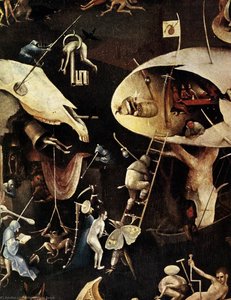
Vrt Zemeljskih Radosti: Boschova Enigmatična Vizija Hieronymus Boschev "Vrt Zemeljskih Radosti" je nedvomno ena najbolj prepoznavnih in skrivnostnih del v zgodovini umetnosti. Ustvarjen med letoma 1490 in 1510, ta monumentalni triptih razkriva vizualno pripoved o potovanju človeštva od nedolžnosti do iskanja užitkov in končnega sodbe. Več kot le slika je to globoka meditacija o moralnosti, željah in posledicah zemeljskih veselja – opozorilo, ki še danes odzvanja skozi stoletja. Bosch ni…

2
Sedem smrtnih grehov (1480) by Hieronymus Bosch

Sedem smrtnih grehov

1480 · Tempera na leseni podlagi · Muzej Prado, Madrid

To čarobno umetniško delo, ustvarjeno okoli leta 1480, predstavlja kompleksno alegorično sceno, ki se vrti okoli priljubljenega srednjoveškega motiva „Kolesa sreče“. Več kot le vizualno osupljiva kompozicija, gre za globoko meditacijo o ciklični naravi življenja, nepredvidljivi roki usode in trajni borbi med vrlinom in grehom. Ta izdelek ponuja prepričljivo pogled v tesnobe in prepričanja Evrope poznega 15. stoletja.

3
Triptih Obziri z Nagnjavanjem Sv. Ane (1506) by Hieronymus Bosch

Triptih Obziri z Nagnjavanjem Sv. Ane

1506 · Olje na leseni podlagi · Museu Nacional de Arte Antiga, Lizbona

Očaravajuča tematika in narativna globina Ta izjemni triptih živopisno zajema duhovne in moralne borbe svetnika Antonija v sredi surrealistične, kaotične pokrajine, polne fantastičnih bitij in simboličnih elementov. V središču kompozicije je sam svetinec Antonij, prikazan v trenutku intenzivne molitve in kontemplacije, ko se sooča s skušavami in slabostmi, ki grozijo njegovi duhovni čistini. Delo raziskuje teme vere, skušave in božanske vztrajnosti ter gledalce vabi v globoko meditacijo o človeški morali…

4
Triptih Žitnice (1504) by Hieronymus Bosch

Triptih Žitnice

1504 · Olje na leseni podlagi · Muzej Prado, Madrid

Triptih Žitnice: Vrtnico Severne renesančne umetnosti Pregled Triptih Žitnice preroha Hieronymusa Boscha je očarljivo vrhunsko delo, ki v celoti utripa s svetlobno edinstvenim slogom umetnika in njegovo globoko simboliko. To triptih, ustvarjen okoli leta 1504, predstavlja osupljiv primer umetnosti severne renesanse, ki je znana po svojih zapletanih detajlih, bogatih barvah in kompleksnih pripovestnih nitah. Kompozicija in slog Triptih se sestoji iz treseh platen, od katerih vsako pripoveduje ločeno, a hkrati…

5
The Ship of Fools (1500) by Hieronymus Bosch

The Ship of Fools

1500 · Olje na platnu · Louvre, Pariz

Hieronymus Boschova "Ladja Nesrečnih" – Priča o Človeški Hujšavi Hieronymus Boschova "Ladja Nesrečnih" (1500) je nepozaben primer renesančne umetnosti, ki nas prežljuje s svojo surrealistično vizijo človeške huje. Ta delo, ustvarjeno v zgodnjih letih 16. stoletja, ni le slika; to je kompleksna alegorija, ki prikazuje človeško napake in moralne podcenjevanje. V osrednji poziciji stoji čudovit, a grozljiv lik z ptičjo glavo, ki sedi na drevesu, v katerem je zakorenitela lobanja…

6
Poslednji sodišč (1482) by Hieronymus Bosch

Poslednji sodišč

Boschovo »Poslednji sodišč«, dokončano leta 1482, ni le prikaz religijskega dogme; je neonski pot v podzavest renesančnega umetnika in prehriben odraz tesnobi, ki so bile povezane z smrtnostjo in božijim sodiščem. Naslikano na lesu—mediumu, ki ga je Bosch izmed drugih izbral zaradi njegove trpežnosti in sposobnosti prenašanja zapletenih podrobnosti—to monumentalno triptih presega preprosto pripovedovanje zgodov. Namesto tega nam predstavlja panoramo grotesknih figur in simboličnih grozot, ki še stoletja pozneje očarujajo…

7
Zdravljenje neumnosti (Izvlečenje kamna umreženosti) (1475) by Hieronymus Bosch

Zdravljenje neumnosti (Izvlečenje kamna umreženosti)

1475 · Akril na platnu · Muzej Prado, Madrid

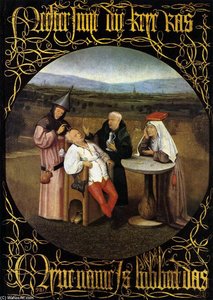
Boschovo »Zdravljenje neumnosti«, ali »Izvlečenje kamna noričnosti«, stoji kot edinstveno in pretresljivo spominjanje na tesnobe, ki so ključačale pod površino poznega srednjovekega Evrope. To vrhunsko oljno delo na leseni podlagi, naslikano okoli leta 1475, se nahaja v muzeju Museo del Prado v Madridu in gledalcem ponuja nepreverljiv vpogled v Boschovo izjemno domišljijo ter njegovo mojstrovsko manipulacijo s simboliko.

8
Krist nosi križ (10) (1515) by Hieronymus Bosch

Krist nosi križ (10)

1515 · Olje na leseni podlagi · Museum voor Schone Kunsten, Gent

Hieronymus Bosch, eden najbolj enigmatičnih in fascinantnih umetnikov severne renesančne umetnosti, je ustvaril serijo slik, ki prikazujejo Krista, ko nosi križ. Med temi deli izstopa Kristov nosil križ (10), ki se nahaja v Museum voor Schone Kunsten v Gentu v Belgiji, saj s svojo edinstveno kompozicijo in čustveno globino navdušuje vsakega gledalca.

9
Posvetovanje kraljev (1510) by Hieronymus Bosch

Posvetovanje kraljev

1510 · Olje na leseni podlagi · Muzej Prado, Madrid

Ustvarjeno okoli leta 1510, je Triptih pozdrav kraljev Hieronymusa Boscha osupljiv primer umetnosti severne renesanse. To natančno izdelano del razprelega biblično zgodbo z edinstveno kombinacijo zemeljanske realnosti in globokega duhovnega simbolizma, kar gledalca vabijo v svet, kjer se pobožnost sreča s fantastičnim.

10
Smrt in skuj"*"} (1490) by Hieronymus Bosch

Smrt in skuj"*"}

1490 · Akril na platnu · National Gallery of Art, Washington

Oster in opomin: Potovanje v globino Boschovega *Smrti in sketa* Smrt in sket*, ki ga je okoli leta 1490 ustvaril enigmatični nizozemski mojster Hieronymus Bosch, ni le slika; je pretresljiva meditacija o smrtnosti, pohlepi in popolni neučinkovitosti prizemljenih premoženstev. Prvotno del večjega triptika – ki je zdaj žal razdeljen – ta panel ponuja koncentrirano dozo Boschovega značilnega surrealizma in moralistične namene. Motiv in pripoved Scena se odvija v klaustrofobičnem notranjem…

Hieronymus Bosch's famous paintings, numbers 11 to 100

11Potnik by Hieronymus BoschPotnikMuseum Boijmans Van Beuningen 12Ecce Homo (1500) by Hieronymus BoschEcce Homo1500 · Städel Museum 13Poslednji sodnik (podrobnost) (1505) by Hieronymus BoschPoslednji sodnik (podrobnost)1505 · Akademija likovnih umetnosti v Dunaju 14Ship of Fools (1500) by Hieronymus BoschShip of Fools1500 15Triptih skušanja sv. Antonija (osrednji panel) (1505) by Hieronymus BoschTriptih skušanja sv. Antonija (osrednji panel)1505 · Museu Nacional de Arte Antiga 16Smrt in truta (Del) (1490) by Hieronymus BoschSmrt in truta (Del)1490 · National Gallery of Art 17Srednji panel triptika Zadnji sod</a> by Hieronymus BoschSrednji panel triptika Zadnji sod</a> 18The Temptation of St. Anthony (detail) (1516) by Hieronymus BoschThe Temptation of St. Anthony (detail)1516 19Triptih vrt Evdenskih uživanj (detajl) (23) (1500) by Hieronymus BoschTriptih vrt Evdenskih uživanj (detajl) (23)1500 · Muzej Prado 20Sedem smrtnih grehov – mojestitev umetniškega dela znanega nizozemskega umetnika Hieronima Boscha. Raziskovanje bogate simbolike in temnega fantazijskega sloga v tej ikonični sliki. by Hieronymus BoschSedem smrtnih grehov – mojestitev umetniškega dela znanega nizozemskega umetnika Hieronima Boscha. Raziskovanje bogate simbolike in temnega fantazijskega sloga v tej ikonični sliki. 21Sedem smrtnih grehov in štiri zadnja stvarstva (1485) by Hieronymus BoschSedem smrtnih grehov in štiri zadnja stvarstva1485 · Muzej Prado 22Triptik poslednjega sodba (1504) by Hieronymus BoschTriptik poslednjega sodba1504 · Akademija likovnih umetnosti v Dunaju 23Hristovo posmehovanje (Kronanje s trnjem) (1510) by Hieronymus BoschHristovo posmehovanje (Kronanje s trnjem)1510 · National Gallery 24Triptih vrtov zemaljskih uživkov (detajl) (13) (1500) by Hieronymus BoschTriptih vrtov zemaljskih uživkov (detajl) (13)1500 · Muzej Prado 25Triptych of Last Judgement (left wing) by Hieronymus BoschTriptych of Last Judgement (left wing) 26Kristusova Descenza v Peklo by Hieronymus BoschKristusova Descenza v PekloMetropolitanski muzej umetnosti 27The Adoration of the Magi (1510) by Hieronymus BoschThe Adoration of the Magi1510 · Muzej Prado 28Pobožnost kraljev (srednji panel) (1510) by Hieronymus BoschPobožnost kraljev (srednji panel)1510 · Muzej Prado 29Mankind Beset by Devils (reverse of Rebel Angels panel) (1500) by Hieronymus BoschMankind Beset by Devils (reverse of Rebel Angels panel)1500 · Museum Boijmans Van Beuningen 30Dvorec dožog, Benetke - pekel by Hieronymus BoschDvorec dožog, Benetke - pekel 31Vrt zemalskih uživanj (1500) by Hieronymus BoschVrt zemalskih uživanj1500 32Sedem Smrtznih Prestopkov (podrobnost) (10) (1480) by Hieronymus BoschSedem Smrtznih Prestopkov (podrobnost) (10)1480 · Muzej Prado 33The Ship of Fools (1500) by Hieronymus BoschThe Ship of Fools1500 34The Garden of Earthly Delights (detail) (1515) by Hieronymus BoschThe Garden of Earthly Delights (detail)1515 35Sedem smrtnih pregreš, detajl (11) (1480) by Hieronymus BoschSedem smrtnih pregreš, detajl (11)1480 · Muzej Prado 36Triptih vrtov zemalskih uživkov (detajl) (48) (1500) by Hieronymus BoschTriptih vrtov zemalskih uživkov (detajl) (48)1500 · Muzej Prado 37Triptik o pokušanju sv. Antonija (detajl) (11) (1505) by Hieronymus BoschTriptik o pokušanju sv. Antonija (detajl) (11)1505 · Museu Nacional de Arte Antiga 38St. Liberata Triptych (1503) by Hieronymus BoschSt. Liberata Triptych1503 39Triptih zadnjega soudu (srednji panel) (1504) by Hieronymus BoschTriptih zadnjega soudu (srednji panel)1504 · Akademija likovnih umetnosti v Dunaju 40Haywain( detail) (1500) by Hieronymus BoschHaywain( detail)1500 41Triptih vrtov zemalskih uživanj (detajl) (33) (1500) by Hieronymus BoschTriptih vrtov zemalskih uživanj (detajl) (33)1500 · Muzej Prado 42Triptych of Haywain (right wing) (1500) by Hieronymus BoschTriptych of Haywain (right wing)1500 · Muzej Prado 43Triptih skušnj svetnika Antonija (podrobnost) (37) (1505) by Hieronymus BoschTriptih skušnj svetnika Antonija (podrobnost) (37)1505 · Museu Nacional de Arte Antiga 44Noah's Ark on Mount Ararat (obverse) (1500) by Hieronymus BoschNoah's Ark on Mount Ararat (obverse)1500 · Museum Boijmans Van Beuningen 45Triptih pustinških svetnikov (1505) by Hieronymus BoschTriptih pustinških svetnikov1505 · Dogejeva palača 46Aretacija Krista, Jheronimus Bosch (v stilu), ok. 1530 - ok. 1550 (1550) by Hieronymus BoschAretacija Krista, Jheronimus Bosch (v stilu), ok. 1530 - ok. 15501550 47Ecce Homo (1475) by Hieronymus BoschEcce Homo1475 · Städelsches Kunstinstitut und Städtische Galerie 48Triptih vrtov prizemljenih uživkov (detajl) (18) (1500) by Hieronymus BoschTriptih vrtov prizemljenih uživkov (detajl) (18)1500 · Muzej Prado 49Dvorec Dožov, Benetke - Pekel, pad pokamednih by Hieronymus BoschDvorec Dožov, Benetke - Pekel, pad pokamednih 50The Garden of Earthly Delights (1515) by Hieronymus BoschThe Garden of Earthly Delights1515 · Muzej Prado 51Prekušave svetega Antona (1501) by Hieronymus BoschPrekušave svetega Antona1501 · Muzej Prado 52Allegory of Gluttony and Lust by Hieronymus BoschAllegory of Gluttony and LustYale University Art Gallery 53Christ Carrying the Cross (1480) by Hieronymus BoschChrist Carrying the Cross1480 · Kunsthistorisches Museum 54The Garden of Earthly Delights (detail) (30) (1504) by Hieronymus BoschThe Garden of Earthly Delights (detail) (30)1504 55Hristovo posmevanje (Kronanje s trnjem) (1495) by Hieronymus BoschHristovo posmevanje (Kronanje s trnjem)1495 · National Gallery 56Triptih mučeništva svete Liberate (1500) by Hieronymus BoschTriptih mučeništva svete Liberate1500 · Dogejeva palača 57Triptych of Temptation of St Anthony (detail) (31) (1505) by Hieronymus BoschTriptych of Temptation of St Anthony (detail) (31)1505 · Museu Nacional de Arte Antiga 58Triptih o senu (srednji panel) (1500) by Hieronymus BoschTriptih o senu (srednji panel)1500 · Monasterio de San Lorenzo 59Triptih Senovnika (srednji panel) (1500) by Hieronymus BoschTriptih Senovnika (srednji panel)1500 · Muzej Prado 60Triptych of Temptation of St Anthony (detail) (1505) by Hieronymus BoschTriptych of Temptation of St Anthony (detail)1505 · Museu Nacional de Arte Antiga 61Triptih skušanja sv. Antonija (detajl) (14) (1505) by Hieronymus BoschTriptih skušanja sv. Antonija (detajl) (14)1505 · Museu Nacional de Arte Antiga 62Pobožnost kraljevih modrocev by Hieronymus BoschPobožnost kraljevih modrocevPhiladelphia Museum of Art 63Ascent blaženih (1504) by Hieronymus BoschAscent blaženih1504 64Triptih mučeništva svete Liberate (centralni panel) (1500) by Hieronymus BoschTriptih mučeništva svete Liberate (centralni panel)1500 · Dogejeva palača 65Ecce Homo (1490) by Hieronymus BoschEcce Homo1490 · Philadelphia Museum of Art 66The Garden of Earthly Delights (detail) (1515) by Hieronymus BoschThe Garden of Earthly Delights (detail)1515 · Muzej Prado 67Vrt zemalskih uživanj (podrobnost) (9) (1515) by Hieronymus BoschVrt zemalskih uživanj (podrobnost) (9)1515 68Paradise and Hell (1510) by Hieronymus BoschParadise and Hell1510 · Muzej Prado 69Sv. Janez Krstnik na divjavi by Hieronymus BoschSv. Janez Krstnik na divjaviMuseo Lázaro Galdiano 70The Mounted Escort of the Magi (triptych, inside of right wing) (1500) by Hieronymus BoschThe Mounted Escort of the Magi (triptych, inside of right wing)1500 · Upton House 71Triptih vrt Evdenskih uživanj (detajl) (21) (1500) by Hieronymus BoschTriptih vrt Evdenskih uživanj (detajl) (21)1500 · Muzej Prado 72Razstava nebeščanskega vzpona; Paradiz, by Hieronymus BoschRazstava nebeščanskega vzpona; Paradiz, 73Sedem smučnih podatkov in zadnji stvari by Hieronymus BoschSedem smučnih podatkov in zadnji stvari 74St John the Evangelist on Patmos (1504) by Hieronymus BoschSt John the Evangelist on Patmos1504 · Staatliche Museen zu Berlin 75Krist v Limbu by Hieronymus BoschKrist v LimbuPhiladelphia Museum of Art 76Saint Christopher (1508) by Hieronymus BoschSaint Christopher1508 · Noordbrabants Museum 77Tree-Man by Hieronymus BoschTree-ManGraphische Sammlung Albertina 78The Garden of Earthly Delights (detail) (12) (1515) by Hieronymus BoschThe Garden of Earthly Delights (detail) (12)1515 · Muzej lepih umetnosti 79St Agnes with the Donor (right wing, detail) (1510) by Hieronymus BoschSt Agnes with the Donor (right wing, detail)1510 · Muzej Prado 80Christ in Limbo (1510) by Hieronymus BoschChrist in Limbo1510 81Triptych of Temptation of St Anthony (outer right wing) (1505) by Hieronymus BoschTriptych of Temptation of St Anthony (outer right wing)1505 · Museu Nacional de Arte Antiga 82Triptih vrtov zemaljskih uživkov (detajl) (20) (1500) by Hieronymus BoschTriptih vrtov zemaljskih uživkov (detajl) (20)1500 · Muzej Prado 83Beggars by Hieronymus BoschBeggarsGraphische Sammlung Albertina 84The Temptation of St. Anthony (detail) (1516) by Hieronymus BoschThe Temptation of St. Anthony (detail)1516 85Veštice by Hieronymus BoschVešticeLouvre 86The Garden of Earthly Delights (detail) (1500) by Hieronymus BoschThe Garden of Earthly Delights (detail)1500 · Muzej Prado 87Triptych of Temptation of St Anthony (detail) (22) (1505) by Hieronymus BoschTriptych of Temptation of St Anthony (detail) (22)1505 · Museu Nacional de Arte Antiga 88Pobožanje kraljev (1650) by Hieronymus BoschPobožanje kraljev1650 · Rijksmuseum 89Triptych of Temptation of St Anthony (detail) (40) (1505) by Hieronymus BoschTriptych of Temptation of St Anthony (detail) (40)1505 · Museu Nacional de Arte Antiga 90The Seven Deadly Sins (detail) (12) (1480) by Hieronymus BoschThe Seven Deadly Sins (detail) (12)1480 · Muzej Prado 91The Ship of Fools in Flames by Hieronymus BoschThe Ship of Fools in FlamesAkademija likovnih umetnosti v Dunaju 92Triptych of Temptation of St Anthony (detail) (30) (1505) by Hieronymus BoschTriptych of Temptation of St Anthony (detail) (30)1505 · Museu Nacional de Arte Antiga 93The Garden of Earthly Delights (detail) (1500) by Hieronymus BoschThe Garden of Earthly Delights (detail)1500 94The Garden of Earthly Delights (detail) (21) (1504) by Hieronymus BoschThe Garden of Earthly Delights (detail) (21)1504 95The Garden of Earthly Delights (detail) (17) (1504) by Hieronymus BoschThe Garden of Earthly Delights (detail) (17)1504 96Triptych of Garden of Earthly Delights (detail) (19) (1500) by Hieronymus BoschTriptych of Garden of Earthly Delights (detail) (19)1500 · Muzej Prado 97Zadnji božji sodnik, desni krilo by Hieronymus BoschZadnji božji sodnik, desni krilo 98Prekušava sv. Antona, središnji panel by Hieronymus BoschPrekušava sv. Antona, središnji panel 99Triptych of Haywain (detail) (1500) by Hieronymus BoschTriptych of Haywain (detail)1500 · Monasterio de San Lorenzo 100Triptych of Garden of Earthly Delights (detail) (22) (1500) by Hieronymus BoschTriptych of Garden of Earthly Delights (detail) (22)1500 · Muzej Prado

Hieronymus Bosch's famous paintings, period by period

The subjects that held Hieronymus Bosch's eye

The four subjects that come back most often in these originals, each with its finest example.

The museums that keep Hieronymus Bosch's originals

The 8 museums that hold the most of the paintings on this page.

Museum City Works by Hieronymus Bosch Paintings from this list
Muzej Prado, MadridMuzej Prado Madrid 65 Vrt zemeljskih užitkov, Sedem smrtnih grehov, Triptih Žitnice
Museu Nacional de Arte Antiga, LizbonaMuseu Nacional de Arte Antiga Lizbona 18 Triptih Obziri z Nagnjavanjem Sv. Ane, Triptih skušanja sv. Antonija (osrednji panel), Triptik o pokušanju sv. Antonija (detajl) (11)
Akademija likovnih umetnosti v Dunaju, DunajAkademija likovnih umetnosti v Dunaju Dunaj 9 Poslednji sodišč, Poslednji sodnik (podrobnost), Triptik poslednjega sodba
Museum Boijmans Van Beuningen, RotterdamMuseum Boijmans Van Beuningen Rotterdam 14 Potnik, Mankind Beset by Devils (reverse of Rebel Angels panel), Noah's Ark on Mount Ararat (obverse)
Dogejeva palača, BenetkeDogejeva palača Benetke 8 Triptih pustinških svetnikov, Triptih mučeništva svete Liberate, Triptih mučeništva svete Liberate (centralni panel)
Philadelphia Museum of Art, FiladelfijaPhiladelphia Museum of Art Filadelfija 7 Pobožnost kraljevih modrocev, Ecce Homo, Krist v Limbu
Monasterio de San Lorenzo, EscorialMonasterio de San Lorenzo Escorial 5 Triptih o senu (srednji panel), Triptych of Haywain (detail)
Louvre, ParizLouvre Pariz 4 The Ship of Fools, Veštice

Hieronymus Bosch across the decades: one unique original for each

Works per decade

Pick a decade to see the original that defines it.

Hieronymus Bosch's paintings: questions for the gallery

What is the single most famous work of Hieronymus Bosch?Reveal the answer

Vrt zemeljskih užitkov (1504), Muzej Prado, Madrid. Sedem smrtnih grehov (1480) and Triptih Obziri z Nagnjavanjem Sv. Ane (1506) come next.

At what age did Hieronymus Bosch create Vrt zemeljskih užitkov?Reveal the answer

54 years old: Vrt zemeljskih užitkov dates from 1504, and Hieronymus Bosch was born in 1450.

Which ten paintings by Hieronymus Bosch are the most famous?Reveal the answer

Vrt zemeljskih užitkov, Sedem smrtnih grehov, Triptih Obziri z Nagnjavanjem Sv. Ane, Triptih Žitnice, The Ship of Fools, Poslednji sodišč, Zdravljenje neumnosti (Izvlečenje kamna umreženosti), Krist nosi križ (10), Posvetovanje kraljev and Smrt in skuj"*"}. The ranking above gives each one's year and museum.

How many works by Hieronymus Bosch are known?Reveal the answer

Our catalog holds 371 works by Hieronymus Bosch, dated from 1475 to 1516.

Where can the most famous Hieronymus Bosch originals be seen?Reveal the answer

Mostly in Muzej Prado (Madrid), Museu Nacional de Arte Antiga (Lizbona) and Akademija likovnih umetnosti v Dunaju (Dunaj). The museum table above lists them all.

During which period did Hieronymus Bosch create the best-known paintings?Reveal the answer

In 1500s: 51 of the 100 works on this page were made then, Vrt zemeljskih užitkov among them.

Which famous Hieronymus Bosch painting is the earliest, and which the latest?Reveal the answer

On this page, the earliest is Zdravljenje neumnosti (Izvlečenje kamna umreženosti) (1475) and the latest The Temptation of St. Anthony (detail) (1516).

What subjects did Hieronymus Bosch favour?Reveal the answer

Simbolizem (17), Medieval art (11) and Allegory (10), across the 100 works on this page.

What materials did Hieronymus Bosch paint with most?Reveal the answer

Olje na leseni podlagi, for 36 of the 100 works on this page.

Which movement does the work of Hieronymus Bosch belong to?Reveal the answer

Severna renesansa, judging by the originals on this page.

What Hieronymus Bosch originals can I see at the Muzej Prado?Reveal the answer

Vrt zemeljskih užitkov, Sedem smrtnih grehov and Triptih Žitnice: the Muzej Prado, Madrid holds 28 of the works on this page.

Where can I order a hand-painted Hieronymus Bosch reproduction?Reveal the answer

Yes, as a reproduction: the original stays in its museum, but any painting on this page can be painted by hand for you, made to order one at a time, from the painting's own page.

Hieronymus Bosch: a portrait of the artist

The Life and Identity of Hieronymus Bosch

The name Hieronymus Bosch belongs to a man born Jheronimus van Aken. He emerges from the history of the Netherlands around 1450 in the town of 's-Hertogenbosch. This was a period of intense religious fervor and societal unease in the Duchy of Brabant. He was a Dutch painter whose very identity remains a subject of intense scrutiny. Records from the time are fragmented. They offer only glimpses of a man who would become a notable representative of the Early Netherlandish painting school.

His existence was rooted in a lineage of creators. He was born into a family with a long tradition of painting, a background that likely shaped his early understanding of the medium. While his contemporaries often focused on the serene, Bosch turned his gaze toward the grotesque and the symbolic. He navigated a world where the boundaries between the divine and the demonic appeared to dissolve. His work reflects the anxieties of the late medieval era, capturing a sense of human folly through a highly individualistic lens.

Early Life, Family and Training

The roots of the artist's identity are embedded in the very architecture of 's-Hertogenbosch. He is born in his grandfather's house, a structure tied to a lineage of creators. His grandfather, Jan van Aken, was a painter who died in 1454. This familial connection to the craft is not merely incidental; it is foundational. His father, Anthonius van Aken, continues this tradition, working both as a painter and as an artistic adviser. The workshop environment is the first classroom, a space where the technical conventions of Netherlandish painting are absorbed through daily practice and observation.

Training begins within this family workshop. He learns the discipline of the medium through the hands of his kin, absorbing the methods of his predecessors. The transition from a student in a family studio to a recognized figure in the municipal records occurs in 1474. This is the first time his name appears in the official documents of 's-Hertogenbosch. He moves from the private sphere of the family workshop into the public record of the city, a step that marks his emergence as an individual within the professional landscape of the Duchy of Brabant.

Marriage and Social Standing

The stability of Bosch's personal life takes shape between 1479 and 1481. He marries Aleyt Goyaerts van den Meervenne, a union that brings more than companionship. Through her family’s holdings, Aleyt provides a layer of financial security, anchoring the artist within the local economy. The couple eventually moves to the nearby town of Oirschot, a shift that marks a departure from the immediate bustle of his birthplace.

Socially, Bosch moves within the influential circles of the Brabant region. In 1486 or 1487, he joins the Illustrious Brotherhood of Our Lady. Membership in this highly respected religious confraternity places him among the influential citizens of 's-Hertogenbosch. This affiliation provides a structured connection to the religious and civic life of the community, cementing his position as a recognized figure in the local social hierarchy.

Technique and Artistic Style

Bosch works primarily on oak panels, utilizing the masterful oil techniques of the Netherlandish tradition. He does not seek the smooth, invisible surface favored by many of his contemporaries. Instead, his application of paint often leaves a rough surface, a tactile quality that lends weight to his strange subjects. Through the precise use of glazing—layering thin, translucent washes of color—he achieves a sense of luminous depth and intricate texture. This technical control allows for a startling clarity even within his most chaotic compositions.

His visual language relies on a fusion of meticulous detail and wildly imaginative imagery. He populates his landscapes with hybrid beings, grotesque demons, and strange, anatomical distortions that challenge the viewer's perception of reality. These figures are not mere decorations; they function as symbols of vice and spiritual corruption. The tension between his precise, realistic rendering of textures and the surreal nature of his subjects creates a profound sense of unease. He captures the human condition through a lens of intense moral scrutiny, where every creature carries a heavy theological weight.

Key Works and Masterpieces

The gaze shifts to the triptych known as The Garden of Earthly Delights. It remains his most famous work, a complex visual labyrinth. The left panel presents the Garden of Eden, teeming with life. The central panel depicts a world consumed by sensual pleasure and unrestrained desire. On the right, a terrifying vision of hell unfolds. This work functions as a panoramic view of humanity’s fall from grace, moving from paradise to the torments of the afterlife.

In other compositions, Bosch explores the mechanics of sin and the chaos of the human condition. The Seven Deadly Sins, held in the Museo del Prado in Madrid, examines moral failure through a structured lens. Around 1500, he produced The Ship of Fools, a work capturing the folly of mankind. His ability to render the grotesque is further seen in The Temptation of St. Anthony, one of his notable works. The Haywain Triptych also stands as a significant piece in his body of work, presenting a world caught in a cycle of temptation and judgment.

Legacy and Enduring Influence

The ripples of Bosch’s vision moved rapidly through the 16th century, shaping the trajectory of Northern art. Pieter Bruegel the Elder emerges as his most significant follower, adopting and expanding upon the complex compositional structures and moralizing themes that Bosch pioneered. This lineage of imagery did not end with the Renaissance. Centuries later, the Surrealists found a precursor in his work. Salvador Dalí and Max Ernst looked toward his canvases to find a visual language for the subconscious, drawing direct inspiration from his ability to render the impossible with startling clarity.

His work remains remarkably modern in its execution. He possessed a unique capacity to weave together the grotesque and the beautiful, creating a tension that feels contemporary even in a digital age. This duality allows his paintings to function as windows into the religious and social climate of the 15th and 16th centuries. Through his brush, the anxieties of a changing world find physical form. He captured a specific era of intense moral scrutiny and societal shifts, turning theological concepts into visceral, visual realities that continue to provoke debate.

Where to See the Works Today

The weight of Bosch's legacy is concentrated heavily in Madrid. The Museo del Prado holds 55 of his works, providing the most extensive look at his visual language. Within these halls, one encounters the terrifying details of his hellscapes and the complex moral allegories that defined his career. The collection includes the Triptych of the Adoration of the Magi (c. 1510) and The Seven Deadly Sins (c. 1480).

In Lisbon, the Museu Nacional de Arte Antiga preserves 18 works, including the Temptation of St. Anthony (c. 1506). The presence of his imagery in Portugal highlights the reach of his influence across Europe. Meanwhile, the Museum Boijmans Van Beuningen in the Netherlands maintains 10 works, including The Vagabond (The Prodigal Son) (c. 1516). These pieces offer a direct connection to the Netherlandish tradition from which he emerged.

Other significant collections are scattered across the continent. The Academy of Fine Arts in Vienna holds 8 works, such as Christ Child with a Walking Frame (c. 1480). In Berlin, the Staatliche Museen contains 7 works. To see his output in its entirety, one must move between these specific centers of preservation.

All 371 works by Hieronymus Bosch →