Portret Koloman Moser

100 najbolj znanih slik umetnika Koloman Moser, vsaka popolnoma edinstvena

Posodobljeno november 2026 · uvrščeno glede na naš skoraj priljubljenosti (iskanja, obiske in naročila za vsako delo) · 189 del v našem katalogu avtorja Koloman Moser

Kratek opis

Dance of the Wreath-Bearing Maidens (1898) je slika avtorja Koloman Moser, ki pritegne največ pogledov; original se nahaja v muzeju Secession, Dunaj. Nato se pogled smeri k Poster of the Beethoven sonatas evening (1908) in Drafts for the exlibris for Fritz Waerndorfer (1903). Med 189 dela umetnika Koloman Moser v našem katalogu so ta 100 najbolj znana; vsako je edinstven original, predstavljen z letnico nastanka, muzejem in razlogom za njegovo nečasenost.

1868 – 1918, Dunaj Art nouveau Največ del: Leopold Museum

10 najboljjših slik umetnika Koloman Moser skozi oči galerije

1
Dance of the Wreath-Bearing Maidens (1898) avtorja Koloman Moser

Dance of the Wreath-Bearing Maidens

1898 · Black and White Photography · Secession, Dunaj

In this work, titled Dance of the Wreath-Bearing Maidens, Koloman Moser presents an architectural scene that centers on a large, imposing structure. The composition is anchored by this building, which is likely the Secession Building located in Vienna, Austria. The structure is defined by a prominent roofline and a series of decorative elements that frame its entrances. Through the use of columns and arches, the architecture gains a sense of…

2
Poster of the Beethoven sonatas evening (1908) avtorja Koloman Moser

Poster of the Beethoven sonatas evening

1908 · Print

The Poster of the Beethoven sonatas evening by Koloman Moser emerges from 1908, a moment when the air in Vienna pulses with new artistic energy. This graphic work functions as a visual invitation to a specific musical encounter. It announces an evening dedicated to the profound compositions of Ludwig van Beethoven, inviting the viewer to witness the power of his sonatas through a modern lens. The design carries the weight…

3
Drafts for the exlibris for Fritz Waerndorfer (1903) avtorja Koloman Moser

Drafts for the exlibris for Fritz Waerndorfer

1903 · Ink On Paper

The ink flows across the paper in a rhythmic dance, capturing a moment of transition between thought and final form. In this 1903 draft for an exlibris, the lines possess a liquid quality, winding around figures with an organic grace that feels alive. Three women emerge from the composition, their bodies elongated and poised in a way that suggests a dreamlike elegance. One figure wears a crown, her presence lending…

4
Semmering Landscape avtorja Koloman Moser

Semmering Landscape

Oil On Canvas

The landscape of the Semmering region finds a quiet, symbolic expression in this work. Mountains rise against a sky saturated with purple hues, while a rising sun casts a warm glow over the peaks. Scattered trees provide texture and depth to the composition, grounding the ethereal light in the physical reality of the terrain. Two figures are positioned within the scene—one near the center and another toward the right—offering a…

5
Loneliness (1902) avtorja Koloman Moser

Loneliness

1902 · Watercolor

In Loneliness, Koloman Moser explores a quiet, introspective moment through the medium of watercolor. Created about 1902, this work reflects the sensibilities of the Art Nouveau style, focusing on a singular, solitary figure. A man stands beneath a tree, his head partially obscured by the foliage, creating a sense of withdrawal from the world around him. This choice of posture suggests a deep internal focus, a retreat into the self…

6
Figure study of Tristan (1915) avtorja Koloman Moser

Figure study of Tristan

1915 · Drawing

The scene unfolds through a black and white drawing titled Figure study of Tristan. Created by Koloman Moser, this work captures a singular, quiet moment of preparation. The artist’s hand moves across the paper to document the human form, focusing on the physical presence of the subject. It is a study of light and shadow, stripped of color to emphasize the raw essence of the figure.

7
Poster for 'Prince Richard Metternich' (1899) avtorja Koloman Moser

Poster for 'Prince Richard Metternich'

1899 · Print

In this 1899 composition, we find ourselves observing a moment of suspended motion. A single figure, draped in a flowing blue dress, appears to drift through a serene sky. There is a sense of weightlessness here, as if the subject is caught in a dance or perhaps a flight between the clouds. The lines are not merely outlines; they are sinuous, organic curves that define the movement of the fabric…

8
Self Portrait in Colonial Dress (1910) avtorja Koloman Moser

Self Portrait in Colonial Dress

1910 · Watercolor · Kunsthistorisches Museum, Dunaj

The painting depicts a man with a mustache wearing a suit and tie, appearing to look directly at the viewer while seated. His attire is suggestive of colonial clothing. The man's facial features and outfit are rendered with significant detail. The background is somewhat blurry, depicting an indoor setting that includes two chairs, one on the left side and another toward the right, and a bowl located near the bottom…

9
Sketch for a poster of the Vienna Workshop (1904) avtorja Koloman Moser

Sketch for a poster of the Vienna Workshop

1904 · Paper

Sketch for a poster of the Vienna Workshop, created in 1904, is a work by the Austrian artist Koloman Moser. This piece emerged during a period of significant transformation in the Viennese art scene, reflecting the shifting aesthetics of the turn of the century.

10
Am Steinhof Church, Design for the rise window (1905) avtorja Koloman Moser

Am Steinhof Church, Design for the rise window

1905 · Gouache

The design for the rise window of Am Steinhof Church emerges from the creative mind of Koloman Moser. Created about 1905, this work captures a moment of intense artistic focus. Moser, who was born in Vienna, Austria-Hungary in 1868, brings a specific vision to this ecclesiastical design. His hand moves through the intricate patterns that define the window's structure.

Slavna platna umetnika Koloman Moser, od številk 11 do 100

11The Rax (1912) avtorja Koloman MoserThe Rax1912 · Leopold Museum 12Franz Dangl in Uniform (1891) avtorja Koloman MoserFranz Dangl in Uniform1891 13Inlaid Eisler-Terramare Armoire (1903) avtorja Koloman MoserInlaid Eisler-Terramare Armoire1903 · Leopold Museum 14Wreath bearer. Design for decorative facade of the Viennese Secession. (1897) avtorja Koloman MoserWreath bearer. Design for decorative facade of the Viennese Secession.1897 15Cover design for Meggendorfer leaves (1895) avtorja Koloman MoserCover design for Meggendorfer leaves1895 16Profile of a girl. Preparatory work for a decorative stain in red and green. (1897) avtorja Koloman MoserProfile of a girl. Preparatory work for a decorative stain in red and green.1897 17Mermaid. Illustration for Jugendschatz German seals. (1896) avtorja Koloman MoserMermaid. Illustration for Jugendschatz German seals.1896 18Reproduction template for the leaf for Gerlach's love allegories. New Series, Plate 35 (1895) avtorja Koloman MoserReproduction template for the leaf for Gerlach's love allegories. New Series, Plate 351895 19A modern Tantalus. Illustration for 'Meggendorfer leaves'. (1895) avtorja Koloman MoserA modern Tantalus. Illustration for 'Meggendorfer leaves'.1895 20Happy editing. Illustration with self-portrait. (1895) avtorja Koloman MoserHappy editing. Illustration with self-portrait.1895 21The sketch of the round window art (1897) avtorja Koloman MoserThe sketch of the round window art1897 22‘Surface Decoration,’ Cover (1902) avtorja Koloman Moser‘Surface Decoration,’ Cover1902 · Harvard Art Museums 23Picture book for the niece of Ditha Mautner von Markhof (1904) avtorja Koloman MoserPicture book for the niece of Ditha Mautner von Markhof1904 24Poster for the XIII. Secession (1902) avtorja Koloman MoserPoster for the XIII. Secession1902 25Elisabeth Steindl, Niece of the Artist (1910) avtorja Koloman MoserElisabeth Steindl, Niece of the Artist1910 26Charlotte Moser, Sister of the Artist (1910) avtorja Koloman MoserCharlotte Moser, Sister of the Artist1910 27Rudolf Steindl, Brother-in-law of the Artist (1910) avtorja Koloman MoserRudolf Steindl, Brother-in-law of the Artist1910 28Portrait of the painter Carl Otto Czeschka (1909) avtorja Koloman MoserPortrait of the painter Carl Otto Czeschka1909 29Postcard with Emperor Franz Josef (1908) avtorja Koloman MoserPostcard with Emperor Franz Josef1908 30Catalogue of the Austrian Exhibition in London (1906) avtorja Koloman MoserCatalogue of the Austrian Exhibition in London1906 31Design for the bill of 50 crowns (1911) avtorja Koloman MoserDesign for the bill of 50 crowns1911 32Self-Portrait (1915) avtorja Koloman MoserSelf-Portrait1915 33Venus in the Grotto (1914) avtorja Koloman MoserVenus in the Grotto1914 · Leopold Museum 34The Wayfarer (1914) avtorja Koloman MoserThe Wayfarer1914 · Leopold Museum 35Stamp Design for Emperor Charles I (not accepted) (1917) avtorja Koloman MoserStamp Design for Emperor Charles I (not accepted)1917 36Reclining Female Nude (Mileva Roller) (1912) avtorja Koloman MoserReclining Female Nude (Mileva Roller)1912 37Three women squatting (1914) avtorja Koloman MoserThree women squatting1914 38Kolo middle Dolomites (1912) avtorja Koloman MoserKolo middle Dolomites1912 39Loïe Fuller in the Dance (1902) avtorja Koloman MoserLoïe Fuller in the Dance1902 · Albertina 40Decorative Fabric [“Bird Bülow”] (1900) avtorja Koloman MoserDecorative Fabric [“Bird Bülow”]1900 · MAK – Muzej uporabne umetnosti 41Animal motif for a picture book (1904) avtorja Koloman MoserAnimal motif for a picture book1904 42Marigolds (1909) avtorja Koloman MoserMarigolds1909 · Leopold Museum 43Steinhoch church in Vienna avtorja Koloman MoserSteinhoch church in Vienna 44Study for The Wanderer (1914) avtorja Koloman MoserStudy for The Wanderer1914 45Illustration for the Viennese fashion magazine (1890) avtorja Koloman MoserIllustration for the Viennese fashion magazine1890 46Male Nude Study (1888) avtorja Koloman MoserMale Nude Study1888 47Ver Sacrum (1898) avtorja Koloman MoserVer Sacrum1898 48Draft of the emblem by the Association of Austrian Artists Secession (1897) avtorja Koloman MoserDraft of the emblem by the Association of Austrian Artists Secession1897 49Allegory of Ver Sacrum, sketch of illustration to Ver Sacrum, 101 1898, p.1 (1897) avtorja Koloman MoserAllegory of Ver Sacrum, sketch of illustration to Ver Sacrum, 101 1898, p.11897 50Vignettes for the catalog Secessionausstellung, 1898 (1898) avtorja Koloman MoserVignettes for the catalog Secessionausstellung, 18981898 51Waidmannsheil (1896) avtorja Koloman MoserWaidmannsheil1896 52Laurel wreath (1897) avtorja Koloman MoserLaurel wreath1897 53Serpentine dancer. Poster design for Lois Fuller. (1895) avtorja Koloman MoserSerpentine dancer. Poster design for Lois Fuller.1895 54Landscape with Tree (1896) avtorja Koloman MoserLandscape with Tree1896 55A decorative stain in red and green (1897) avtorja Koloman MoserA decorative stain in red and green1897 56Pisces (1904) avtorja Koloman MoserPisces1904 57Postcard to Carl Moll, Ver Sacrum (1897) avtorja Koloman MoserPostcard to Carl Moll, Ver Sacrum1897 58Spring morning (1896) avtorja Koloman MoserSpring morning1896 59Girls in henhouse (1897) avtorja Koloman MoserGirls in henhouse1897 60A decorative stain in red and green (1898) avtorja Koloman MoserA decorative stain in red and green1898 61Sketch of emblem to 'Ver Sacrum' (1898) avtorja Koloman MoserSketch of emblem to 'Ver Sacrum'1898 62Square vignette (1896) avtorja Koloman MoserSquare vignette1896 63Rudolf Steindl, a brother of the artist (1895) avtorja Koloman MoserRudolf Steindl, a brother of the artist1895 64Iris. Illustration to a poem by Arno Holz. (1898) avtorja Koloman MoserIris. Illustration to a poem by Arno Holz.1898 65Girl in rose (1898) avtorja Koloman MoserGirl in rose1898 66Pieta (1895) avtorja Koloman MoserPieta1895 67'The Rich Catch of Fish' Armchair (1900) avtorja Koloman Moser'The Rich Catch of Fish' Armchair1900 · Los Angeles County Museum of Art 68Sketches for Eisler Terramare High Chair (1903) avtorja Koloman MoserSketches for Eisler Terramare High Chair1903 69Purkersdorf Sanatorium Armchair (1903) avtorja Koloman MoserPurkersdorf Sanatorium Armchair1903 70Lacquered Wood Chair (1905) avtorja Koloman MoserLacquered Wood Chair1905 71Designs for silver brooches (1904) avtorja Koloman MoserDesigns for silver brooches1904 72Picture book for the niece of Ditha Mautner von Markhof (1904) avtorja Koloman MoserPicture book for the niece of Ditha Mautner von Markhof1904 73Picture book for the niece of Ditha Mautner von Markhof (1904) avtorja Koloman MoserPicture book for the niece of Ditha Mautner von Markhof1904 74Picture book for the niece of Ditha Mautner von Markhof (1904) avtorja Koloman MoserPicture book for the niece of Ditha Mautner von Markhof1904 75Picture book for the niece of Ditha Mautner von Markhof (1904) avtorja Koloman MoserPicture book for the niece of Ditha Mautner von Markhof1904 76Picture book for the niece of Ditha Mautner von Markhof (1904) avtorja Koloman MoserPicture book for the niece of Ditha Mautner von Markhof1904 77Picture book for the niece of Ditha Mautner von Markhof (1904) avtorja Koloman MoserPicture book for the niece of Ditha Mautner von Markhof1904 78Am Steinhof Church, Design for the right side altar Guardian Angel (1904) avtorja Koloman MoserAm Steinhof Church, Design for the right side altar Guardian Angel1904 79Picture book for the niece of Ditha Mautner von Markhof (1904) avtorja Koloman MoserPicture book for the niece of Ditha Mautner von Markhof1904 80Am Steinhof Church, Design for the left side altar Our Lady of Mercy (1904) avtorja Koloman MoserAm Steinhof Church, Design for the left side altar Our Lady of Mercy1904 81Picture book for the niece of Ditha Mautner von Markhof (1904) avtorja Koloman MoserPicture book for the niece of Ditha Mautner von Markhof1904 82Picture book for the niece of Ditha Mautner von Markhof (1904) avtorja Koloman MoserPicture book for the niece of Ditha Mautner von Markhof1904 83Church Am Steinhof, drawing of the angel in the left side window (1905) avtorja Koloman MoserChurch Am Steinhof, drawing of the angel in the left side window1905 84Draft of furniture decoration for the bedroom of the apartment Eisler Terra Mare (1902) avtorja Koloman MoserDraft of furniture decoration for the bedroom of the apartment Eisler Terra Mare1902 85Draft for wall decoration in the living room of the apartment in Berlin Stonborough (1904) avtorja Koloman MoserDraft for wall decoration in the living room of the apartment in Berlin Stonborough1904 86Book cover of Austrian art of the XIX. Century (1903) avtorja Koloman MoserBook cover of Austrian art of the XIX. Century1903 87Exlibris Adele Bloch - Bookplate with princess and frog (1905) avtorja Koloman MoserExlibris Adele Bloch - Bookplate with princess and frog1905 88Fabric design with moving waves for Backhausen (1902) avtorja Koloman MoserFabric design with moving waves for Backhausen1902 89Landscape with cloudy sky (1904) avtorja Koloman MoserLandscape with cloudy sky1904 90Backhausen Interior Texiles (1899) avtorja Koloman MoserBackhausen Interior Texiles1899 91Fabric design with floral awakening for Backhausen (1900) avtorja Koloman MoserFabric design with floral awakening for Backhausen1900 92Backhausen Interior Texiles (1899) avtorja Koloman MoserBackhausen Interior Texiles1899 93Am Steinhof Church, mosaic design for the main altar (1905) avtorja Koloman MoserAm Steinhof Church, mosaic design for the main altar1905 94Design for the fabric (1902) avtorja Koloman MoserDesign for the fabric1902 95Design for a Stage Decoration (1901) avtorja Koloman MoserDesign for a Stage Decoration1901 96Design for the bill of 50 crowns (1902) avtorja Koloman MoserDesign for the bill of 50 crowns1902 97Drafts for metal relief (1904) avtorja Koloman MoserDrafts for metal relief1904 98Fabric design with trout dance for Backhausen (1899) avtorja Koloman MoserFabric design with trout dance for Backhausen1899 99Fabric design with birds for Backhausen (1899) avtorja Koloman MoserFabric design with birds for Backhausen1899 100Drafts for metal relief (1904) avtorja Koloman MoserDrafts for metal relief1904

Slavna platna umetnika Koloman Moser, razdeljena po obdobjih

Motivi, ki so očarali Koloman Moser

Četiri teme, ki se v teh originalih najpogosteje ponavljajo, vsaka z svojim vrhunskim primerom.

Muzeji, ki hranijo originala umetnika Koloman Moser

7 muzejev, ki vsebujo največ slik na tej strani.

Muzej Mesto Sloga Koloman Moser Slike iz tega seznama
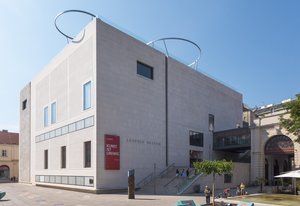
Leopold Museum, DunajLeopold Museum Dunaj 6 The Rax, Inlaid Eisler-Terramare Armoire, Venus in the Grotto
Secession, DunajSecession Dunaj 2 Dance of the Wreath-Bearing Maidens
MAK – Muzej uporabne umetnosti, DunajMAK – Muzej uporabne umetnosti Dunaj 2 Decorative Fabric [“Bird Bülow”]
Kunsthistorisches Museum, DunajKunsthistorisches Museum Dunaj 1 Self Portrait in Colonial Dress
Harvard Art Museums, CambridgeHarvard Art Museums Cambridge 1 ‘Surface Decoration,’ Cover
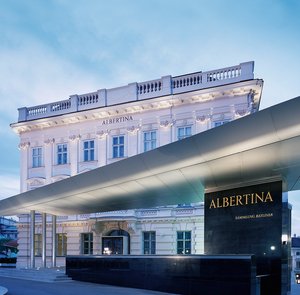
Albertina, DunajAlbertina Dunaj 1 Loïe Fuller in the Dance
Los Angeles County Museum of Art, Los AngelesLos Angeles County Museum of Art Los Angeles 1 'The Rich Catch of Fish' Armchair

Koloman Moser skozi desetetja: vsak unikatni original za vsako obdobje

Delo po desetletjih

Izberite desetletje, da si ogledate original, ki ga opredeljuje.

Slike umetnika Koloman Moser: vprašanja za galerijo

Katero je najbolj znano delo umetnika Koloman Moser?Razkriti odgovor

Dance of the Wreath-Bearing Maidens (1898), Secession, Dunaj. Zatem sledeta Poster of the Beethoven sonatas evening (1908) in Drafts for the exlibris for Fritz Waerndorfer (1903).

Pri kateri dobe je Koloman Moser ustvaril Dance of the Wreath-Bearing Maidens?Razkriti odgovor

30 let: delo Dance of the Wreath-Bearing Maidens iz leta 1898, Koloman Moser pa je bil/a rojen/a leta 1868.

Katera desetina slik avtorja Koloman Moser je najbolj znana?Razkriti odgovor

Dance of the Wreath-Bearing Maidens, Poster of the Beethoven sonatas evening, Drafts for the exlibris for Fritz Waerndorfer, Semmering Landscape, Loneliness, Figure study of Tristan, Poster for 'Prince Richard Metternich', Self Portrait in Colonial Dress, Sketch for a poster of the Vienna Workshop in Am Steinhof Church, Design for the rise window. Zgornja lestica prikazuje leto nastanka in muzej za vsako delo.

Koliko je znanih del avtorja Koloman Moser?Razkriti odgovor

Naš katalog vsebuje 189 del avtorja Koloman Moser, datiranih od 1888 do 1917.

Kje si lahko ogledate najslavnejše originale umetnika Koloman Moser?Razkriti odgovor

Večini v Leopold Museum (Dunaj), Secession (Dunaj) in MAK – Muzej uporabne umetnosti (Dunaj). Zgoraj navedena tabela muzejev vsebuje njihov celoten seznam.

V katerem obdobju je Koloman Moser ustvaril svoja najbolj znana dela?Razkriti odgovor

V obdobju 1900s: 47 od 100 del na tej strani je bilo izdelovanih takrat, med njimi pa Poster of the Beethoven sonatas evening.

Katero znano sliko je naslikal Koloman Moser najprej in katero najpozdneje?Razkriti odgovor

Na tej strani je najstarejše delo iz Male Nude Study (1888) in najstarejše iz Stamp Design for Emperor Charles I (not accepted) (1917).

Katere teme je Koloman Moser najprej ravnate?Razkriti odgovor

Designs and sketches (14), Woman (13) in Man (11), na 100 delih na tej strani.

S katerimi materiali je Koloman Moser najpogosteje slikal?Razkriti odgovor

Oil On Canvas, za 10 od 100 del na tej strani.

Kateri umetniški slog predstavlja delo umetnika Koloman Moser?Razkriti odgovor

Art nouveau, glede na originala na tej strani.

Katere originale Koloman Moser lahko vidim v muzeju Leopold Museum?Razkriti odgovor

The Rax, Inlaid Eisler-Terramare Armoire in Venus in the Grotto: v muzeju Leopold Museum, Dunaj se nahaja 5 del z te strani.

Koloman Moser: portret umetnika

Zgodnje življenje in izobraževanje

Koloman Moser, rojen 30. marca 1868 v Avstriji-Ogrski (danes del Hrvaške), je bil ključna osebnost avstrijske umetniške scene, še posebej priznan po svojih prispevkih k grafični umetnosti in kot soustanovitelj Dunajske sekcesije. Njegova umetniška pot se je začela s formalnim študijem na Wiener Akademie in Kunstgewerbeschule, kjer je kasneje leta 1899 postal tudi predavatelj. Ta akademska podlaga je bila ključna pri oblikovanju njegove vsestranske kariere v različnih medijih. Družinsko ozadje ga je že zgodaj izpostavilo umetnosti in dizajnu, spodbudilo njegovo oko za detajle in estetiko, ki sta definirala njegov umetniški slog. Njegova družina je spodbujala njegovo ustvarjalnost, kar mu je omogočilo razvoj občutka za lepoto in harmonijo, ki se odraža v celotnem njegovem delu.

Umetniški prispevki: večplastna kariera

Moserjev vpliv na grafično umetnost je nesporno pomemben. Oblikoval je poštne znamke, vinjete za revije in druge tiskane materiale z značilnimi geometrijskimi vzorci in stiliziranimi podobami. Njegove zasnove so odlikovale jasnost, eleganca in inovativna uporaba tipografije. Poleg grafičnega oblikovanja se je Moserjev talent razširil na modo, vitraže, porcelan, keramiko, pihano steklo, posodje, srebro in nakit. To dokazuje njegovo zavezanost integraciji umetnosti v vsakdanje življenje. Njegove arhitektonske zasnove, najbolj znana pa je apsida mozaika in vitraže za cerkev am Steinhof na Dunaju (1904), prikazujejo njegovo sposobnost združevanja vizionarske umetnosti s funkcionalnim dizajnom. Ta dela veljajo za mojstrovine arhitekture Art Nouveauja. Njegova ustvarjalnost ni poznala meja, vedno je iskal nove načine izražanja in presegal konvencije svojega časa.

Wiener Werkstätte in duhovni sodelavci

Leta 1903 je Moser skupaj z Josefem Hoffmannom ustanovil Wiener Werkstätte (Dunajsko delavnico). Ta kolaborativna delavnica si je prizadevala ustvarjati estetsko všečne gospodinjske predmete s povezovanjem umetnikov in obrtnikov. Wiener Werkstätte je zagovarjala filozofijo “Gesamtkunstwerk” – celotno umetniško delo – kjer je bil vsak vidik predmeta, od njegove zasnove do proizvodnje, skrbno premišljen. Moserjeva vključenost v Wiener Werkstätte je utrdila njegovo zavezanost funkcionalni lepoti in dvignila status uporabne umetnosti. Delavnica je postala pomembno središče za razvoj novega sloga v dizajnu, ki je poudarjal kakovost, ročno izdelavo in celovit pristop k ustvarjanju. Njegovo sodelovanje s Hoffmannom je bilo ključno pri oblikovanju identitete delavnice in njenega vpliva na evropsko umetnost in dizajn.

Vplivi, razvoj in zapuščina

Moserjev umetniški razvoj so vplivali številni ključni gibi, vključno z Art Nouveaujem, simbolizmom in Dunajsko sekcesijo. Navdih je črpal iz japonskih lesorezov, ki so vplivali na njegovo uporabo ravnih barvnih površin in poenostavljenih oblik. Njegov slog se je sčasoma razvil in postal vse bolj abstraktno geometrijski, hkrati pa ohranil občutek elegance in prefinjenosti. Moserjevo zapuščino potrjujejo njegove zasnove, ki so bile posmrtno upodobljene na avstrijskem 100 evrskem kovancu Steinhof Church (2005), kar prizna njegov trajni vpliv na umetnost in dizajn. Umrl je na Dunaju leta 1918 in za seboj pustil pomembno delo, ki še danes navdihuje umetnike in oblikovalce. Njegovi prispevki so pomagali oblikovati potek moderne umetnosti in dizajna ter poudarjali pomen integracije lepote v vsakdanje predmete in prostore. Njegova dela ostajajo vir navdiha za ustvarjalce po vsem svetu.