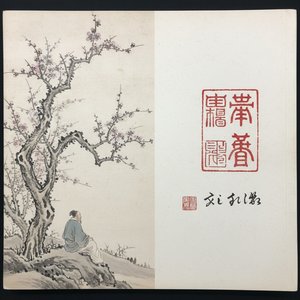
The Presence of Hu Xiqui
To understand the weight of Hu Xiqui's contribution, one must look toward the halls of The Palace Museum in Beijing. His work does not merely exist in a vacuum; it is anchored in one of the most significant collections of cultural relics in the People's Republic of China. While many artists fade into the periphery of history, Hu Xiqui remains a tangible part of the imperial legacy preserved within these walls. His presence is felt through the physical traces of pigment and paper that have survived the passage of time.
The survival of his work is a matter of historical fact. His involvement in the artistic record is confirmed by the holdings of The Palace Museum, where his pieces are categorized alongside significant historical artifacts. This connection to the Qing imperial collection provides a concrete basis for assessing his place in the lineage of Chinese art. He is not a figure of myth, but a figure of documented record.
Cataloged Works and Provenance
The evidence of his hand is found in specific, documented instances. His output is not a matter of speculation but is tied to the physical inventory of major institutions. The following details define his current standing in the art historical record:
- The primary collection holding his work is The Palace Museum, Beijing.
- His cataloged works include an undated piece titled Untitled.
The scarcity of his known works in the current catalog—only four approved pieces—demands a precise reading of what remains. We do not deal with a vast, sprawling oeuvre here, but with specific, localized instances of creation. The undated nature of his "Untitled" work suggests a focus on the act of creation itself rather than the imposition of a chronological label.
Historical Context
Hu Xiqui belongs to a tradition where the brush and ink carry the weight of history. His work is part of a broader movement of Chinese painting that has been preserved through centuries of technical precision. By existing within the collections of Beijing, his work is linked to the aesthetic evolution of the region. He is a component of a larger, continuous history of ink and paper that defines the visual language of the East.
Vprašanja in odgovori
Ali lahko obiščem virtualni muzej del Hu Xiqui?
3D galerija umetnosti umetnika Hu Xiqui je stran, ki v virtualni trodimenzionalni galeriji prikazuje umetnikova dela.
Ali obstaja celoten seznam umetnin umetnika Hu Xiqui?
Vsa dela umetnika Hu Xiqui na platformi ta spletna stran si lahko ogledate na njegovi strani Vsi umetniški slogi.
Kje so dela umetnika Hu Xiqui razvrščena po tehniki?
Delo umetnika Hu Xiqui si lahko ogledate po različnih tehnikah na njegovi strani Vse tehnike.
V katerih umetnostnih smereh je deloval/a Hu Xiqui?
Stran Vsi umetnostni slogi prikazuje dela umetnika Hu Xiqui razvrščena po umetniškem slogu.