

1


Posodobljeno november 2026 · uvrščeno glede na naš skoraj priljubljenosti (iskanja, obiske in naročila za vsako delo) · 2 del v našem katalogu avtorja Henry Ritter
Kratek opis
Middy's sermon (1853) je slika avtorja Henry Ritter, ki pritegne največ pogledov; original se nahaja v muzeju Wallraf-Richartz-Museum, Köln. Med 2 dela umetnika Henry Ritter v našem katalogu so ta 2 najbolj znana; vsako je edinstven original, predstavljen z letnico nastanka, muzejem in razlogom za njegovo nečasenost.
1 muzejev, ki vsebujo največ slik na tej strani.
| Muzeji | Mesto | Sloga Henry Ritter | Slike iz tega seznama |
|---|---|---|---|
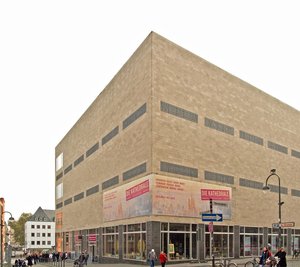 Wallraf-Richartz-Museum |
Köln | 1 | Middy's sermon |
Vsi originali umetnika Henry Ritter z navedenim letom, ki so prikazani tukaj, pripadajo letu 1853: razvrščeni so glede na stopnjo znanosti.
Izberite leto in oglej originale.
Middy's sermon (1853)
37 let: delo Middy's sermon iz leta 1853, Henry Ritter pa je bil/a rojen/a leta 1816.
Naš katalog vsebuje 2 del avtorja Henry Ritter.
Večini v Wallraf-Richartz-Museum (Köln). Zgoraj navedena tabela muzejev vsebuje njihov celoten seznam.
To understand Henry Ritter, one must look past the simple label of a German painter and recognize the friction between his Canadian origins and his German training. Born in Montreal in 1816, Ritter did not follow the commercial path his father, a Hanoverian officer, intended. Instead, he moved through Hamburg before settling into the rigorous academic structure of the Düsseldorfer Malerschule. This was not a mere education; it was an immersion into a specific way of seeing the world through narrative and ethnographic detail.
His technical foundation was built under the watchful eyes of Karl Ferdinand Sohn and Friedrich Wilhelm Schadow at the Kunstakademie Düsseldorf. However, his most decisive shifts came from private instruction. Rudolf Jordan provided more than just lessons; he offered a lens for observing the North Sea, instilling in Ritter an ethnographic approach that would define his later output. This training allowed him to move between the precision of lithography and the broader strokes of marine painting.
Ritter’s career was split between the serious and the satirical. While he possessed the skill for historical and marine subjects, his reputation often rested on his ability to use art as a tool for social commentary. He was a regular contributor to the Düsselderm Monathefte, where his illustrations carried a sharp, biting edge. His 1849 publication, Der Politische Struwwelpeter, utilized the familiar structure of children's literature to deliver a pointed satire on the German Revolution and the complexities of unification.
His graphic work was not limited to political mockery. He demonstrated a high level of competence in book illustration, notably for the works of Washington Irving. This versatility shows an artist capable of shifting from the biting critique of contemporary politics to the more structured demands of literary accompaniment. His ability to handle diverse media—including lithography, engraving, and aquatint—gave him a reach that many of his contemporaries lacked.
The physical reality of Ritter's life was often dictated by his health. A diagnosis of "nervous fever" forced a move to Seligenthal, interrupting the momentum of his time in Düsseldorf. Despite these interruptions, his output remained significant enough to be preserved by Ferdinand Fagerlin after his death in 1853. His works, ranging from the maritime tension of Smugglers Struggling with English Soldiers to the somber Young Pilot Drowned, remain held in major institutions like the National Gallery of Canada and the Metropolitan Museum of Art.
Ritter’s importance lies in his refusal to be a single-dimensional artist. He was simultaneously a student of the academy, a chronicler of maritime life, and a political satirist. His work captures a specific mid-19th-century tension: the struggle between traditional academic painting and the emerging need for a more direct, often critical, visual language in response to a changing Europe.
