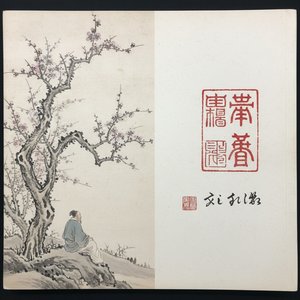
Early Life, Family and Training
Born in Kunshan, Jiangsu, Gui Changshi was shaped by a lineage of profound literary talent. He was the grandson of the prose writer Gui Youguang, a connection that ensured his upbringing was steeped in the intellectual traditions of the Ming dynasty. Though he eventually moved to Changshu, his roots remained firmly planted in the scholarly culture of his native region. This familial foundation provided more than just a name; it offered a direct link to a specific way of life and a rigorous standard of learning.
Intelligence arrived early for Gui Changshi. By the age of ten, he was already composing poetry, demonstrating a precocious command of language that suggested a life dedicated to the written word. While he was a government student, his path deviated from the traditional expectations of his station. He eventually chose to set aside the pursuit of the imperial examinations, a decision that redirected his focus toward the deep study of ancient prose. This departure from the official bureaucracy allowed him to cultivate the sensibilities of a literati artist.
His training was not confined to a single discipline but was instead a synthesis of various arts. He became a man who could navigate the complexities of poetry, calligraphy, painting, and seal carving with equal facility. This multifaceted education was a continuation of his family's scholarly legacy, passed down through generations. He would eventually pass this intellectual and artistic inheritance to his son, Gui Zhuang, ensuring that the family's devotion to these classical pursuits remained unbroken.
Artistic Technique and Style
Gui Changshi was a true literati polymath, a man who moved seamlessly between the disciplines of poetry, calligraphy, painting, and seal carving. His approach to calligraphy was deeply rooted in tradition, as he modeled his hand after the formal structures of the Jin and Tang dynasties. In the realm of seal carving, he sought a different kind of resonance. He advocated for the ancient models of the Qin and Han dynasties, crafting seals that were simple, tranquil, and elegant. His carvings were not merely functional objects but were intended to be expressive of emotion through their restrained forms.
His painterly style was a careful dialogue with the masters of the past. When composing landscapes, such as in his work Qi Garden, he looked to the Yuan dynasty masters Ni Zan and Huang Gongwang for structural guidance. His botanical subjects followed a different lineage; his depictions of orchids and bamboo drew inspiration from the Ming dynasty styles of Xu Wei and Chen Chun. Even his treatment of ink bamboo reflected a deep respect for the Song and Yuan traditions, using the medium to capture a sense of movement and resilience.
Key Works and Notable Pieces
In the twilight of his life, Gui Changshi produced Qi Garden, a landscape painted in 1630. The work reflects a deep engagement with the traditions of the Yuan dynasty, specifically drawing from the styles of Ni Zan and Huang Gongwang. The landscape is accompanied by orchids and bamboo that mirror the compositions of Xu Wei and Chen Chun. In this piece, the bamboo stems rise tall and erect against a storm, a gesture of resoluteness, while the leaves sway with the force of the wind. The frontispiece calligraphy for this handscroll was executed by his son, Gui Zhuang, and the label was written by the epigraphist Luo Zhenyu.
His mastery of script and form is further evidenced by A Set of Four Albums of Regular Script Calligraphy, created in 1633. These albums demonstrate the precision and discipline required of a scholar-artist of the late Ming dynasty. His ability to balance the structural requirements of calligraphy with the expressive needs of the brush allowed him to navigate the various disciplines of the literati tradition.
- Qi Garden (1630)
- A Set of Four Albums of Regular Script Calligraphy (1633)
Later Years and Death
During the Chongzhen era, the imperial court recognized his standing and summoned him to serve as an Expectant Official. It was a significant summons, yet he chose not to respond. He remained apart from the formal structures of the state, maintaining a distance from the administrative duties that the court required of a man of his learning.
The stability of the era eventually fractured with the fall of the Ming dynasty. This political collapse weighed heavily upon him. Overcome with grief by the dissolution of the dynasty, his spirit seemed to follow the decline of the empire. He died the following year.
Vprašanja in odgovori
Ali lahko dela umetnika Gui Changshi brskam po barvni paleti?
Delo umetnika Gui Changshi si lahko ogledate po barvni paleti na njegovi strani Po barvnih paletah.
Koliko so priljubljena dela umetnika Gui Changshi?
Za umetnika Gui Changshi je na voljo stran Statistika, ki prikazuje statistiko o njegovih umetniških delih na platformi ta spletna stran.
Koliko umetnin umetnika Gui Changshi je na voljo za ogled?
Na strani Vsi umetniški slogi si lahko ogledate 2 umetnin del umetnika Gui Changshi.
Kako se je umetnost umetnika Gui Changshi skozi čas razvijala?
Kronološki pregled dela umetnika Gui Changshi si lahko ogledate na njegovi strani Zgodovina umetnosti, kjer se dela prikazujejo v vrstnem redu nastanka, razdeljena v posamezna poglavja.